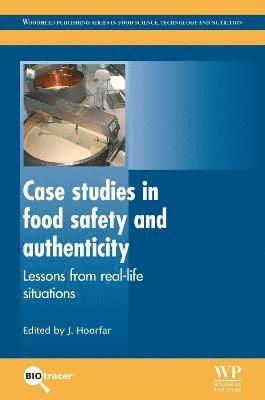
Case Studies in Food Safety and Authenticity
Lessons from Real-Life Situations
Inbunden, Engelska, 2012
2 135 kr
Beställningsvara. Skickas inom 10-15 vardagar. Fri frakt över 249 kr.
Beskrivning
The identification and control of food contaminants rely on careful investigation and implementation of appropriate management strategies. Using a wide range of real-life examples, Case studies in food safety and authenticity provides a vital insight into the practical application of strategies for control and prevention.
Part one provides examples of recent outbreak investigations from a wide range of experts around the world, including lessons learnt, before part two goes on to explore examples of how the source was traced and the implications for the food chain. Methods of crisis management are the focus of part three, whilst part four provides studies of farm-level interventions and the tracking of contaminants before they enter the food chain. Part five is focussed on safe food production, and considers the challenges of regulatory testing and certification, hygiene control and predictive microbiology. The book concludes in part six with an examination of issues related to food adulteration and authenticity.
With its distinguished editor and international team of expert contributors, Case studies in food safety and authenticity is a key reference work for those involved in food production, including quality control, laboratory and risk managers, food engineers, and anyone involved in researching and teaching food safety.
Part one provides examples of recent outbreak investigations from a wide range of experts around the world, including lessons learnt, before part two goes on to explore examples of how the source was traced and the implications for the food chain. Methods of crisis management are the focus of part three, whilst part four provides studies of farm-level interventions and the tracking of contaminants before they enter the food chain. Part five is focussed on safe food production, and considers the challenges of regulatory testing and certification, hygiene control and predictive microbiology. The book concludes in part six with an examination of issues related to food adulteration and authenticity.
With its distinguished editor and international team of expert contributors, Case studies in food safety and authenticity is a key reference work for those involved in food production, including quality control, laboratory and risk managers, food engineers, and anyone involved in researching and teaching food safety.
- Delivers a vital insight into the practical application of strategies for control and prevention of food contaminants
- Provides detailed examples of recent outbreak investigations from a wide range of international experts, discussing how the source was traced and the implications for the food chain
- Chapters discuss methods of crisis management, farm-level interventions, safe food production and the challenges of regulatory testing and certification
Produktinformation
- Utgivningsdatum:2012-06-25
- Mått:156 x 234 x undefined mm
- Vikt:760 g
- Format:Inbunden
- Språk:Engelska
- Serie:Woodhead Publishing Series in Food Science, Technology and Nutrition
- Antal sidor:408
- Förlag:Elsevier Science
- ISBN:9780857094124
Utforska kategorier
Mer om författaren
Jeffrey Hoorfar is a Professor and Research Manager at the Technical University of Denmark.
Recensioner i media
"This unique and impressive book of wide breadth and interest is recommended to chemists at large, but particularly to those involved in food production and quality control, whether working in production and control, research or teaching." --Chemistry World"Those involved in food safety training and education will find the book a valuable asset in course design and delivery." --Trends in Food Science
Innehållsförteckning
- Obituary for Niels SkovgaardContributor contact detailsWoodhead Publishing Series in Food Science, Technology and NutritionPrefaceForewordHow to use this bookAcknowledgementsPart I: Outbreak investigationsChapter 1: Tracing an outbreak of listeriosis in Austria: what an investigative microbiologist needs to considerAbstract:1.1 Introduction to the case1.2 Significance of the case1.3 The case history continues1.4 Resolution and outcomes1.5 Commentary and personal reflections1.6 Critical questions for discussionChapter 2: A point-source outbreak of Salmonella in an ethnic community in the UKAbstract:2.1 Introduction2.2 Significance of the situation2.3 The case history continues2.4 Resolution and outcomes2.5 Commentary2.6 Acknowledgements2.7 Critical questions for discussionChapter 3: Investigating the source of a food poisoning incident in Cheshire, UKAbstract:3.1 Introduction3.2 Significance of the situation3.3 The case history continues3.4 Resolution and outcomes3.5 Commentary3.6 Acknowledgements3.7 Critical questions for discussionChapter 4: Investigating a large outbreak of salmonellosis in the US involving fresh produceAbstract:4.1 Introduction to the case4.2 Significance of the case4.3 Background information4.4 The case history continues4.5 Resolution and outcomes4.6 Commentary and personal reflections4.7 Critical questions for discussionChapter 5: What was the source of the 2011 outbreak of Escherichia coli in Germany and France?Abstract:5.1 Introduction to the case5.2 Significance of the case5.3 The case continues5.4 Resolution and outcomes5.5 Commentary and personal reflections5.6 Acknowledgments5.7 Critical questions for discussionChapter 6: Tracing the source of a community-wide gastroenteric outbreak caused by Campylobacter in FinlandAbstract:6.1 Introduction to the case6.2 Significance of the case6.3 The case history continues6.4 Management of the outbreak and source tracing6.5 Conclusions of the outbreak and attempts to identify its source6.6 Commentary: how can safety be improved and what constitutes an outbreak?6.7 Critical questions for discussionChapter 7: One pathogen but two different types of foodborne outbreak: Bacillus cereus in catering facilities in GermanyAbstract:7.1 Introduction to the cases7.2 Significance of the cases7.3 The case histories continue7.4 Resolution and outcomes7.5 Commentary and personal reflections7.6 Critical questions for discussionChapter 8: Investigating a suspected case of mycotoxin poisoning in South AfricaAbstract:8.1 Introduction to the case8.2 Significance of the case8.3 The case continues8.4 Outcomes8.5 Commentary8.6 Critical questions for discussionChapter 9: Investigations of foodborne outbreaks caused by a parasite in CanadaAbstract:9.1 Introduction to the cases9.2 Significance of the cases9.3 The background to the cases: previous outbreaks and challenges associated with detection and control9.4 The case histories continue: traceback investigations and follow-up9.5 Resolution and outcomes9.6 Commentary9.7 Acknowledgments9.8 Critical questions for discussionPart II: Source tracingChapter 10: Troubleshooting the environmental source of contamination with Listeria monocytogenes in a typical small food manufacturing plant in IrelandAbstract:10.1 Introduction to the case10.2 Significance of the case10.3 The case history continues10.4 Resolution and outcomes10.5 Commentary and personal reflections10.6 Critical questions for discussionChapter 11: Tracing the source of persistent contamination of ready-to-eat chicken products with Listeria monocytogenes in ItalyAbstract:11.1 Introduction to the case11.2 Significance of the case11.3 The case history continues11.4 Resolution and outcomes11.5 Commentary11.6 Acknowledgements11.7 Critical questions for discussionChapter 12: An unforeseen source of aflatoxins in milk in SwedenAbstract:12.1 Introduction to the case12.2 Significance of the case12.3 The case continues12.4 Resolution and outcomes12.5 Commentary and personal reflections12.6 Acknowledgments12.7 Critical questions for discussionChapter 13: Investigations prompted by the discovery of high levels of Salmonella in fresh herbs in the UKAbstract:13.1 Introduction13.2 Significance of the case13.3 The case history continues13.4 Resolution and outcomes13.5 Commentary13.6 Acknowledgements13.7 Critical questions for discussionChapter 14: Source tracing in Thailand following contamination of dog chew toys with SalmonellaAbstract:14.1 Introduction to the case14.2 Significance of the case14.3 Case history continues14.4 Resolution and outcomes14.5 Commentary and personal reflections14.6 Acknowledgements14.7 Critical questions for discussionChapter 15: Analysing tap-water from households of patients with inflammatory bowel disease in NorwayAbstract:15.1 Introduction to the case15.2 Significance of the case15.3 The case history continues15.4 Resolution and outcomes15.5 Commentary15.6 Acknowledgments15.7 Critical questions for discussionPart III: Crisis managementChapter 16: A proactive attempt to control an outbreak of foodborne disease in humans after detection of Salmonella during surveillance and control of pork in DenmarkAbstract:16.1 Introduction to the case16.2 Significance of the case16.3 The outbreak history continues16.4 Resolution and outcomes16.5 Comments and personal reflections16.6 Acknowledgements16.7 Critical questions for discussionChapter 17: Managing and learning from an anthrax outbreak in a Swedish beef cattle herdAbstract:17.1 Introduction to the case17.2 The Swedish outbreak in 2008: how did it all begin?17.3 The case history continues17.4 Significance of the case17.5 Resolution and outcomes17.6 Commentary17.7 Critical questions17.8 AcknowledgmentsChapter 18: Mounting an effective response to an outbreak of viral disease involving street food vendors in IndonesiaAbstract:18.1 Introduction to the case18.2 Significance of the case18.3 The case history continues18.4 Commentary and personal reflections18.5 Acknowledgements18.6 Critical questions for discussionChapter 19: Handling of the media during an incident in Romania involving dioxin contamination of yoghurtsAbstract:19.1 Introduction to the case19.2 Significance of the case19.3 The case history continues19.4 Resolution and outcomes19.5 Commentary and personal reflections19.6 Critical questions for discussionPart IV: Farm-level interventionsChapter 20: Is it possible to reduce foodborne Campylobacter infections in humans through vaccination of animals?Abstract:20.1 Introduction to the case20.2 Significance of the case20.3 Why vaccinate poultry and not humans?20.4 What vaccination strategy to use?20.5 Resolutions and outcome20.6 Critical questions for discussion20.7 AcknowledgementsChapter 21: The free-range meat paradox: the conflict between free-range poultry production systems and biocontainment against zoonotic microorganismsAbstract:21.1 Introduction to the case21.2 Significance of the case21.3 The case continues21.4 Resolution and outcomes21.5 Commentary21.6 Acknowledgements21.7 Critical questionsChapter 22: How does Sweden control Salmonella before it enters the food chain?Abstract:22.1 Introduction to the case22.2 Significance of the case22.3 The case history continues22.4 Resolution and outcomes22.5 Commentary22.6 Acknowledgements22.7 Critical questionsChapter 23: Bovine spongiform encephalitis: the case of an unexpected and rapidly spreading epidemic in cattle with serious consequencesAbstract:23.1 Introduction to the case23.2 Significance of the case23.3 Background to the case: the nature of BSE and vCJD23.4 The case continues23.5 Resolution and outcomes23.6 Commentary23.7 Acknowledgment23.8 Critical questions for discussionChapter 24: The continuing debate over increasing consumption of raw (unpasteurised) milk: is it safe?Abstract:24.1 Introduction to the case24.2 Significance of the case24.3 The case continues24.4 Commentary and personal reflections24.5 Acknowledgement24.6 Critical questions for discussionPart V: Safe food productionChapter 25: Challenges in food safety certification of a small enterprise producing a speciality product in CyprusAbstract:25.1 Introduction to the case25.2 Significance of the case25.3 The case continues25.4 Outcomes and commentary25.5 AcknowledgmentsChapter 26: The dilemma of regulatory testing of dairy foods in Australia: minimising risk to the public while avoiding unnecessary regulatory burdenAbstract:26.1 Introduction to the cases26.2 Significance of the cases26.3 The case histories continue26.4 Resolutions and outcomes26.5 Commentary26.6 Critical questions for discussionChapter 27: Learning from outbreaks of Escherichia coli O157:H7 caused by low pH foodsAbstract:27.1 Introduction27.2 Significance of the cases27.3 The case history continues27.4 Resolutions and outcomes27.5 Commentary27.6 Acknowledgment27.7 Critical questions for discussionChapter 28: Hygiene control in the dry food products industry: the roles of cleaning methods and hygienic indicatorsAbstract:28.1 Introduction to the cases28.2 Significance of the cases28.3 Case studies28.4 Commentary: where do we go from here?28.5 Critical questions for discussionChapter 29: Boosting exports of fresh meat by using faster laboratory methods in DenmarkAbstract:29.1 Introduction to the case29.2 Significance of the case29.3 The case history continues29.4 Commentary and personal reflections29.5 Acknowledgments29.6 Critical questions for discussionChapter 30: Using predictive microbiology to benefit the Australian meat industryAbstract:30.1 Introduction to the case30.2 Significance of the case30.3 The case history continues – extreme rainfall and tropical cyclone Yasi30.4 Resolution and outcomes30.5 Commentary30.6 Critical questions for discussionPart VI: Food adulteration and authenticityChapter 31: Forensic investigation of a sabotage incident in a factory manufacturing nut-free ready meals in the UKAbstract:31.1 Introduction31.2 Significance of the case31.3 The case history continues31.4 Resolution and outcomes31.5 Commentary and personal reflections31.6 Acknowledgements31.7 Critical questions for discussionChapter 32: Lessons from the large-scale incident of animal feed contamination with dioxins in Germany in 2011Abstract:32.1 Introduction to the case32.2 Significance of the case32.3 The case history continues32.4 Resolution and outcomes32.5 Commentary32.6 Critical questions for discussionChapter 33: Investigating the adulteration of UHT milk in BrazilAbstract:33.1 Introduction to the case33.2 Significance of the case33.3 The case history continues33.4 Resolution and outcomes33.5 Commentary and personal reflectionsChapter 34: Food adulteration with melamine on an international scale: field work and troubleshooting in AfricaAbstract:34.1 Introduction to the case34.2 Significance of the case34.3 The case history continues34.4 Resolution and outcomes34.5 Commentary and personal reflections34.6 Acknowledgements34.7 Critical questions for discussionChapter 35: Investigating cases of taste disturbance caused by pine nuts in DenmarkAbstract:35.1 Introduction to the case35.2 Significance of the case35.3 The case history continues35.4 Resolution and outcomes35.5 Commentary and personal reflections35.6 Critical questions for discussionChapter 36: Development and application of molecular tools to investigate the mislabeling of cod sold in SwedenAbstract:36.1 Introduction to the case36.2 Significance of the case36.3 The case history continues36.4 Resolution and outcomes36.5 Commentary and personal reflections36.6 Acknowledgments36.7 Critical questions for discussionChapter 37: Testing for genetically modified organisms (GMOs) revealed the real source of rice imported to NorwayAbstract:37.1 Introduction to the cases37.2 Significance of the cases37.3 The case histories continue37.4 Resolution and outcomes37.5 Commentary37.6 Acknowledgments37.7 Critical questions for discussionChapter 38: Documenting the ‘terroir’ aspects of award-winning Danish conserves: a model for the development of authentic food productsAbstract:38.1 Introduction to the case38.2 Significance of the case38.3 The case histories continue38.4 Resolution and outcomes38.5 Commentary38.6 Acknowledgments38.7 Critical questions for discussionIndex
Hoppa över listan


Du kanske också är intresserad av
- -22%
Del 3
- -30%
- -30%
- 4 för 3
Brevbäraren i Lizzanello
Francesca Giannone
Pocket, 2026
4,3 utav 5 stjärnor. Totalt antal röster:(43)
99 kr
- -30%
- 4 för 3
Del 8
- 4 för 3
Del 1
- Nyhet
Del 2
- 4 för 3
Del 1