Inbunden, Engelska, 2025
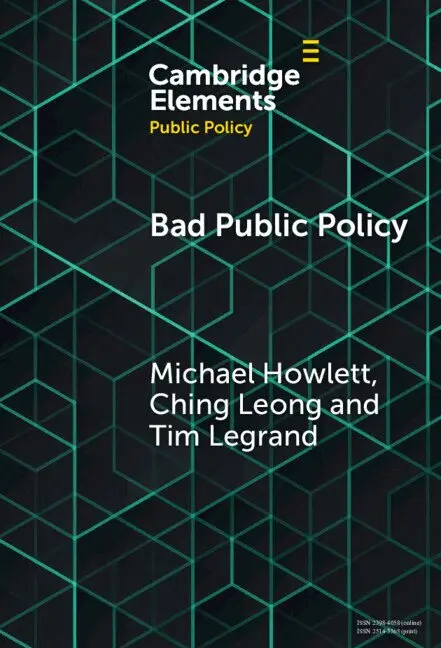
Bad Public Policy
Av Michael Howlett, Ching Leong, Tim Legrand
829 kr
Beställningsvara. Skickas inom 5-8 vardagar. Fri frakt över 249 kr.
Beskrivning
Policy studies assume the existence of baseline parameters - such as honest governments doing their best to create public value, publics responding in good faith, and both parties relying on a policy-making process that aligns with the public interest. In such circumstances, policy goals are expected to be produced through mechanisms in which the public can articulate its preferences and policy-makers are expected to listen to what has been said in determining their governments' courses of action. While these conditions are found in some governments, much policy-making occurs without these pre-conditions and processes. Unlike situations that produce what can be thought of as 'good' public policy, 'bad' public policy is a more common outcome. How this happens and what makes for bad public policy are the subjects of this Element. This title is also available as Open Access on Cambridge Core.
Produktinformation
- Utgivningsdatum: 2025-05-08
- Mått: 152 x 229 x 8 mm
- Vikt: 303 g
- Format: Inbunden
- Språk: Engelska
- Serie: Elements in Public Policy
- Antal sidor: 110
- Förlag: Cambridge University Press
- ISBN: 9781009497039
Utforska kategorier
Betyg & recensioner
0 recensioner
Inga recensioner tillgängliga.