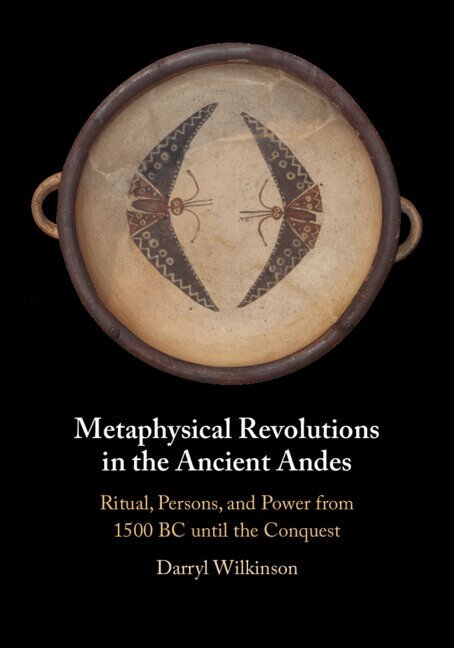
Häftad, Engelska, 2026
Metaphysical Revolutions in the Ancient Andes
679 kr
Skickas måndag 26/10. Fri frakt över 249 kr.
Beskrivning
The material and visual culture of late precolonial Andean societies-especially the Inka Empire-looked radically different from their predecessors. For millennia, the iconography of the ancient Andes was dominated by warriors, sacrificial rites, apex predators and chimerical beings whose bodies were amalgamations of multiple human and animal species. Yet by AD 1000, these images had almost entirely vanished. This study offers the first ever analysis of these dramatic transformations. Far more than simply a change of aesthetic preferences, or even a shift in ideology, it posits a series of metaphysical revolutions in which Andean sociality was fundamentally altered. The basis of personhood, the creation of value and the nature of political power itself all came to be refigured in far-reaching ways. Specifically, a once-dominant metaphysics focused on the predatory extraction of vitality from enemies disappeared, to be replaced by one grounded in reciprocal exchanges between human and nonhuman beings.
Produktinformation
- Utgivningsdatum: 2026-09-30
- Mått: 177 x 253 x 23 mm
- Vikt: 686 g
- Format: Häftad
- Språk: Engelska
- Antal sidor: 339
- Förlag: Cambridge University Press
- ISBN: 9781009655088
Utforska kategorier
Betyg & recensioner
0 recensioner
Inga recensioner tillgängliga.