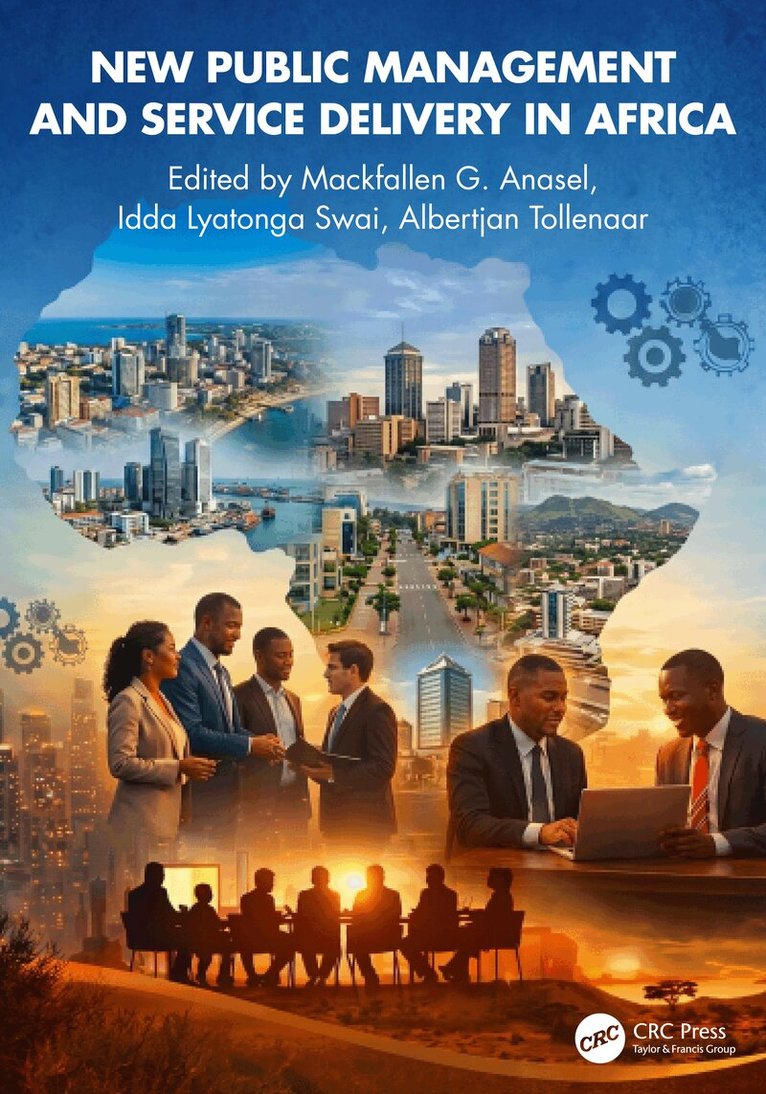
Häftad, Engelska, 2026
New Public Management and Service Delivery in Africa
Av Mackfallen G. Anasel, Idda Lyatonga Swai, Albertjan Tollenaar
832 kr
Kommande
Beskrivning
New Public Management (NPM) is a transformational approach that reshapes public sector administration by adopting private-sector managerial practices to boost efficiency, effectiveness, and quality of service, challenging traditional bureaucratic inefficiencies through decentralization, performance orientation, and market mechanisms. This book examines NPM’s implementation in developing countries, especially in Africa, exploring its successes and challenges. Using empirical case studies, it shows how NPM reforms impact governance, service delivery, and public accountability, using New Public Service and New Public Governance models focusing on citizen participation and collaboration.Key Features: ■ Results-Oriented Governance: Emphasis on outcomes and performance measurement to enhance public service effectiveness■ Managerialism: Introduction of private-sector management practices, including decentralization and quasi-market arrangements■ Citizen Empowerment: Treating citizens as clients with freedom of choice and increased participation in service delivery■ Efficiency and Cost Reduction: Streamlining government operations to improve responsiveness and reduce public expenditure■ Collaborative and Adaptive Governance: Incorporating New Public Service and Governance principles of co-production, transparency, and multi-stakeholder networks
Produktinformation
- Utgivningsdatum: 2026-11-20
- Mått: 178 x 254 x undefined mm
- Format: Häftad
- Språk: Engelska
- Antal sidor: 198
- Förlag: Taylor & Francis Ltd
- ISBN: 9781041124863
Utforska kategorier
Betyg & recensioner
0 recensioner
Inga recensioner tillgängliga.