Inbunden, Engelska, 2026
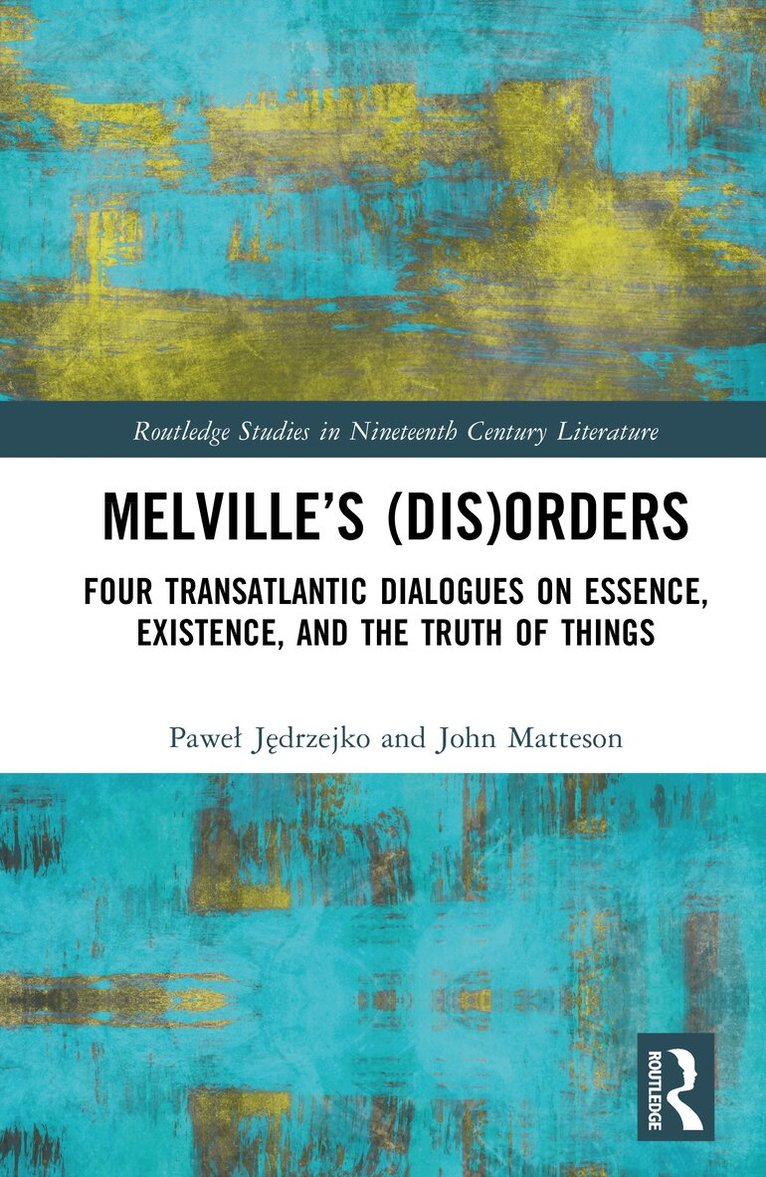
Melville’s (Dis)Orders
Av Paweł Jędrzejko, John Matteson
2839 kr
Kommande
Beskrivning
Melville’s (Dis)Orders offers a dialogical re-reading of Herman Melville as a thinker of moral, political, and existential disorder, tracing how his literary imagination confronts authority, law, violence, and ethical responsibility in modernity.Combining literary analysis with philosophical reflection, this book advances a dual- voiced, dialogical approach to Melville’s oeuvre, which brings literary studies into sustained conversations with ethics, political thought, theology, and intellectual history. Moving beyond thematic interpretation, the authors read Melville as a diagnostician of modernity’s fractures, where sovereignty falters, legal order destabilizes, and moral judgment becomes precarious. Through close readings of major and lesserknown texts, the volume offers scholars a conceptually rigorous framework for understanding Melville’s relevance to debates on authority, responsibility, friendship, and post-theological ethics, while modeling dialogic scholarship as a critical method.This book is written primarily for scholars of nineteenth-century American literature, Melville studies, American Romanticism, and comparative literature, as well as philosophers, intellectual historians, and scholars of religion interested in ethics, secularization, and dialogic thought. It will also be of value to postgraduate and doctoral students, advanced undergraduates in specialized seminars, and educators seeking interdisciplinary, research-driven resources on Melville’s ethical imagination.
Produktinformation
- Utgivningsdatum: 2026-10-30
- Mått: 152 x 229 x undefined mm
- Format: Inbunden
- Språk: Engelska
- Serie: Routledge Studies in Nineteenth Century Literature
- Antal sidor: 300
- Förlag: Taylor & Francis Ltd
- ISBN: 9781041162070
Utforska kategorier
Betyg & recensioner
0 recensioner
Inga recensioner tillgängliga.