Inbunden, Engelska, 2026
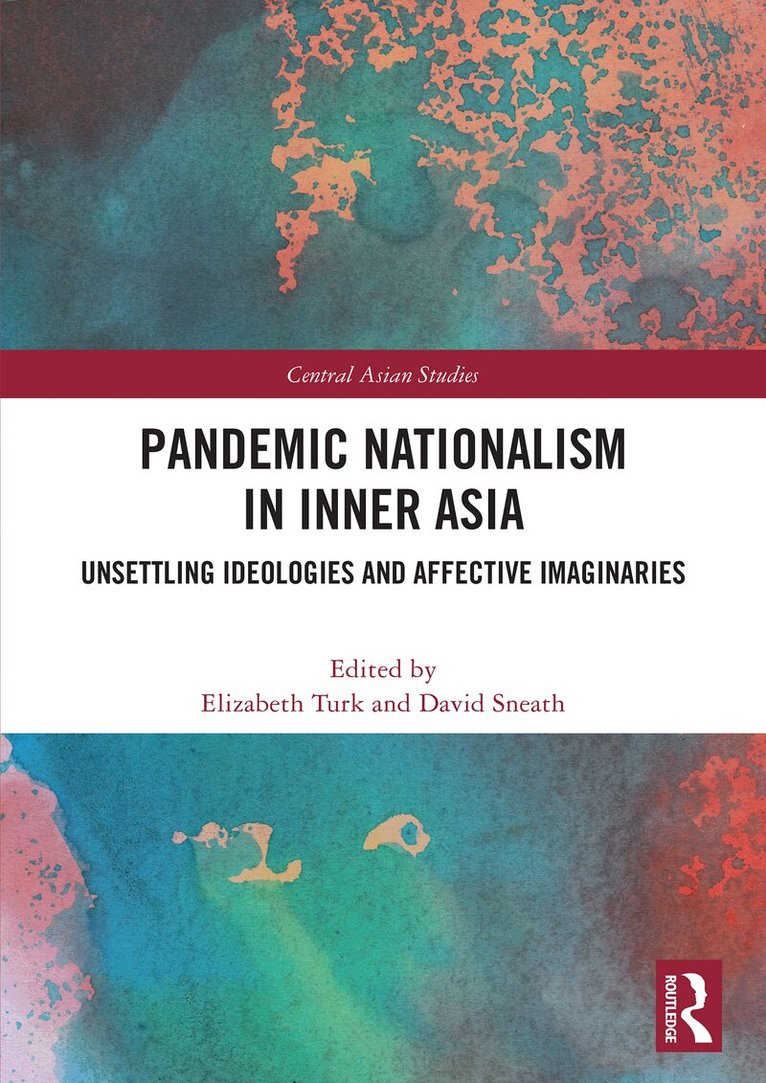
Pandemic Nationalism in Inner Asia
Av Elizabeth Turk, David Sneath
2504 kr
Beställningsvara. Skickas inom 10-15 vardagar. Fri frakt över 249 kr.
Beskrivning
This book offers an ethnographic analysis of nationalist thought, centralized power, and modes of governance in (post- )pandemic Mongolian political and cultural contexts. By reframing the unity often associated with descriptive ‘groupist’ thought in terms of claims and objects of concern within a wider political imaginary, this book provides a new conceptual framework for understanding nationalist thought beyond the strictly ideological.By approaching nationalism as a structure of ideas formed within a wider affective imaginary of human groupings and attachments, the book draws attention to the diversity such claims can take. Through the lens of nationalism as a narrative, the book explores how claims and objects of concern— such as the notion of a national ‘people’ or ethnicity— interact with processes of ideational authorship, messaging, and reception. It examines how affect is enacted as part of ideational encounters, relocating it from an ontological or subconscious force to a historically situated and authored outcome of human engagement. Drawing on rich ethnographic insights from across the Mongolian region, the book presents a novel methodology for theorizing nationalism that emphasizes objects of concern and ethnographic particularities.Pandemic Nationalism in Inner Asia is designed for scholars, researchers, and students in anthropology, political science, sociology, and Asian studies. It will also appeal to those interested in nationalism, governance, and the cultural impacts of pandemics. Broad subject areas include ethnography, nationalism studies, affect theory, and Inner Asian studies.The chapters in this book were originally published as a special issue of Central Asian Survey.
Produktinformation
- Utgivningsdatum: 2026-09-21
- Mått: 174 x 246 x 10 mm
- Vikt: 420 g
- Format: Inbunden
- Språk: Engelska
- Serie: Central Asian Studies
- Antal sidor: 134
- Förlag: Taylor & Francis Ltd
- ISBN: 9781041390848
Utforska kategorier
Betyg & recensioner
0 recensioner
Inga recensioner tillgängliga.