374 kr
Beställningsvara. Skickas inom 7-10 vardagar. Fri frakt över 249 kr.
Beskrivning
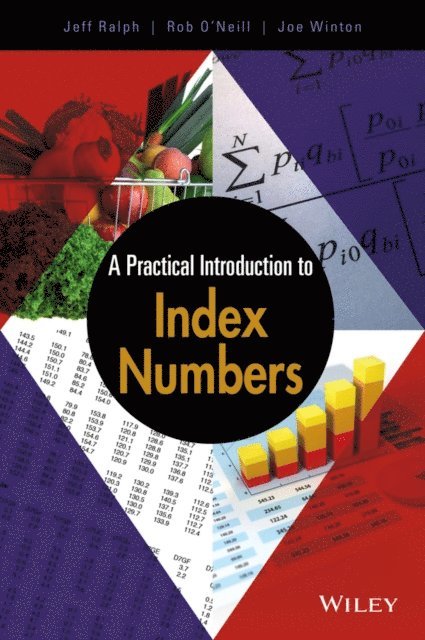
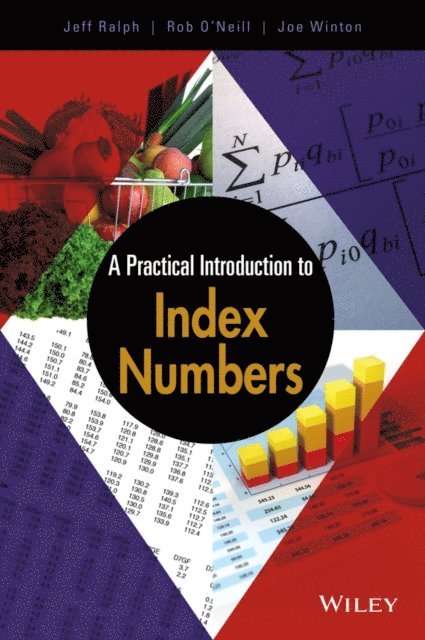
This book provides an introduction to index numbers for statisticians, economists and numerate members of the public. It covers the essential basics, mixing theoretical aspects with practical techniques to give a balanced and accessible introduction to the subject. The concepts are illustrated by exploring the construction and use of the Consumer Prices Index which is arguably the most important of all official statistics in the UK. The book also considers current issues and developments in the field including the use of large-scale price transaction data.A Practical Introduction to Index Numbers will be the ideal accompaniment for students taking the index number components of the Royal Statistical Society Ordinary and Higher Certificate exams; it provides suggested routes through the book for students, and sets of exercises with solutions.
Produktinformation
- Utgivningsdatum:2015-08-14
- Mått:152 x 229 x 13 mm
- Vikt:304 g
- Format:Häftad
- Språk:Engelska
- Antal sidor:232
- Förlag:John Wiley & Sons Inc
- ISBN:9781118977811
Utforska kategorier
Mer om författaren
Dr Jeff Ralph, Head of Index Number Methodology, Office for National Statistics, Cardiff, UKMr Joe Winton, Statistical Training Unit, Office for National Statistics, Cardiff, UKDr Robert O'Neill, Lecturer in Economics, University of Huddersfield, UK
Innehållsförteckning
- Preface xiAcknowledgements xv1 Introduction 11.1 What is an index number? 11.2 Example – the Consumer Prices Index 21.3 Example – FTSE 100 51.4 Example – Multidimensional Poverty Index 61.5 Example – Gender Inequality Index 61.6 Representing the world with index numbers 71.7 Chapter summary 8References 82 Index numbers and change 92.1 Calculating an index series from a data series 92.2 Calculating percentage change 112.3 Comparing data series with index numbers 132.4 Converting from an index series to a data series 142.5 Chapter summary 16Exercise A 173 Measuring inflation 193.1 What is inflation? 193.2 What are inflation measures used for and why are they important? 203.2.1 Determination of monetary policy by a central bank 213.2.2 Changing of provisions for private pensions 213.2.3 Changes in amounts paid over long-term contracts 213.2.4 Changes in rail fares and other goods 223.2.5 Evaluating investment decisions 223.2.6 Inputs to economic research and analysis 233.2.7 Index-linked debt 233.2.8 Tax allowances 233.2.9 Targets for stability of the economy in an international context 233.3 Chapter summary 24References 24Exercise B 254 Introducing price and quantity 274.1 Measuring price change 274.2 Simple, un-weighted indices for price change 304.2.1 Simple price indices 304.2.2 Simple quantity indices 334.3 Price, quantity and value 344.4 Example – Retail Sales Index 354.5 Chapter summary 36Exercise C 375 Laspeyres and Paasche indices 395.1 The Laspeyres price index 405.2 The Paasche price index 415.3 Laspeyres and Paasche quantity indices 435.4 Laspeyres and Paasche: mind your Ps and Qs 455.4.1 Laspeyres price index as a weighted sum of price relatives 455.4.2 Laspeyres quantity index as a weighted sum of quantity relatives 465.4.3 Paasche price index as a weighted harmonic mean of price relatives 465.4.4 Paasche quantity index as a weighted harmonic mean of quantity relatives 465.5 Laspeyres, Paasche and the Index Number Problem 485.6 Laspeyres or Paasche? 495.7 A more practical alternative to a Laspeyres price index? 515.8 Chapter summary 51References 52Exercise D 536 Domains and aggregation 556.1 Defining domains 556.2 Indices for domains 576.3 Aggregating domains 586.4 More complex aggregation structures 626.5 A note on aggregation structures in practice 626.6 Non-consistency in aggregation 636.7 Chapter summary 63Exercise E 647 Linking and chain-linking 677.1 Linking 687.2 Re-basing 717.3 Chain-linking 747.4 Chapter summary 75Exercise F 768 Constructing the consumer prices index 798.1 Specifying the index 798.2 The basket 808.3 Locations and outlets 818.4 Price collection 818.5 Weighting 818.6 Aggregation structure 828.7 Elementary aggregates 838.8 Linking 848.9 Owner occupier housing 858.10 Publication 858.11 Special procedures 868.12 Chapter summary 86References 86Exercise G 889 Re-referencing a series 899.1 Effective comparisons with index numbers 899.2 Changing the index reference period 929.3 Why re-reference? 949.4 Re-basing 959.5 Chapter summary 96References 96Exercise H 9710 Deflation 9910.1 Value at constant price 10110.2 Volume measures in the national accounts 10210.3 Chapter summary 103Exercise I 10411 Price and quantity index numbers in practice 10511.1 A big picture view of price indices 10511.2 The harmonised index of consumer prices 10611.3 UK measures of consumer price inflation 10711.4 PPI and SPPI 10811.5 PPPs and international comparison 10911.6 Quantity indices 10911.7 Gross domestic product 11011.8 Index of Production 11111.9 Index of services 11211.10 Retail sales index 11311.11 Chapter summary 11411.12 Data links 115References 11512 Further index formulae 11912.1 Recap on price index formulae 11912.2 Classifying price and quantity index formulae 12012.3 Asymmetrically weighted price indices 12012.4 Symmetric weighted price indices 12312.5 Un-weighted price indices 12412.6 Different formulae, different index numbers 12612.7 Chapter summary 127References 127Exercise J 12913 The choice of index formula 13113.1 The index number problem 13113.2 The axiomatic approach 13313.3 The economic approach 13413.4 The sampling approach 13513.5 The stochastic approach to index numbers 13613.6 Which approach is used in practice? 13713.7 Chapter summary 138References 138Exercise K 14014 Issues in index numbers 14114.1 Cost-of-living versus cost-of-goods 14114.2 Consumer behaviour and substitution 14314.3 New and disappearing goods 14414.4 Quality change 14514.4.1 Option 1: do nothing – pure price change 14614.4.2 Option 2: automatic linking – pure quality change 14614.4.3 Option 3: linking 14714.4.4 Option 4: imputation 14714.4.5 Option 5: hedonics 14714.5 Difficult to measure items 14814.6 Chapter summary 149References 14915 Research topics in index numbers 15115.1 The uses of scanner data 15115.1.1 Improvements at the lowest level of aggregation 15215.1.2 Understanding consumer behaviour 15215.1.3 Alternative measurement schemes 15315.1.4 Frequency of indices 15315.2 Variations on indices 15415.2.1 Regional indices 15415.2.2 Variation by socio-economic group or income quantile 15415.3 Difficult items 15515.3.1 Clothing 15515.3.2 New and disappearing goods 15615.3.3 Hedonics 15715.4 Chaining 15715.5 Some research questions 158References 158A Mathematics for index numbers 161A.1 Notation 161A.1.1 Summation notation 161A.1.2 An alternative representation 163A.1.3 Geometric indices 164A.1.4 Harmonic indices 164A.2 Key results 165A.2.1 The value ratio decomposition 165A.2.2 Converting between the two forms of price and quantity indices 166A.2.3 Other examples of the price-relative/weights 167A.2.4 The value ratio as a product of Fisher indices 167A.3 Index Formula Styles 168B Choice of index formula 169B.1 The axiomatic approach to index numbers 169B.1.1 An introduction to the axiomatic approach 169B.1.2 Some axioms 170B.1.3 Choosing an index based on the axiomatic approach 173B.1.4 Conclusions 174B.2 The economic approach to index numbers 174B.2.1 The economic approach to index numbers 174B.2.2 A result on expenditure indices 177B.2.3 Example 1: Cobb-Douglas and the Jevons index 179B.2.4 Example 2: CES and the Lloyd-Moulton index 181B.2.5 Issues with the economic approach 183References 184C Glossary of terms and formulas 185C.1 Commonly used terms 185C.2 Commonly used symbols 189C.3 Unweighted indices (price versions only) 190C.4 Weighted indices (price versions only) 191D Solutions to exercises 193E Further reading 211E.1 Manuals 211E.2 Books 211E.3 Papers 212Index 213
Hoppa över listan


Du kanske också är intresserad av
- Nyhet
- Nyhet
Hjärnans akilleshälar : hur din hjärna lurar dig, och vad du kan göra åt det
Anders Hansen
Inbunden
289 kr
- -30%
- -22%
Del 1
- Signerad!
Del 11