729 kr
Skickas inom 3-6 vardagar
729 kr
Skickas inom 3-6 vardagar
575 kr
Skickas
147 kr
Skickas
710 kr
Skickas
1 043 kr
Statistics: The Art and Science of Learning From Data, 5th Edition helps you understand what statistics is all about and learn the right questions to ask when analyzing data, instead of just memorizing procedures. It makes accessible the ideas that have turned statistics into a central science of modern life, without compromising essential material. Students often find this book enjoyable to read and stay engaged with the wide variety of real-world data in the examples and exercises. Based on the authors' belief that it's important for you to learn and analyze both quantitative and categorial data, this text pays greater attention to the analysis of proportions than many other introductory statistics texts.
Key features include:
Greater attention to the analysis of proportions compared to other introductory statistics texts. Introduction to key concepts, presenting the categorical data first, and quantitative data after. A wide variety of real-world data in the examples and exercises New sections and updated content will enhance your learning and understanding.Pearson MyLab® Students, if Pearson Pearson MyLab Statistics is a recommended/mandatory component of the course, please ask your instructor for the correct ISBN. Pearson MyLab Statistics should only be purchased when required by an instructor. Instructors, contact your Pearson representative for more information.
679 kr
Neil J. Salkind’s best-selling Statistics for People Who (Think They) Hate Statistics has been helping ease student anxiety around an often intimidating subject since it first published in 2000. Now the bestselling SPSS and Excel versions are joined by a first edition of the text for use with the R software. New co-author Leslie A. Shaw carries forward Neil’s signature humorous, personable, and informative approach. The text guides students through various statistical procedures, beginning with descriptive statistics, correlation, and graphical representation of data, and ending with inferential techniques and analysis of variance.
Features and benefits:
· Lots of support for getting started with R: Included are two introductory chapters on R and on R Studio, plus an appendix on other R packages and resource sites.
· Step-by-step demonstrations of each statistical procedure in R: The authors show how to import the dataset, enter the syntax to run the test, and understand the output.
· Additional resources make it easy to transition to this text, and to R: Code and datasets are available on an accompanying website, which also includes screencast R tutorial videos for students, and PowerPoint slides and additional test questions for instructors.
492 kr
Skickas
78 kr
Läs direkt efter köp
677 kr
Skickas inom 10-15 vardagar
131 kr
Skickas
147 kr
Skickas
469 kr
Skickas
147 kr
Skickas
209 kr
Skickas inom 3-6 vardagar
716 kr
Skickas inom 5-8 vardagar
729 kr
Skickas inom 10-15 vardagar
519 kr
Skickas
277 kr
Skickas inom 5-8 vardagar
147 kr
Skickas
729 kr
Skickas inom 10-15 vardagar
147 kr
Skickas
1 125 kr
Skickas inom 5-8 vardagar
318 kr
Skickas inom 3-6 vardagar
725 kr
Skickas inom 10-15 vardagar
1 851 kr
1 245 kr
Skickas inom 7-10 vardagar
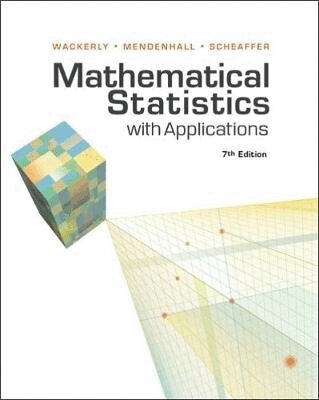
For junior/senior undergraduates taking probability and statistics as applied to engineering, science, or computer science.
This classic text provides a rigorous introduction to basic probability theory and statistical inference, with a unique balance between theory and methodology. Interesting, relevant applications use real data from actual studies, showing how the concepts and methods can be used to solve problems in the field. This revision focuses on improved clarity and deeper understanding.
1 224 kr
Skickas inom 10-15 vardagar
496 kr
Skickas
1 205 kr
Skickas inom 3-6 vardagar
224 kr
Skickas inom 3-6 vardagar
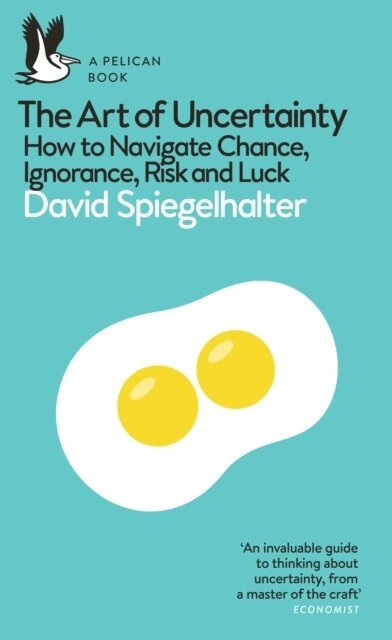
How dangerous is our diet? How much of sports falls into the realm of luck? When authorities categorize a given event as "highly likely"-how likely is that, really? Whether we're trying to decide if the benefits of a new medication are worth the chance of side effects or if artificial intelligence truly threatens humanity, our lives are riddled with uncertainties both everyday and existential-yet it can be difficult to know how to properly weigh all those unknowns. Luckily for us, renowned statistician David Spiegelhalter has spent his career dissecting data to resolve the apparently random and decode the many decisions we face with imperfect information. In The Art of Uncertainty, he shows how we can become better at dealing with what we don't know to make smarter choices in a world so full of puzzling variables.
In lucid, lively prose, Spiegelhalter guides us through the principles of probability, illustrating how they can help us think more analytically about everything from medical advice to sports to climate change forecasts. He demonstrates how taking a mathematical approach to phenomena we might otherwise attribute to fate or luck can help us sort hidden patterns from mere coincidences, better evaluate cause and effect, and predict what’s likely to happen in the future. Along the way, we learn how a misinterpretation of a probability contributed to the infamous Bay of Pigs fiasco, why a ship twice the size of the Titanic sank without a trace, and why we can be so confident that no two properly shuffled decks of cards have ever been in the same order.
Sparkling with wit and fascinating real-world examples, this is an essential guide to navigating uncertainty while also retaining the humility to admit what we don’t, or simply cannot, know.