• Fri frakt över 249 kr
  • •
  • Snabba leveranser
  • •
  • Billiga böcker
Kundservice

Du är på sajten för privatpersoner.

Företag, bibliotek eller offentlig verksamhet?

Du handlar på classic.bokus.com, där alla dina funktioner finns intakta.
Till classic.bokus.com
Bokus logotyp. Gå till startsidan.
  • Erbjudanden
  • Student
  • Topplistor
  • Barn & ungdom
  • Bokus Play
  • E-böcker
  • Ljudböcker
  • Pocketböcker
  • Spel och pussel

Pocketfynda! Hundratals böcker för 49 kr/st →

Sidfot

Mina sidor

    Hjälp

    • Kundservice
    • Vanliga frågor och svar
    • Frakt och leverans
    • Retur vid ångerrätt
    • Reklamera vara
    • Betalning
    • Köpvillkor
    • Allmänna villkor
    • Information om webbplatsens tillgänglighet

    Om Bokus

    • Om oss
    • Pressrum
    • För studenter
    • För företag
    • För bibliotek och offentlig verksamhet
    • För leverantörer
    • Hållbarhet

    Populärt

    • Aktuella erbjudanden
    • Presentkort
    • Studentlitteratur
    • Nya böcker
    • Topplistor
    • Signerade böcker
    • Engelska böcker

    Inspiration

    • Boktips
    • BookTok
    • Barnbokskaraktärer
    • Populära författare
    Logotyp för Bokus
    Följ oss på Facebook (extern länk)Följ oss på Instagram (extern länk)Följ oss på YouTube (extern länk)Följ oss på TikTok (extern länk)
    bokus @ CookiesAnpassa cookiesIntegritetspolicyKöpvillkor
    Till Citymail hemsida (extern länk)Till Budbee hemsida (extern länk)Till Postnord hemsida (extern länk)Till Schenker hemsida (extern länk)Till Early Bird hemsida (extern länk)Till Walleys hemsida (extern länk)
    1. Kultur
    2. Scenkonst och film
    3. Film

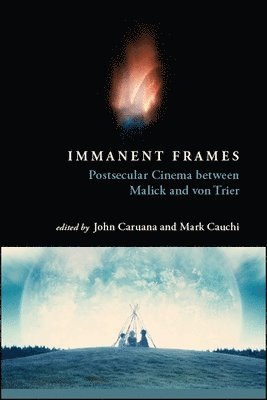
    Immanent Frames

    Postsecular Cinema between Malick and von Trier

    AvJohn Caruana,Mark Cauchi

    Inbunden, Engelska, 2018

    Del i serien SUNY series, Horizons of Cinema

    1 558 kr

    Beställningsvara. Skickas inom 5-8 vardagar. Fri frakt över 249 kr.

    Beskrivning

    Explores a growing number of films and filmmakers that challenge the strict boundaries between belief and unbelief.For some time now, thinkers across the humanities and social sciences have increasingly called into question the once-dominant view of the relationship between modernity and secularism, prompting some to speak of a "postsecular turn." Until now, film studies has largely been silent about this development, even though cinema itself has been a major vehicle for such reflection. This fact became inescapable in 2011 when Terrence Malick's The Tree of Life and Lars von Trier's Melancholia were released within days of each other. While these two audacious and controversial films present seemingly opposite perspectives-the former a thoughtful meditation on faith, the latter a portrayal of nontriumphalist atheism-together they raise critical questions about transcendence and immanence in modern life. These films are, however, only the most conspicuous of a growing body of works that call forth similar and related questions-what this collection aptly calls "postsecular cinema."Taking the nearly simultaneous release of The Tree of Life and Melancholia as its starting point and framing device, this pioneering collection sets out to establish the idea of postsecular cinema as a distinct body of films and a viable critical category. Adopting a film-philosophy approach, one group of essays examines Malick's and von Trier's films, while another looks at works by Chantal Akerman, Denys Arcand, the Dardenne brothers, and John Michael McDonagh, among others. The volume closes with two important interviews with Luc Dardenne and Jean-Luc Nancy that invite us to reflect more deeply on some of the central concerns of postsecular cinema.

    Produktinformation

    • Utgivningsdatum:2018-06-01
    • Mått:152 x 229 x 27 mm
    • Vikt:535 g
    • Format:Inbunden
    • Språk:Engelska
    • Serie:SUNY series, Horizons of Cinema
    • Antal sidor:306
    • Förlag:State University of New York Press
    • ISBN:9781438470177

    Utforska kategorier

    • Film inom Kultur
    • Filosofi inom Filosofi och religion

    Mer om författaren

    John Caruana is Associate Professor of Philosophy at Ryerson University. Mark Cauchi is Associate Professor in the Department of Humanities at York University.

    Recensioner i media

    "Immanent Frames stands out as a valuable response to an increasing tendency in recent films to tackle religious issues from an open-ended approach … this book will prove an important resource to scholars of religion and film, due to the rich variety of perspectives it encompasses as well as due to the thorough analyses it contains." — Journal of Religion and Film

    Innehållsförteckning

    • IllustrationsAcknowledgmentsWhat Is Postsecular Cinema? An IntroductionJohn Caruana and Mark CauchiPart I. The Poles of Postsecular Cinema: Malick and von Trier 1. Two Ways through Life: Postsecular Visions in Melancholia and The Tree of Life Robert Sinnerbrink2. Hegel, Malick, and the Postsecular SublimeLambert Zuidervaart3. Repetition and Belief: A Kierkegaardian Reading of Malick’s The Tree of Life John Caruana4. Toward and Away from the World: Subjectivity After Loss in The Tree of Life Steven Rybin5. The Death of God and the Genesis of Worldhood in von Trier’s Melancholia Mark Cauchi6. Notes on Divine Homelessness: A Reading of Lars von Trier’s Dogville Costica BradatanPart II. The Spectrum of Postsecular Cinema: Beyond Malick and von Trier 7. Face to Face with Chantal AkermanWilliam Rothman8. "There’s No Point in Killing a Bad Priest": John Michael McDonagh’s Calvary and theBroken MiddleCatherine Wheatley9. The Immortal Thighs of Ines Orsini: The Transcendence of Grace in Denys Arcand’s The Barbarian Invasions Russell J. A. Kilbourn10. Three Immersions: Mouchette, Vagabond, Rosetta Charles Warren11. "Put Yourself in My Place": Two Days, One Night and the Journey Back to LifeSarah CooperPart III. Conversations on Postsecular Cinema: Luc Dardenne and Jean-Luc Nancy 12. Can We Think the Inconsolable without Consolation? An Interview with Luc DardenneLuc Dardenne13. Could It Be that Cinema Itself Is Contemporaneity? A Conversation with Jean-Luc NancyJean-Luc NancyContributorsIndex