America Between the Wars, 1919-1941
A Documentary Reader
Häftad, Engelska, 2011
Del 8 i serien Uncovering the Past: Documentary Readers in American History
542 kr
Beställningsvara. Skickas inom 5-8 vardagar. Fri frakt över 249 kr.
Beskrivning
This collection situates over seventy essential primary documents in their historical context to illustrate the American experience during the interwar era (1919-1941). Introduces a broad range of cultural and historical topics, from race and the role of women to trends in literature and the Great DepressionIncludes a range of photographs and illustrationsEnd-of-chapter questions encourage critical thinking and analysis, while a bibliography prepares students for further research
Produktinformation
- Utgivningsdatum:2011-12-30
- Mått:152 x 229 x 14 mm
- Vikt:362 g
- Format:Häftad
- Språk:Engelska
- Serie:Uncovering the Past: Documentary Readers in American History
- Antal sidor:280
- Förlag:John Wiley and Sons Ltd
- ISBN:9781444338973
Utforska kategorier
Mer om författaren
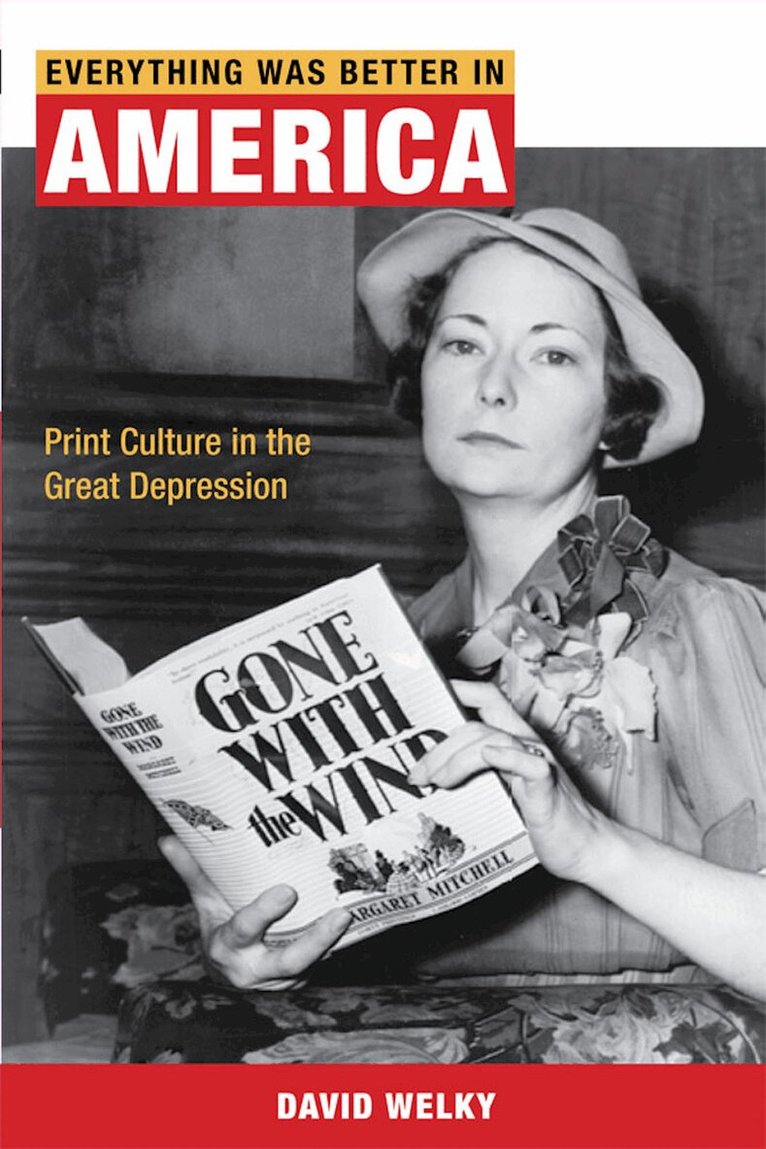
David Welky is Associate Professor of History at the University of Central Arkansas. He has written extensively on the history of film, sports, mass media, and popular culture in the 1920s and 1930s. His previous books include Thousand-Year Flood: The 1937 Ohio-Mississippi Disaster (2011), The Moguls and the Dictators: Hollywood and the Coming of World War II (2008), Everything Was Better in America: Print Culture in the Great Depression (2008) and Charles A. Lindbergh: The Power and Peril of Celebrity, 1927-1941 (edited with Randy Roberts, 2003).
Innehållsförteckning
- List of Illustrations ix Series Editors' Preface xSource Acknowledgments xiiIntroduction 1Chapter 1 Challenges to Postwar Readjustment 101 W. E. B. DuBois, "Returning Soldiers," 1919 102 Jack Gaveel, Workers Need to Radicalize, 1919 123 A. Mitchell Palmer on Communism in America, 1920 154 Warren Harding, “Readjustment,” 1920 185 Charlotte Perkins Gilman, Immigration Hurts America, 1923 20Chapter 2 Social Battles of the 1920s 241 Grand Dragon Hiram Evans on the Klan and Americanism, 1926 242 "The Menace of Fundamentalism," 1925 303 Edwin E. Slosson, "The Futility of Anti-Prohibition," 1920 324 "Why Boston Wishes to Hang Sacco and Vanzetti," 1927 34Chapter 3 The New Negro 381 Floyd J. Calvin, Criticizing Southern Lynching, 1923 382 Marcus Garvey Addresses UNIA Supporters in Philadelphia, 1919 413 Alain Locke, "Harlem," 1925 434 Pace Phonograph Corporation, Supporting Black Businesses, 1921 475 Zora Neale Hurston, "How It Feels to Be Colored Me," 1928 496 Aaron Douglas, Aspects of Negro Life, 1934 and Into Bondage, 1936 52Chapter 4 New Trends in Literature 551 Edna St. Vincent Millay, "Spring," 1920 552 Sinclair Lewis, Main Street, 1920 563 Countee Cullen, "Heritage," 1925 614 Nella Larsen, Quicksand, 1928 65Chapter 5 Women in the 1920s 701 Viola I. Paradise, Housekeeping and Childcare in Rural Montana, 1919 702 Letters from Mothers to the Children's Bureau, 1920–7 743 Crystal Eastman, Radical Feminism, 1920 764 Margaret Sanger Defends Birth Control, 1923 795 Advertisement for Lysol Disinfectant: Tradition Meets the New Woman, 1928 82Chapter 6 Mass Culture 851 Bruce Bliven, Radio's Promise and Pitfalls, 1924 852 Cartoons Celebrating Charles Lindbergh's Transatlantic Flight, 1927 893 Motion Pictures in Middletown, 1929 914 John R. Tunis on College Football, 1928 945 Paul Gallico Discusses the Relevance of Babe Ruth, 1932 97Chapter 7 The Onset of the Great Depression 1021 Paul Abbot on the National Economy, 1929 1022 New York Times, First Day of the Crash, 1929 1073 Herbert Hoover Speaks to the Press about the Economy, 1929 1104 Calvin Coolidge, A Bright Economic Future If We Stay the Course, 1932 111Chapter 8 To Fear or Not to Fear 1161 Walter Lippmann, Candidate Franklin Roosevelt, 1932 1162 Herbert Hoover, The Proposed New Deal Will Ruin Us, 1932 1193 Franklin Roosevelt's Fireside Chat on Banking, 1933 1224 Cartoon Celebrating the National Recovery Administration, 1933 126Chapter 9 Voices from the Great Depression 1291 Clarence Lee, Riding the Rails during the Great Depression, 1999 1292 Ann Marie Low, Farming in the Dust Bowl, 1930–2 1323 John L. Spivak, Migrant Farm Workers, 1934 1364 Howard Kester, The Southern Tenant Farmers Union's "Ceremony of the Land," 1937 141Chapter 10 The New Deal: Critics and Limitations 1461 James P. Cannon, In Support of Unionization, 1934 1462 Huey Long, "Every Man a King," 1934 1483 Raymond E. Click to Franklin Roosevelt, The New Deal Means Socialism, 1935 1524 The Saturday Evening Post Attacks Intrusive Government, 1935 1535 Cartoons Denouncing the Court-Packing Plan, 1937 155Chapter 11 People of Color in the Age of Roosevelt 1591 Herman J. D. Carter, An Injustice at Scottsboro, 1933 1592 James R. Reid, Joe Louis: African American Hero, 1938 1613 John Collier on A New Deal for Native Americans, 1938 1634 Eva Lowe (Chen Junqi) Describes Chinese American Life during the Depression, 1982 1665 Luisa Moreno, Latinos and American Identity, 1940 169Chapter 12 Women in the New Deal Era 1741 Babe Didrikson: Viking Girl, 1932 1742 Meridel Le Sueur, "I Was Marching," 1934 1783 Bruce Gould and Beatrice Blackmar Gould, A Modern Marriage, 1937 1824 Eleanor Roosevelt, "My Day," 1937, 1939 1835 Letters from African American Women to the Federal Government, 1935–41 1876 Dorothea Lange, Photos of Women Surviving Hard Times, 1939 192Chapter 13 Raising the Walls in Turbulent Times 1971 Henry Cabot Lodge Denounces the Proposed League of Nations, 1919 1972 Harry Elmer Barnes, World War I Was a Mistake, 1926 2003 Calvin Coolidge, Address to Congress Regarding the Invasion of Nicaragua, 1927 2044 The Sinking of the Panay, 1937 206Chapter 14 The Great Debate: America Encounters World War II 2111 Franklin Roosevelt's Neutrality Message, 1939 2112 Charles Lindbergh, America is Drifting toward War, 1940 2143 Franklin Roosevelt, Fireside Chat on "An Arsenal of Democracy," 1940 2174 A. Philip Randolph Calls for a March on Washington, 1941 2225 Franklin Roosevelt Declares an Unlimited National Emergency, 1941 225Chapter 15 Popular Culture and the Great Debate 2281 Will Hays, The Motion Picture in a Changing World, 1940 2282 Henry R. Luce, America and the War, 1940 2303 Edward R. Murrow, This is London, 1940 2344 War and Consumerism: Advertisements from Time Magazine, 1941 2385 Harry Warner's Testimony to a Senate Subcommittee on War Propaganda in Film, 1941 243Bibliography 247Index 257
Hoppa över listan


Mer från samma författare
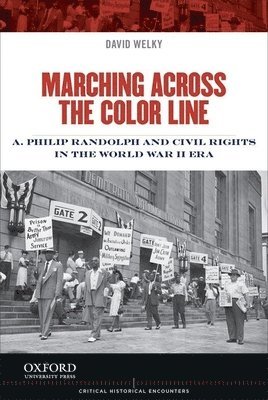
Marching Across the Color Line: A. Philip Randolph and Civil Rights in the World War II Era
David Welky
Häftad
473 kr