• Fri frakt över 249 kr
  • •
  • Snabba leveranser
  • •
  • Billiga böcker
Kundservice

Du är på sajten för privatpersoner.

Företag, bibliotek eller offentlig verksamhet?

Du handlar på classic.bokus.com, där alla dina funktioner finns intakta.
Till classic.bokus.com
Bokus logotyp. Gå till startsidan.
  • Erbjudanden
  • Nyheter
  • Student
  • Topplistor
  • Barn & ungdom
  • Bokus Play
  • E-böcker
  • Pocketböcker
  • Spel & pussel

10% rabatt på allt med kod: NYSTART10 →

Sidfot

Mina sidor

    Hjälp

    • Kundservice
    • Vanliga frågor och svar
    • Frakt och leverans
    • Retur vid ångerrätt
    • Reklamera vara
    • Betalning
    • Köpvillkor
    • Allmänna villkor
    • Information om webbplatsens tillgänglighet

    Om Bokus

    • Om oss
    • Pressrum
    • För studenter
    • För företag
    • För bibliotek och offentlig verksamhet
    • För leverantörer
    • Hållbarhet

    Populärt

    • Aktuella erbjudanden
    • Presentkort
    • Studentlitteratur
    • Nya böcker
    • Topplistor
    • Signerade böcker
    • Engelska böcker

    Inspiration

    • Boktips
    • BookTok
    • Populära bokserier
    • Barnbokskaraktärer
    • Populära författare
    Logotyp för Bokus
    Följ oss på Facebook (extern länk)Följ oss på Instagram (extern länk)Följ oss på YouTube (extern länk)Följ oss på TikTok (extern länk)
    bokus @ CookiesAnpassa cookiesIntegritetspolicyKöpvillkor
    Till Citymail hemsida (extern länk)Till Budbee hemsida (extern länk)Till Postnord hemsida (extern länk)Till Schenker hemsida (extern länk)Till Early Bird hemsida (extern länk)Till Walleys hemsida (extern länk)
    1. Samhälle och politik
    2. Samhälle och kultur
    3. Kultur och medier
    4. Kulturvetenskap

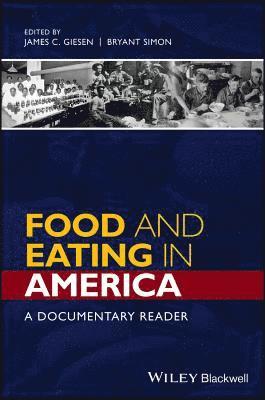
    Food and Eating in America

    A Documentary Reader

    AvJames C. Giesen,Bryant Simon

    Häftad, Engelska, 2018

    Del i serien Uncovering the Past: Documentary Readers in American History

    590 kr

    Beställningsvara. Skickas inom 5-8 vardagar. Fri frakt över 249 kr.

    Beskrivning

    Guides students through a rich menu of American history through food and eatingThis book features a wide and diverse range of primary sources covering the cultivation, preparation, marketing, and consumption of food from the time before Europeans arrived in North America to the present-day United States. It is organized around what the authors label the “Four P’s”—production, politics, price, and preference—in order to show readers that food represents something more than nutrition and the daily meals that keep us alive. The documents in this book demonstrate that food we eat is a “highly condensed social fact” that both reflects and is shaped by politics, economics, culture, religion, region, race, class, and gender.Food and Eating in America covers more than 500 years of American food and eating history with sections on: An Appetizer: What Food and Eating Tell Us About America; Hunting, Harvesting, Starving, and the Occasional Feast: Food in Early America; Fields and Foods in the Nineteenth Century; Feeding a Modern World: Revolutions in Farming, Food, and Famine; and Counterculture Cuisines and Culinary Tourism. Presents primary sources from a wide variety of perspectives—Native Americans, explorers, public officials, generals, soldiers, slaves, slaveholders, clergy, businessmen, workers, immigrants, activists, African Americans, Hispanics, Asian Americans, artists, writers, investigative reporters, judges, the owners of food trucks, and prison inmatesIllustrates the importance of eating and food through speeches, letters, diaries, memoirs, newspaper and magazine articles, illustrations, photographs, song lyrics, advertisements, legislative statutes, court rulings, interviews, manifestoes, government reports, and recipesOffers a new way of exploring how people lived in the past by looking closely and imaginatively at foodFood and Eating in America: A Documentary Reader is an ideal book for students of United States history, food, and the social sciences. It will also appeal to foodies and those with a curiosity for documentary-style books of all kinds.

    Produktinformation

    • Utgivningsdatum:2018-03-16
    • Mått:152 x 229 x 18 mm
    • Vikt:499 g
    • Format:Häftad
    • Språk:Engelska
    • Serie:Uncovering the Past: Documentary Readers in American History
    • Antal sidor:352
    • Förlag:John Wiley and Sons Ltd
    • ISBN:9781118936399

    Utforska kategorier

    • Kulturvetenskap inom Samhälle och politik
    • Socialhistoria och kulturhistoria inom Historia och arkeologi
    • Amerikas historia inom Historia och arkeologi

    Innehållsförteckning

    • Series Editors’ Preface xiiSeries Editors’ Preface xiiPart I: An Appetizer: What Food and Eating Tell Us About America 1Part II: Hunting, Harvesting, Starving, and the Occasional Feast: Food in Early America 9Chapter 1 Food in the New World: Pre]Columbian Era through the American Revolution 11Document 1.1: The Cherokee Creation Story, “How the World Was Made, Wahnenauhi Version” 11Document 1.2: John Smith’s History of the Starving Times at Jamestown Colony (1609) 13Document 1.3: English Artist John White’s drawings of Native Americans fishing, cooking, and preparing corn (1580s) 15Document 1.4: Edward Winslow on the “First” Thanksgiving, 1621 18Document 1.5: A Micmac Perspective on Europeans’ Way of Life, near Quebec (c. 1677) 21Document 1.6: John Winthrop, Jr., Report to the Royal Society of London on Indian Corn (1662) 23Document 1.7: Observations on American Vegetables Versus English Vegetables, from John Josselyn, New]England’s Rarities Discovered (1672), and Francis Higginson, New]England’s Plantation (1630) 25Document 1.8: A Soldier’s Perspective on the Revolutionary War, Selections from the Memoir of Private Joseph Plumb Martin (1777) 27Document 1.9: A General’s Perspective: A Letter from General Horatio Gates to Major General Caswell (August 3, 1780) 30Document 1.10: Selections from The Autobiography of Benjamin Franklin (1791) on Communal Eating and Vegetarianism 31Chapter 2 Food, Foodways, and Conflict in the Early Republic 34Document 2.1: Amelia Simmons, American Cookery (1796), “Preface,” and Selected Recipes 34Document 2.2: The Preface, Introduction, and Assorted Recipes from Mary Randolph, The Virginia House]Wife (1824) 36Document 2.3: Unidentified artist, Benjamin Hawkins and the Creek Indians (Painting, c. 1805) 41Document 2.4: John Lewis Krimmel, The Quilting Frolic (Painting, 1813) 42Document 2.5: Excerpt from Joseph Doddridge, Notes on the Settlement and Indian Wars of the Western Parts of Pennsylvania and Virginia (1824), Chapter 5, “Beasts and Birds” 44Document 2.6: Selections from English Phrenologist George Combe, Notes on the United States During a Phrenological Visit in 1838–9–40, vol. II. (1841) 45Document 2.7: A Variation of the Lyrics of “Home Sweet Home,” a Popular Song of the Early Republic (c. 1830) 47Part III: Fields and Foods in the Nineteenth Century 49Chapter 3 Slavery and Food in the Old South 51Document 3.1: Selections from Frederick Douglass, Memoirs on Food and Slavery (1845) 51Document 3.2: Excerpts from Harriet Jacobs, Incidents in the Life of a Slave Girl (1861) on Slaves’ Weekly Rations, Punishments for Slaves’ Stealing Food from Master, and Slave Taste Testers for Master 55Document 3.3: Images of the Antebellum South 56Document 3.4: Excerpts from Daniel R. A. C. Hundley, Social Relations in Our Southern States (1860) 59Document 3.5: Selections from Planter James Battle Avirett, The Old Plantation: How We Lived in Great House and Cabin Before the War (1901) 62Document 3.6: Excerpts from William H. Robinson, From Log Cabin to the Pulpit, or Fifteen Years in Slavery (1913) 65Document 3.7: Excerpts from Allen Parker, Recollections of Slavery Times (1895) 67Chapter 4 Agriculture and Food in the Age of Reform 70Document 4.1: Advice on Farm Management, from The New England Farmer and Horticultural Journal (1828) 70Document 4.2: Selections from Medicus, The Oracle of Health and Long Life Containing Plain and Practical Instructions for the Preservation of Sound Health…(1837) 72Document 4.3: Selections from Lydia Maria Child, The American Frugal Housewife (1829) 75Document 4.4: Excerpts from Sylvester Graham, “A Defence of the Graham System of Living” (1837) 77Document 4.5: The Mormon “Word of Wisdom” (1833) 82Document 4.6: Political Cartoon: “A Member of the Temperance Society” (c. 1833) 84Document 4.7: Family Dietary Advice from William Andrus Alcott, The Young Wife (1837) 85Chapter 5 Food on the Frontier 88Document 5.1: Thomas Jefferson’s Agrarian Ideal, from Notes on the State of Virginia (1785) 88Document 5.2: Excerpt from Judge William Cooper, A Guide in the Wilderness (1810) 91Document 5.3: Food in the West with Lewis and Clark (From their Journals, 1804) 92Document 5.4: Selections from The Diary of Patrick Breen (1846) 96Document 5.5: Gold Rush Food: Selections from Lansford W. Hastings, The Emigrants’ Guide to Oregon and California (1845) and Elisha Douglas Perkins, Gold Rush Diary (1849) 98Document 5.6: Advertisement for Cyrus McCormick’s Mechanical Reaper (1846) 101Chapter 6 The Civil War (1861–1865) 103Document 6.1: Selections from the Diary of Louis Léon (CSA) 103Document 6.2: The Confederate Right to Impress Food, a selection from “A Bill to Provide Supplies for the Army and to Prescribe the Mode of Making Impressments” (1864) 105Document 6.3: Photograph of Hardtack 106Document 6.4: “A Dangerous Novelty in Memphis,” cartoon by Frank Bellew, Harper’s Weekly (1862) 107Document 6.5: Photographs of Prisoners Liberated from Confederate Prisons (1865) 109Chapter 7 Food Reborn: Immigration, Urbanization, and Eating (1857–1905) 111Document 7.1: Observations of Food and Cooking in Texas: Frederick Law Olmsted, A Journey Through Texas (1857) 111Document 7.2: Documents on Irish Immigration from Mary Anne Sadlier, Bessy Conway; or, The Irish Girl in America (1885) and John O’Hanlon, The Irish Emigrant’s Guide for the United States (1861) 113Document 7.3: Recipes for “Broth in haste,” “Cheap white,” and “Tongue, Braised, with Aspic Jelly,” from Lafcadio Hearn, Creole Cookbook (1887) 116Document 7.4: Platform of the Populist Party (1892) 118Document 7.5: Cooking Utensils for Sale in the 1912 Sears, Roebuck and Co. Catalog 119Document 7.6: Ernest H. Crosby, Letter to The New York Times on Vegetarianism (1905) 121Part IV: Feeding a Modern World: Revolutions in Farming, Food, and Famine 125Chapter 8 The Progressive Era and Food 127Document 8.1: Samuel Gompers, Meat vs. Rice: American Manhood Against Asiatic Coolieism, Which Shall Survive (1901) 127Document 8.2: The Pure Food and Drug Act of 1906 (1906) 129Document 8.3: “Riots in Newark Over Meat Boycott,” The New York Times (1910) 132Document 8.4: “Girls’ Canning Clubs” from the Wyoming Farm Bulletin (1914) 135Document 8.5: Lyrics to the Song, “Hoover’s Goin’ to Get You!” (1918) 137Document 8.6: Excerpts from Christine Frederick, “The New Housekeeping,” Ladies’ Home Journal (1912) 139Document 8.7: LuAnn Jones, “Work Was My Pleasure: An Oral History of Nellie Stancil Langley” (1991) 146Document 8.8: “HOT Hamburger: Just Off the Griddle” (1926) 149Chapter 9 The Great Depression 151Document 9.1: Oscar Heline, farmer from Iowa, interviewed by Studs Terkel in Hard Times (1970) 151Document 9.2: John Steinbeck, “The Harvest of Gypsies,” San Francisco Chronicle (1936) 155Document 9.3: Excerpt from Kathy Mays Smith, Gold Medal: CCC Company 1538, A Documentary (2001) 160Document 9.4: Lynn]Pgh, Recipe for “Depression Cake” (circa 1935) 162Document 9.5: President Franklin D. Roosevelt, “Address” (1935) 163Chapter 10 World War II and the Food and Government Revolution 170Document 10.1: Office of Price Administration, “How to Use Your War Ration Book” (1943) 170Document 10.2: Clive McCay, “Eat Well to Work Well: The Lunch Box Should Carry a Hearty Meal,” in War Emergency Bulletin No. 38 (1942) 172Document 10.3: World War II Era Advertisement, “Have a ‘Coke’ = Good Winds Have Blown You Here” (1943) 175Document 10.4: “The Official Bracero Agreement,” For the Temporary Migration of Mexican Agricultural Workers to the United States (1942) 178Document 10.5: Excerpt from Jeanne Wakatsuki Houston and James D. Houston, Farewell to Manzanar (1973), 35–38 183Chapter 11 The Postwar Food Revolution(s) of Suburban America 187Document 11.1: Photograph of Super Giant Supermarket, Rockville, Maryland (1964) 187Document 11.2: Excerpt from Emily Post, “Restaurant Etiquette” in Etiquette: The Blue Book of Social Usage (1957) 189Document 11.3: Excerpt from Rachel Carson, Silent Spring (1962) 196Document 11.4: Swanson Advertisement, “Everybody Wins” (1963) 201Document 11.5: Excerpts from Norman Borlaug’s lecture “The Green Revolution, Peace, and Humanity,” Delivered Upon Receiving the Nobel Peace Prize (1970) 203Document 11.6: Margaret Visser, “A Meditation on the Microwave,” Psychology Today (1989) 212Chapter 12 Eating Civil Rights 217Document 12.1: Announcement of New Segregated Restaurant Law, Birmingham Age]Herald (1914) 217Document 12.2: Mississippi Freedom Democratic Party, “Food for Fight for Freedom” (1965) 219Document 12.3: Black Panther Party, “To Feed Our Children,” The Black Panther (1969) 224Document 12.4: Eliseo Medina, “Why A Grape Boycott?” (circa 1969) 226Document 12.5: Ralph Johnson and Patricia Reed, “What’s Wrong with Soul Food,” The Black Collegian (1981) 230Document 12.6: “Marlon Brando, S.F. Cleric Arrested for Fishing Illegally,” Seattle Daily Times (1964) 233Document 12.7: Vietnamese Fishermen’s Association, et al., Plaintiffs, v. The Knights of the Ku Klux Klan, et al., Defendants. Civ. A. No. H]81]895. United States District Court, S. D. Texas, Houston Division (1981) 236Document 12.8: Press Release: “T.G.I. Friday’s® to Bring ‘Magic’ Brand of Restaurants to Urban Communities” (1998) 245Chapter 13 The Counterculture and the Lunch Counter 248Document 13.1: Excerpts from Gordon and Phyllis Grabe, The Hippie Cookbook or Don’t Eat Your Food Stamps (1970) 248Document 13.2: Kit Leder, “Women in the Communes,” Women: A Journal of Liberation (1969) 251Document 13.3: Excerpt from Carol Adams, The Sexual Politics of Meat: A Feminist]Vegetarian Critical Theory, 20th Anniversary Edition (2010) 255Document 13.4: Hanna Rosin, “The Evil Empire: The Scoop on Ben & Jerry’s Crunchy Capitalism,” The New Republic (1995) 257Document 13.5: Bryant Simon, “Why Starbucks Lost its Mojo,” Christian Science Monitor (2005) 262Chapter 14 Cheap Food, Cheap Calories 266Document 14.1: Centers for Disease Control Maps of the Obesity Trend in the United States (1985–2010) 266Document 14.2: Excerpt from Judge Robert Sweet Opinion in Pelman v. McDonald’s Corp. (2003) 268Document 14.3: Michael Pollan, “Down on the Industrial Organic Farm,” The New York Times Magazine (2001) 275Document 14.4: Avi Solomon, “Working Undercover in a Slaughterhouse: An Interview with Timothy Pachirat,” Boing, Boing (2008) 281Document 14.5: Statement of Sarah C. White, Member, United Food and Commercial Workers Local 1529 (1990) 286Document 14.6: Excerpt from Sarah Wu, also known as “Mrs. Q.,” Fed Up with Lunch: How One Anonymous Teacher Revealed the Truth about School Lunches—And How We Can Change Them! (2011) 287Document 14.7: Excerpt from “Fat Liberation Manifesto” (1973) 293Chapter 15 Foodies and the Complexities of Consumption 297Document 15.1: Menu from Spago Restaurant (1987) 297Document 15.2: Andrew Chan, “‘La Grande Bouffe’: Cooking Shows as Pornography,” Gastronomica (2003) 299Document 15.3: Rabbi Nahum Ward-Lev and Shelley Mann-Lev, “Keeping Eco]kosher” (1990) 303Document 15.4: Mill Creek Farm’s Mission Statement and Values (2017) 306Document 15.5: Excerpt from Gustavo Arellano, Taco USA: How Mexican Food Conquered America (2014) 309Document 15.6: Rachel Kuo, “The Feminist Guide to Being a Foodie Without Being Culturally Appropriative,” from everydayfeminism.com (2015) 312Document: 15.7: Photograph of People Waiting for Korean Tacos from the Kogi Truck, Torrance, CA (2009) 319Document 15.8: Greg Wright, “French Fries, Mais Non, Congress Calls em ‘Freedom Fries’,” USA Today (2003) 320Document 15.9: Kayleigh Rogers, “When Prison Food is Punishment,” from the blog Motherboard (2015) 323Index 328