Bryant Simon - Böcker
Visar alla böcker från författaren Bryant Simon. Handla med fri frakt och snabb leverans.
12 produkter
12 produkter
832 kr
Skickas inom 5-8 vardagar
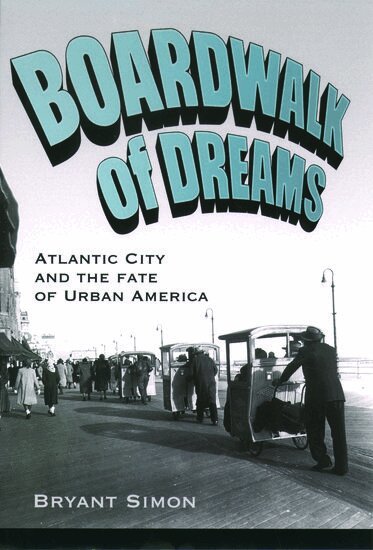
During the first half of the twentieth century, Atlantic City was the nation's most popular middle-class resort--the home of the famed Boardwalk, the Miss America Pageant, and the board game Monopoly. By the late 1960s, it had become a symbol of urban decay and blight, compared by journalists to bombed-out Dresden and war-torn Beirut. Several decades and a dozen casinos later, Atlantic City is again one of America's most popular tourist spots, with thirty-five million visitors a year. Yet most stay for a mere six hours, and the highway has replaced the Boardwalk as the city's most important thoroughfare. Today the city doesn't have a single movie theater and its one supermarket is a virtual fortress protected by metal detectors and security guards.In this wide-ranging book, Bryant Simon does far more than tell a nostalgic tale of Atlantic City's rise, near death, and reincarnation. He turns the depiction of middle-class vacationers into a revealing discussion of the boundaries of public space in urban America. In the past, he argues, the public was never really about democracy, but about exclusion. During Atlantic City's heyday, African Americans were kept off the Boardwalk and away from the beaches. The overly boisterous or improperly dressed were kept out of theaters and hotel lobbies by uniformed ushers and police. The creation of Atlantic City as the "Nation's Playground" was dependent on keeping undesirables out of view unless they were pushing tourists down the Boardwalk on rickshaw-like rolling chairs or shimmying in smoky nightclubs.Desegregation overturned this racial balance in the mid-1960s, making the city's public spaces more open and democratic, too open and democratic for many middle-class Americans, who fled to suburbs and suburban-style resorts like Disneyworld. With the opening of the first casino in 1978, the urban balance once again shifted, creating twelve separate, heavily guarded, glittering casinos worlds walled off from the dilapidated houses, boarded-up businesses, and lots razed for redevelopment that never came. Tourists are deliberately kept away from the city's grim reality and its predominantly poor African American residents. Despite ten of thousands of buses and cars rolling into every day, gambling has not saved Atlantic City or returned it to its glory days.Simon's moving narrative of Atlantic City's past points to the troubling fate of urban America and the nation's cultural trajectory in the twentieth century, with broad implications for those interested in urban studies, sociology, planning, architecture, and history.
342 kr
Skickas inom 5-8 vardagar
During the first half of the twentieth century, Atlantic City was the nation's most popular middle-class resort--the home of the famed Boardwalk, the Miss America Pageant, and the board game Monopoly. By the late 1960s, it had become a symbol of urban decay and blight, compared by journalists to bombed-out Dresden and war-torn Beirut. Several decades and a dozen casinos later, Atlantic City is again one of America's most popular tourist spots, with thirty-five million visitors a year. Yet most stay for a mere six hours, and the highway has replaced the Boardwalk as the city's most important thoroughfare. Today the city doesn't have a single movie theater and its one supermarket is a virtual fortress protected by metal detectors and security guards.In this wide-ranging book, Bryant Simon does far more than tell a nostalgic tale of Atlantic City's rise, near death, and reincarnation. He turns the depiction of middle-class vacationers into a revealing discussion of the boundaries of public space in urban America. In the past, he argues, the public was never really about democracy, but about exclusion. During Atlantic City's heyday, African Americans were kept off the Boardwalk and away from the beaches. The overly boisterous or improperly dressed were kept out of theaters and hotel lobbies by uniformed ushers and police. The creation of Atlantic City as the "Nation's Playground" was dependent on keeping undesirables out of view unless they were pushing tourists down the Boardwalk on rickshaw-like rolling chairs or shimmying in smoky nightclubs.Desegregation overturned this racial balance in the mid-1960s, making the city's public spaces more open and democratic, too open and democratic for many middle-class Americans, who fled to suburbs and suburban-style resorts like Disneyworld. With the opening of the first casino in 1978, the urban balance once again shifted, creating twelve separate, heavily guarded, glittering casinos worlds walled off from the dilapidated houses, boarded-up businesses, and lots razed for redevelopment that never came. Tourists are deliberately kept away from the city's grim reality and its predominantly poor African American residents. Despite ten of thousands of buses and cars rolling into every day, gambling has not saved Atlantic City or returned it to its glory days.Simon's moving narrative of Atlantic City's past points to the troubling fate of urban America and the nation's cultural trajectory in the twentieth century, with broad implications for those interested in urban studies, sociology, planning, architecture, and history.
367 kr
Kommande
Public toilets determine who gets everyday dignity, freedom of movement, and civic belonging—and who doesn’t.Americans have nowhere to go. Nationwide, countless public spaces lack one crucial thing: bathrooms, never mind ones that are safe and functional. Yet in the past, political leaders celebrated the opening of public bathrooms with boisterous press conferences and showy ribbon-cutting ceremonies.For Customers Only is the first book to tell the larger history of public bathrooms in the United States, a fascinating story characterized by persistent discrimination, squeamishness about unknown bodies, and disinvestment in public amenities. Acclaimed writer and historian Bryant Simon argues that restrooms aren’t only an architectural feature, but an emblem of control and inequality. In the late nineteenth century, cities vied for the newest and biggest comfort stations to meet the demands of their bustling economies and accommodate a broad and growing public. They built restrooms with gold-domed entrances and ornamented stall doors to inspire cleanliness and order.But officials soon grew anxious about who might take advantage of this privacy: gay men, the unhoused, and eventually drug users. And as the civil rights movement challenged segregation, officials in the north and south closed public toilets rather than integrate them. By the end of the twentieth century, only people with means could use private bathrooms while out and about—provided they made a purchase at a business. Today, as the fights over trans rights reveal, bathroom access remains a flash point across the country. Meanwhile, some municipalities are again calling for widely available public toilets, but as a tool for economic revitalization, not a public necessity.The political and cultural history of a squirm-inducing subject, For Customers Only reveals the real and symbolic power of the most ordinary of things. Bathrooms, Simon shows, have always reflected our fragmented national values. Whether these spaces will ever become more accessible and inclusive is ultimately up to us.
242 kr
Skickas inom 7-10 vardagar
"Everything But the Coffee" casts a fresh eye on the world's most famous coffee company, looking beyond baristas, movie cameos, and Paul McCartney CDs to understand what Starbucks can tell us about America. Bryant Simon visited hundreds of Starbucks around the world to ask, Why did Starbucks take hold so quickly with consumers? What did it seem to provide over and above a decent cup of coffee? Why at the moment of Starbucks' profit-generating peak did the company lose its way, leaving observers baffled about how it might regain its customers and its cultural significance? "Everything But the Coffee" probes the company's psychological, emotional, political, and sociological power to discover how Starbucks' explosive success and rapid deflation exemplify American culture at this historical moment. Most importantly, it shows that Starbucks speaks to a deeply felt American need for predictability and class standing, community and authenticity, revealing that Starbucks' appeal lies not in the product it sells but in the easily consumed identity it offers.
841 kr
Skickas inom 3-6 vardagar
White supremacy shaped all aspects of post-Civil War southern life, yet its power was never complete or total. The form of segregation and subjection nicknamed Jim Crow constantly had to remake itself over time even as white southern politicians struggled to extend its grip. Here, some of the most innovative scholars of southern history question Jim Crow's sway, evolution, and methods over the course of a century. These essays bring to life the southern men and women--some heroic and decent, others mean and sinister, most a mixture of both--who supported and challenged Jim Crow, showing that white supremacy always had to prove its power. Jim Crow was always in motion, always adjusting to meet resistance and defiance by both African Americans and whites. Sometimes white supremacists responded with increased ferocity, sometimes with more subtle political and legal ploys. Jumpin' Jim Crow presents a clear picture of this complex negotiation. For example, even as some black and white women launched the strongest attacks on the system, other white women nurtured myths glorifying white supremacy.Even as elite whites blamed racial violence on poor whites, they used Jim Crow to dominate poor whites as well as blacks. Most important, the book portrays change over time, suggesting that Strom Thurmond is not a simple reincarnation of Ben Tillman and that Rosa Parks was not the first black woman to say no to Jim Crow. From a study of the segregation of household consumption to a fresh look at critical elections, from an examination of an unlikely antilynching campaign to an analysis of how miscegenation laws tried to sexualize black political power, these essays about specific southern times and places exemplify the latest trends in historical research. Its rich, accessible content makes Jumpin' Jim Crow an ideal undergraduate reader on American history, while its methodological innovations will be emulated by scholars of political history generally. In addition to the editors, the contributors are Edward L. Ayers, Elsa Barkley Brown, W. Fitzhugh Brundage, Laura F. Edwards, Kari Frederickson, David F. Godshalk, Grace Elizabeth Hale, Jacquelyn Dowd Hall, Stephen Kantrowitz, Nancy MacLean, Nell Irwin Painter, and Timothy B. Tyson.
460 kr
Skickas inom 10-15 vardagar
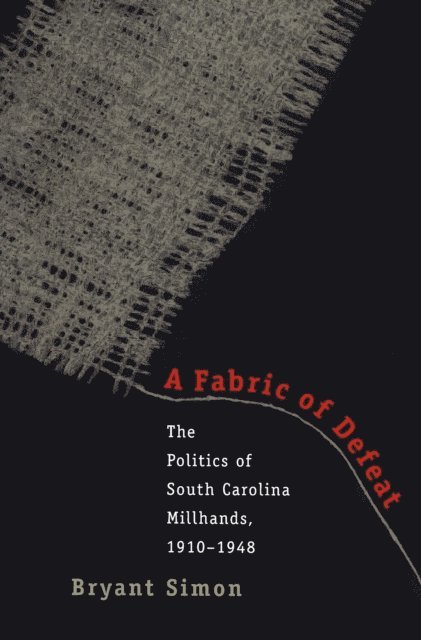
In this book, Bryant Simon brings to life the politics of white South Carolina millhands during the first half of the twentieth century. His revealing and moving account explores how this group of southern laborers thought about and participated in politics and public power. Taking a broad view of politics, Simon looks at laborers as they engaged in political activity in many venues--at the polling station, on front porches, and on the shop floor--and examines their political involvement at the local, state, and national levels. He describes the campaign styles and rhetoric of such politicians as Coleman Blease and Olin Johnston (himself a former millhand), who eagerly sought the workers' votes. He draws a detailed picture of mill workers casting ballots, carrying placards, marching on the state capital, writing to lawmakers, and picketing factories. These millhands' politics reflected their public and private thoughts about whiteness and blackness, war and the New Deal, democracy and justice, gender and sexuality, class relations and consumption. Ultimately, the people depicted here are neither romanticized nor dismissed as the stereotypically racist and uneducated ""rednecks"" found in many accounts of southern politics. Southern workers understood the political and social forces that shaped their lives, argues Simon, and they developed complex political strategies to deal with those forces. |Brings to life the politics of white South Carolina millhands from 1920 to 1945. Examines laborers as they engaged in political activity and shows how their politics reflected their public and private opinions.
1 189 kr
Skickas inom 7-10 vardagar
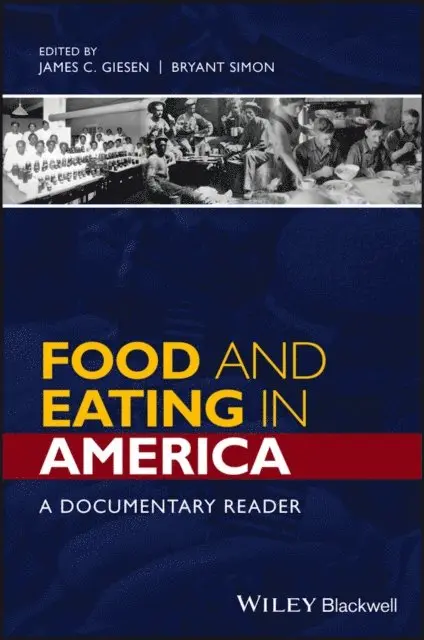
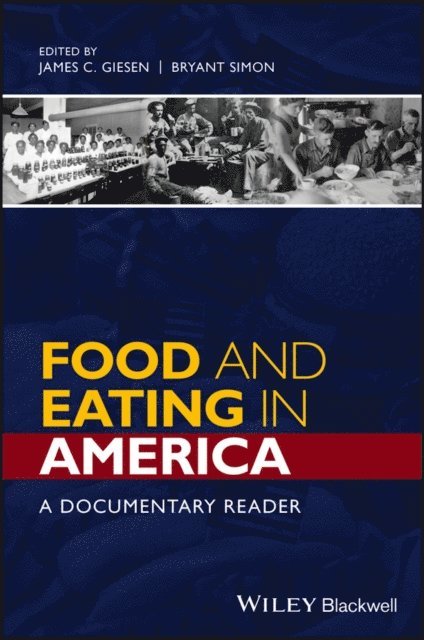
Guides students through a rich menu of American history through food and eatingThis book features a wide and diverse range of primary sources covering the cultivation, preparation, marketing, and consumption of food from the time before Europeans arrived in North America to the present-day United States. It is organized around what the authors label the “Four P’s”—production, politics, price, and preference—in order to show readers that food represents something more than nutrition and the daily meals that keep us alive. The documents in this book demonstrate that food we eat is a “highly condensed social fact” that both reflects and is shaped by politics, economics, culture, religion, region, race, class, and gender.Food and Eating in America covers more than 500 years of American food and eating history with sections on: An Appetizer: What Food and Eating Tell Us About America; Hunting, Harvesting, Starving, and the Occasional Feast: Food in Early America; Fields and Foods in the Nineteenth Century; Feeding a Modern World: Revolutions in Farming, Food, and Famine; and Counterculture Cuisines and Culinary Tourism. Presents primary sources from a wide variety of perspectives—Native Americans, explorers, public officials, generals, soldiers, slaves, slaveholders, clergy, businessmen, workers, immigrants, activists, African Americans, Hispanics, Asian Americans, artists, writers, investigative reporters, judges, the owners of food trucks, and prison inmatesIllustrates the importance of eating and food through speeches, letters, diaries, memoirs, newspaper and magazine articles, illustrations, photographs, song lyrics, advertisements, legislative statutes, court rulings, interviews, manifestoes, government reports, and recipesOffers a new way of exploring how people lived in the past by looking closely and imaginatively at foodFood and Eating in America: A Documentary Reader is an ideal book for students of United States history, food, and the social sciences. It will also appeal to foodies and those with a curiosity for documentary-style books of all kinds.
538 kr
Skickas inom 7-10 vardagar
Guides students through a rich menu of American history through food and eatingThis book features a wide and diverse range of primary sources covering the cultivation, preparation, marketing, and consumption of food from the time before Europeans arrived in North America to the present-day United States. It is organized around what the authors label the “Four P’s”—production, politics, price, and preference—in order to show readers that food represents something more than nutrition and the daily meals that keep us alive. The documents in this book demonstrate that food we eat is a “highly condensed social fact” that both reflects and is shaped by politics, economics, culture, religion, region, race, class, and gender.Food and Eating in America covers more than 500 years of American food and eating history with sections on: An Appetizer: What Food and Eating Tell Us About America; Hunting, Harvesting, Starving, and the Occasional Feast: Food in Early America; Fields and Foods in the Nineteenth Century; Feeding a Modern World: Revolutions in Farming, Food, and Famine; and Counterculture Cuisines and Culinary Tourism. Presents primary sources from a wide variety of perspectives—Native Americans, explorers, public officials, generals, soldiers, slaves, slaveholders, clergy, businessmen, workers, immigrants, activists, African Americans, Hispanics, Asian Americans, artists, writers, investigative reporters, judges, the owners of food trucks, and prison inmatesIllustrates the importance of eating and food through speeches, letters, diaries, memoirs, newspaper and magazine articles, illustrations, photographs, song lyrics, advertisements, legislative statutes, court rulings, interviews, manifestoes, government reports, and recipesOffers a new way of exploring how people lived in the past by looking closely and imaginatively at foodFood and Eating in America: A Documentary Reader is an ideal book for students of United States history, food, and the social sciences. It will also appeal to foodies and those with a curiosity for documentary-style books of all kinds.
488 kr
Skickas inom 10-15 vardagar
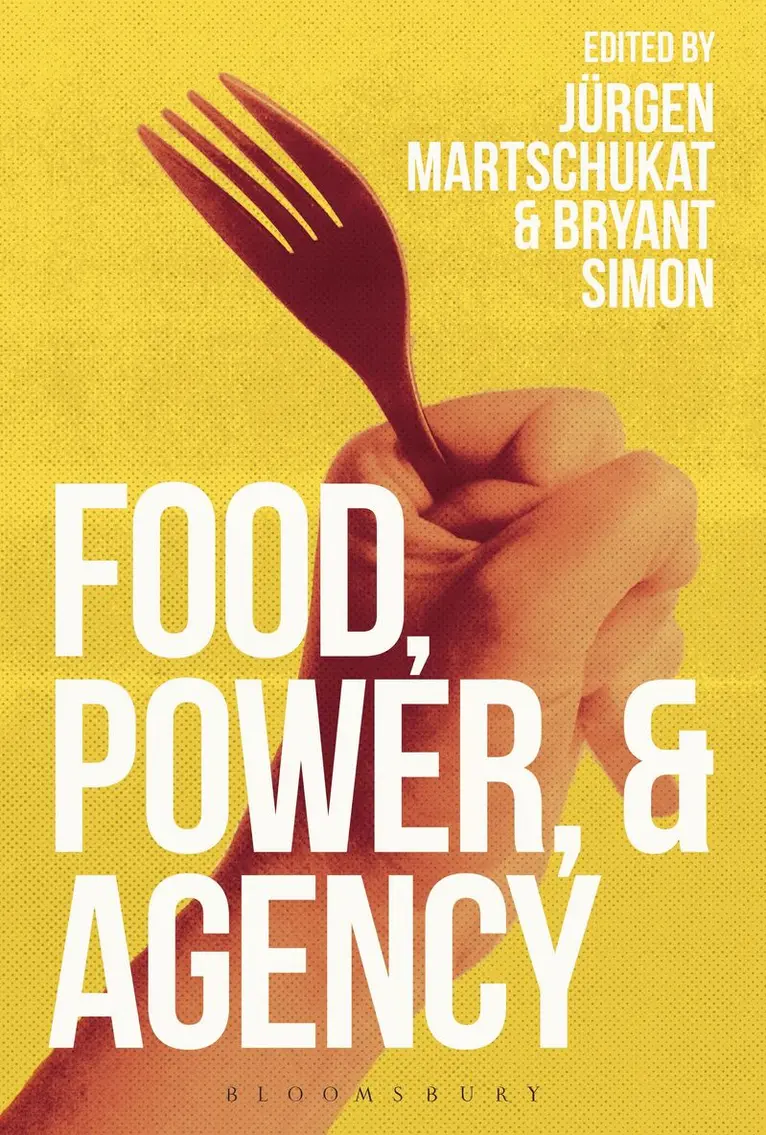
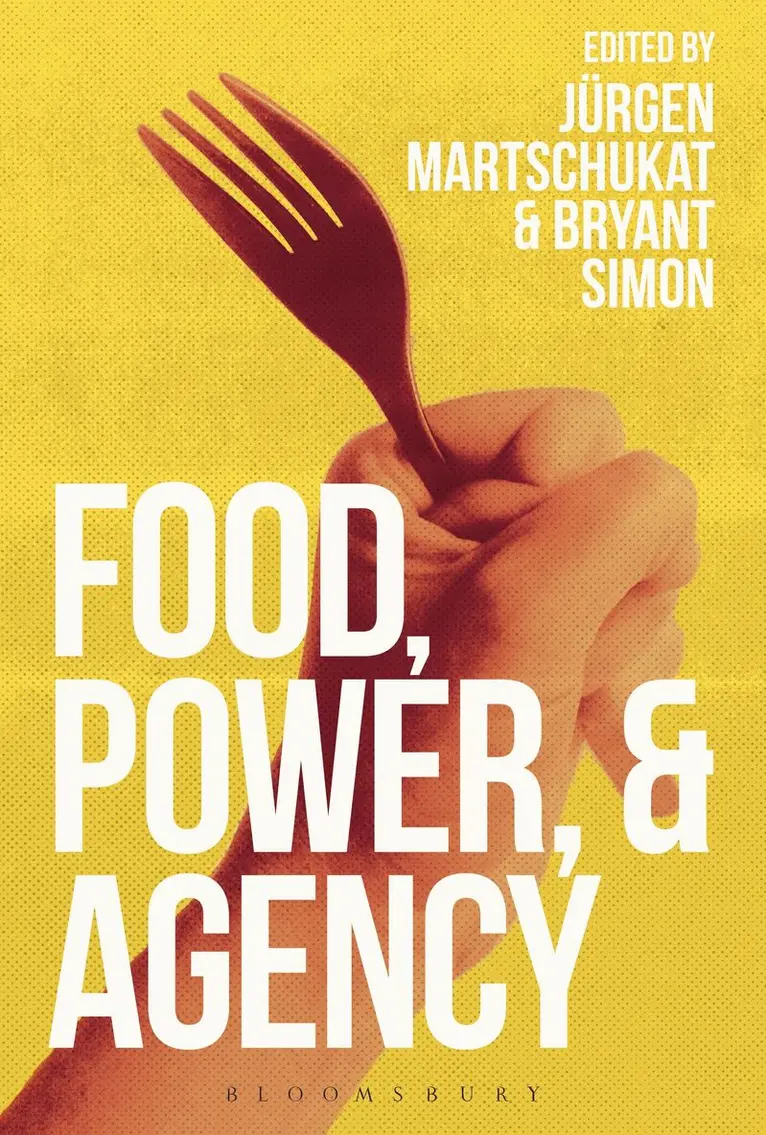
Grounded in the work of Roland Barthes, Bruno Latour, Pierre Bourdieu, and Michel Foucault, this exciting book uses food as a lens to examine agency and the political, economic, social, and cultural power which underlies every choice of food and every act of eating.The book is divided into three parts - National Characters; Anthropological Situations; Health – with each of the eight chapters exploring the power of food as well as the power relationships reflected and refracted through food. Featuring contributions from historians, sociologists, anthropologists, and cultural studies scholars from around the world, the book offers case studies of a diverse range -from German cuisine and ethnicity in San Francisco after the Gold Rush, through Italian cuisine in Japan, to ‘ultragreasy bureks’ and teenage fast food consumption in Slovenia.By directly engaging with questions of agency and power, the book pushes the field of food studies in new directions. An important read for students and researchers in food studies, food history, anthropology of food, and sociology of food.
281 kr
Skickas inom 10-15 vardagar
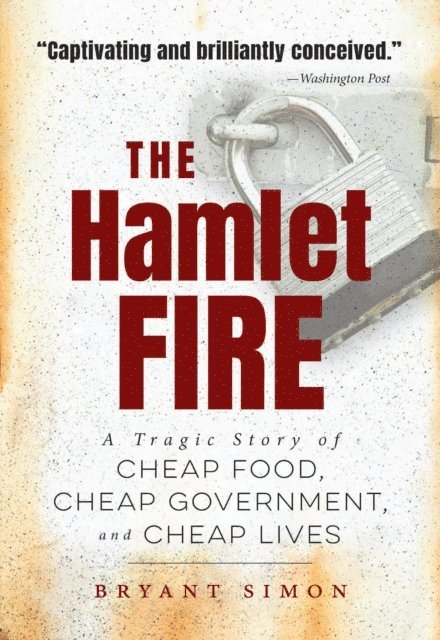
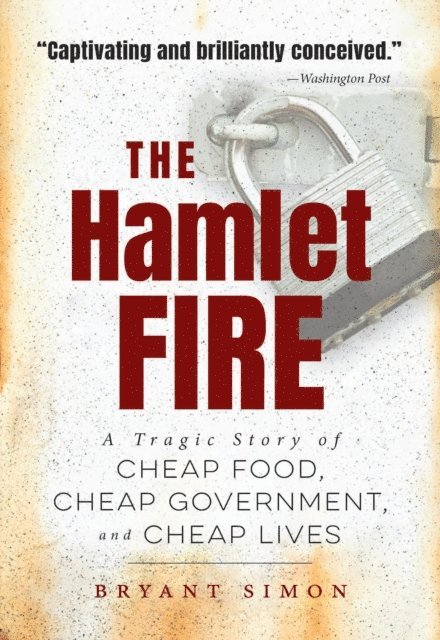
For decades, the small, quiet town of Hamlet, North Carolina, thrived thanks to the railroad. But by the 1970s, it had become a postindustrial backwater, a magnet for businesses in search of cheap labor and almost no oversight. Imperial Food Products was one of those businesses. The company set up shop in Hamlet in the 1980s. Workers who complained about low pay and hazardous working conditions at the plant were silenced or fired. But jobs were scarce in town, so workers kept coming back, and the company continued to operate with impunity. Then, on the morning of September 3, 1991, the never-inspected chicken-processing plant a stone's throw from Hamlet's city hall burst into flames. Twenty-five people perished that day behind the plant's locked and bolted doors. It remains one of the deadliest accidents ever in the history of the modern American food industry.Eighty years after the Triangle Shirtwaist Fire, industrial disasters were supposed to have been a thing of the past in the United States. However, as award-winning historian Bryant Simon shows, the pursuit of cheap food merged with economic decline in small towns across the South and the nation to devalue laborers and create perilous working conditions. The Hamlet fire and its aftermath reveal the social costs of antiunionism, lax regulations, and ongoing racial discrimination. Using oral histories, contemporary news coverage, and state records, Simon has constructed a vivid, potent, and disturbing social autopsy of this town, this factory, and this time that exposes how cheap labor, cheap government, and cheap food came together in a way that was destined to result in tragedy.
1 142 kr
Skickas inom 10-15 vardagar
Grounded in the work of Roland Barthes, Bruno Latour, Pierre Bourdieu, and Michel Foucault, this exciting book uses food as a lens to examine agency and the political, economic, social, and cultural power which underlies every choice of food and every act of eating.The book is divided into three parts - National Characters; Anthropological Situations; Health – with each of the eight chapters exploring the power of food as well as the power relationships reflected and refracted through food. Featuring contributions from historians, sociologists, anthropologists, and cultural studies scholars from around the world, the book offers case studies of a diverse range -from German cuisine and ethnicity in San Francisco after the Gold Rush, through Italian cuisine in Japan, to ‘ultragreasy bureks’ and teenage fast food consumption in Slovenia.By directly engaging with questions of agency and power, the book pushes the field of food studies in new directions. An important read for students and researchers in food studies, food history, anthropology of food, and sociology of food.
235 kr
Tillfälligt slut
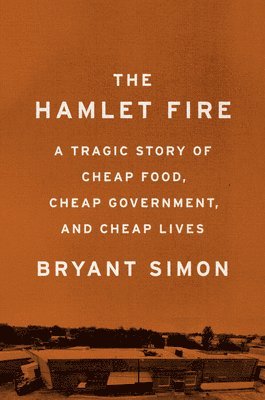
A 'gifted writer' (Chicago Tribune) uses a long forgotten factory fire in small-town North Carolina to show how cut-rate food and labor have become the new American norm. For decades the small, quiet town of Hamlet, North Carolina thrived thanks to the railroad. But by the 1980s, it had become post-industrial backwater, a magnet for businesses looking for cheap labor with little or almost no official oversight. One of these businesses was Imperial Foods, which paid its workers a dollar or so above the minimum wage to stand in pools of freezing water for hours on end, scraping fat off frozen chicken breasts, and fined them if they went to the bathroom too many times during a shift. Then on the morning of September 3, 1991 - the day after Labor Day - this factory that had never been inspected caught fire. Twenty-five workers - mostly single mothers, many of whom were black - perished behind locked doors. Eighty years after the Triangle Shirtwaist Fire, industrial disasters were supposed