Urban Analytics (inbunden)
Format
Häftad (Paperback / softback)
Språk
Engelska
Serie
Spatial Analytics and GIS
Antal sidor
200
Utgivningsdatum
2017-12-20
Upplaga
1
Förlag
SAGE Publications
Medarbetare
Folch, David (Florida State University, USA) (förf.) / Singleton, Alex D. (förf.)
Dimensioner
239 x 168 x 13 mm
Vikt
545 g
ISBN
9781473958630

Urban Analytics

Häftad,  Engelska, 2017-12-20
650
  • Skickas från oss inom 2-5 vardagar.
  • Fri frakt över 249 kr för privatkunder i Sverige.
Finns även som
Visa alla 2 format & utgåvor
The economic and political situation of cities has shifted in recent years in light of rapid growth amidst infrastructure decline, the suburbanization of poverty and inner city revitalization. At the same time, the way that data are used to understand urban systems has changed dramatically.

Urban Analytics offers a field-defining look at the challenges and opportunities of using new and emerging data to study contemporary and future cities through methods including GIS, Remote Sensing, Big Data and Geodemographics.

Written in an accessible style and packed with illustrations and interviews from key urban analysts, this is a groundbreaking new textbook for students of urban planning, urban design, geography, and the information sciences.
Visa hela texten

Passar bra ihop

  1. Urban Analytics
  2. +
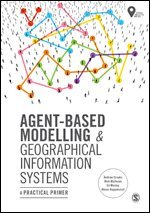
  3. Agent-Based Modelling and Geographical Information Systems

De som köpt den här boken har ofta också köpt Agent-Based Modelling and Geographical Informat... av Andrew Crooks, Nick Malleson, Ed Manley, Alison Heppenstall (häftad).

Köp båda 2 för 1372 kr

Kundrecensioner

Har du läst boken? Sätt ditt betyg »

Fler böcker av författarna

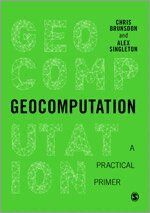
  • Geocomputation

    Chris Brunsdon, Alex David Singleton, Alex D Singleton

    Geocomputation is the use of software and computing power to solve complex spatial problems. It is gaining increasing importance in the era of the 'big data' revolution, of 'smart cities', of crowdsourced data, and of associated applications for v...

Övrig information

Alex Singleton is Professor of Geographic Information Science at the University of Liverpool, where he entered as a lecturer in 2010. He holds a BSc (Hons) Geography from the University of Manchester and a PhD from University College London. To date, his research income totals around £15m, with two career highlights including the ESRC funded Consumer Data Research Centre; and the recently awarded ESRC Centre for Doctoral Training in New Forms of Data. Alex's research is embedded within the Geographic Data Science Lab (geographicdatascience.com) and concerns various aspects of urban analytics. In particular, his work has extended a tradition of area classification within Geography where he has developed an empirically informed critique of the ways in which geodemographic methods can be refined for effective yet ethical use in public resource allocation applications.¿ Seth Spielman is an Associate Professor of Geography at the University of Colorado. ¿His expertise is in the intersection of maps, statistics, and machine learning. ¿He has received the¿Breheny Prize¿for work in Urban Analytics, a distinguished scholar award in Planning from the American Association of Geographers, and was profiled in the journal ¿Science¿as an archetype of a new¿generation of data-centric geographers. His¿publications¿have appeared in a diverse set of journals including PNAS, PlosOne, Demography, Annals of the Association of American Geographers, and the International Journal of GIS. ¿Outside of academia his professional experience has ranged from the hyper digital world of Data Science and Software Engineering in Silicon Valley to the insanely analog practice of being the sole proprietor of an antiquarian bookshop in Manhattan. David Folch is an Assistant Professor in the Department of Geography at Florida State University. His research focuses on spatial analytical methods, with a contextual interest in US cities and neighborhoods. His approach to research sits at the intersection of geography, economics and computer science, which in practice means merging geographic and economic theories with high-performance computing and large datasets to address research questions with distinctly spatial manifestations. His work has involved developing improved measures for residential segregation and the creation of spatial approaches for reducing uncertainty in American Community Survey estimates. He holds degrees in geography and economics.