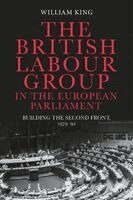
Inbunden, Engelska, 2026
British Labour Group in the European Parliament
Av William King
757 kr
Beställningsvara. Skickas inom 3-6 vardagar. Fri frakt över 249 kr.
Beskrivning
We know far too little about the Labour Party's approach to Europe, or about the contribution of British MEPs to the European Parliament. In this thorough study of Labour MEPs, William King addresses both of these gaps and does so with detailed research and excellent judgment.- Piers Ludlow, Professor of International History, London School of Economics and Political Science (LSE)William King’s book offers an illuminating, meticulously researched account of the British Labour Group’s nuanced role in the European Parliament. By bringing to the fore key figures such as Barbara Castle or Ken Collins, King provides fresh insights into the group’s internal debates, while also tracing its influence on major Community policies, from agriculture and the environment to the single market. This work is an essential read for students and scholars of the EU, particularly those interested in the European Parliament’s history and dynamics.- Carine Germond, Professor of European Studies, Norwegian University of Science and Technology (NTNU)Given how significant Britain's relationship with the European Union has been, and how much has been written about it – especially since Brexit – it is remarkable how little we know about the Labour Party and Europe, and still less about Labour and the European Parliament. That is what makes William King's book so important. Deeply researched, learned, and consistently engaging, it takes us back, with real command of the detail, to cooperation, compromise, conflict and agreement, to personalities and politics – reminding us of how Britain was once part of Europe, and how Labour tried to shape its future.- James Ellison, Reader in International History, Queen Mary University of LondonThe book explores the contributions and activities, in core policy areas, of the fractious British Labour Group, consisting of Labour Party MEPs, 1979–1992. Following the first direct elections to the European Parliament in 1979, Labour MEPs sought to challenge, influence and shape the direction and nature of the European Community from within. Operating in a parliamentary arena where a great variety of viewpoints, arguments and approaches met, this book explores the underappreciated and overlooked contributions of Labour MEPs. As such, importantly, its sheds much-needed light on British involvement in a core institution at the European-level. The book focuses on six core policy areas, which allows for an analysis of change of time, as well as changing views, practices and policies during this crucial period in Labour Party and European integration history.
Produktinformation
- Utgivningsdatum: 2026-11-03
- Mått: 156 x 234 x 16 mm
- Vikt: 538 g
- Format: Inbunden
- Språk: Engelska
- Antal sidor: 256
- Förlag: Manchester University Press
- ISBN: 9781526192059
Utforska kategorier
Betyg & recensioner
0 recensioner
Inga recensioner tillgängliga.