• Fri frakt över 249 kr
  • •
  • Snabba leveranser
  • •
  • Billiga böcker
Kundservice

Du är på sajten för privatpersoner.

Företag, bibliotek eller offentlig verksamhet?

Du handlar på classic.bokus.com, där alla dina funktioner finns intakta.
Till classic.bokus.com
Bokus logotyp. Gå till startsidan.
  • Erbjudanden
  • Student
  • Topplistor
  • Barn & ungdom
  • Bokus Play
  • E-böcker
  • Ljudböcker
  • Pocketböcker
  • Spel och pussel

Pocketfynda! Hundratals böcker för 49 kr/st →

Sidfot

Mina sidor

    Hjälp

    • Kundservice
    • Vanliga frågor och svar
    • Frakt och leverans
    • Retur vid ångerrätt
    • Reklamera vara
    • Betalning
    • Köpvillkor
    • Allmänna villkor
    • Information om webbplatsens tillgänglighet

    Om Bokus

    • Om oss
    • Pressrum
    • För studenter
    • För företag
    • För bibliotek och offentlig verksamhet
    • För leverantörer
    • Hållbarhet

    Populärt

    • Aktuella erbjudanden
    • Presentkort
    • Studentlitteratur
    • Nya böcker
    • Topplistor
    • Signerade böcker
    • Engelska böcker

    Inspiration

    • Boktips
    • BookTok
    • Barnbokskaraktärer
    • Populära författare
    Logotyp för Bokus
    Följ oss på Facebook (extern länk)Följ oss på Instagram (extern länk)Följ oss på YouTube (extern länk)Följ oss på TikTok (extern länk)
    bokus @ CookiesAnpassa cookiesIntegritetspolicyKöpvillkor
    Till Citymail hemsida (extern länk)Till Budbee hemsida (extern länk)Till Postnord hemsida (extern länk)Till Schenker hemsida (extern länk)Till Early Bird hemsida (extern länk)Till Walleys hemsida (extern länk)
    1. Samhälle och politik
    2. Sociologi och antropologi
    3. Antropologi

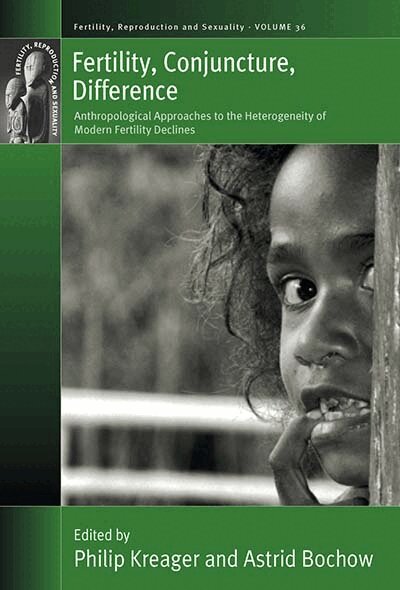
    Fertility, Conjuncture, Difference

    Anthropological Approaches to the Heterogeneity of Modern Fertility Declines

    AvPhilip Kreager,Astrid Bochow

    Inbunden, Engelska, 2017

    Del i serien Fertility, Reproduction and Sexuality: Social and Cultural Perspectives

    2 024 kr

    Beställningsvara. Skickas inom 3-6 vardagar. Fri frakt över 249 kr.

    Beskrivning

    In the last forty years anthropologists have made major contributions to understanding the heterogeneity of reproductive trends and processes underlying them. Fertility transition, rather than the story of the triumphant spread of Western birth control rationality, reveals a diversity of reproductive means and ends continuing before, during, and after transition. This collection brings together anthropological case studies, placing them in a comparative framework of compositional demography and conjunctural action.  The volume addresses major issues of inequality and distribution which shape population and social structures, and in which fertility trends and the formation and size of families are not decided solely or primarily by reproduction.

    Produktinformation

    • Utgivningsdatum:2017-09-01
    • Mått:152 x 229 x 24 mm
    • Vikt:669 g
    • Format:Inbunden
    • Språk:Engelska
    • Serie:Fertility, Reproduction and Sexuality: Social and Cultural Perspectives
    • Antal sidor:358
    • Förlag:Berghahn Books
    • ISBN:9781785336041

    Utforska kategorier

    • Antropologi inom Samhälle och politik
    • Reproduktionsmedicin inom Medicin
    • Sociologi inom Samhälle och politik

    Mer om författaren

    Philip Kreager is Senior Research Fellow in Human Sciences, Somerville College; Director, Fertility and Reproduction Studies Group, Institute of Social and Cultural Anthropology; and Reseach Associate, Department of Sociology, Oxford University. He has written extensively on the history and conceptual development of population theory and analysis in European culture, and on comparative family systems and anthropological demography.

    Recensioner i media

    “Philip Kreager and Astrid Bochow’s edited Fertility, conjuncture, difference is a convincing continuation of critical discussions which began in the mid-1990s about, on the one hand, using anthropological approaches in order to understand the heterogeneity of modern reproductive change and, on the other, the possibilities for creating an anthropological demography. This effort is tackled in the volume’s extraordinary introduction, in which the editors outline the innovative research strategy – combining conjunctural action and compositional difference – needed to unravel the continuing diversity of fertility world-wide.” • Journal of the Royal Anthropological Institute“These rich interdisciplinary studies show fertility decisions are not made according to rational choice economic theory and a vague concept of ‘modernity.’ Each case study here presents cultural and personal factors coalesced around reproductive decisions that women and men consider when making life decisions. The editors and contributors are to be congratulated for this splendid and insightful contribution to understanding reproductive decision making and, not least, the benefits of interdisciplinarity. Highly recommended.” • Journal of the Motherhood Initiative“This volume offers much needed empirical support to the concept of vital conjunctures, but it also provides a more theoretical discussion explaining the reproductive decision-making beyond the mere economic rationality of the actors. The fact that demographic explanations should pay closer attention to the compositional effects, achieved through the individual agency within the “multiple potential futures” stands as the biggest strength of the book.”  • Anthropological Notebooks“Outstanding. This volume follows in a distinct lineage of both historically and anthropologically-informed critical studies of the demographic analysis of fertility decline and reproductive change. It is an excellent addition to that corpus of work.” • Simon Szreter, St John’s College, Cambridge

    Innehållsförteckning

    • List of Illustrations, Figures and TablesPrefaceIntroductionPhilip Kreager and Astrid BochowChapter 1. The Key to Fertility: Generation, Reproduction and Class Formation in a Namibian CommunityJulia PauliChapter 2. Becoming and Belonging in African Historical Demography, 1900-2000Sarah WaltersThis chapter is available open access under a Creative Commons Attribution International License (CC BY) thanks to the support of the Wellcome Trust.Chapter 3. Between the Central Laws of Moscow and Local Particularity: The Reproduction of Subgroups in the South of TajikistanSophie Roche and Sophie HohmannChapter 4. Feeling Secure to Reproduce: Economy, Community and Fertility in Southern EuropePatrick HeadyChapter 5. Ambivalent Men: Male Dilemmas and Fertility Control in SenegalSara Randall, Nathalie Mondain, and Alioune DiagneChapter 6. Accounting for Reproductive Difference: Sociality, Temporality and Individuality during Pregnancy in CameroonErica van der SijptChapter 7. Understanding Childlessness in Botswana: Reproduction and Tswana-nization of Middle-Class Identities in the Twenty-First CenturyAstrid BochowChapter 8. Low Fertility and Secret Family Planning in LesothoLena L. KroekerChapter 9. ‘The Doctor’s Way’: Traditional Contraception and Modernity in CambodiaEleanor HukinChapter 10. Demographers on Culture: Fertility, Nuptiality, Family StructuresYves Charbit and Véronique PetitChapter 11. Vital Conjunctures RevisitedJennifer A. Johnson-HanksIndex