• Fri frakt över 249 kr
  • •
  • Snabba leveranser
  • •
  • Billiga böcker
Kundservice

Du är på sajten för privatpersoner.

Företag, bibliotek eller offentlig verksamhet?

Du handlar på classic.bokus.com, där alla dina funktioner finns intakta.
Till classic.bokus.com
Bokus logotyp. Gå till startsidan.
  • Erbjudanden
  • Student
  • Topplistor
  • Barn & ungdom
  • Bokus Play
  • E-böcker
  • Ljudböcker
  • Pocketböcker
  • Spel och pussel

Pocketfynda! Hundratals böcker för 49 kr/st →

Sidfot

Mina sidor

    Hjälp

    • Kundservice
    • Vanliga frågor och svar
    • Frakt och leverans
    • Retur vid ångerrätt
    • Reklamera vara
    • Betalning
    • Köpvillkor
    • Allmänna villkor
    • Information om webbplatsens tillgänglighet

    Om Bokus

    • Om oss
    • Pressrum
    • För studenter
    • För företag
    • För bibliotek och offentlig verksamhet
    • För leverantörer
    • Hållbarhet

    Populärt

    • Aktuella erbjudanden
    • Presentkort
    • Studentlitteratur
    • Nya böcker
    • Topplistor
    • Signerade böcker
    • Engelska böcker

    Inspiration

    • Boktips
    • BookTok
    • Barnbokskaraktärer
    • Populära författare
    Logotyp för Bokus
    Följ oss på Facebook (extern länk)Följ oss på Instagram (extern länk)Följ oss på YouTube (extern länk)Följ oss på TikTok (extern länk)
    bokus @ CookiesAnpassa cookiesIntegritetspolicyKöpvillkor
    Till Citymail hemsida (extern länk)Till Budbee hemsida (extern länk)Till Postnord hemsida (extern länk)Till Schenker hemsida (extern länk)Till Early Bird hemsida (extern länk)Till Walleys hemsida (extern länk)
    1. Samhälle och politik
    2. Samhälle och kultur
    3. Kultur och medier
    4. Kulturvetenskap

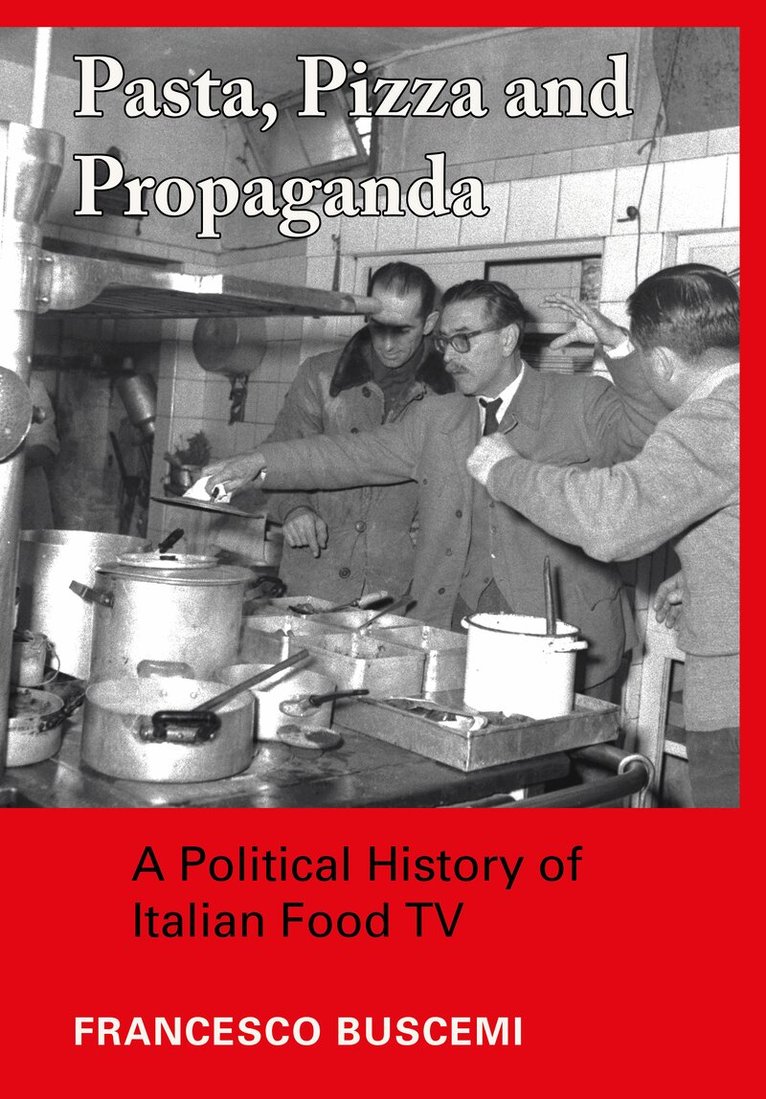
    Pasta, Pizza and Propaganda

    A Political History of Italian Food TV

    AvFrancesco Buscemi

    Inbunden, Engelska, 2022

    Del i serien Trajectories of Italian Cinema and Media

    1 360 kr

    Beställningsvara. Skickas inom 5-8 vardagar. Fri frakt över 249 kr.

    Fler format och utgåvor

    E-bok

    947 kr

    E-bok

    950 kr

    Beskrivning

    This book aims to develop a political history of Italian ‘good food’ on national television, and the central role of food in Italian culture. The focus is highly original and this is a unique interdisciplinary study at the intersection between food studies, media studies and politics.The three protagonists of Pasta, Pizza and Propaganda are food, television and politics. These are the three main characters that interrelate, collaborate and fight behind the scenes, while in front of the camera the writers, intellectuals and celebrity chefs talk about, prepare or taste the best Italian dishes.The book retraces the history of Italian food television from a political point of view: the early shows of the pioneers under strict Catholic control in the 1950s and 1960s, the left-wing political twist of the 1970s, the conservative riflusso or resurgence of the 1980s, the disputed Berlusconian era and the rise of the celebrity chefs, which, for better or for worse, makes Italy similar to the other western countries.The history of Italy since the mid-1950s is retold through the lenses of food television. This lively book demonstrates that cooking spaghetti in a TV studio is a political act, and tries to uncover how it is possible that, while watching on TV how to make pizza, we become citizens.The primary readership will be an academic audience, including those in the disciplines of food studies, media studies, politics and Italian studies, as well as potentially for those interested in Italian sociology and anthropology. There may be a potential wider readership because of the popularity of Italian food and food television.

    Produktinformation

    • Utgivningsdatum:2022-05-27
    • Mått:170 x 244 x 11 mm
    • Vikt:481 g
    • Format:Inbunden
    • Språk:Engelska
    • Serie:Trajectories of Italian Cinema and Media
    • Antal sidor:170
    • Förlag:Intellect
    • ISBN:9781789384062

    Utforska kategorier

    • Kulturvetenskap inom Samhälle och politik
    • Politik och statsskick inom Samhälle och politik
    • Television inom Kultur

    Mer om författaren

    Francesco Buscemi researches on food TV, political communication and cultural history. He teaches media history and media writing at the Catholic University of Milan, Insubria University and University of Udine.

    Recensioner i media

    'Buscemi provides in-depth discussions on the important links between British and Italian food culture, television, politics and associated industries and behaviours. [...] [This book] will be valuable to students of television generally, and particularly those taking an interdisciplinary approach to media, food, culture, politics and globalisation. Buscemi provides a capsule case study of the development over sixty years of Italian television and the journey of food through those decades, witnessing changes to gender expectations, ideas of being a ‘better’ Italian and the possibility of food being used to promote a political ‘lie’ (p. 138) to viewers. [It] considers the culinary and cultural capital that the presenters acquire through television appearances and then use in their representations of the politics of food, world events and aspects of our lives which are far from frivolous.'

    Innehållsförteckning

    • Introduction                                                                                                             Chapter 1: Literature review, theoretical framework and methodology        Politics, television and food in Italy: Dangerous liaisons                       Politics in Italy after the Second World War                                             Television in Italy                                                                             Italian food between reality and stereotypes                              Italian food TV                                                                                  Theoretical framework                                                                                Methodology                                                                                                 Conclusion                                                                                                    Chapter 2: Broadcasting sacred food: 1954–1970                                             Soldati's journey to the Po Valley                                                              Soldati's conception of genuineness                                                         Nature and culture                                                                                     Culture and the past                                                                                               Where are the women?                                                                               Soldati's sacred food                                                                                   Linea contro linea                                                                                       Conclusion                                                                                                    Chapter 3: 1971–1980: The ephemeral wind of change                                              A new political scenario                                                                               The new scenario on TV: RAI's reformation                                             A Tavola alle 7                                                                                              The relationship between Veronelli and Ninchi                          Ninchi, Veronelli and the field of Italian politics in the 1970s    Dimmi Come Mangi and the dawn of neo-TV                                          Conclusion                                                                                                    Chapter 4: 1981–1999: Going back home (and to the kitchen)                        Riflusso and Italy in the 1980s and 1990s                                                           Wilma De Angelis and home cooking                                                         A Pranzo con Wilma                                                                         Food television becomes a genre                                                              Conclusion                                                                                                    Chapter 5: Eating TV: Food on Berlusconian television, 2000–2012                The celebrity housewives and their shows                                             La Prova del Cuoco                                                                          Women between power and stereotype                                      Serving sacred food in Trattoria                                                   The contrasted discovery of foreign food                                               Food in the news                                                                                         Conclusion                                                                                        Chapter 6: 2012–the present, the Italian way to the celebrity chef              The invasion of the global formats           A case of Italian adaptation: From kitchen nightmares to Cucine da IncuboA Cena da Me: Representing food to talk about something else          Food Network Italia                                                                                     The new celebrity chefs                                                                            Alessandro Borghese e Simone RugiatiMasterChef                                       Italian food out of Italy                                                       Dietary chefs and their enemies                                                   The tough chef                                                                               Female professional cooking                                                                      Benedetta Rossi, the anti-chef                                                        Conclusion    Conclusion