- Nyhet
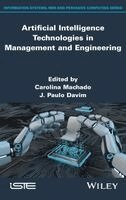
Artificial Intelligence Technologies in Management and Engineering
1 737 kr
Beställningsvara. Skickas inom 5-8 vardagar. Fri frakt över 249 kr.
Beskrivning
Artificial intelligence (AI) technologies play a transformative role in several areas of knowledge, including management and engineering. Their adoption has been driven by the advancement of machine learning algorithms, increased computing power, and the availability of large volumes of data, making AI technologies indispensable for process optimization and strategic decision-making. However, organizations must invest in research, development and professional training to ensure AI is used ethically and sustainably to drive progress.This book makes several contributions, by not only advancing scientific and technical knowledge, but also improving efficiency and decision-making, and developing new tools and technologies.The main aim of Artificial Intelligence Technologies in Management and Engineering is to provide a channel for sharing and disseminating knowledge of new advances in AI technologies in management and engineering among academics/researchers, managers and engineers. It seeks to advance research in the field, provide practical insights for managers and engineers, and also serve as a basis for future technological innovations.
Produktinformation
- Utgivningsdatum:2026-04-23
- Mått:156 x 234 x 21 mm
- Vikt:651 g
- Format:Inbunden
- Språk:Engelska
- Serie:ISTE Invoiced
- Antal sidor:336
- Förlag:ISTE Ltd
- ISBN:9781836690528
Utforska kategorier
Mer om författaren
Carolina Machado is an associate professor with habilitation at the University of Minho, Portugal. She has lectured on HRM subjects since 1989. She is currently the Head of the HRM Work Group at the University of Minho and is also the Editor-in-Chief of the International Journal of Applied Management Sciences and Engineering.J. Paulo Davim is a professor at the University of Aveiro, Portugal and is also distinguished as an honorary professor in several universities/colleges/institutes in China, India and Spain. He has more than 35 years of teaching and research experience in mechanical and industrial engineering.
Innehållsförteckning
- Preface xiiiCarolina MACHADO and J. Paulo DAVIMChapter 1 From Algorithms to Applications: AI in Management and Engineering 1Hamed TAHERDOOST and Mitra MADANCHIAN1.1 Introduction 11.2 Foundations of artificial intelligence 21.3 AI in management 51.4 AI in engineering 71.5 Comparative taxonomy of AI applications 91.6 Challenges and limitations 101.7 Future directions 121.8 Conclusion 121.9 References 13Chapter 2 Generational Perspectives on AI (From Baby Boomers to Gen Z): Understanding, Perceived Usefulness, Motivation to Adopt and Risk Perception 19Flor MORTON, Teresa TREVIÑO-BENAVIDES, Daniel Javier de la Garza MONTEMAYORand Ana Valdés LOYOLA2.1 Introduction 192.2 Literature review 202.2.1 Perceived usefulness of artificial intelligence 202.2.2 Uses and gratifications theory and AI use 212.2.3 Perceived risk 232.3 Methodology 242.4 Findings 252.4.1 Baby Boomers 252.4.2 Generation X 282.4.3 Millennials 332.4.4 Centennials 372.5 Discussion and conclusion 392.5.1 Baby Boomers: cautious and curious 422.5.2 Generation X: pragmatic realism 422.5.3 Millennials: enthusiastic yet concerned 422.5.4 Centennials: acceptance with awareness 422.6 References 43Chapter 3 Smart Decisions: How AI Is Transforming Everyday Management and Engineering Practices 47Soha RAWAS, Cerine TAFRAN, Agariadne Dwinggo SAMALA, Feri FERDIANand Yudha Aditya FIANDRA3.1 Introduction 473.2 What is AI? A practical overview 493.3 AI for smarter management practices 503.3.1 The expanding role of AI in management 503.3.2 Real-world tools and use cases 523.3.3 Strategic advantages of AI-augmented management 533.4 AI in engineering: enhancing efficiency without coding 533.4.1 How AI is reshaping engineering workflows 533.4.2 No-code AI tools for engineering use cases 553.4.3 Key advantages in engineering contexts 563.5 Easy-to-use AI tools for non-technical professionals 563.5.1 Key user-friendly AI platforms 573.5.2 Practical applications across roles 573.5.3 Advantages of no-code AI tools 573.6 Ethical and organizational considerations 583.6.1 Transparency and explainability 583.6.2 Bias and fairness 583.6.3 Data privacy and security 593.6.4 Organizational readiness and culture 593.6.5 Evaluating ethical AI tools 593.7 Future outlook: embracing AI with confidence 593.8 Conclusion 603.9 Declaration 613.10 References 61Chapter 4 Integrating AI into Business Education: Bridging the Gap Between Disciplinary Knowledge and Business Performance 65Laura Esther Zapata CANTÚ and Martha Elena Moreno BARBOSA4.1 Introduction 654.2 AI in business practices and education 674.2.1 AI boosting the use of technology in workplaces 684.2.2 AI in business practices 694.2.3 AI as a driving force for business schools 704.2.4 AI in business education and curriculum alignment: disciplinary competencies 724.3 Method 734.4 Results 754.4.1 AI benefits in Mexican firms 754.4.2 AI risks in Mexican firms 764.4.3. Perception of competences requiring development in business schools 774.5 Discussion and conceptual model 784.5.1 How do business schools respond to industry needs in the context of AI integration? 794.5.2 How do business schools ensure competence development (soft skills and disciplinary competences) when incorporating AI? 804.6 Conclusions 824.6.1 Theoretical implications 824.6.2 Practical implications 834.6.3 Limitations 844.7 Declaration 844.8 References 84Chapter 5 Holistic Management Quo Vadis? Designing Management Dispositive and Metamorphic Possibilities in the age of AI 89Patrick BARETTO and Qeis KAMRAN5.1 Introduction 895.2 Designing a dispositive of knowledge 915.2.1 Management as knowledge of practice 945.2.2. Management’s drift: from knowledge of practice to knowledge of tools 955.2.3 From tools to theorization: the inversion of technology and AI 965.3 Research methodology 975.3.1 LDA: topic modeling 995.3.2 Mapping topics to knowledge spheres 1045.4 Analysis 1055.4.1 Multiple correspondence analysis 1055.4.2 Content analysis 1065.4.3 Heatmap analysis 1115.4.4 Meta-synthesis: reconfiguring the epistemic ecology of knowledge 1175.5 Toward an epistemic dispositive framework 1205.6 The architecture of the epistemic dispositive 1225.7 Metamorphic possibilities of the management dispositive 1245.8 An apology for the management dispositive: a call for strategic foresight 1255.8.1 In defense of management as an epistemic domain 1255.9 Declaration 1305.10 References 131Chapter 6 Mapping the Use of Generative AI in Spain’s Advertising Sector: Current Trends and Future Challenges 135Juan Manuel Corbacho VALENCIA, Jesús Pérez SEOANE and Xabier MARTÍNEZ-ROLÁN6.1 Introduction 1366.2 Global perspectives on AI in advertising and creative processes 1376.2.1 Spanish empirical research on GenAI adoption and professional practices 1386.2.2 GenAI changing the creative process 1416.2.3 Consumer response and cultural adaptation research 1436.2.4 Ethical frameworks and regulatory compliance 1436.2.5 Future research directions 1446.3 Methodology 1466.3.1 Identification of the sample 1466.4 Analysis of the results 1486.4.1 Perception of GenAI tools 1486.4.2 Uses of GenAI in the professional environment 1496.4.3 Advertisers and GenAI 1516.4.4 Limitations and inhibitors 1526.5 Conclusions 1536.6 References 154Chapter 7 Emotional Nudging in the Rise of Affective Artificial Intelligence 159Cristiana Cerqueira LEAL and Benilde OLIVEIRA7.1 Introduction: from nudging to AI-based emotional hypernudging 1597.2 Emotions and decision-making 1627.2.1 Human emotions: what is an emotion? 1627.2.2 A catalogue of emotions for decision-making 1637.3 Mechanisms of emotional nudging through AI 1667.3.1 Human emotions versus synthetic emotion in AI 1667.3.2 Emotion recognition: reading the room 1677.3.3 Emotion expression/generation: shaping the stimulus 1687.3.4 Emotional personalization in adaptive loops: what works for whom 1697.3.5 Temporal and contextual variability 1707.4 Applications of emotional nudging 1717.4.1 Public policy and civic engagement 1717.4.2 Health and well-being 1717.4.3 Sustainability and climate action 1727.4.4 Financial behavior 1727.4.5 Education and learning environments 1737.4.6 Digital platforms: social media, e-commerce, fintech 1747.4.7 Personal assistants 1757.5 Ethical and societal implications 1767.5.1 Autonomy and manipulation 1767.5.2 Bias, discrimination and fairness 1777.5.3 Guiding principles for responsible emotional nudging 1777.6 Final remark: long-term impact on human behavior, trust and rationality 1807.7 Abbreviations 1817.8 Acknowledgments 1817.9 Declaration 1817.10 References 181Chapter 8 Agentic AI in Marketing: Opportunities, Challenges and Impact on Firm Performance 185Florin Sabin FOLTEAN and Octavian Dumitru HERA8.1 Introduction 1858.2 AAI systems 1868.2.1 AI agency concept 1868.2.2 AI agents 1888.2.3 Architecture and operational mechanisms of AAI systems 1918.3 AAI systems opportunities in marketing 1938.3.1 Applications of AAI systems in marketing processes 1938.3.2 Architecture of AAI systems in marketing 1948.4 Challenges of AAI systems adoption in marketing organizations 1968.5 Business value of AAI systems in marketing 1988.6 Conclusion 1998.7 References 200Chapter 9. AI’s Role in Marketing: Mapping the Evolution of Creativity 205Teresa TREVIÑO-BENAVIDES and Flor MORTON9.1 Introduction 2059.2 Literature review 2079.2.1 Creativity and creative thinking in organizations 2079.2.2 Phase 1 mechanical AI: marketing automation and analytics 2099.2.3 Phase 2 GenAI: creativity enhancement and personalization 2109.2.4 The effects of personalization on consumer experience and behavior 2129.2.5 AI-driven personalization and consumer engagement 2139.2.6 Phase 3 collaborative AI: a tool for innovation 2149.3 Challenges and limitations of AI in marketing 2169.4 Future directions of AI in marketing and creativity 2179.5 Implications and future research 2179.6 References 218Chapter 10 Unveiling Management Research’s Thematic Evolution: An Unsupervised Machine Learning – Latent Dirichlet Allocation Perspective 223Qeis KAMRAN10.1 Introduction 22410.2 Method 22510.2.1 Pre-processing 22810.2.2 Topic detection via LDA 23210.2.3 Post LDA 23910.2.4 Limitation of the LDA methodology and comments 24010.3 Analyses 24110.4 Results of the content analysis 24410.5 Contributing authors 24910.6 Most influential papers 24910.7 Box plotting 25010.8 Conclusion 25110.9 References 25210.10 Appendix 1 Application of the machine learning methodology to investigate the domain of entrepreneurship and marketing 25610.10.1 Introduction 25610.10.2 Method 25710.10.3 CA – the most cited articles per journal per year 25910.10.4 Conclusion 26510.10.5 References 267Chapter 11 The Use of AI in Human Resource Management: Barriers, Opportunities and Trends 269Pedro Miguel Torres BARROS and Carolina MACHADO11.1 Introduction 27011.2 Theoretical framework 27111.2.1 Hrm 27211.2.2 Ai 27411.2.3 Integrating AI into HRM 27711.3 Methodology 27811.3.1 Sample selection and participants 27811.3.2 Data collection 27911.3.3 Data analysis 27911.3.4 Sample characterization 27911.4 Analysis and discussion of results 28211.4.1 Adoption of AI in HRM 28211.4.2 Perceptions about AI in HRM 28311.4.3 Areas of application and/or non-application of AI in HRM 28511.4.4 Future perspectives of AI in HRM 28511.5 Best practice guide for using AI in HRM 28611.5.1 Fundamental principles 28611.5.2 Applications and best practices 28611.5.3 Challenges and solutions 28711.5.4 Gradual and sustainable implementation 28711.6 Conclusion 28711.7 Declaration 28911.8 References 289List of Authors 293Index 297
Hoppa över listan


Du kanske också är intresserad av
Del 2
- -19%
- -23%
- 4 för 3
Del 1
- 4 för 3
Brevbäraren i Lizzanello
Francesca Giannone
Pocket, 2026
4,3 utav 5 stjärnor. Totalt antal röster:(55)
99 kr
- -30%
- -30%
Del 3
- -30%
- -22%
Del 2