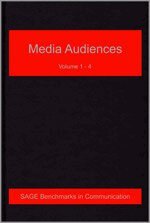
Beskrivning
Produktinformation
- Utgivningsdatum:2009-07-23
- Mått:156 x 234 x 105 mm
- Vikt:2 720 g
- Format:Inbunden
- Språk:Engelska
- Serie:SAGE Benchmarks in Communication
- Antal sidor:1 320
- Upplaga:1
- Förlag:SAGE Publications
- ISBN:9781847875792
Utforska kategorier
Mer om författaren
My main research interests include media violence, the impact of broadcast news, effects of television on public opinion, the effects of advertising on young people, the use and impact of new interactive media. I have also conducted research on a wide range of other media, marketing and management issues.My recent research has centred on the use and impact of new media (in particular the Internet and digital interactive television). I am particularly interested in the use of the web as an information source and in the impact of Internet-related behaviour on use of other media, especially television.I have continued to conduct research and to write about the influence of television advertising, among children and adults. Much of this recent work has focused on alcohol advertising and young people’s drinking. In addition, with two colleagues in my department, I recently conducted research for the Food Standards Agency on the nature of formula product advertising targeted at young mothers.I have also been involved in research from the British Library with colleagues at University College London on the use of online tools for information search in the context of higher education. David Machin is Lecturer in the Department of Media and Communication at the University of Leicester. He is co-editor of the journal Social Semiotics and has written five other books, including Introduction to Multimodal Analysis (Hodder, 2007), and News Production (Routledge, 2006), as well as co-editing the Media Audiences major work with Barrie Gunter.
Innehållsförteckning
- VOLUME 1: HISTORY OF AUDIENCE STUDYEarly PositionsTelevision′s Impact on Society - T. CoffinThe State of Communication Research - B. BerelsonOn the Effect of Communication - W. DavisonFunctional Analysis and Mass Communication - C. R. WrightOn the Use of the Mass Media as "Escape": Clarification of a concept - E. Katz and D. FoulkesMass Communication Research: An old road surveyed - J. KlapperAudiences as Markets or PublicThe Audience - J. G. WebsterTelevision Audience Research at Britain′s Independent Broadcasting Authority, 1974-1984 - J. M. Wober and B. GunterAudiences, Use and EffectsFlow and Media Enjoyment - J. L. SherryExpanding Disposition Theory: Reconsidering character liking, moral evaluations and enjoyment - A. A. RaneyInterpretational AudiencesAmassing the Multitude: Revisiting early audience studies - J. Z. BratichAudience Semiotics, Interpretive Communities and the ′Ethnographic Turn′ in Media Research - K. C. SchroderSocial Action Media Studies: Foundational arguments and common premises - G. T. Schoening and J. A. AndersonAssessing Qualitative Television Audience Research: Incorporating feminist and anthropological theoretical innovation - A. D. LotzAlternative Theoretical Traditions Five Traditions in Search of the Audience - K. B. Jensen and K. E. RosengrenThe Rise and Fall of Audience Research: An old story with a new ending - S. M. LivingstoneActive Audience Theory: Pendulums and pitfalls - D. MorleyNew Media PerspectivesHow do Communication and Technology Researchers Study the Internet? - J. B. Walther, G. Gay and J. T. HancockNew Media - New Pleasures? - A. Kerr, J. Kucklich, and P. Brereton VOLUME 2: MEASUREMENT OF AUDIENCESQuantitative SurveysAudience Flow Past and Present: Television inheritance effects reconsidered - J. G. WebsterTelevision and Leisure Time: Yesterday, today and (maybe) tomorrow - J. P. RobinsonContinuities and Discontinuities in Media Usage and Taste: A longitudinal study - H. T. Himmelweit and B. SwiftExperience Sampling Methods Applications to Communication Research Questions - R. Kubey and M. CsikszentmihalyiInternet Use in the Contemporary Media Environment - A. J. Flanagin and M. J. MetzgerWhat do Americans Really Want to Know? Tracking the behaviour of news readers on the internet - D. TewkesburyControlled ExperimentsDoes Aggression Cause a Preference for Viewing Media Violence - A. FengisteinForbidden Fruit Versus Tainted Fruit of Warning Labels on Attraction to Television Violence - B. Bushman and A.D. StackSome Like it Bad: Testing a model for perceiving and experiencing fictional characters - E. A. Konijn and J. F. HoornCan you Hear Me Now? The impact of voice in an online gaming community - D. Williams, S. Capalan and L. XiangQualitativeDepth InterviewsImpact of the VCR on Control of Television Viewing - W. Y. Kim, S. J. Baran and K. K. MasseyRethinking the Focus Group in Media and Communications Research - P. Lunt and S. LivingstoneEthnographic/Observational ResearchViewing the Viewers: Viewing behaviours by children and adults during television programs and commercials - K. L. Schmitt, K. D. Woolf and D. R. AndersonDo Children Learn How to Watch Television? The impact of extensive experience with Blue′s Clues on preschool children′s television viewing behaviour - A. M. Crawley, D. R. Anderson, A. Santomero, A. Wilder, W. Williams, M. R. Evans and J. Bryant The Rules of Viewing Television in Public Places - D. Lemish Reception AnalysisCulture and Communication: Towards an ethnographic critique of media consumption in the transitional media system - I. AngOn Playfully Becoming the ′Other′: Watching Oprah Winfrey on Malaysian television - T. WilsonFrom ′Interpretive Communities′ to ′Communities of Improvisation′ - D. Machin and M. CarrithersVOLUME 3: AGGREGATED AND DISAGGREGATED AUDIENCESDemographicsWatching Talk: Gender and engagement in the viewing of audience discussion programmes - S. LivingstoneDevelopmental Changes in Adolescents′ Television Viewing Habits: Longitudinal trajectories in a three-wave panel study - S. EggermontIn Search of the Older Audience: Adult age differences in television viewing - M. L. Mares and W. E. WoodardBlack and White Viewers′ Perception and Recall of Occupational Characters on Television - O. AppiahAssertions of Identities Through News Production: News making among teenage Muslim girls in London and New York - H. NoorBeliefsHow the Media Effect What People Think: An information processing approach - R. M. EntmanConsumers′ Intentions to Opt In To SMS Advertising: A cross national study of young Americans and Koreans - A. MukPersonality and Motivational FactorsModeling the Gratification Seeking Process of Television Viewing - C. LinUses and Gratifications of Media Violence: Personality correlates of viewing and liking violent genres - M. Krcmar and L.G. KeanEffects of Personality Type on the Use of Television Genre - J. W. Shim and B. PaulIs Psychopathology the Key to Understanding Why Some Children Become Aggressive When They Are Exposed to Violent Television Programming? - T. Grimes, L. Bergen, K. Nichols, E. Vernberg and P. FonagyFandom′Celebrating the Story the Way it is′: Cultural studies, corporate media and the contested utility of fandom - S. MurrayMedium and Genre FactorsBeneath the Viewer of Fragmentation: Television audience polarization in a multichannel world - J. G. WebsterTV Diets: Towards a typology of TV viewership - G. Weimann, H. B. Brosius, and M. WoberWhy People Watch Reality TV? - S. Reiss and J. WiltzLiving on Dawson′s Creek: Teen viewers, cultural convergence and television overflow - W. BrookerRereading David Morley′s the ′Nationwide′ Audience - S. KimVOLUME 4: AUDIENCES AND INFLUENCESIntended Effects - Political CampaigningAppeals and Strategies of Negative Political Advertising - B. L. Roddy and G. M. GarramoneCampaign Advertisements Versus Television News as Sources of Political Issue Information - X. Zhao and S. H. ChaffeeIssue-advocacy versus candidate advertising: Effects on candidate preferences and democratic process - M. Pfau, R. L. Holbert, E. A. Szabo and K. Kaminski The Impact of Political Advertising on Knowledge, Internet Information Seeking, and Candidate Preference - N. A. Valentino, V. L. Hutchings and D. WilliamsIntended Effects - Social MarketingJ. L. Andsager, E. W. Austin and B. E. Pinkleton - C. Schooler, J. A. Flora and J. W. Farquhar Moving Toward Synergy: Media supplementation in the Stanford Five-City ProjectUnintended Effects - Activities and Time Use - Questioning the Value of Realism: Young adults′ processing of messages in alcohol-related public service announcements and advertisingReconsidering the Displacement Hypothesis - D. C. Mutz, D. F. Roberts and D. P. van VuurenLongitudinal Effects of Television on Children′s Leisure-time Reading: A test of three explanatory models - C. M. Koolstra and T. H. van der VoortUnintended Effects - Antisocial BehaviourEffect of Television Violence on Aggressiveness - J. L. Freedman Television Violence and Aggression: The debate continues - L. Friedrich-Cofer and A. C. HustonTelevision Violence and Aggression: A rejoinder - J. L. FreedmanDoes Viewing Violent Media Really Cause Criminal Violence? A methodological review - J. Savage Unintended Effects - Public/Private Impression FormationThe Anatomy of Agenda-setting Research - E. M. Rogers, J. W. Dearing, and D. BrequianFraming as a Theory of Media Effects - D. A. ScheufeleDo talk Shows Cultivate Adolescents′ Views of the World? A prolonged exposure experiment - P. Rossler and H.B. BrosiusScope of Self: Toward a model of television′s effects on self-complexity in adolescence - K. HarrisonMedia Effects on Ethnic Identity Among Linguistic Majorities and Minorities: A longitudinal study of a bilingual setting - R. Clement, S.C. Baker, G. Josephson and K. A. NoelsUnintended Effects - Cognitive and Emotional DevelopmentTelevision′s Impact on High School Achievement - G. D. GaddyThe Effects of Television Advertising on Materialism, Parent-child Conflict, and Unhappiness: A review of research - M. Buijzen and P.M. Valkenburg
Du kanske också är intresserad av
- Signerad!
- Nyhet
SIGNERAD - Där färgen får styra : En berättelse i akvarell
Maximilian Svensson, Linda Newnham
319 kr
- Nyhet