- Nyhet
Navigating the 21st Century Business World
Case Studies in Management
AvDorottya Sallai,Alexander Pepper
295 kr
Beställningsvara. Skickas inom 5-8 vardagar. Fri frakt över 249 kr.
Beskrivning
Produktinformation
- Utgivningsdatum:2025-07-31
- Mått:152 x 229 x 17 mm
- Vikt:435 g
- Format:Häftad
- Språk:Engelska
- Antal sidor:298
- Förlag:LSE Press
- ISBN:9781911712381
Utforska kategorier
Mer om författaren
Dorottya Sallai is an Associate Professor of Management (Education) at the London School of Economics and Political Science (LSE), where she has received consistent recognition for teaching excellence, including LSE’s Outstanding Teaching Award. Her research has been published in leading peer-reviewed journals. Beyond her academicwork, she serves as an expert consultant to the European Commission and provides strategic consultancy to public and private sector organisations.Alexander Pepper (better known as Sandy) is Emeritus Professor of Management Practice at LSE, where he taught and carried out research from 2008 to 2023. He was previously a partner at PwC, where he held various senior management roles, including as global leader of the human resources tax and legal services business from2002 to 2006.Vida Amani is a corporate reward expert with over 14 years’ experience gained in the pharmaceuticals, media and oil industries, working in the UK and US. She is a Fellow of the CIPD and aguest speaker at LSE in reward management.
Innehållsförteckning
- List of figures and tables Editors and contributors PART 1: INTRODUCTION1. Business cases: what are they, why do we use them andhow should you go about doing a case analysis?Dorottya Sallai and Alexander Pepper In this introductory capture we consider the history of case teachingin US business schools, the difference between the ‘Harvard’ and‘Chicago’ approaches to management education, why at LondonSchool of Economics and Political Science (LSE) we find merit in bothapproaches, how the application of theory helps to elucidate cases,and how cases provide a laboratory for exploring management deci-sion-making. We go on to explain the Introduction–Facts–Theory–Analysis–Conclusion approach to writing a case analysis.PART 2: STRATEGY AND GENERAL MANAGEMENT2. Corporate strategy in the UK vehicle componentsindustry: a comparison of Lucas Industries and GKNSir Geoffrey Owen The story of how Lucas Industries and GKN responded to the chang-ing economic environment during the years of industrial declinein the UK is one of the classic cases of business strategy. LucasIndustries and GKN, manufacturers of automotive and aerospaceindustry components, were in their heyday two of the UK’s largestlisted industrial companies. Yet, while GKN managed successfully tonegotiate the rapidly changing economic and industrial scene of the1980s–1990s, Lucas Industries struggled to adapt and was eventuallyforced to merge with the North American Varity Corporation in whatmany commentators regarded as an effective takeover.3. The collapse of Carillion plcLauren Oddoye and Alexander PepperThis case examines the collapse of Carillion plc, an outsourcingcompany. It describes how outsourcing became a common businessmodel in the 1990s, how being the lowest-cost provider is not byitself a sustainable long-term business strategy and how optimisticassumptions about the profitability of long-term contracts can leadto financial failure.4. On what matters: Unilever plc – purpose or performance?Alexander Pepper Shareholder primacy, socially responsible business, corporate purposeand sustainability are examined in this case about Unilever’s evolvingbusiness strategy over the period from 2017, following an attemptedtakeover by Kraft Heinz Company, to 2024 with the appointment of anew chief executive officer from outside the group.PART 3: GOVERNANCE, ACCOUNTING AND CONTROL5. Asset allocation and governance at the Imperial Tobaccopension fund in the mid-20th centuryYally Avrahampour This case is concerned with exploring the relationship between thepractice of management as an internal set of rules and managementas interacting and advocating standards that relate to external rulesrelating to governance. It highlights the reasons that managersengage with professional standards as part of their managementpractice. More generally, the case is an opportunity to considercultural changes in the approach to governance.6. The fall of the Maxwell empireAlexander Pepper This is a ‘raw case’ which draws on a number of independentreports on Robert Maxwell’s business practices and flotation ofMirror Group Newspapers, videos and other secondary materialto examine the rise and fall of the Maxwell empire. It can be usedto teach how corporate governance in the UK has developed since1990, the role of auditors and directors, the significance of pensionfunds in the capital markets, developments in pensions law, andthe strengths and risks of a ‘productive narcissist’ CEO. 7. Activist investors: Alliance Trust and Elliott InternationalAlexander Pepper This case tells the story of the decline of Alliance Trust, an investmentcompany established in 1888 in Dundee, Scotland, as a result of theactions of an active investor, Elliott Management. Topics include thebusiness model of investment funds, the role of active investors,corporate governance, business ethics and leadership.8. The failure of the Royal Bank of ScotlandAlexander PepperUsing newspaper articles and other secondary material, this casetells the story of how an apparently successful acquisition, coincidingwith the 2008–2009 global financial crisis, brought about the nearbankruptcy of the Royal Bank of Scotland. It considers how subprimemortgages were securitised and sold throughout the global financialindustry, creating systemic risk and leading to large losses when theAmerican housing market went into recession, and how an ill-con-ceived major acquisition came about because of ‘over-reaching’, withcatastrophic consequences. It can be used in teaching about theglobal financial crisis, business strategy (mergers and acquisitions),leadership, governance and business ethics.PART 4: ECONOMICS, POLITICS AND THE BUSINESSENVIRONMENT9. China National Petroleum Corporation in SudanRoger Fon This case focuses on the different types of competitive advantageChinese multinational enterprises investing in developing economiescan have, with a particular focus on a state-owned multinational andthe role played by the Chinese government in the company’s interna-tionalisation process. It examines the characteristics of the institu-tional environment in developing economies that pose challenges forforeign firms, how emerging market multinationals in general, andChinese multinationals in particular, navigate extreme institutionalconditions in developing economies and how the characteristics ofthe home-country institutional environment in China effects thelocation strategies of Chinese state-owned firms. 10. TRQ and Rio Tinto: the Oyu Tolgoi copper mine and theobsolescing bargain in MongoliaChristine Côté, Saul Estrin, Daniel Shapiroand Ellie Cumpsty The Gobi Desert’s Oyu Tolgoi mine is one of the world’s largest copperand gold deposits, which has the potential to contribute one-thirdof Mongolia’s GDP. The Canadian company Turquoise Hill Resourcesand the Mongolian government have faced challenges since the2009 Oyu Tolgoi Investment Agreement. Shareholders were initiallyoptimistic because of rising copper demand, but mine developmenthas been plagued by cost overruns, unclear agreement impacts andgovernment-investor disputes. Senior management are focused onnavigating these challenges, which may involve renegotiations orselling the mine. The main issue the case study examines is how toreach a long-term agreement that prevents disputes and ensuresproject success.11. Activist investors versus Big Oil: how should ExxonMobiland British Petroleum respond?Rebecca Campbell, Alfred Jasansky and Janna Wirth This case study contrasts two activist campaigns targeting Big Oil.In one, Arjuna Capital targeted Exxon (pushing it to adopt moreambitious climate targets). In the other, Bluebell Capital targetedBritish Petroleum (BP) (demanding it watered down its climate goalsand exploit current high oil prices). The case addresses an enduringdebate – what is the purpose of the firm? Is it to generate profits forshareholders within the confines of the law (i.e., Milton Friedman’sfamous proposition)? Or do firms have obligations to wider society?12. Environmental impact: why fast fashion is bad for theenvironmentDorottya Sallai Using sources from the internet and publicly available research, thiscase challenges students to think about the impact of fast fashionon the environment. Students are required to develop a campaigntargeting different audiences about fast fashion’s environmentalimpact. Acting as if they were consultants, students have to carryout independent research and produce a presentation about theirapproach for a client, which is a well-known charity specialising inenvironmental protection. PART 5: HUMAN RESOURCE MANAGEMENT ANDORGANISATIONAL BEHAVIOUR13. The UK’s National Health Service: teams, conflict andperformanceEmma Soane This is an imagined case which considers a multidisciplinary hospitalteam in the UK’s National Health Service (NHS). The team is taskedwith discussing how to improve patient safety, a critical area forimprovement in the NHS. The purpose of the case is to illustrate dif-ferent types of team conflict, sources of conflict and the detrimentaleffect of conflict on team performance. It also considers team diver-sity, its causes and consequences. The challenges facing the team areaddressed by adopting a leadership style that values diversity andadapts to suit the needs of team members.14. Redesigning a performance management systemRebecca Campbell and Vida Amani This case study describes how an imaginary company redesigned itspay for performance and performance management system. It helpsstudents understand the purpose of a performance managementsystem, gives insights into the challenges associated with design-ing a performance management system, evaluates the advantagesand disadvantages of forced distribution, and considers the ten-sion between evaluative (‘judge’) versus developmental (‘coach’)approaches to performance management.15. Transformation in the automotive sector: the manage-ment challenges of AI and the digital revolutionKarin A. King and Aurelie Cnop Digital transformation in the automotive industry is driving significantchange in business models, in customer expectations and in organisa-tions and their workforces. As technology is rapidly progressing, organi-sations are confronted with massive changes, which are particularlyaffecting the way in which employees work and the conditions underwhich they do so. This case considers the rapid digitisation of industryand its consequences for human resource management, specifically inlight of the use of artificial intelligence (AI). As a management sciencestopic, this case study directs the learner to the automotive sector spe-cifically and its use of AI. Given the significant demands on industry toadopt emerging technologies to remain competitive in today’s globaleconomy, how should the workplace and job design evolve? 16. auticon: promoting a neurodiverse workforceDorottya Sallai and Ian Hill auticon is a social enterprise that employs autistic individuals astechnology consultants, leveraging their unique skills to drive inno-vation. As the world’s largest employer of autistic consultants, thecompany not only provides meaningful job opportunities but alsoadvocates for neuroinclusion in the workplace. This case study exam-ines auticon’s impact on employees and client organisations,highlighting the advantages of embracing neurodiversity forenhanced productivity and social change. The case study demon-strates how inclusivity can yield significant social and economicbenefits, while also pose some challenges for management.PART 6: PUBLIC MANAGEMENT17. Planning and programming for a government-hostedmass-gathering event in India: the 2019 Prayagraj KumbhMelaLuciano Andrenacci and Michael BarzelayIndia has a long tradition, going back to colonial times, in which gov-ernments play host to multi-week Hindu festivals, known as melas.In 2017, the newly elected head of Uttar Pradesh’s state governmentdecided the 2019 mela in Prayagraj was to be more than a usual one:the experience of attending would be as magnificent as possible foras many as could attend. This would be a Kumbh Mela, a major focusfor regional and local development in the state. Cleanliness wouldbe a major goal, and preparations would get underway 18 monthsahead of the event. This case is broadly about managing a pro-gramme of major projects in government in preparation for hosting amass-gathering event – one that turned out to be the largest humangathering ever on the planet. 18. Socio-economic background and career progressionwithin the UK Civil ServiceDorottya Sallai and Ian HillThis case study explores how socio-economic background – oftenreferred to as social class – impacts career progression within the UKCivil Service. Despite ongoing efforts to promote diversity and inclu-sion, evidence indicates that an individual’s class backgroundsignificantly shapes their career trajectory within the public sector.The case of career progression within the UK Civil Service providesa unique perspective on social mobility and equal opportunities. Itshows how individuals from various economic and social classesnavigate their career paths, highlighting both the explicit and subtleways in which class influences professional advancement.Index
Du kanske också är intresserad av
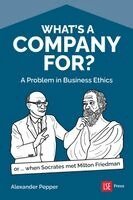
If You're So Ethical, Why Are You So Highly Paid?: Ethics, Inequality and Executive Pay
Alexander Pepper
Häftad, 2022
242 kr
- -19%
- -22%
- Nyhet
- 4 för 3
En flicka som kallas Alice
Kristin Hannah
Pocket, 2025
99 kr
- -23%
- -30%