• Fri frakt över 249 kr
  • •
  • Snabba leveranser
  • •
  • Billiga böcker
Kundservice

Du är på sajten för privatpersoner.

Företag, bibliotek eller offentlig verksamhet?

Du handlar på classic.bokus.com, där alla dina funktioner finns intakta.
Till classic.bokus.com
Bokus logotyp. Gå till startsidan.
  • Erbjudanden
  • Student
  • Topplistor
  • Barn & ungdom
  • Bokus Play
  • E-böcker
  • Ljudböcker
  • Pocketböcker
  • Spel & pussel

Upp till 25% på utvalda nyheter →

Sidfot

Mina sidor

    Hjälp

    • Kundservice
    • Vanliga frågor och svar
    • Frakt och leverans
    • Retur vid ångerrätt
    • Reklamera vara
    • Betalning
    • Köpvillkor
    • Allmänna villkor
    • Information om webbplatsens tillgänglighet

    Om Bokus

    • Om oss
    • Pressrum
    • För studenter
    • För företag
    • För bibliotek och offentlig verksamhet
    • För leverantörer
    • Hållbarhet

    Populärt

    • Aktuella erbjudanden
    • Presentkort
    • Studentlitteratur
    • Nya böcker
    • Topplistor
    • Signerade böcker
    • Engelska böcker

    Inspiration

    • Boktips
    • BookTok
    • Populära bokserier
    • Barnbokskaraktärer
    • Populära författare
    Logotyp för Bokus
    Följ oss på Facebook (extern länk)Följ oss på Instagram (extern länk)Följ oss på YouTube (extern länk)Följ oss på TikTok (extern länk)
    bokus @ CookiesAnpassa cookiesIntegritetspolicyKöpvillkor
    Till Citymail hemsida (extern länk)Till Budbee hemsida (extern länk)Till Postnord hemsida (extern länk)Till Schenker hemsida (extern länk)Till Early Bird hemsida (extern länk)Till Walleys hemsida (extern länk)
    1. Psykologi och pedagogik
    2. Pedagogik
    3. Pedagogisk teori och filosofi

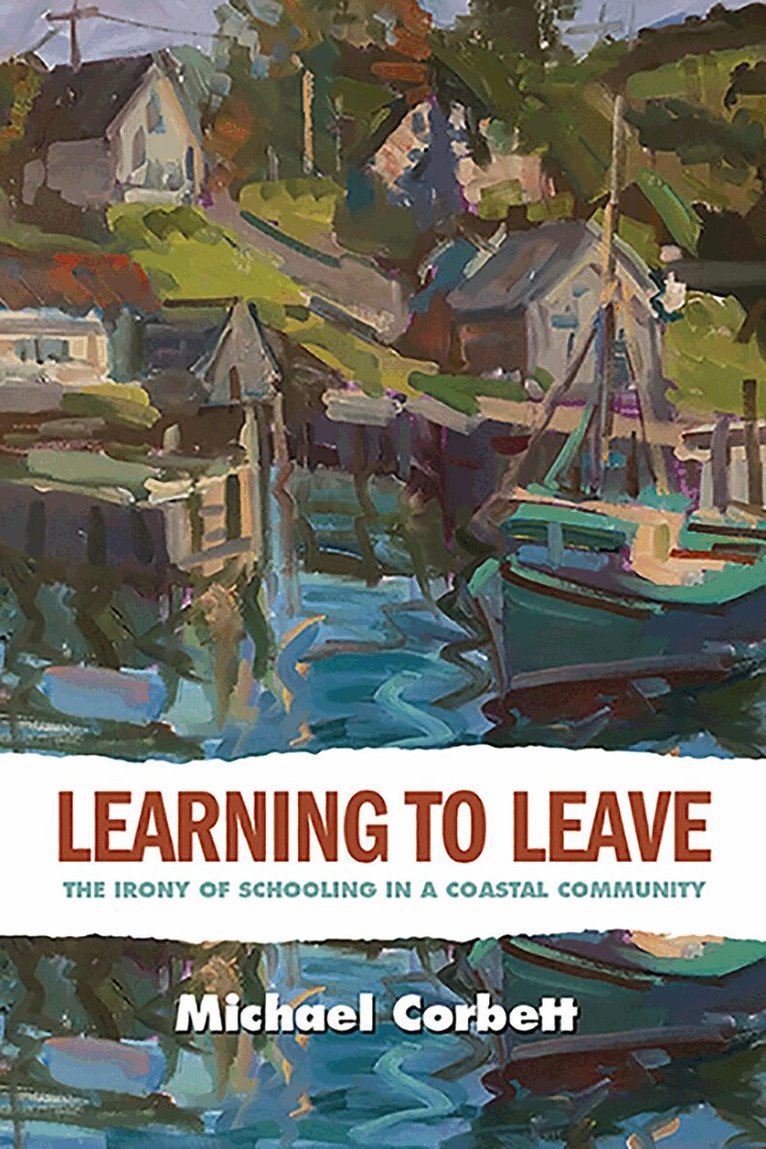
    Learning to Leave

    The Irony of Schooling in a Coastal Community

    AvMichael Corbett

    Häftad, Engelska, 2020

    Del i serien Rural Studies

    263 kr

    Beställningsvara. Skickas inom 10-15 vardagar. Fri frakt över 249 kr.

    Beskrivning

    Published with a new preface, this innovative case study from Nova Scotia analyzes the relationship between rural communities and contemporary education. Rather than supporting place-sensitive curricula and establishing networks within community populations, the rural school has too often stood apart from local life, with the generally unintended consequence that many educationally successful rural youth come to see their communities and lifestyles as places to be left behind. They face what Michael Corbett calls a mobility imperative, which, he shows, has been central to contemporary schooling. Learning to Leave argues that if education is to be democratic and serve the purpose of economic, social, and cultural development, then it must adapt and respond to the specificity of its locale, the knowledge practices of the people, and the needs of those who struggle to remain in challenged rural places.

    Produktinformation

    • Utgivningsdatum:2020-06-11
    • Mått:152 x 244 x 20 mm
    • Vikt:363 g
    • Format:Häftad
    • Språk:Engelska
    • Serie:Rural Studies
    • Antal sidor:309
    • Förlag:West Virginia University Press
    • ISBN:9781949199536

    Utforska kategorier

    • Pedagogisk teori och filosofi inom Psykologi och pedagogik
    • Utbildningsstrategier och utbildningspolitik inom Psykologi och pedagogik
    • Sociologi inom Samhälle och politik

    Mer om författaren

    Michael Corbett teaches at Acadia University in Nova Scotia and has studied youth educational decision-making, mobilities and education, the politics of educational assessment, literacies in rural contexts, improvisation and the arts in education, conceptions of space and place, the viability of small rural schools, and wicked policy problems and controversies in education.

    Recensioner i media

    “A major research contribution—one that will join a relatively short list of first-rate books aimed at helping the education research community, as well as the general public, understand the convoluted phenomenon known as rural education.”Journal of Research in Rural Education “An engrossing, theoretically sophisticated, and important piece of community sociology.”Rural Sociology

    Innehållsförteckning

    • Preface to the 2020 EditionForewordAcknowledgmentChapter 1IntroductionMigration and Regional Dependency: The Brain DrainThe Migration Imperative in Rural EducationChallenges to the Migration Imperative in Rural SchoolingWhy Would Young People Stay?Schooling and Migration in Atlantic CanadaNotesChapter 2Reconceptualizing ResistanceHabitus, Discourse and PlaceResistance Theory in the Sociology of EducationBourdieu's Logic of PracticePoststructural Resistance TheoryResistance and CommunityRural Identity PoliticsThe Organized Rural Community as a Resistant SiteConclusion: To Choose and to MoveNotesChapter 3Who Stays, Who Goes and WhereEducation and Migration on Digby Neck, 1963-1998The EconomyEducation LevelsMobilityThe Education/Mobility ConnectionSummaryNotesChapter 4Parallel Education SystemsThe Classes of 1963-1974Family and Work: An Education for StayingThe Hand on the Shoulder: Socialization for LeavingFormal Education: Streaming for Leavingin the 1960s and early 1970sLearning to Do: The Construction of Intelligenceand Identity in a Coastal CommunityThey Wanted Me to Go to School: Schooling, Identity and FamilyLeaving Home: Education and Occupational PioneeringI Didn't Want to End UpResisting DisplacementConclusionNotesChapter 5The Boom YearsThe Classes of 1975-1986Gender, Work and SchoolingDefining Security: Education, Identity and WorkFamily/ClassThe Mobile FamilyBecoming a StrangerConclusionNotesChapter 6Surviving the CrisisThe Classes of 1987-1998What Is There For the Young Ones?Quitting in the 1990s: Finding Something toDo When There's Nothing to DoThe New Reserve Army of LabourGetting Out: Class, Gender and EducationSurvival and FamilyBack to the Future: Surviving in the New EconomyResistanceConclusion: The Mobile Discourse of SchoolingNotesChapter 7ConclusionPlace MattersMigration, Education and Ambivalence: Mobility CapitalAmbiguity, Mobility and ResistanceResistancesRural Schooling and CommunityNotesReferencesIndex