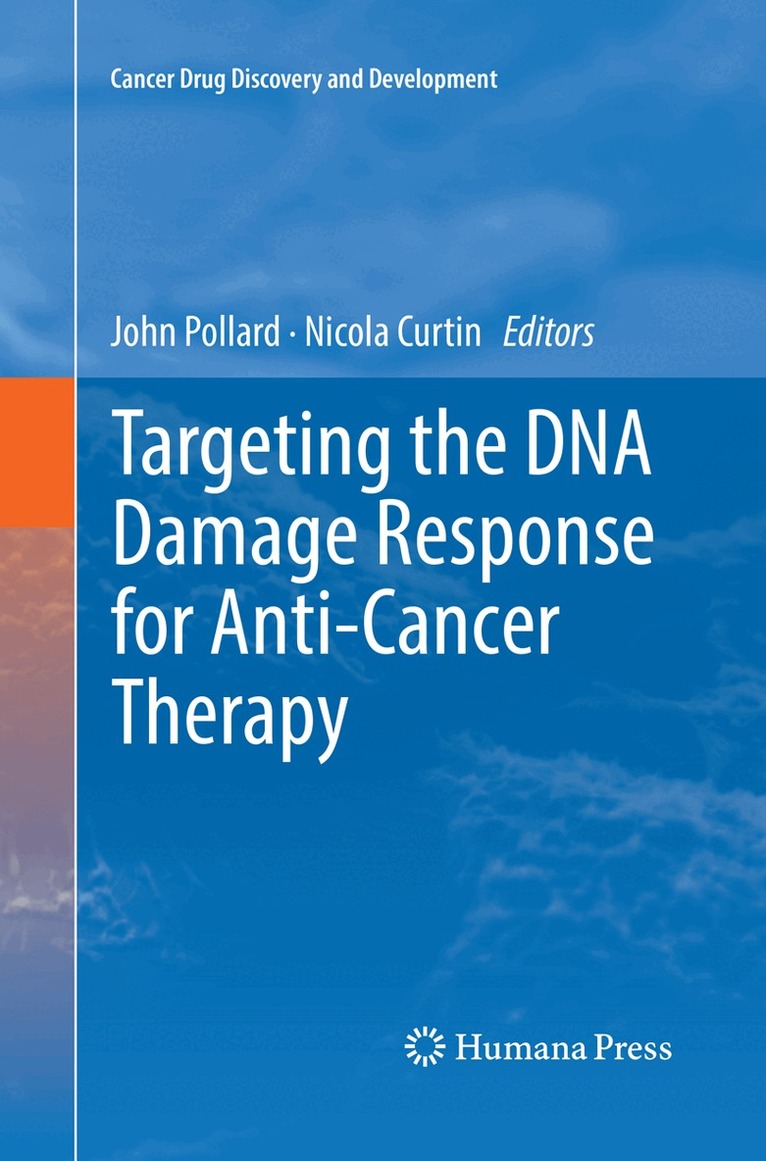
Häftad, Engelska, 2018
Targeting the DNA Damage Response for Anti-Cancer Therapy
Av John Pollard, Nicola Curtin
2249 kr
Beställningsvara. Skickas inom 10-15 vardagar. Fri frakt över 249 kr.
Beskrivning
Over the past decade a complex role for DNA damage response (DDR) in tumorigenesis has emerged. A proficient DDR has been shown to be a primary cause for cellular resistance to the very many DNA damaging drugs, and IR, that are widely used as standard-of-care across multiple cancer types. It has also been shown that defects in this network, predominantly within the ATM mediated signaling pathway, are commonly observed in cancers and may be a primary event during tumorigenesis. Such defects may promote a genomically unstable environment, facilitating the persistence of mutations, any of which may provide a growth or survival advantage to the developing tumor. In addition, these somatic defects provide opportunities to exploit a reliance on remaining repair pathways for survival, a process which has been termed synthetic lethality. As a result of all these observations there has been a great interest in targeting the DDR to provide anti-cancer agents thatmay have benefit as monotherapy in cancers with high background DNA damage levels or as a means to increase the efficacy of DNA damaging drugs and IR. In this book we will review a series of important topics that are of great interest to a broad range of academic, industrial and clinical researchers, including the basic science of the DDR, its role in tumorigenesis and in dictating response to DNA damaging drugs and IR. Additionally, we will focus on the several proteins that have been targeted in attempts to provide drug candidates, each of which appear to have quite distinct profiles and could represent very different opportunities to provide patient benefit.
Produktinformation
- Utgivningsdatum: 2018-12-21
- Mått: 155 x 235 x 23 mm
- Vikt: 622 g
- Format: Häftad
- Språk: Engelska
- Serie: Cancer Drug Discovery and Development
- Antal sidor: 401
- Förlag: Springer Nature Switzerland AG
- ISBN: 9783030093365
Utforska kategorier
Betyg & recensioner
0 recensioner
Inga recensioner tillgängliga.