Inbunden, Engelska, 2020
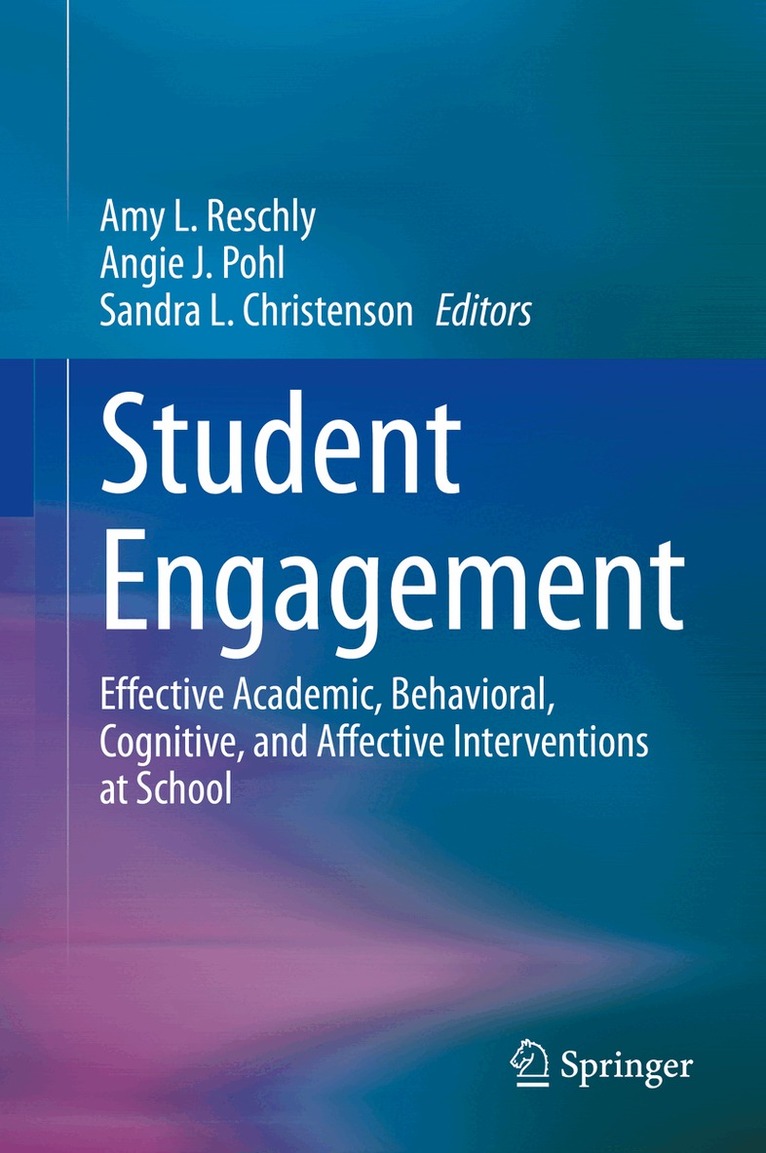
Student Engagement
Av Amy L. Reschly, Angie J. Pohl, Sandra L. Christenson
1912 kr
Beställningsvara. Skickas inom 10-15 vardagar. Fri frakt över 249 kr.
Beskrivning
This book provides cutting-edge, evidence-based strategies and interventions that target students’ engagement at school and with learning. Coverage begins with the background and 29-year history of the Check & Connect Model and describes the model and assessment of student engagement that served as the backdrop for conceptualizing the engagement interventions described in the book. Subsequent chapters are organized around the subtypes of student engagement – academic, behavioral, affective, cognitive – that were developed based on work with the Check & Connect Model. Principles and formal interventions are presented at both the universal and more intensive levels, consistent with the Response-to-Intervention/Multi-Tiered System of Support (MTSS) framework. The book concludes with a summary on the lessons learned from Check & Connect and the importance of a system that is oriented toward enhancing engagement and school completion for all students. Interventions featured in this book include: Peer-Assisted Learning Strategies (PALS).The Homework, Organization, and Planning Skills (HOPS) Intervention.The Good Behavior Game in the classroom.Check-in, Check-out (CICO). Banking Time, a dyadic intervention to improve teacher-student relationshipsThe Self-Regulation Empowerment Program (SREP).Student Engagement is a must-have resource for researchers, professionals, and graduate students in child and school psychology, educational policy and politics, and family studies.
Produktinformation
- Utgivningsdatum: 2020-03-13
- Mått: 155 x 235 x 25 mm
- Vikt: 642 g
- Format: Inbunden
- Språk: Engelska
- Antal sidor: 331
- Förlag: Springer Nature Switzerland AG
- ISBN: 9783030372842
Utforska kategorier
Betyg & recensioner
0 recensioner
Inga recensioner tillgängliga.