Häftad, Engelska, 2022
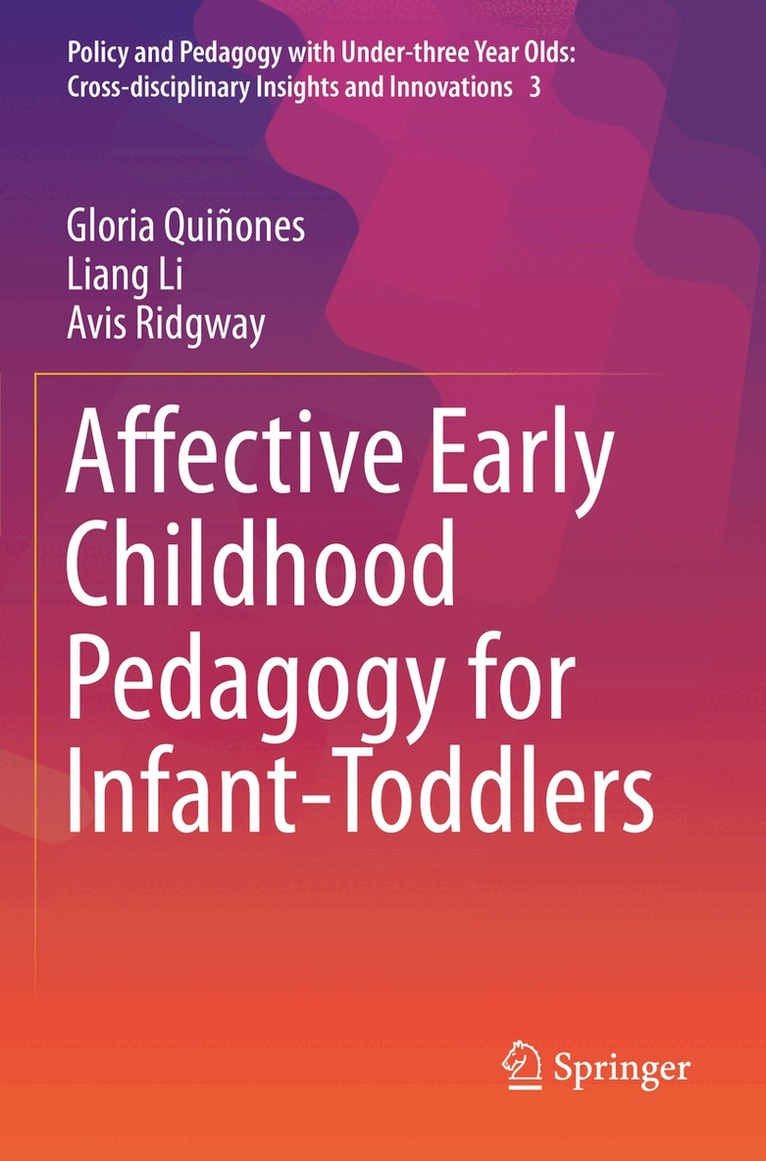
Affective Early Childhood Pedagogy for Infant-Toddlers
Av Gloria Quiñones, Liang Li, Avis Ridgway
1276 kr
Beställningsvara. Skickas inom 10-15 vardagar. Fri frakt över 249 kr.
Beskrivning
This exciting new book brings fresh knowledge of affective pedagogies in early childhood education and care. The book draws on cultural-historical theory in alignment with visual methodologies to elucidate infant-toddlers’ affective pedagogies through analysis of case examples. The book reveals contemporary pedagogical practices in the infant-toddler space like mealtimes, nappy change and play. These pedagogical practices show the highly specialised nature of working with infant-toddlers such as the affective relations between educators and infant-toddlers, affective dialogue, affective engagement, and the creation of affective spaces. The value of collaboration is highlighted through creating an affective space for educators to become aware, reflect and position themselves as effective and affective educators. The book introduces innovative methodological tools such as images and collective drawings for collaborative reflection.
Produktinformation
- Utgivningsdatum: 2022-05-20
- Mått: 155 x 235 x 9 mm
- Vikt: 283 g
- Format: Häftad
- Språk: Engelska
- Serie: Policy and Pedagogy with Under-three Year Olds: Cross-disciplinary Insights and Innovations
- Antal sidor: 146
- Förlag: Springer Nature Switzerland AG
- ISBN: 9783030735296
Utforska kategorier
Betyg & recensioner
0 recensioner
Inga recensioner tillgängliga.