Häftad, Engelska, 2023
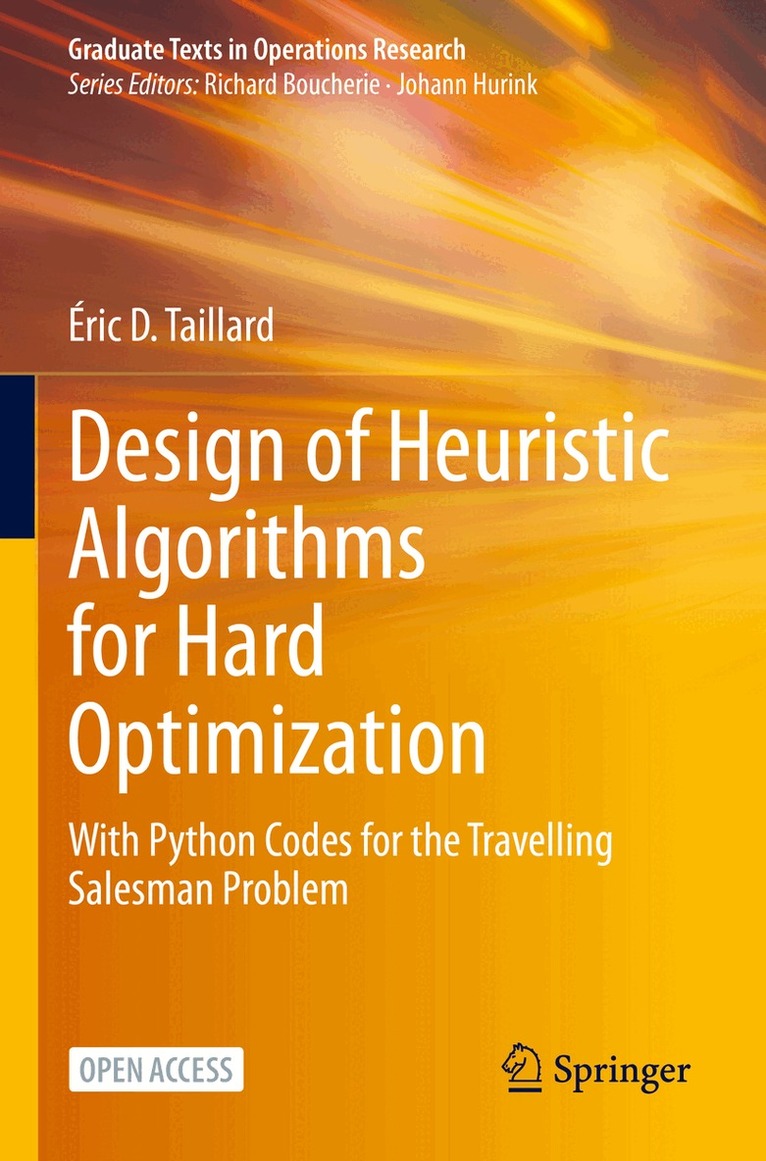
Design of Heuristic Algorithms for Hard Optimization
445 kr
Skickas inom 10-15 vardagar
Beskrivning
This open access book demonstrates all the steps required to design heuristic algorithms for difficult optimization. The classic problem of the travelling salesman is used as a common thread to illustrate all the techniques discussed. This problem is ideal for introducing readers to the subject because it is very intuitive and its solutions can be graphically represented. The book features a wealth of illustrations that allow the concepts to be understood at a glance. The book approaches the main metaheuristics from a new angle, deconstructing them into a few key concepts presented in separate chapters: construction, improvement, decomposition, randomization and learning methods. Each metaheuristic can then be presented in simplified form as a combination of these concepts. This approach avoids giving the impression that metaheuristics is a non-formal discipline, a kind of cloud sculpture. Moreover, it provides concrete applications of the travelling salesman problem, whichillustrate in just a few lines of code how to design a new heuristic and remove all ambiguities left by a general framework. Two chapters reviewing the basics of combinatorial optimization and complexity theory make the book self-contained. As such, even readers with a very limited background in the field will be able to follow all the content.
Produktinformation
- Utgivningsdatum: 2023-10-31
- Mått: 155 x 235 x 23 mm
- Vikt: 448 g
- Format: Häftad
- Språk: Engelska
- Antal sidor: 287
- Förlag: Springer International Publishing AG
- Serie: Graduate Texts in Operations Research
- ISBN: 9783031137167
Betyg & recensioner
0 recensioner
Inga recensioner tillgängliga.