Häftad, Engelska, 2024
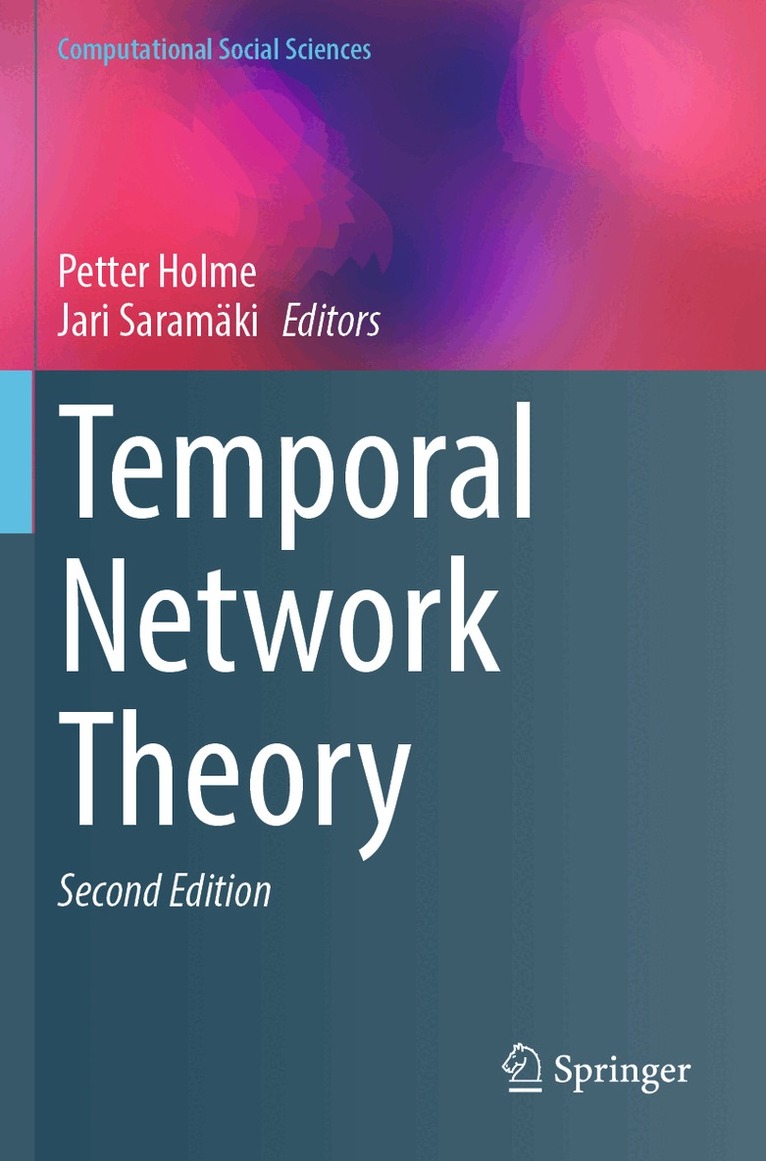
Temporal Network Theory
Av Petter Holme, Jari Saramäki
1643 kr
Beställningsvara. Skickas inom 10-15 vardagar. Fri frakt över 249 kr.
Beskrivning
This book focuses on the theoretical side of temporal network research and gives an overview of the state of the art in the field. Curated by two pioneers in the field who have helped to shape it, the book contains contributions from many leading researchers. Temporal networks fill the border area between network science and time-series analysis and are relevant for epidemic modeling, optimization of transportation and logistics, as well as understanding biological phenomena.Over the past 20 years, network theory has proven to be one of the most powerful tools for studying and analyzing complex systems. Temporal network theory is perhaps the most recent significant development in the field in recent years, with direct applications to many of the “big data” sets. This book appeals to students, researchers, and professionals interested in theory and temporal networks—a field that has grown tremendously over the last decade.This second edition of Temporal NetworkTheory extends the first with three chapters highlighting recent developments in the interface with machine learning.
Produktinformation
- Utgivningsdatum: 2024-11-21
- Mått: 155 x 235 x 26 mm
- Vikt: 841 g
- Format: Häftad
- Språk: Engelska
- Serie: Computational Social Sciences
- Antal sidor: 485
- Upplaga: 2
- Förlag: Springer International Publishing AG
- ISBN: 9783031304019
Betyg & recensioner
0 recensioner
Inga recensioner tillgängliga.