Inbunden, Engelska, 2017
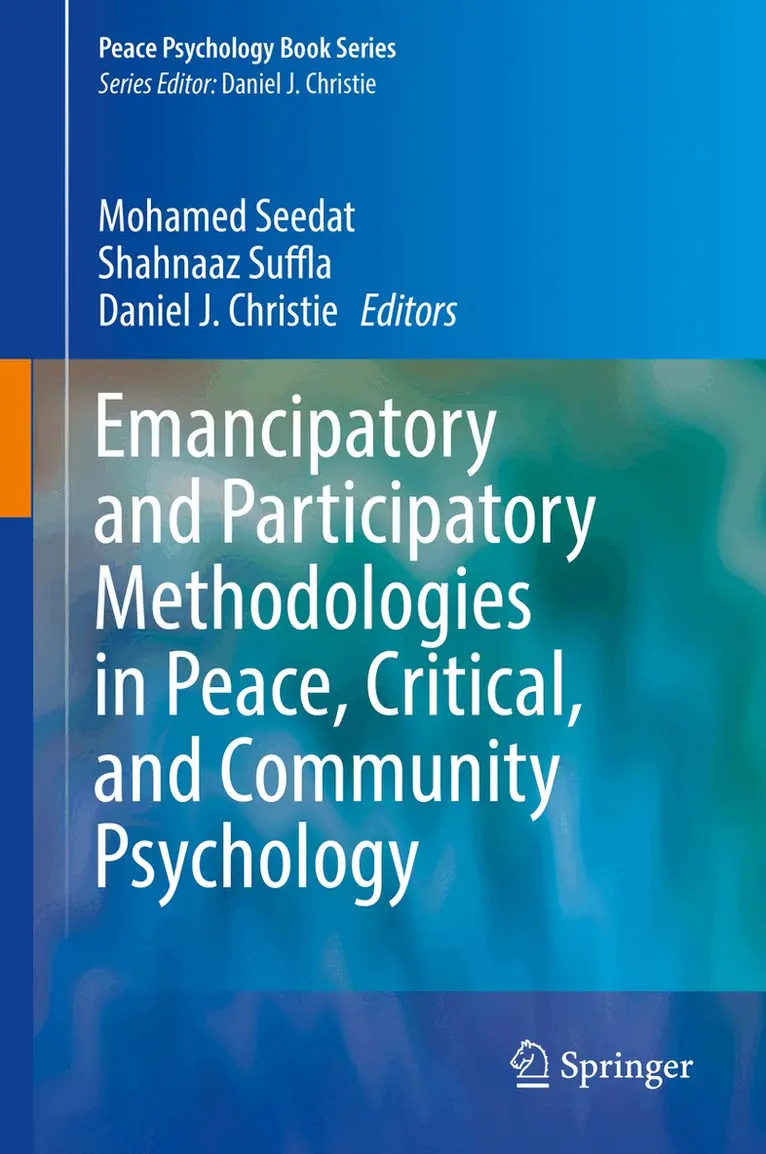
Emancipatory and Participatory Methodologies in Peace, Critical, and Community Psychology
Av Mohamed Seedat, Shahnaaz Suffla, Daniel J. Christie
1170 kr
Beställningsvara. Skickas inom 10-15 vardagar. Fri frakt över 249 kr.
Beskrivning
Offering a unique set of case studies that invites readers to question and reimagine the concept of community engagement, this collected work provides an overview and analysis of numerous, creative participatory research methods designed to improve well-being at both the individual and societal level. In a world where there are enormous differences in the wealth and health of people, it is increasingly recognized that sustainable peace requires both a broad--‐based public commitment to nonviolence combined with noticeable increments in the wellbeing of people who occupy the lowest socioeconomic strata of societies. This volume focuses on the latter-how to use qualitative research methods to improve well-being of research participants, and thus, the wider society. The participatory research examples described in these chapters are meant to encourage researchers, scholars, and practitioners to question assumed knowledge about community engagement research and practice, and to inspire social justice-oriented scholarship. The cases studies and methods portrayed are as varied as the situations and cultures in which they take place. In most of the case studies, the personal is linked to the political with a social justice imperative as participants from marginalized communities express an understanding of their own position within power hierarchies, deconstruct power relations, and experience a sense of agency. In other instances, the methods are no less participatory but the aim is more focused on inner and outer harmony, psychological wellbeing, conflict resolution and intergroup reconciliation. In all the cases studies, there is a strong emphasis on methods in which community members are at the center of efforts to promote social change. The methods described include group storytelling, community arts, asset mapping, dialogues, creative writing, embroidery, filmmaking, Photovoice, “writing back” to power, and other means of engaging in emancipatorypraxis and promoting personal wellbeing. Taken together, the chapters illustrate creative ways in which community members, embedded in disadvantaged contexts, can engage in a dynamic process that stimulates individual and collective agency. Ultimately, this volume will provide readers with a deeper understanding of a wide range of creative, qualitative research methods, and will encourage establishment of an effective social justice agenda essential to human wellbeing and sustainable peace.
Produktinformation
- Utgivningsdatum: 2017-10-27
- Mått: 155 x 235 x 18 mm
- Vikt: 484 g
- Format: Inbunden
- Språk: Engelska
- Serie: Peace Psychology Book Series
- Antal sidor: 206
- Upplaga: 17001
- Förlag: Springer International Publishing AG
- ISBN: 9783319634883
Utforska kategorier
Betyg & recensioner
0 recensioner
Inga recensioner tillgängliga.