Häftad, Engelska, 2015
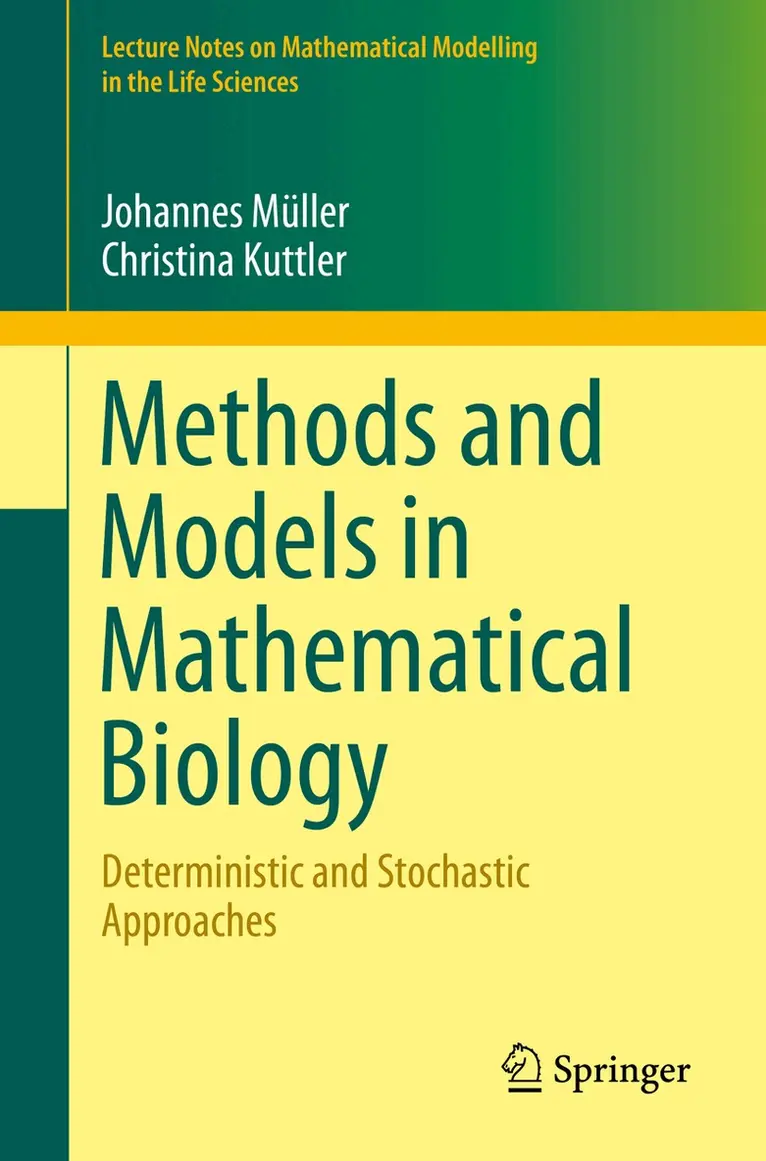
Methods and Models in Mathematical Biology
Av Johannes Müller, Christina Kuttler
987 kr
Beställningsvara. Skickas inom 10-15 vardagar. Fri frakt över 249 kr.
Beskrivning
This book developed from classes in mathematical biology taught by the authors over several years at the Technische Universität München. The main themes are modeling principles, mathematical principles for the analysis of these models and model-based analysis of data. The key topics of modern biomathematics are covered: ecology, epidemiology, biochemistry, regulatory networks, neuronal networks and population genetics. A variety of mathematical methods are introduced, ranging from ordinary and partial differential equations to stochastic graph theory and branching processes. A special emphasis is placed on the interplay between stochastic and deterministic models.
Produktinformation
- Utgivningsdatum: 2015-08-20
- Mått: 155 x 235 x 40 mm
- Vikt: 1 076 g
- Format: Häftad
- Språk: Engelska
- Serie: Lecture Notes on Mathematical Modelling in the Life Sciences
- Antal sidor: 711
- Upplaga: 15001
- Förlag: Springer-Verlag Berlin and Heidelberg GmbH & Co. KG
- ISBN: 9783642272509
Utforska kategorier
Betyg & recensioner
0 recensioner
Inga recensioner tillgängliga.