Inbunden, Engelska, 2022
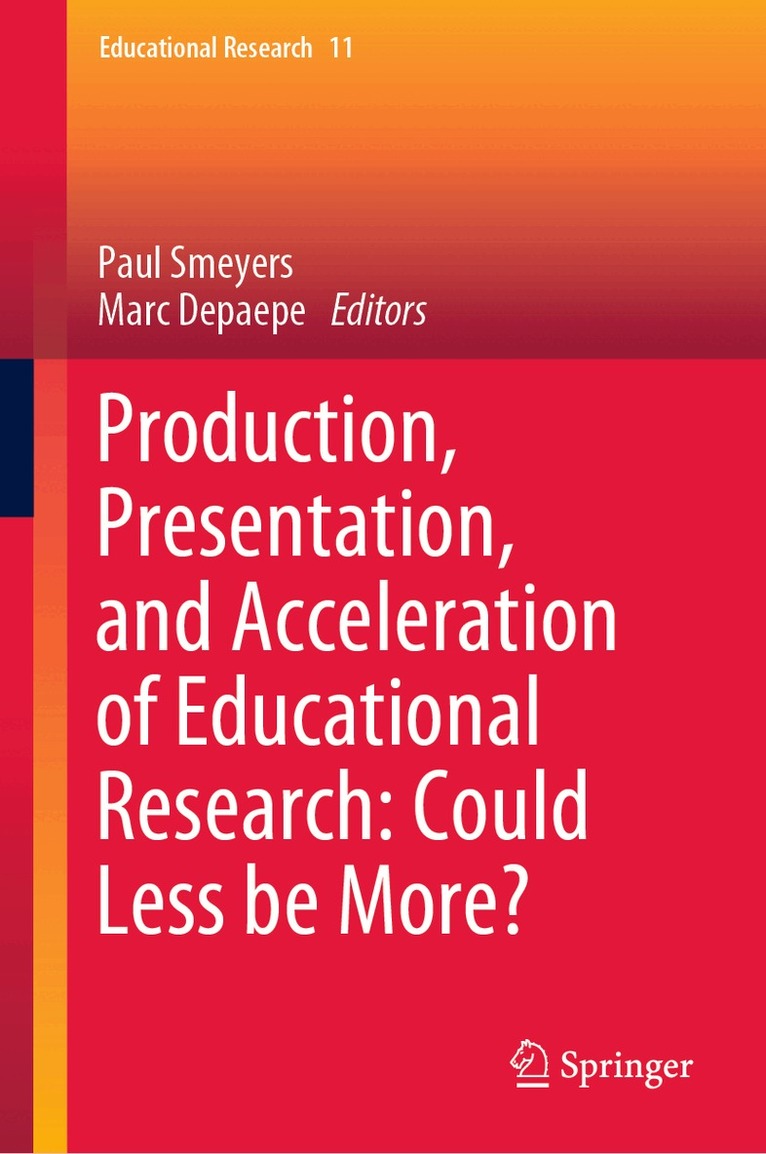
Production, Presentation, and Acceleration of Educational Research: Could Less be More?
1380 kr
Beställningsvara. Skickas inom 10-15 vardagar. Fri frakt över 249 kr.
Beskrivning
Is educational research chasing the trends one can observe in big sciences, mimicking what happens, some would say successfully, elsewhere in academia? The question in the title of this edited collection took its inspiration from a verse by Goethe: Wer Großes will, muss sich zusammenraffen. In der Beschränkung zeigt sich erst der Meister. Such confinement or limitation that may show mastery does not characterize at all the present state of the educational research publication scene. Instead, there have never been more of such publications which follow each other with an increasing speed. It may therefore be interesting to delve into the reasons of this development that is characteristic of what is published in this field as in many or almost all fields of scholarly work. The chapters in this collection address aspects of the (re)presentation, dissemination and reception, and the production and acceleration of educational research. An international group of scholars, philosophers and historians of education, address questions such as ‘Why publish?’, ‘The lust for academic fame’, ‘Why educational historiography is not an unnecessary luxury?’, and ‘Ways of knowing’. The twelve chapters are preceded by an introduction where issues of plurality and diversity in the study of education are at centre stage and followed by an Epilogue written by the Editors of the Springer Series Educational Research. Paul Smeyers and Marc Depaepe offer some final reflections after a journey of two decades that took them and the colleagues participating in the Research Community from 1999 till 2018 floating on the current of the Zeitgeist that carried the Discipline of Education. They claim finally that mastery in the study of education requires restraint.
Produktinformation
- Utgivningsdatum: 2022-02-14
- Mått: 155 x 235 x 19 mm
- Vikt: 483 g
- Format: Inbunden
- Språk: Engelska
- Serie: Educational Research
- Antal sidor: 233
- Förlag: Springer Verlag, Singapore
- ISBN: 9789811630163
Utforska kategorier
Betyg & recensioner
0 recensioner
Inga recensioner tillgängliga.