Häftad, Engelska, 2023
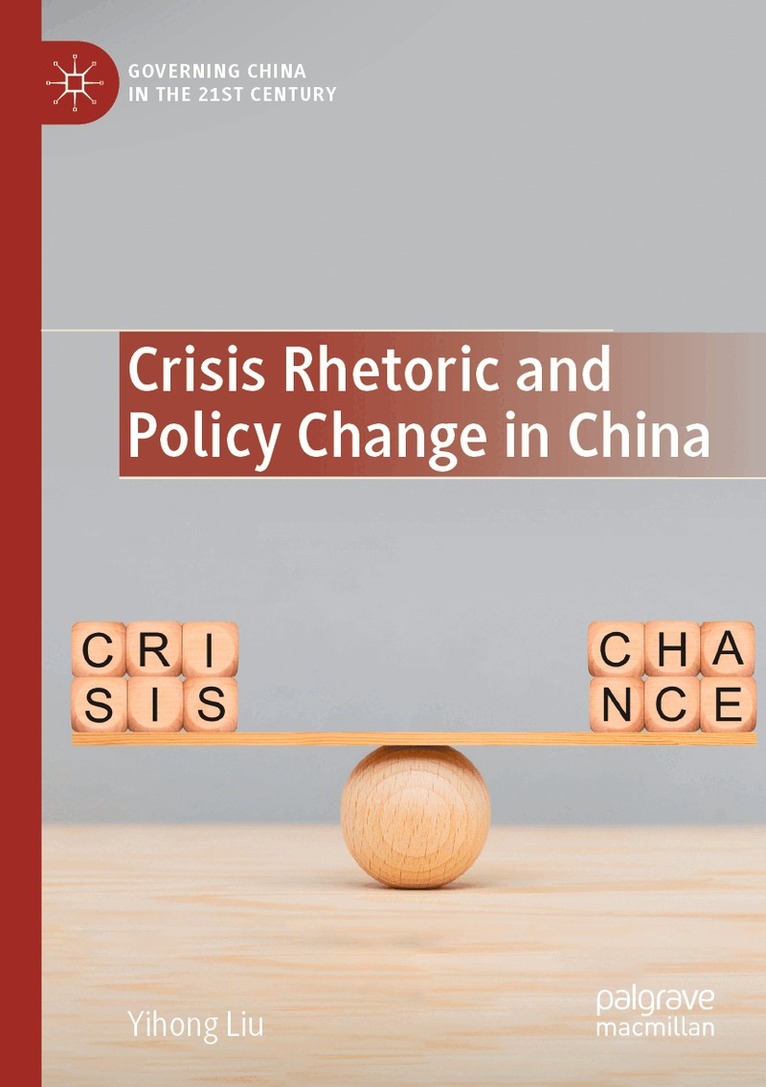
Crisis Rhetoric and Policy Change in China
Av Yihong Liu
1170 kr
Beställningsvara. Skickas inom 10-15 vardagar. Fri frakt över 249 kr.
Beskrivning
This book explores how China's political system responds to crisis. A crisis is an episode whose impact cannot be controlled merely by astute on-the-ground incident management, particularly in cases involving widespread doubt about the legitimacy of established policy paradigms or the political order as a whole. Crisis can create “political windows” for advocacy groups challenging established policies in pluralist democracies. The political battle between competing definitions of an uncertain and ambiguous situation among the various actors provides them with crisis-induced opportunity space for dramatic policy change. However, the process of crisis-induced policy change, mainly by crisis framing, in non-west regimes like China has not been adequately addressed. As China's leadership foregrounds legitimacy in “victory” over COVID-19, and a new era of climate change disasters begins, this dynamic model of crisis and recuperation will offer food for thought for scholars of Chinese andglobal politics.
Produktinformation
- Utgivningsdatum: 2023-01-15
- Mått: 148 x 210 x 16 mm
- Vikt: 361 g
- Format: Häftad
- Språk: Engelska
- Serie: Governing China in the 21st Century
- Antal sidor: 253
- Förlag: Springer Verlag, Singapore
- ISBN: 9789811677656
Utforska kategorier
Betyg & recensioner
0 recensioner
Inga recensioner tillgängliga.