Amara Solari - Böcker
Visar alla böcker från författaren Amara Solari. Handla med fri frakt och snabb leverans.
8 produkter
8 produkter
101 kr
Skickas inom 5-8 vardagar
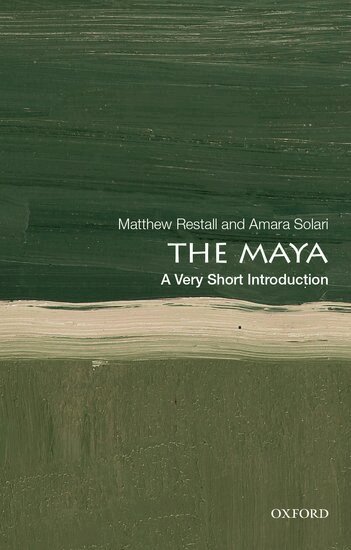
The Maya forged one of the greatest societies in the history of the ancient Americas — and in all of human history. Long before contact with Europeans, Maya communities built spectacular cities with large, well-fed large populations. They mastered the visual arts, and developed a sophisticated writing system that recorded extraordinary knowledge in calendrics, mathematics, and astronomy. The Maya achieved all this without area-wide centralized control. There was never a single, unified Maya state or empire, but always numerous, evolving ethnic groups speaking dozens of distinct Mayan languages. The people we call "Maya" never thought of themselves as such; yet something definable, unique, and endlessly fascinating - what we call Maya culture - has clearly existed for millennia. So what was their self-identity and how did Maya civilization come to be "invented?"With the Maya historically subdivided and misunderstood in so many ways, the pursuit of what made them "the Maya" is all the more important. In this Very Short Introduction, Restall and Solari explore the themes of Maya identity, city-state political culture, art and architecture, the Maya concept of the cosmos, and the Maya experience of contact with — including invasion by — outsiders. Despite its brevity, this book is unique for its treatment of all periods of Maya civilization, from its origins to the present.
1 168 kr
Skickas inom 7-10 vardagar
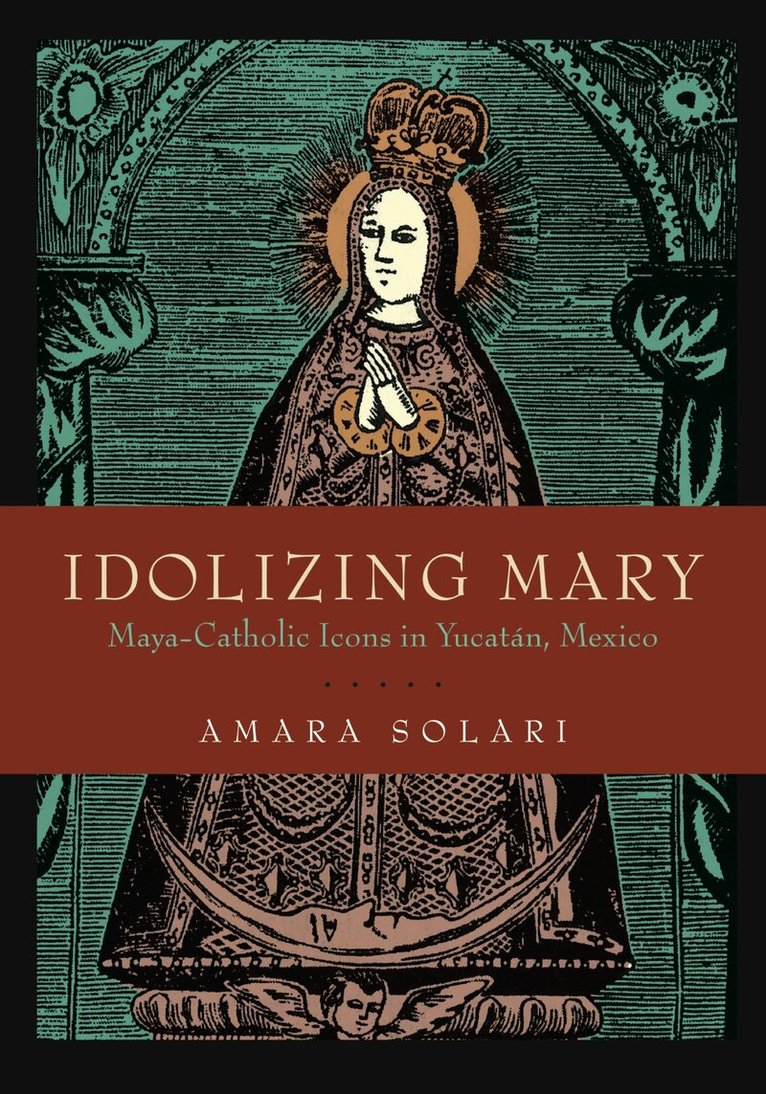
In the summer of 1648, yellow fever appeared for the first time on the Yucatán Peninsula, claiming the lives of roughly one-third of the population. To combat this epidemic, Spanish colonial authorities carried a miracle-working Marian icon in procession from Itzmal to the capital city of Mérida and back again as a means of invoking divine intercession. Idolizing Mary uses this event and this icon to open a discussion about the early and profound indigenous veneration of the Virgin Mary.Amara Solari argues that particular Marian icons, such as the Virgin of Itzmal, embodied an ideal suite of precontact numinous qualities, which Maya neophytes reframed for their community’s religious needs. Examining prints, paintings, and early modern writings about the Virgin of Itzmal, Solari takes up various topics that contributed to the formation of Yucatán Catholicism—such as indigenous Maya notions of sacrality, ritual purity, and the formal qualities of offering vessels—and demonstrates how these aligned with the Virgin of Itzmal in such a way that the icon came to be viewed by the native populations as a deity of a new world order.Thoroughly researched and convincingly argued, Idolizing Mary will be welcomed by scholars and students interested in religious transformation and Marian devotion in colonial Spanish America.
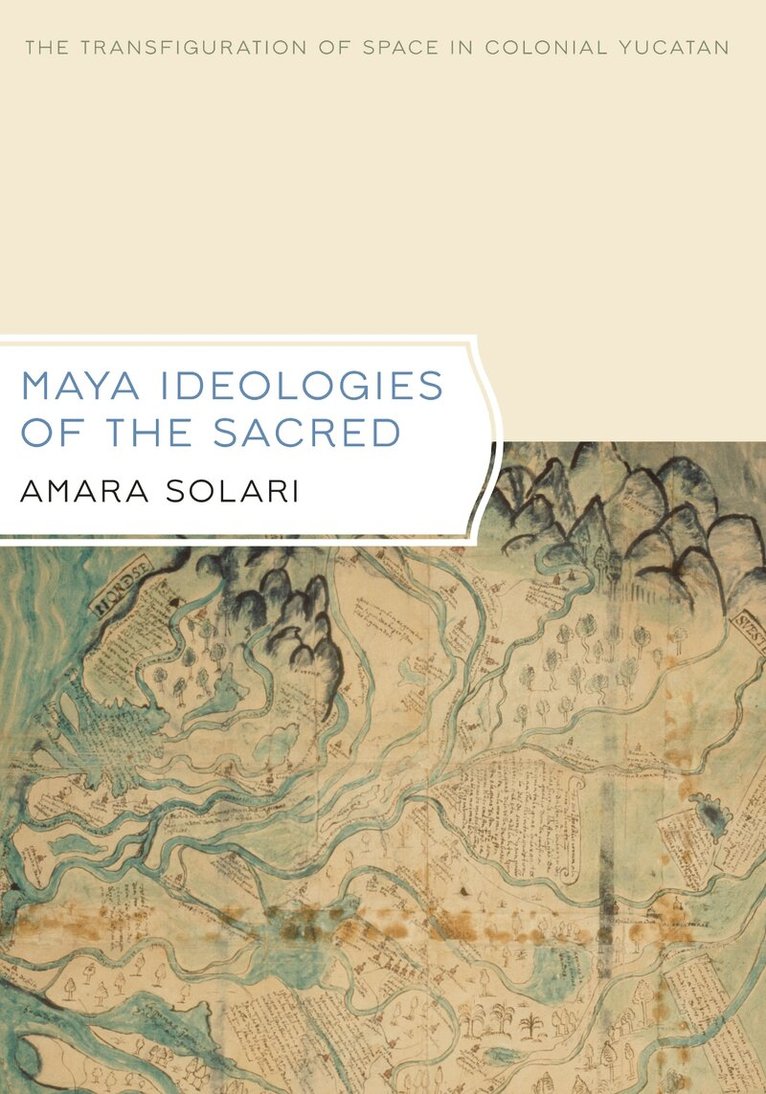
Maya Ideologies of the Sacred
The Transfiguration of Space in Colonial Yucatan
Inbunden, Engelska, 2013
588 kr
Skickas inom 7-10 vardagar
As Spaniards built colonies in the New World, men of the cloth saw within ancient ruins and inhabited native towns great potential for easing the colonization effort. In the Yucatan, which is the locus of this study, Franciscan friars seized upon the opportunity to “conquer” Maya places for Christianity. Their practice of remaking a Maya town into a Christian town-often building their church on the very foundations of an ancient sacred site-represented the absolute triumph of their religion, the ultimate defeat of the pagan demonic forces by the true faith.This book addresses the Franciscan evangelical campaign of sixteenth-century Yucatan and investigates how Maya conceptions of space, landscape, and history influenced the conversion strategies adopted by the friars. Amara Solari analyzes colonial manuscripts written in Yucatec Mayan to discern how Maya communities conceived of land (and more abstractly, space) and how they encoded space with cultural significance. She demonstrates how these indigenous understandings of space and its history, a locale’s “spatial biography,” made the transference of sacrality possible. Using the Maya city of Itzmal as a case study, Solari examines the process of transferring sacrality and healing abilities from the Maya deity Itzamnaaj to a numinous statue of the Virgin Mary. She also reveals how the hybrid religious ideology that evolved allowed the native Maya population to subvert colonial political and religious programs and maintain community identity in the early years of the colonial period.
179 kr
Skickas inom 7-10 vardagar
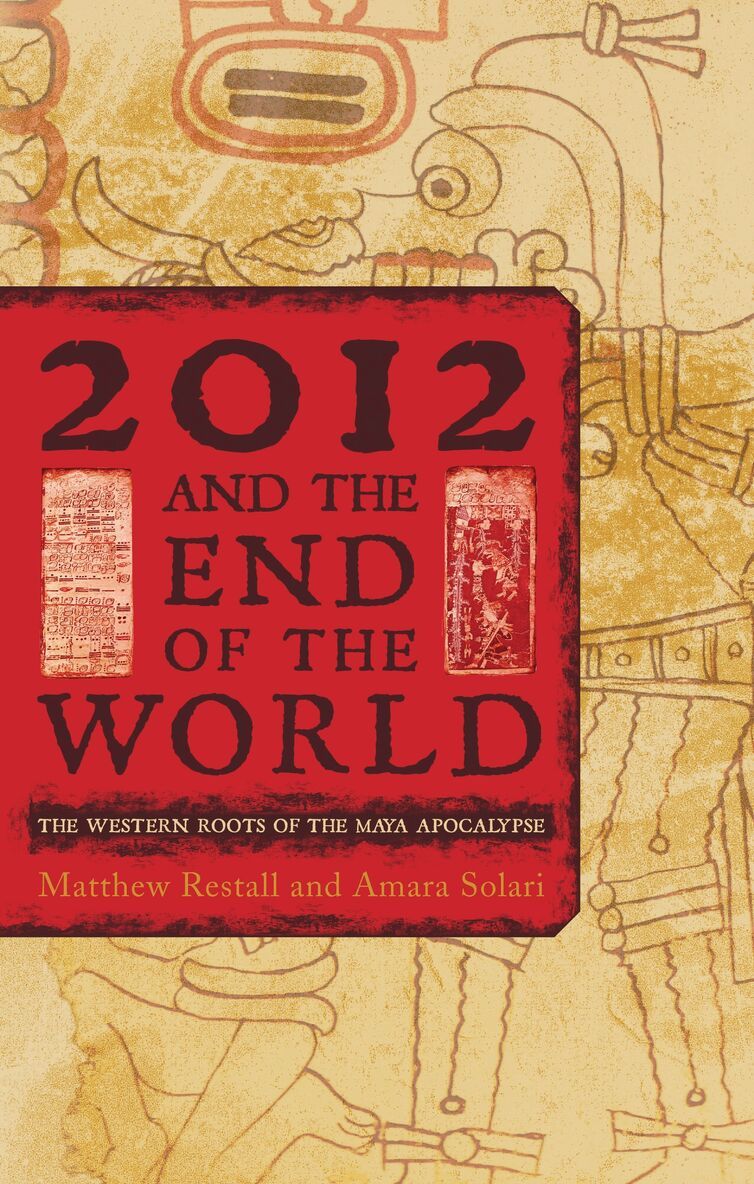
Did the Maya really predict that the world would end in December of 2012? If not, how and why has 2012 millenarianism gained such popular appeal? In this deeply knowledgeable book, two leading historians of the Maya answer these questions in a succinct, readable, and accessible style. Matthew Restall and Amara Solari introduce, explain, and ultimately demystify the 2012 phenomenon. They begin by briefly examining the evidence for the prediction of the world's end in ancient Maya texts and images, analyzing precisely what Maya priests did and did not prophesize. The authors then convincingly show how 2012 millenarianism has roots far in time and place from Maya cultural traditions, but in those of medieval and Early Modern Western Europe. Revelatory any myth-busting, while remaining firmly grounded in historical fact, this fascinating book will be essential reading as the countdown to December 21, 2012, begins.
641 kr
Skickas inom 7-10 vardagar
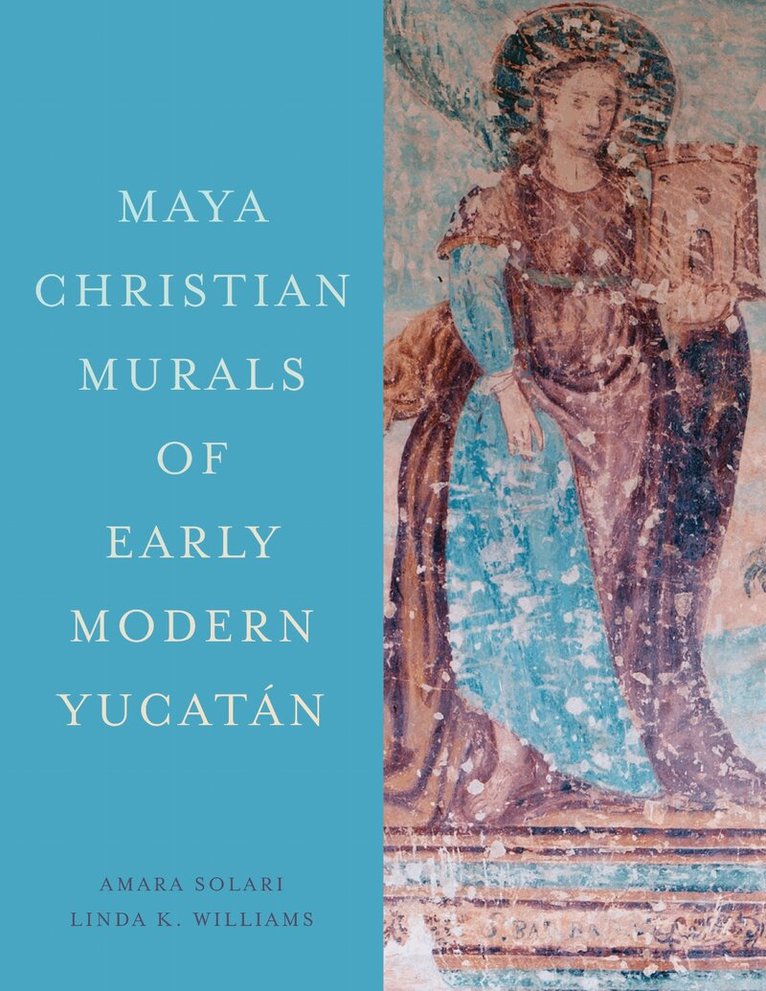
The first study of Christian murals created by indigenous artists in sixteenth and seventeenth century YucatÁn.In the sixteenth and seventeenth centuries, Maya artists painted murals in churches and conventos of YucatÁn using traditional techniques to depict iconography brought from Europe by Franciscan friars. The fragmentary visual remains and their placement within religious structures embed Maya conceptions of sacredness beyond the didactic imagery. Mobilizing both cutting-edge technology and tried-and-true analytical methods, art historians Amara Solari and Linda K. Williams reexamine the Maya Christian murals, centering the agency of the people who created them. The first volume to comprehensively document the paintings, Maya Christian Murals of Early Modern YucatÁn collects new research on the material composition of the works, made possible by cutting-edge imaging methods. Solari and Williams investigate pigments and other material resources, as well as the artists and historical contexts of the murals. The authors uncover numerous local innovations in form and content, including images celebrating New World saints, celestial timekeeping, and ritual processions. Solari and Williams argue that these murals were not simply vehicles of coercion, but of cultural “grafting,” that allowed Maya artists to shape a distinctive and polyvocal legacy in their communities.
942 kr
Skickas inom 10-15 vardagar
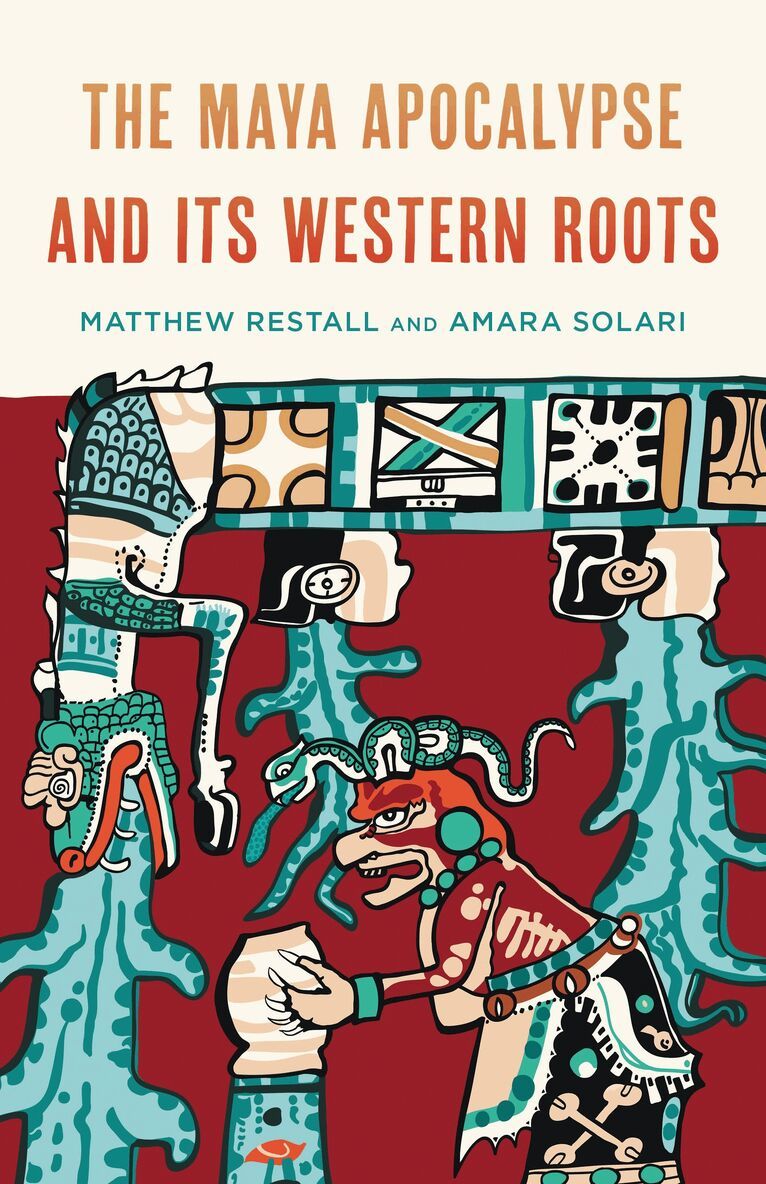
This fascinating history explores the cultural roots of our civilization’s obsession with the end of the world. Busting the myth of the ancient Maya prediction that time would end in 2012, Matthew Restall and Amara Solari build on their previous book, 2012 and the End of the World, to use the Maya case to connect such seemingly disparate historical events as medieval European millenarianism, Moctezuma’s welcome to Cortés, Franciscan missionizing in Mexico, prophetic traditions in Yucatan, and the growing belief today in conspiracies and apocalypses. In demystifying the 2012 phenomenon, the authors draw on their decades of scholarship to provide an accessible and engaging explanation of what Mayas and Aztecs really believed, how Judeo-Christian apocalypticism became part of the Indigenous Mesoamerican and modern American worlds, and why millions continue to anticipate an imminent Doomsday.
354 kr
Skickas inom 10-15 vardagar
This fascinating history explores the cultural roots of our civilization’s obsession with the end of the world. Busting the myth of the ancient Maya prediction that time would end in 2012, Matthew Restall and Amara Solari build on their previous book, 2012 and the End of the World, to use the Maya case to connect such seemingly disparate historical events as medieval European millenarianism, Moctezuma’s welcome to Cortés, Franciscan missionizing in Mexico, prophetic traditions in Yucatan, and the growing belief today in conspiracies and apocalypses. In demystifying the 2012 phenomenon, the authors draw on their decades of scholarship to provide an accessible and engaging explanation of what Mayas and Aztecs really believed, how Judeo-Christian apocalypticism became part of the Indigenous Mesoamerican and modern American worlds, and why millions continue to anticipate an imminent Doomsday.
349 kr
Skickas inom 5-8 vardagar
The Friar and the Maya offers a full study and new translation of the Relación de las Cosas de Yucatán (Account of the Things of Yucatan) by a unique set of eminent scholars, created by them over more than a decade from the original manuscript held by the Real Academia de la Historia in Madrid. This critical and careful reading of the Account is long overdue in Maya studies and will forever change how this seminal text is understood and used. For generations, scholars used (and misused) the Account as the sole eyewitness insight into an ancient civilization. It is credited to the sixteenth-century Spanish Franciscan, monastic inquisitor, and bishop Diego de Landa, whose legacy is complex and contested. His extensive writings on Maya culture and history were lost in the seventeenth century, save for the fragment that is the Account, discovered in the nineteenth century, and accorded near-biblical status in the twentieth as the first “ethnography” of the Maya. However, the Account is not authored by Landa alone; it is a compilation of excerpts, many from writings by other Spaniards—a significant revelation made here for the first time. This new translation accurately reflects the style and vocabulary of the original manuscript. It is augmented by a monograph—comprising an introductory chapter, seven essays, and hundreds of notes—that describes, explains, and analyzes the life and times of Diego de Landa, the Account, and the role it has played in the development of modern Maya studies. The Friar and the Maya is an innovative presentation on an important and previously misunderstood primary source.