• Fri frakt över 249 kr
  • •
  • Snabba leveranser
  • •
  • Billiga böcker
Kundservice

Du är på sajten för privatpersoner.

Företag, bibliotek eller offentlig verksamhet?

Du handlar på classic.bokus.com, där alla dina funktioner finns intakta.
Till classic.bokus.com
Bokus logotyp. Gå till startsidan.
  • Erbjudanden
  • Nyheter
  • Student
  • Topplistor
  • Barn & ungdom
  • Bokus Play
  • E-böcker
  • Pocketböcker
  • Spel & pussel

10% rabatt på allt med kod: NYSTART10 →

Sidfot

Mina sidor

    Hjälp

    • Kundservice
    • Vanliga frågor och svar
    • Frakt och leverans
    • Retur vid ångerrätt
    • Reklamera vara
    • Betalning
    • Köpvillkor
    • Allmänna villkor
    • Information om webbplatsens tillgänglighet

    Om Bokus

    • Om oss
    • Pressrum
    • För studenter
    • För företag
    • För bibliotek och offentlig verksamhet
    • För leverantörer
    • Hållbarhet

    Populärt

    • Aktuella erbjudanden
    • Presentkort
    • Studentlitteratur
    • Nya böcker
    • Topplistor
    • Signerade böcker
    • Engelska böcker

    Inspiration

    • Boktips
    • BookTok
    • Populära bokserier
    • Barnbokskaraktärer
    • Populära författare
    Logotyp för Bokus
    Följ oss på Facebook (extern länk)Följ oss på Instagram (extern länk)Följ oss på YouTube (extern länk)Följ oss på TikTok (extern länk)
    bokus @ CookiesAnpassa cookiesIntegritetspolicyKöpvillkor
    Till Citymail hemsida (extern länk)Till Budbee hemsida (extern länk)Till Postnord hemsida (extern länk)Till Schenker hemsida (extern länk)Till Early Bird hemsida (extern länk)Till Walleys hemsida (extern länk)
    1. Filosofi och religion
    2. Religion och tro
    3. Religion: allmänt

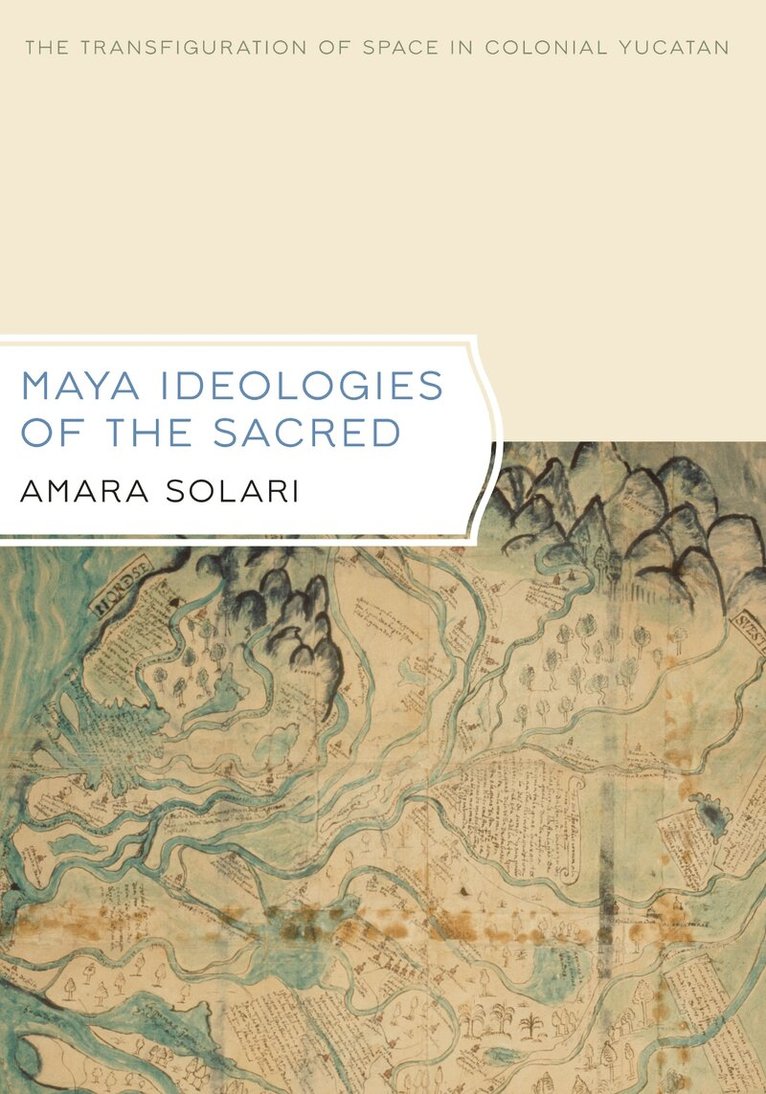
    Maya Ideologies of the Sacred

    The Transfiguration of Space in Colonial Yucatan

    AvAmara Solari

    Inbunden, Engelska, 2013

    Del i serien Latin American and Caribbean Arts and Culture Publication Initiative, Mellon Foundation

    609 kr

    Beställningsvara. Skickas inom 5-8 vardagar. Fri frakt över 249 kr.

    Beskrivning

    As Spaniards built colonies in the New World, men of the cloth saw within ancient ruins and inhabited native towns great potential for easing the colonization effort. In the Yucatan, which is the locus of this study, Franciscan friars seized upon the opportunity to “conquer” Maya places for Christianity. Their practice of remaking a Maya town into a Christian town-often building their church on the very foundations of an ancient sacred site-represented the absolute triumph of their religion, the ultimate defeat of the pagan demonic forces by the true faith.This book addresses the Franciscan evangelical campaign of sixteenth-century Yucatan and investigates how Maya conceptions of space, landscape, and history influenced the conversion strategies adopted by the friars. Amara Solari analyzes colonial manuscripts written in Yucatec Mayan to discern how Maya communities conceived of land (and more abstractly, space) and how they encoded space with cultural significance. She demonstrates how these indigenous understandings of space and its history, a locale’s “spatial biography,” made the transference of sacrality possible. Using the Maya city of Itzmal as a case study, Solari examines the process of transferring sacrality and healing abilities from the Maya deity Itzamnaaj to a numinous statue of the Virgin Mary. She also reveals how the hybrid religious ideology that evolved allowed the native Maya population to subvert colonial political and religious programs and maintain community identity in the early years of the colonial period.

    Produktinformation

    • Utgivningsdatum:2013-07-01
    • Mått:178 x 254 x 25 mm
    • Vikt:739 g
    • Format:Inbunden
    • Språk:Engelska
    • Serie:Latin American and Caribbean Arts and Culture Publication Initiative, Mellon Foundation
    • Antal sidor:244
    • Förlag:University of Texas Press
    • ISBN:9780292744943

    Utforska kategorier

    • Religion: allmänt inom Filosofi och religion
    • Amerikas historia inom Historia och arkeologi

    Mer om författaren

    These are the recollections of Alexandre-of his life, his death-in-life, and his ultimate death, as they are played out against the mobile tapestry of the valley where he was born. The valley itself, in the backlands of the state of Bahia, Brazil, alternates at different stages in Alexandre’s consciousness between reality and symbol. It swings from a harsh regional specificity to become the panorama of all human life, its endless, eroding wind the devouring hostility of all environments and its pain the pain of every human being in the face of his own brutality and that of others.Throughout the novel Alexandre’s mind ranges from sharp awareness, through hallucination, to oblivion (“a man dies while alive,” says Jeronimo, his mentor), and back again as he experiences the violent, obtuse phenomena of life in the valley-his universe and ours. This latter-day Lazarus leaves the resisting hills and black sky once only, hounded by the valley dwellers who believe he has murdered his wife, her father, and her brother. Yet despite his awareness of the horror of the valley and his intuition of something beyond it, it is precisely his contact with the gentler existence to which he escapes that forces Alexandre to recognize his nature for what it is. Turning his back on a greater and more varied range of feeling and experience, he chooses the narrow ferocity of the valley, to which he returns to die the final death for which the earlier deaths have prepared him.

    Recensioner i media

    Solari’s skillful use of diverse sources-visual, textual, and architectural-in Spanish and Yucatec Maya makes Maya Ideologies of the Sacred a compelling interdisciplinary study that contributes to the fields of art history, colonial Latin American history, Maya studies, anthropology, architecture, and spatial theory. (CAA Reviews)

    Innehållsförteckning

    • AcknowledgmentsA Note on OrthographyChapter 1: Spatial Conquests of the Yucatan PeninsulaChapter 2: The Ritualized Landscape of Pre-Columbian ItzmalChapter 3: Animated Landscapes in Text and ImageChapter 4: Cartographic Narrative and Maya Spatial Ideologies in LiteratureChapter 5: Circular Cosmologies and Colonial Maya Cartographic PracticeChapter 6: The Transfiguration of Colonial ItzmalConclusion: The Seventeenth-Century Transference of Locative PowerNotesBibliographyIndex