Anthony Martinez – författare
11 kr
Läs direkt efter köp
11 kr
Läs direkt efter köp
11 kr
Läs direkt efter köp
208 kr
Skickas inom 5-8 vardagar
208 kr
Skickas inom 5-8 vardagar
16 kr
Läs direkt efter köp
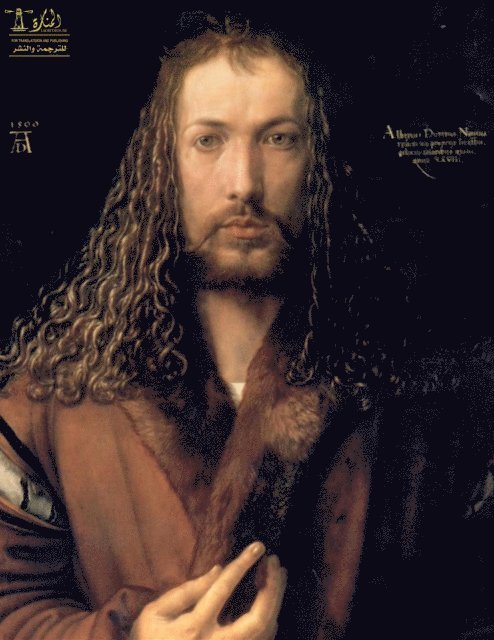
Albrecht Dürer (1471–1528) was probably the greatest graphical artist of the Northern Renaissance. He is the first to have elevated the self-portrait to a high art form, and was known for his fascination with animals, which form the subjects of many of his graphical works. He reveled in portraying men of learning and/or high stature as well as peasants, believing that portraits of the latter could be as instructive as those of the former. His marriage to his wife Agnes was childless and banal, apparently because Dürer was too preoccupied with intellectual matters to be much interested in romantic pursuits.
90 kr
Läs direkt efter köp
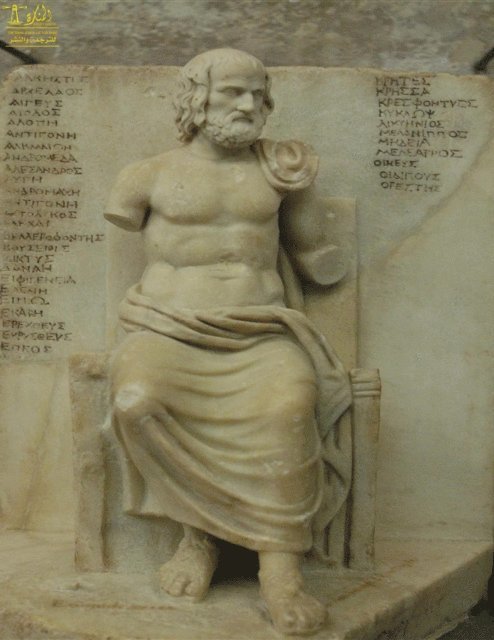
It is possible to reconstruct only the sketchiest biography of Euripides. His mother’s name was Cleito; his father’s name was Mnesarchus or Mnesarchides. One tradition states that his mother was a greengrocer who sold herbs in the marketplace. Aristophanes joked about this in comedy after comedy; but there is better indirect evidence that Euripides came of a well-off family. Euripides first received the honour of being chosen to compete in the dramatic festival in 455, and he won his first victory in 441. Euripides left Athens for good in 408, accepting an invitation from Archelaus, king of Macedonia. He died in Macedonia in 406.
Euripides’ only known public activity was his service on a diplomatic mission to Syracuse in Sicily. He was passionately interested in ideas, however, and owned a large library. He is said to have associated with Protagoras, Anaxagoras, and other Sophists and philosopher-scientists. His acquaintance with new ideas brought him restlessness rather than conviction, however, and his questioning attitude toward traditional Greek religion is reflected in some of his plays. Of Euripides’ private life, little can be said. Later tradition invented for him a spectacularly disastrous married life. It is known that he had a wife called Melito and produced three sons. One of these was something of a poet and produced the Bacchants after his father’s death. He may also have completed his father’s unfinished play Iphigenia at Aulis.
The ancients knew of 92 plays composed by Euripides. Nineteen plays are extant, if one of disputed authorship is included. At only four festivals was Euripides awarded the first prize—the fourth posthumously, for the tetralogy that included Bacchants and Iphigenia at Aulis. As Sophocles won perhaps as many as 24 victories, it is clear that Euripides was comparatively unsuccessful. More to the point is that on more than 20 occasions Euripides was chosen, out of all contestants, to be one of the three laureates of the year. Furthermore, the regularity with which Aristophanes parodied him is proof enough that Euripides’ work commanded attention. It is often said that disappointment at his plays’ reception in Athens was one of the reasons for his leaving his native city in his old age; but there are other reasons why an old poet might have left Athens in the 23rd year of the Peloponnesian War.
236 kr
Läs direkt efter köp
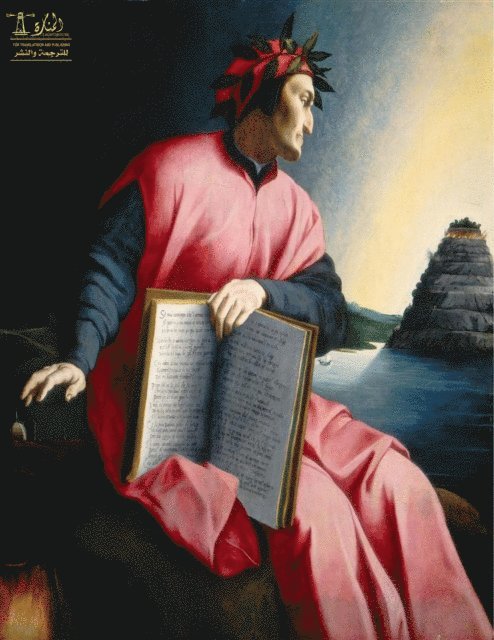
Dante’s Divine Comedy, a landmark in Italian literature and among the greatest works of all medieval European literature, is a profound Christian vision of humankind’s temporal and eternal destiny. On its most personal level, it draws on Dante’s own experience of exile from his native city of Florence. On its most comprehensive level, it may be read as an allegory, taking the form of a journey through hell, purgatory, and paradise. The poem amazes by its array of learning, its penetrating and comprehensive analysis of contemporary problems, and its inventiveness of language and imagery. By choosing to write his poem in the Italian vernacular rather than in Latin, Dante decisively influenced the course of literary development. (He primarily used the Tuscan dialect, which would become standard literary Italian, but his vivid vocabulary ranged widely over many dialects and languages.) Not only did he lend a voice to the emerging lay culture of his own country, but Italian became the literary language in western Europe for several centuries.
In addition to poetry Dante wrote important theoretical works ranging from discussions of rhetoric to moral philosophy and political thought. He was fully conversant with the classical tradition, drawing for his own purposes on such writers as Virgil, Cicero, and Boethius. But, most unusual for a layman, he also had an impressive command of the most recent scholastic philosophy and of theology. His learning and his personal involvement in the heated political controversies of his age led him to the composition of De monarchia, one of the major tracts of medieval political philosophy.
Early life and the Vita nuova
Most of what is known about Dante’s life he has told himself. He was born in Florence in 1265 under the sign of Gemini (between May 21 and June 20) and remained devoted to his native city all his life. Dante describes how he fought as a cavalryman against the Ghibellines, a banished Florentine party supporting the imperial cause. He also speaks of his great teacher Brunetto Latini and his gifted friend Guido Cavalcanti, of the poetic culture in which he made his first artistic ventures, his poetic indebtedness to Guido Guinizelli, the origins of his family in his great-great-grandfather, Cacciaguida, whom the reader meets in the central cantos of the Paradiso (and from whose wife the family name, Alighieri, derived), and, going back even further, of the pride that he felt in the fact that his distant ancestors were descendants of the Roman soldiers who settled along the banks of the Arno.
327 kr
Läs direkt efter köp
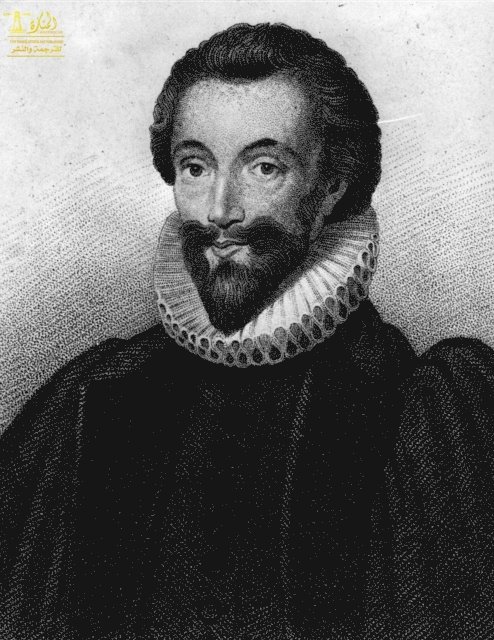
John Donne was born in 1572 in London, England. He is known as the founder of the Metaphysical Poets, a term created by Samuel Johnson, an eighteenth-century English essayist, poet, and philosopher. The loosely associated group also includes George Herbert, Richard Crashaw, Andrew Marvell, and John Cleveland. The Metaphysical Poets are known for their ability to startle the reader and coax new perspective through paradoxical images, subtle argument, inventive syntax, and imagery from art, philosophy, and religion using an extended metaphor known as a conceit. Donne reached beyond the rational and hierarchical structures of the seventeenth century with his exacting and ingenious conceits, advancing the exploratory spirit of his time.
Donne entered the world during a period of theological and political unrest for both England and France; a Protestant massacre occurred on Saint Bartholomew’s day in France; while in England, the Catholics were the persecuted minority. Born into a Roman Catholic family, Donne’s personal relationship with religion was tumultuous and passionate, and at the center of much of his poetry. He studied at both Oxford and Cambridge Universities in his early teen years. He did not take a degree at either school, because to do so would have meant subscribing to the Thirty-nine Articles, the doctrine that defined Anglicanism. At age twenty he studied law at Lincoln’s Inn. Two years later he succumbed to religious pressure and joined the Anglican Church after his younger brother, convicted for his Catholic loyalties, died in prison. Donne wrote most of his love lyrics, erotic verse, and some sacred poems in the 1590s, creating two major volumes of work: Satires and Songs and Sonnets.
In 1598, after returning from a two-year naval expedition against Spain, Donne was appointed private secretary to Sir Thomas Egerton. While sitting in Queen Elizabeth’s last Parliament in 1601, Donne secretly married Anne More, the sixteen-year-old niece of Lady Egerton. Donne’s father-in-law disapproved of the marriage. As punishment, he did not provide a dowry for the couple and had Donne briefly imprisoned.
658 kr
Läs direkt efter köp
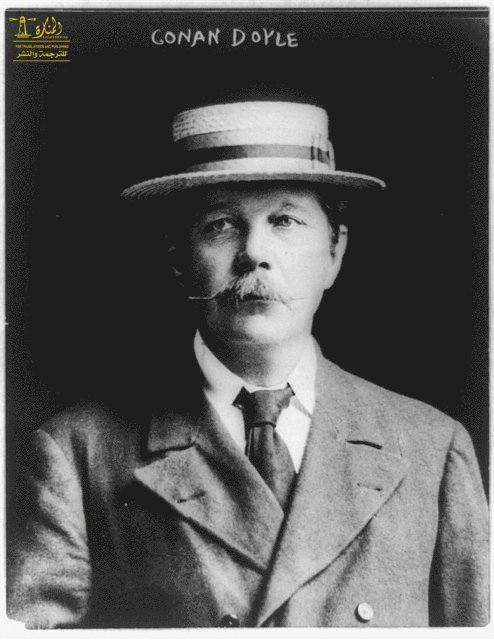
Arthur Conan Doyle, in full Sir Arthur Ignatius Conan Doyle, (born May 22, 1859, Edinburgh, Scotland—died July 7, 1930, Crowborough, Sussex, England), Scottish writer best known for his creation of the detective Sherlock Holmes—one of the most vivid and enduring characters in English fiction.
Conan Doyle, the second of Charles Altamont and Mary Foley Doyle’s 10 children, began seven years of Jesuit education in Lancashire, England, in 1868. After an additional year of schooling in Feldkirch, Austria, Conan Doyle returned to Edinburgh. Through the influence of Dr. Bryan Charles Waller, his mother’s lodger, he prepared for entry into the University of Edinburgh’s Medical School. He received Bachelor of Medicine and Master of Surgery qualifications from Edinburgh in 1881 and an M.D. in 1885 upon completing his thesis, “An Essay upon the Vasomotor Changes in Tabes Dorsalis.”
While a medical student, Conan Doyle was deeply impressed by the skill of his professor, Dr. Joseph Bell, in observing the most minute detail regarding a patient’s condition. This master of diagnostic deduction became the model for Conan Doyle’s literary creation, Sherlock Holmes, who first appeared in A Study in Scarlet, a novel-length story published in Beeton’s Christmas Annual of 1887. Other aspects of Conan Doyle’s medical education and experiences appear in his semiautobiographical novels, The Firm of Girdlestone (1890) and The Stark Munro Letters (1895), and in the collection of medical short stories Round the Red Lamp (1894). (See also Sherlock Holmes: Pioneer in Forensic Science.) Conan Doyle’s creation of the logical, cold, calculating Holmes, the “world’s first and only consulting detective,” sharply contrasted with the paranormal beliefs Conan Doyle addressed in a short novel of this period, The Mystery of Cloomber (1889). Conan Doyle’s early interest in both scientifically supportable evidence and certain paranormal phenomena exemplified the complex diametrically opposing beliefs he struggled with throughout his life.
Driven by public clamour, Conan Doyle continued writing Sherlock Holmes adventures through 1926. His short stories were collected in several volumes, and he also wrote novels (e.g., The Hound of the Baskervilles, serialized 1901–02) that feature Holmes and his assistant, Dr. Watson. Conan Doyle, however, claimed the success of Holmes overshadowed the merit he believed his other historical fiction deserved, most notably his tale of 14th-century chivalry, The White Company (1891), its companion piece, Sir Nigel (1906), and his adventures of the Napoleonic war hero Brigadier Gerard and the 19th-century skeptical scientist Professor George Edward Challenger.
When his passions ran high, Conan Doyle also turned to nonfiction. His works included military writings, The Great Boer War (1900) and The British Campaign in France and Flanders, 6 vol. (1916–20), and subjects such as the Belgian atrocities in the Congo during Leopold II’s reign, in The Crime of the Congo (1909), as well as his involvement in the actual criminal cases of George Edalji and Oscar Slater.
245 kr
Läs direkt efter köp
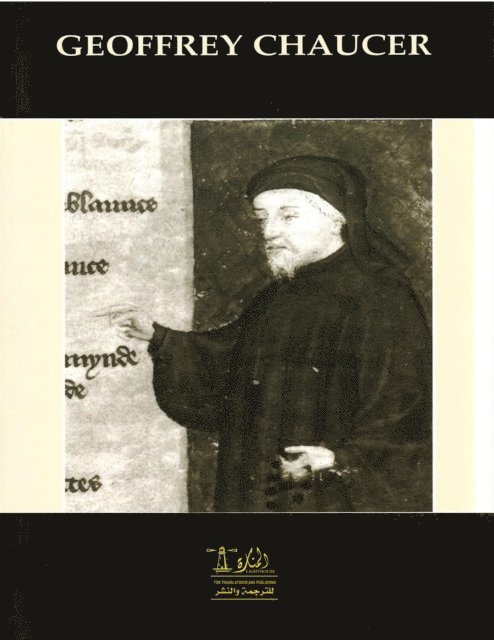
English poet Geoffrey Chaucer wrote the unfinished work, The Canterbury Tales. It is considered one of the greatest poetic works in English.
Synopsis
Poet Geoffrey Chaucer was born circa 1340 in London, England. In 1357 he became a public servant to Countess Elizabeth of Ulster and continued in that capacity with the British court throughout his lifetime. The Canterbury Tales became his best known and most acclaimed work. He died October 25, 1400 in London, England, and was the first to be buried in Westminster Abbey’s Poet’s Corner.
Early Life
Poet Geoffrey Chaucer was born circa 1340, most likely at his parents’ house on Thames Street in London, England. Chaucer’s family was of the bourgeois class, descended from an affluent family who made their money in the London wine trade. According to some sources, Chaucer’s father, John, carried on the family wine business.
Geoffrey Chaucer is believed to have attended the St. Paul’s Cathedral School, where he probably first became acquainted with the influential writing of Virgil and Ovid.
In 1357, Chaucer became a public servant to Countess Elizabeth of Ulster, the Duke of Clarence’s wife, for which he was paid a small stipend—enough to pay for his food and clothing. In 1359, the teenage Chaucer went off to fight in the Hundred Years’ War in France, and at Rethel he was captured for ransom. Thanks to Chaucer’s royal connections, King Edward III helped pay his ransom. After Chaucer’s release, he joined the Royal Service, traveling throughout France, Spain and Italy on diplomatic missions throughout the early to mid-1360s. For his services, King Edward granted Chaucer a pension of 20 marks.
779 kr
Läs direkt efter köp
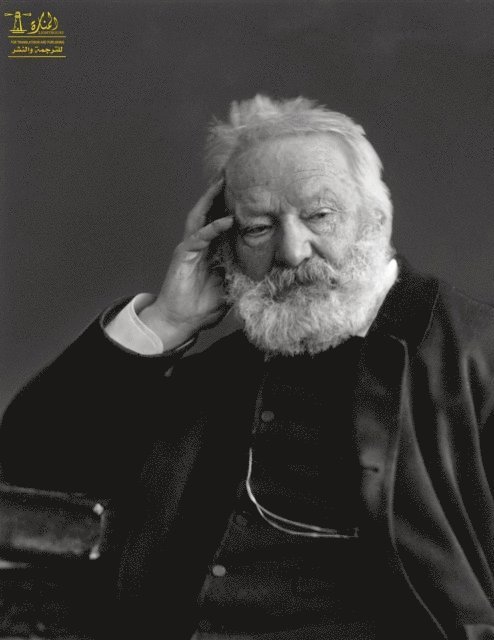
Victor Hugo, in full Victor-Marie Hugo, (born February 26, 1802, Besançon, France—died May 22, 1885, Paris), poet, novelist, and dramatist who was the most important of the French Romantic writers. Though regarded in France as one of that country’s greatest poets, he is better known abroad for such novels as Notre-Dame de Paris (1831) and Les Misérables (1862).
Early years (1802–30)
Victor was the third son of Joseph-Léopold-Sigisbert Hugo, a major and, later, general in Napoleon’s army. His childhood was coloured by his father’s constant traveling with the imperial army and by the disagreements that soon alienated his parents from one another. His mother’s royalism and his father’s loyalty to successive governments—the Convention, the Empire, the Restoration—reflected their deeper incompatibility. It was a chaotic time for Victor, continually uprooted from Paris to set out for Elba or Naples or Madrid, yet always returning to Paris with his mother, whose royalist opinions he initially adopted. The fall of the empire gave him, from 1815 to 1818, a time of uninterrupted study at the Pension Cordier and the Lycée Louis-le-Grand, after which he graduated from the law faculty at Paris, where his studies seem to have been purposeless and irregular. Memories of his life as a poor student later inspired the figure of Marius in his novel Les Misérables.
From 1816, at least, Hugo had conceived ambitions other than the law. He was already filling notebooks with verses, translations—particularly from Virgil—two tragedies, a play, and elegies. Encouraged by his mother, Hugo founded a review, the Conservateur Littéraire (1819–21), in which his own articles on the poets Alphonse de Lamartine and André de Chénier stand out. His mother died in 1821, and a year later Victor married a childhood friend, Adèle Foucher, with whom he had five children. In that same year he published his first book of poems, Odes et poésies diverses, whose royalist sentiments earned him a pension from Louis XVIII. Behind Hugo’s concern for classical form and his political inspiration, it is possible to recognize in these poems a personal voice and his own particular vein of fantasy.
49 kr
Läs direkt efter köp
Aeschylus was born at the religious center of Eleusis. His father, Euphorion, was of a noble Athenian family. In 499 B.C. Aeschylus produced his first tragedy, and in 490 he is reputed to have taken part in the Battle of Marathon, in which the Athenians defeated the Persian invaders.
In 484 Aeschylus won first prize in tragedy in the annual competitions held in Athens. In 472 he took first prize with a tetralogy, three tragedies with a connecting theme and a comic satyr play. It embraced Phineus, The Persians, Glaucus of Potniae, and the satyr play Prometheus, the Fire Kindler. Defeated in one dramatic competition by Sophocles in 468, Aeschylus later won first prize with another tetralogy: Laius, Oedipus, The Seven against Thebes, and the satyr play The Sphinx. In 463 he won first prize with the tetralogy now known as The Suppliants, The Egyptians, The Danaids, and the satyr play The Amymone. In 458 he gained his last victory with the trilogy Oresteia. The date of another trilogy, the Prometheia, is unknown, but it was probably produced sometime between The Seven against Thebesand the Oresteia. Only 7 of the perhaps 90 plays that Aeschylus wrote are preserved. Aeschylus was acquainted with the Greek poet lon of Chios, and he may also have known Pindar, Greece's greatest lyric poet. Aeschylus's son and the descendants of Aeschylus's sister also wrote tragedies. The legend that Aeschylus stood trial for divulging the Eleusinian Mysteries but was acquitted on the grounds that he was never initiated may be simply a reflection of his religious environment. He was greatly influenced by the poet Homer, describing his own works as "slices of Homer."
Aeschylus retired to Sicily, and tradition says that he was ignominiously killed by an eagle which, in its desire to split open a turtle it was carrying, mistook his bald head for a boulder. His tomb at Gela in Sicily became a shrine, and his own epitaph recorded his military, not his literary, exploits.
Contributions, Style, and Philosophy
Because Aeschylus was writing for the Greek theater in its formative stages, he is credited with having introduced many features that became associated with the traditional Greek theater. Among these were the rich costumes, decorated cothurni (a kind of footwear), solemn dances, and possibly elaborate stage machinery. Aeschylus also added parts for a second and a third actor; before his time plays were written for only one actor and a chorus. He is said to have acted in his own plays and designed his own choral dances.
82 kr
Läs direkt efter köp
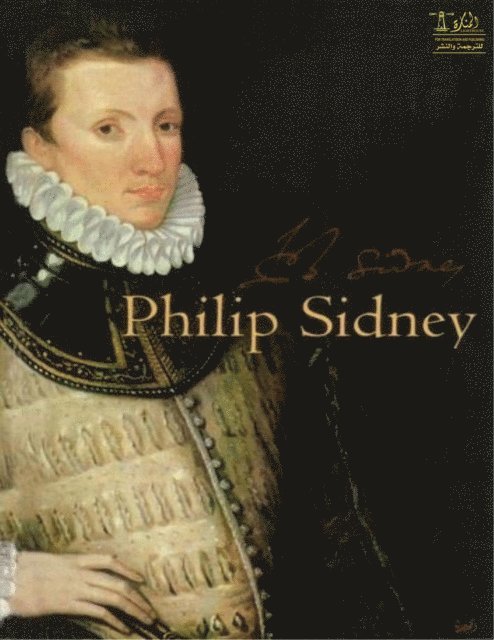
Sir Philip Sidney, (born November 30, 1554, Penshurst, Kent, England—died October 17, 1586, Arnhem, Netherlands), Elizabethan courtier, statesman, soldier, poet, and patron of scholars and poets, considered the ideal gentleman of his day. After Shakespeare’s sonnets, Sidney’s Astrophel and Stella is considered the finest Elizabethan sonnet cycle. His The Defence of Poesie introduced the critical ideas of Renaissance theorists to England.
With the work of Sir Philip Sidney and Edmund Spenser, Tottel’s contributors suddenly began to look old-fashioned. Sidney epitomized the new Renaissance “universal man”: a courtier, diplomat, soldier, and poet whose Defence of Poesie includes the first considered account of the state…
Philip Sidney was the eldest son of Sir Henry Sidney and his wife, Lady Mary Dudley, daughter of the duke of Northumberland, and godson of King Philip II of Spain. After Elizabeth I succeeded to the throne, his father was appointed lord president of Wales (and later served three times as lord deputy of Ireland), while his uncle, Robert Dudley, was created earl of Leicester and became the queen’s most trusted adviser. In keeping with his family background, the young Sidney was intended for a career as a statesman and soldier. At age 10 he entered Shrewsbury School, where his classmate was Fulke Greville (later a court official under Elizabeth), who became his lifelong friend and was his early biographer. In February 1568 he began a three-year period of studies at Christ Church, Oxford, afterward traveling in Europe between May 1572 and June 1575, perfecting his knowledge of Latin, French, and Italian. He also gained firsthand knowledge of European politics and became acquainted with many of Europe’s leading statesmen.
His first court appointment came in the spring of 1576, when he succeeded his father as cupbearer to the queen, a ceremonial position. Then in February 1577, when he was only 22, he was sent as ambassador to the German emperor Rudolf II and the elector palatine Louis VI, carrying Queen Elizabeth’s condolences on the deaths of their fathers. But along with this formal task, he also had secret instructions to sound out the German princes on their attitude toward the formation of a Protestant league—the chief political aim being to protect England by associating it with other Protestant states in Europe that would counterbalance the threatening power of Roman Catholic Spain. Sidney apparently brought back enthusiastic reports on the possibilities of forming such a league, but the cautious queen sent other emissaries to check on his reports, and they returned with less-optimistic accounts of the German princes’ reliability as allies. He did not receive another major official appointment until eight years later.
490 kr
Läs direkt efter köp
Percy Bysshe Shelley, (born Aug. 4, 1792, Field Place, near Horsham, Sussex, Eng.—died July 8, 1822, at sea off Livorno, Tuscany [Italy]), English Romantic poet whose passionate search for personal love and social justice was gradually channeled from overt actions into poems that rank with the greatest in the English language.
Shelley was the heir to rich estates acquired by his grandfather, Bysshe (pronounced “Bish”) Shelley. Timothy Shelley, the poet’s father, was a weak, conventional man who was caught between an overbearing father and a rebellious son. The young Shelley was educated at Syon House Academy (1802–04) and then at Eton (1804–10), where he resisted physical and mental bullying by indulging in imaginative escapism and literary pranks. Between the spring of 1810 and that of 1811, he published two Gothic novels and two volumes of juvenile verse. In the fall of 1810 Shelley entered University College, Oxford, where he enlisted his fellow student Thomas Jefferson Hogg as a disciple. But in March 1811, University College expelled both Shelley and Hogg for refusing to admit Shelley’s authorship of The Necessity of Atheism. Hogg submitted to his family, but Shelley refused to apologize to his.
Late in August 1811, Shelley eloped with Harriet Westbrook, the younger daughter of a London tavern owner; by marrying her, he betrayed the acquisitive plans of his grandfather and father, who tried to starve him into submission but only drove the strong-willed youth to rebel against the established order. Early in 1812, Shelley, Harriet, and her older sister Eliza Westbrook went to Dublin, where Shelley circulated pamphlets advocating political rights for Roman Catholics, autonomy for Ireland, and freethinking ideals. The couple traveled to Lynmouth, Devon, where Shelley issued more political pamphlets, and then to North Wales, where they spent almost six months in 1812–13.
Lack of money finally drove Shelley to moneylenders in London, where in 1813 he issued Queen Mab, his first major poem—a nine-canto mixture of blank verse and lyric measures that attacks the evils of the past and present (commerce, war, the eating of meat, the church, monarchy, and marriage) but ends with resplendent hopes for humanity when freed from these vices. In June 1813 Harriet Shelley gave birth to their daughter Ianthe, but a year later Shelley fell in love with Mary Wollstonecraft Godwin, daughter of William Godwin and his first wife, née Mary Wollstonecraft. Against Godwin’s objections, Shelley and Mary Godwin eloped to France on July 27, 1814, taking with them Mary’s stepsister Jane (later “Claire”) Clairmont. Following travels through France, Switzerland, and Germany, they returned to London, where they were shunned by the Godwins and most other friends. Shelley dodged creditors until the birth of his son Charles (born to Harriet, November 30, 1814), his grandfather’s death (January 1815), and provisions of Sir Bysshe’s will forced Sir Timothy to pay Shelley’s debts and grant him an annual income.
75 kr
Läs direkt efter köp
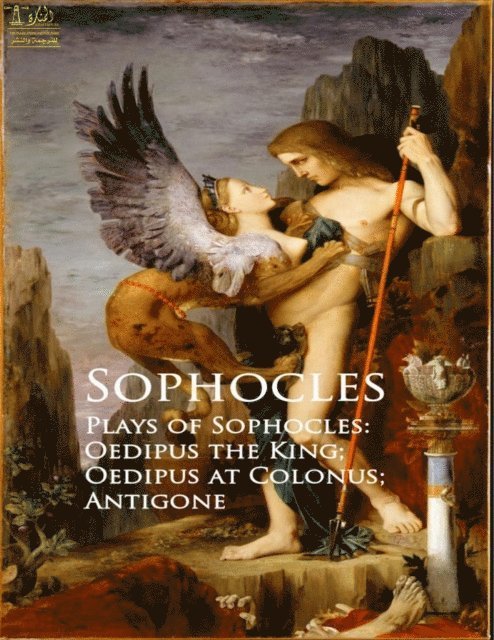
Sophocles, (born c. 496 bce, Colonus, near Athens [Greece]—died 406, Athens), with Aeschylus and Euripides, one of classical Athens’ three great tragic playwrights. The best known of his 123 dramas is Oedipus the King.
Life and career
Sophocles was the younger contemporary of Aeschylus and the older contemporary of Euripides. He was born at Colonus, a village outside the walls of Athens, where his father, Sophillus, was a wealthy manufacturer of armour. Sophocles himself received a good education. Because of his beauty of physique, his athletic prowess, and his skill in music, he was chosen in 480, when he was 16, to lead the paean (choral chant to a god) celebrating the decisive Greek sea victory over the Persians at the Battle of Salamis. The relatively meagre information about Sophocles’ civic life suggests that he was a popular favourite who participated actively in his community and exercised outstanding artistic talents. In 442 he served as one of the treasurers responsible for receiving and managing tribute money from Athens’ subject-allies in the Delian League. In 440 he was elected one of the 10 stratēgoi (high executive officials who commanded the armed forces) as a junior colleague of Pericles. Sophocles later served as stratēgos perhaps twice again. In 413, then aged about 83, Sophocles was a proboulos, one of 10 advisory commissioners who were granted special powers and were entrusted with organizing Athens’ financial and domestic recovery after its terrible defeat at Syracuse in Sicily. Sophocles’ last recorded act was to lead a chorus in public mourning for his deceased rival, Euripides, before the festival of 406. He died that same year.
15 kr
Läs direkt efter köp
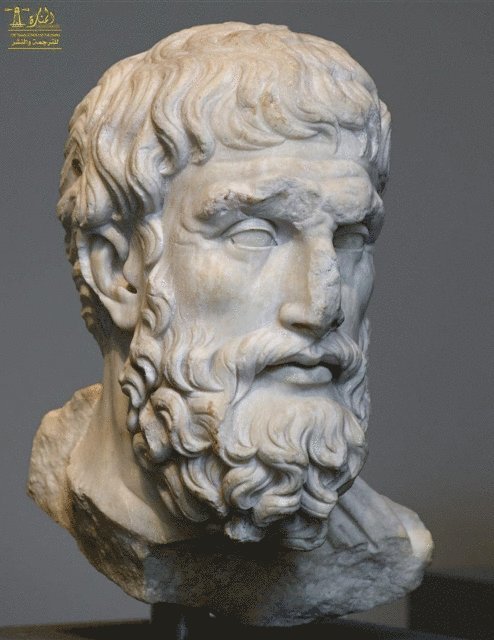
For Epicurus, the purpose of philosophy was to attain the happy, tranquil life, characterized by ataraxia—peace and freedom from fear—and aponia—the absence of pain—and by living a self-sufficient life surrounded by friends. He taught that pleasure and pain are the measures of what is good and evil; death is the end of both body and soul and should therefore not be feared; the gods neither reward nor punish humans; the universe is infinite and eternal; and events in the world are ultimately based on the motions and interactions of atoms moving in empty space.
His parents, Neocles and Chaerestrate, both Athenian-born, and his father a citizen, had emigrated to the Athenian settlement on the Aegean island of Samos about ten years before Epicurus's birth in February 341 BC. As a boy, he studied philosophy for four years under the Platonist teacher Pamphilus. At the age of eighteen, he went to Athens for his two-year term of military service. The playwright Menander served in the same age-class of the ephebes as Epicurus.
After the death of Alexander the Great, Perdiccas expelled the Athenian settlers on Samos to Colophon, on the coast of what is now Turkey. After the completion of his military service, Epicurus joined his family there. He studied under Nausiphanes, who followed the teachings of Democritus. In 311/310 BC Epicurus taught in Mytilene but caused strife and was forced to leave. He then founded a school in Lampsacus before returning to Athens in 306 BC where he remained until his death. There he founded The Garden, a school named for the garden he owned that served as the school's meeting place, about halfway between the locations of two other schools of philosophy, the Stoa and the Academy.
Even though many of his teachings were heavily influenced by earlier thinkers, especially by Democritus, he differed in a significant way with Democritus on determinism. Epicurus would often deny this influence, denounce other philosophers as confused, and claim to be "self-taught".
447 kr
Läs direkt efter köp
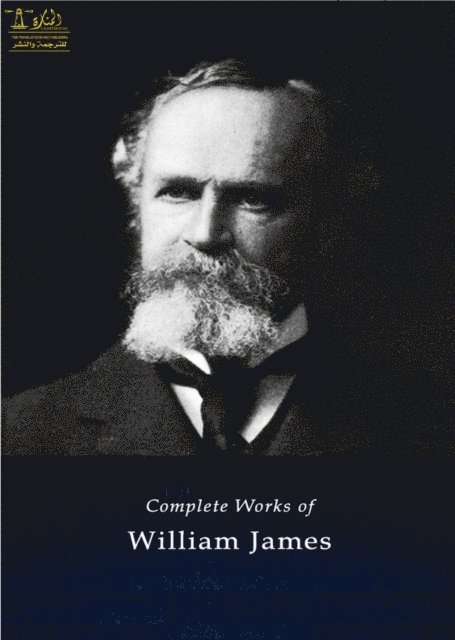
William James, (born Jan. 11, 1842, New York, N.Y., U.S.—died Aug. 26, 1910, Chocorua, N.H.), American philosopher and psychologist, a leader of the philosophical movement of Pragmatism and of the psychological movement of functionalism.
The work of William James, a leader of the Pragmatic movement, was typical of many contemporary tendencies, one of which was the attempt to locate the role of science in knowledge and culture. Trained in medicine, James hoped to protect the autonomy of…
Early life and education
James was the eldest son of Henry James, an idiosyncratic and voluble man whose philosophical interests attracted him to the theology of Emanuel Swedenborg. One of William’s brothers was the novelist Henry James. The elder Henry James held an “antipathy to all ecclesiasticisms which he expressed with abounding scorn and irony throughout all his later years.” Both his physical and his spiritual life were marked by restlessness and wanderings, largely in Europe, that affected the training of his children at school and their education at home. Building upon the works of Swedenborg, which had been proffered as a revelation from God for a new age of truth and reason in religion, the elder James had constructed a system of his own that seems to have served him as a vision of spiritual life. This philosophy provided the permanent intellectual atmosphere of William’s home life, to some degree compensating for the undisciplined irregularity of his schooling, which ranged from New York to Boulogne, Fr., and to Geneva and back. The habits acquired in dealing with his father’s views at dinner and at tea carried over into the extraordinarily sympathetic yet critical manner that William displayed in dealing with anybody’s views on any occasion.
When James was 18 years of age he tried his hand at studying art, under the tutelage of William M. Hunt, an American painter of religious subjects. But he soon tired of it and the following year entered the Lawrence Scientific School of Harvard University. From courses in chemistry, anatomy, and similar subjects there, he went to the study of medicine in the Harvard Medical School; but he interrupted this study in order to accompany the eminent naturalist Louis Agassiz, in the capacity of assistant, on an expedition to the Amazon. There James’s health failed, and his duties irked him. He returned to the medical school for a term and then during 1867–68 went to Germany for courses with the physicist and physiologist Hermann von Helmholtz, who formulated the law of the conservation of energy; with Rudolf Virchow, a pathologist; with Claude Bernard, the foremost experimentalist of 19th-century medicine; and with others. At the same time he read widely in the psychology and philosophy then current, especially the writings of Charles Renouvier, a Kantian Idealist and relativist.
16 kr
Läs direkt efter köp
Jane Barker (1652 – 1732) was an English poet and novelist of the early 18th century. The Amours of Bosvil and Galesia (1713) was considered her most successful work. A staunch Jacobite, she followed King James II of England into exile at Saint-Germain-en-Laye in France shortly after James’ defeat in the Glorious Revolution (1688). During her exile, she wrote a group of political poems, "A Collection of Poems Referring to the Times" (1701), which conveyed her anxiety towards the political future of England. She later became a novelist and wrote Exilius; or, The Banished Roman (1715), A Patch-Work Screen for the Ladies (1723), and The Lining of the Patch Work Screen (1726). Barker was never married and her works show a strong lack of interest in marriage. Instead, she sought to challenge the status quo of female subordination.
Jane Barker was born in May 1652, in the village of Blatherwick, Northamptonshire in England. She was the only daughter, and the second of three surviving children, of Thomas and Anne Barker. Thomas Barker was one of the Secretaries of the Lord Keeper of the Great Seal of England.
33 kr
Läs direkt efter köp
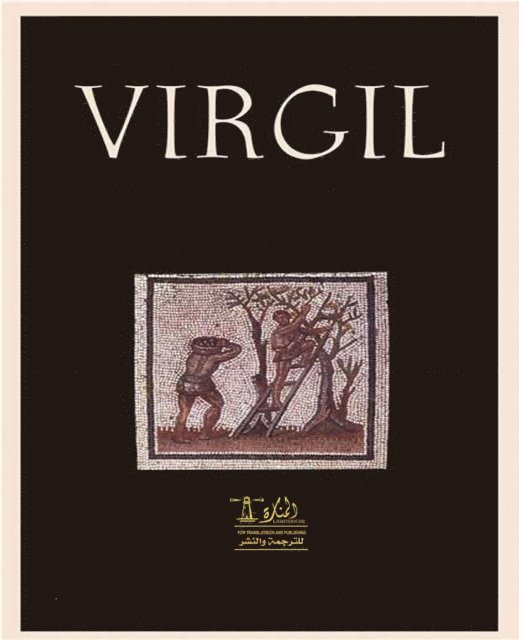
Virgil, also spelled Vergil, Latin in full Publius Vergilius Maro, (born October 15, 70 bce, Andes, near Mantua [Italy]—died September 21, 19 bce, Brundisium), Roman poet, best known for his national epic, the Aeneid (from c. 30 bce; unfinished at his death).Virgil was regarded by the Romans as their greatest poet, an estimation that subsequent generations have upheld. His fame rests chiefly upon the Aeneid, which tells the story of Rome’s legendary founder and proclaims the Roman mission to civilize the world under divine guidance. His reputation as a poet endures not only for the music and diction of his verse and for his skill in constructing an intricate work on the grand scale but also because he embodied in his poetry aspects of experience and behaviour of permanent significance.Virgil was born of peasant stock, and his love of the Italian countryside and of the people who cultivated it colours all his poetry. He was educated at Cremona, at Milan, and finally at Rome, acquiring a thorough knowledge of Greek and Roman authors, especially of the poets, and receiving a detailed training in rhetoric and philosophy. It is known that one of his teachers was the Epicurean Siro, and the Epicurean philosophy is substantially reflected in his early poetry but gradually gives way to attitudes more akin to Stoicism.Political backgroundDuring Virgil’s youth, as the Roman Republic neared its end, the political and military situation in Italy was confused and often calamitous. The civil war between Marius and Sulla had been succeeded by conflict between Pompey and Julius Caesar for supreme power. When Virgil was 20, Caesar with his armies swooped south from Gaul, crossed the Rubicon, and began the series of civil wars that were not to end until Augustus’ victory at Actium in 31 bce. Hatred and fear of civil war is powerfully expressed by both Virgil and his contemporary Horace. The key to a proper understanding of the Augustan Age and its poets lies, indeed, in a proper understanding of the turmoil that had preceded the Augustan peace.Virgil’s life was devoted entirely to his poetry and to studies connected with it; his health was never robust, and he played no part in military or political life. It is said that he spoke once in the lawcourts without distinction and that his shy and retiring nature caused him to give up any ideas he might have had of taking part in the world of affairs. He never married, and the first half of his life was that of a scholar and near recluse. But, as his poetry won him fame, he gradually won the friendship of many important men in the Roman world. Gradually, also, he became a Roman as well as a provincial. (The area in which he had spent his youth, the area around the Po River known as the province of Cisalpine Gaul, was not finally incorporated into Italy until 42 bce. Thus Virgil came, as it were, to Rome from the outside. The enthusiasm of a provincial for Rome is seen in the first eclogue, one of his earliest poems, in which the shepherd Tityrus tells of his recent visit to the capital and his amazement at its splendours.)This collection contain the following:IntroductionThe Aeneid of VirgilThe Eclogues; translated by J. B. GreenoughThe Georgics; translated by J. B. GreenoughThe Bucolics and EcloguesThe Fourth Book of Virgil's Aeneid and the Ninth Book of Voltaire's Henriad
245 kr
Läs direkt efter köp
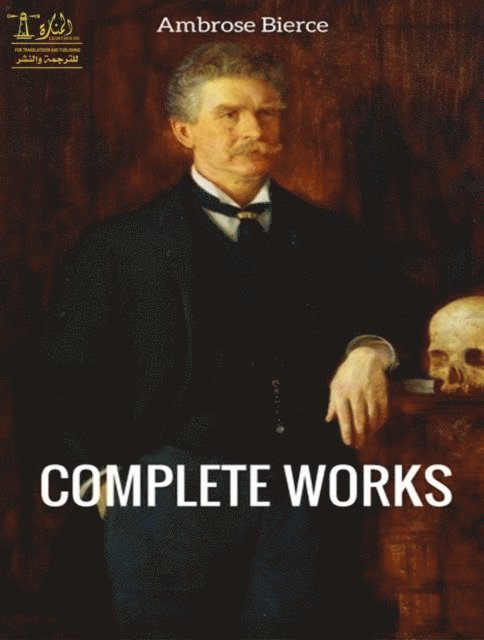
Ambrose Bierce was an American newspaperman, satirist, and short story writer. He disappeared in Mexico in 1914 and his final fate is unknown.
Synopsis
Ambrose Bierce was born on June 24, 1842 in Meigs county, Ohio. He worked as a printer's apprentice and enlisted to fight in the Civil War. After the war he worked as an editor, journalist, and short story writer; capturing his war experiences in vivid detail. In 1913 he went to Mexico, then in the midst of a revolution led by Pancho Villa. He disappeared sometime in 1914
In 1877 he became associate editor of the San Francisco Argonaut but left it in 1879–80 for an unsuccessful try at placer mining in Rockerville in the Dakota Territory. Thereafter he was editor of the San Francisco Illustrated Wasp for five years. In 1887 he joined the staff of William Randolph Hearst’s San Francisco Examiner, for which he wrote the “Prattler” column. In 1896 Bierce moved to Washington, D.C., where he continued newspaper and magazine writing. In 1913, tired of American life, he went to Mexico, then in the middle of a revolution led by Pancho Villa. His end is a mystery, but a reasonable conjecture is that he was killed in the siege of Ojinaga in January 1914.
This collection includes the following:
I. IntroductionII. The Fiend’s DelightIII. The Land Beyond the BlowIV. Cobwebs from an Empty SkullV. Can Such Things Be?VI. Tales of Soldiers and CiviliansVII. Fantastic FablesVIII. Present at a HangingIX. Negligible TalesX. The Parenticide ClubXI. The Fourth EstateXII. The Ocean WaveXIII. “On with the Dance!”XIV. EpigramsXV. Ashes of the BeaconXVI. Working for an EmpressXVII. Across the PlainsXVIII. The MirageXIX. A Sole SurvivorXX. The Collected Works of Ambrose Bierce, Volume 1XXI. The Collected Works of Ambrose Bierce, Volume 2XXII. The Collected Works of Ambrose Bierce, Volume 3XXIII. The Devil’s DictionaryXXIV. The collected works of Ambrose Bierce
147 kr
Läs direkt efter köp
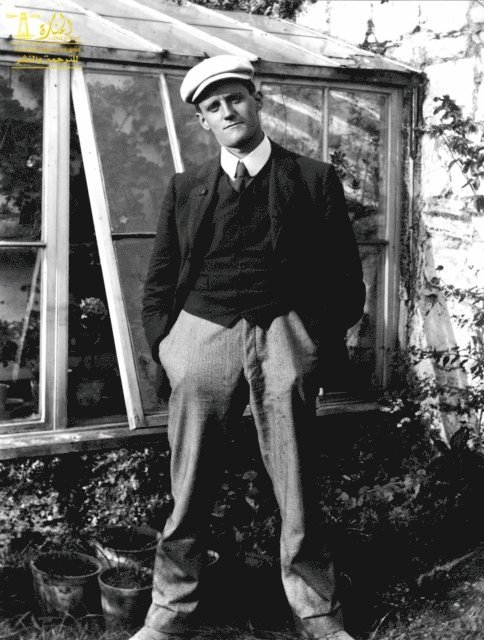
James Joyce was an Irish, modernist writer who wrote in a ground-breaking style that was known both for its complexity and explicit content.
Synopsis
James Joyce was born on February 2, 1882 in Dublin, Ireland. He published "Portrait of the Artist" in 1916 and caught the attention of Ezra Pound. With "Ulysses," Joyce perfected his stream-of-consciousness style and became a literary celebrity. The explicit content of his prose brought about landmark legal decisions on obscenity. Joyce battled eye ailments for most of his life. He died in 1941.
Profile
Born James Augustine Aloysius Joyce on February 2, 1882 in Dublin, Ireland, Joyce was one of the most revered writers of the 20th century, whose landmark book, Ulysses, is often hailed as one of the finest novels ever written. His exploration of language and new literary forms showed not only his genius as a writer but spawned a fresh approach for novelists, one that drew heavily on Joyce's love of the stream-of-consciousness technique and the examination of big events through small happenings in everyday lives.
Joyce came from a big family. He was the eldest of ten children born to John Stanislaus Joyce and his wife Marry Murray Joyce. His father, while a talented singer (he reportedly had one of the finest tenor voices in all of Ireland), didn't provide a stable a household. He liked to drink and his lack of attention to the family finances meant the Joyces never had much money.
From an early age, James Joyce showed not only exceeding intelligence but also a gift for writing and a passion for literature. He taught himself Norwegian so he could read Henrik Ibsen's plays in the language they'd been written, and spent his free time devouring Dante, Aristotle, and Thomas Aquinas.
This collection includes the following:
I. IntroductionII. Chamber MusicIII. DublinersIV. A Portrait of the Artist as a Young ManV. UlyssesVI. Finnegans WakeVII. Exiles: A Play in Three Acts
16 kr
Läs direkt efter köp
Sun Tzu is known as a Chinese military strategist, Taoist philosopher, and general in the 6th century BCE who is widely recognized for his work The Art of War, a treatise on military strategy (also known as The Thirteen Chapters). Whether an individual by the name of `Sun-Tzu’ existed at all has been disputed (in the same way scholars and historians debate the existence of an actual man named Lao-Tzu) but the existence of The Art of War and its profound influence on military campaigns, clearly proves that someone existed to produce said work and that the work is attributed to one Sun-Tzu. The historian Griffith writes:
War, an integral part of the power politics of the age, had become `a matter of vital importance to the state, the province of life and death, the road to survival or ruin’. To be waged successfully, it required a coherent strategic and tactical theory and a practical doctrine governing intelligence, planning, command, operational, and administrative procedures. The author of `The Thirteen Chapters’ was the first man to provide such a theory and such a doctrine. (Griffith, 44).
The difficulty in ascertaining Sun-Tzu’s historicity comes from the early works which mention him, The Spring and Autumn Annals (the state records of the Zhou Dynasty from 722-481 BCE) and the Records of the Grand Historian (known as the Shiji) written between 109-91 BCE by Szuma Chien (Sima Qian). Scholars have criticized both works for inaccuracies and possible conflations of events. The argument against Sun-Tzu’s historicity claims that, had such a great military mind existed, more would have been written of him than just passing references. Still, there are many entries in both works, accepted as historically accurate, which are given the same brief treatment. The scholar Eno writes, “The Spring and Autumn Annals… is brief, not very informative, and inconsistent in its choice of events to note. A typical entry might read, `Autumn; eighth month; locusts’.” The work by Szuma Chien was criticized as largely fanciful concerning his descriptions of the Xia and Shang dynasties until archaeological excavations of the 20th century CE uncovered physical evidence supporting his claims. It is, therefore, possible that a man named Sun-Tzu did exist and is the author of the book which bears his name. This name, however, is a title translated as `The Master’ and is not a personal name. Further, as The Art of War repeatedly uses the phrase, “Sun-Tzu said…” in introducing the precepts, it has been argued that some great military genius, name unknown, wrote the work which was then copied, re-written, edited, or compiled at some point in the Warring States Period in China. It has also been suggested that some student of a man named `Sun-Tzu’ could have written the work based upon his master’s teachings. Scholars who maintain the historicity of Sun-Tzu point to his role in the victory at the Battle of Boju (506 BCE) while scholars who deny said historicity argue that, again, had he been there, he would have played a larger role in the narrative of the battle. Until further evidence comes to light, the debate cannot be resolved; however, whether an individual called `Sun-Tzu’ existed in history is not as important as the work which has made that name famous.
167 kr
Skickas inom 5-8 vardagar
247 kr
Tillfälligt slut