E-bok, Engelska, 2019
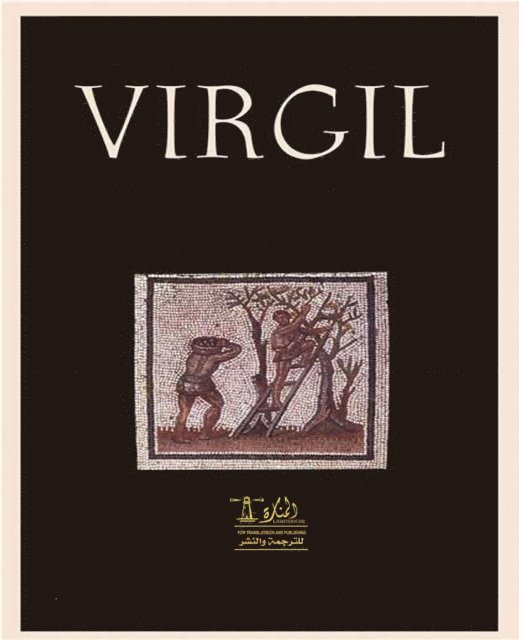
Complete Works of Virgil
35 kr
Läs direkt i Bokus Reader – eller ladda ned till din enhet
Beskrivning
Virgil, also spelled Vergil, Latin in full Publius Vergilius Maro, (born October 15, 70 bce, Andes, near Mantua [Italy]—died September 21, 19 bce, Brundisium), Roman poet, best known for his national epic, the Aeneid (from c. 30 bce; unfinished at his death).
Virgil was regarded by the Romans as their greatest poet, an estimation that subsequent generations have upheld. His fame rests chiefly upon the Aeneid, which tells the story of Rome’s legendary founder and proclaims the Roman mission to civilize the world under divine guidance. His reputation as a poet endures not only for the music and diction of his verse and for his skill in constructing an intricate work on the grand scale but also because he embodied in his poetry aspects of experience and behaviour of permanent significance.
Virgil was born of peasant stock, and his love of the Italian countryside and of the people who cultivated it colours all his poetry. He was educated at Cremona, at Milan, and finally at Rome, acquiring a thorough knowledge of Greek and Roman authors, especially of the poets, and receiving a detailed training in rhetoric and philosophy. It is known that one of his teachers was the Epicurean Siro, and the Epicurean philosophy is substantially reflected in his early poetry but gradually gives way to attitudes more akin to Stoicism.
Political background
During Virgil’s youth, as the Roman Republic neared its end, the political and military situation in Italy was confused and often calamitous. The civil war between Marius and Sulla had been succeeded by conflict between Pompey and Julius Caesar for supreme power. When Virgil was 20, Caesar with his armies swooped south from Gaul, crossed the Rubicon, and began the series of civil wars that were not to end until Augustus’ victory at Actium in 31 bce. Hatred and fear of civil war is powerfully expressed by both Virgil and his contemporary Horace. The key to a proper understanding of the Augustan Age and its poets lies, indeed, in a proper understanding of the turmoil that had preceded the Augustan peace.
Virgil’s life was devoted entirely to his poetry and to studies connected with it; his health was never robust, and he played no part in military or political life. It is said that he spoke once in the lawcourts without distinction and that his shy and retiring nature caused him to give up any ideas he might have had of taking part in the world of affairs. He never married, and the first half of his life was that of a scholar and near recluse. But, as his poetry won him fame, he gradually won the friendship of many important men in the Roman world. Gradually, also, he became a Roman as well as a provincial. (The area in which he had spent his youth, the area around the Po River known as the province of Cisalpine Gaul, was not finally incorporated into Italy until 42 bce. Thus Virgil came, as it were, to Rome from the outside. The enthusiasm of a provincial for Rome is seen in the first eclogue, one of his earliest poems, in which the shepherd Tityrus tells of his recent visit to the capital and his amazement at its splendours.)
This collection contain the following:
Introduction
The Aeneid of Virgil
The Eclogues; translated by J. B. Greenough
The Georgics; translated by J. B. Greenough
The Bucolics and Eclogues
The Fourth Book of Virgil's Aeneid and the Ninth Book of Voltaire's Henriad
Produktinformation
- Utgivningsdatum: 2019-03-04
- Språk: Engelska
- Antal sidor: 844
- Filformat: EPUB
- Kopieringsskydd: LCP
- ISBN: 9783593301662
- Förlag: Lighthouse Books for Translation Publishing
Utforska kategorier
Betyg & recensioner
0 recensioner
Inga recensioner tillgängliga.