Ara Norenzayan - Böcker
Visar alla böcker från författaren Ara Norenzayan. Handla med fri frakt och snabb leverans.
7 produkter
7 produkter
219 kr
Skickas inom 7-10 vardagar
How did human societies scale up from tight-knit groups of hunter-gatherers to the large, anonymous, cooperative societies of today--even though anonymity is the enemy of cooperation? How did organized religions with "Big Gods"--the great monotheistic and polytheistic faiths--spread to colonize most minds in the world? In Big Gods, Ara Norenzayan makes the surprising argument that these fundamental puzzles about the origins of civilization answer each other. Sincere faith in watchful Big Gods unleashed unprecedented cooperation within ever-expanding groups, yet at the same time it introduced a new source of potential conflict between competing groups. And in some parts of the world, societies with atheist majorities--some of the most cooperative and prosperous in the world--have climbed religion's ladder, and then kicked it away. Big Gods answers fundamental questions about the origins and spread of world religions and helps us understand the rise of cooperative societies without belief in gods.
2 029 kr
Skickas inom 10-15 vardagar
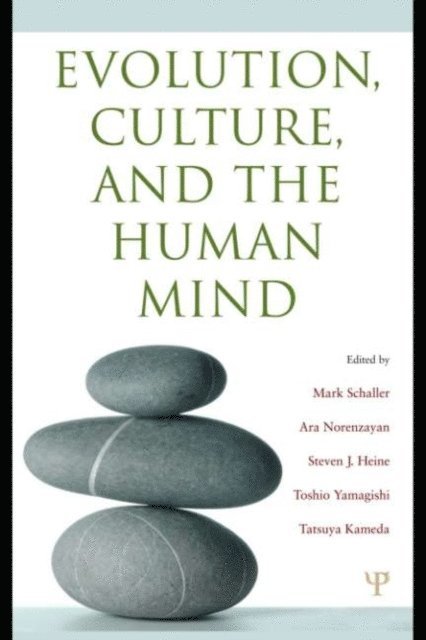
An enormous amount of scientific research compels two fundamental conclusions about the human mind: The mind is the product of evolution; and the mind is shaped by culture. These two perspectives on the human mind are not incompatible, but, until recently, their compatibility has resisted rigorous scholarly inquiry. Evolutionary psychology documents many ways in which genetic adaptations govern the operations of the human mind. But evolutionary inquiries only occasionally grapple seriously with questions about human culture and cross-cultural differences. By contrast, cultural psychology documents many ways in which thought and behavior are shaped by different cultural experiences. But cultural inquires rarely consider evolutionary processes. Even after decades of intensive research, these two perspectives on human psychology have remained largely divorced from each other. But that is now changing - and that is what this book is about. Evolution, Culture, and the Human Mind is the first scholarly book to integrate evolutionary and cultural perspectives on human psychology. The contributors include world-renowned evolutionary, cultural, social, and cognitive psychologists. These chapters reveal many novel insights linking human evolution to both human cognition and human culture – including the evolutionary origins of cross-cultural differences. The result is a stimulating introduction to an emerging integrative perspective on human nature.
2 088 kr
Skickas inom 10-15 vardagar
This volume assesses the role of religion in cooperation and prosocial behaviour using ethnographic and experimental methods across eight different field sites. The first of two volumes presents results from the first phase of the Evolution of Religion and Morality (ERM) Project.Using a unique combination of both experimental and ethnographic methods, the ERM project addresses pressing questions from the burgeoning cultural evolutionary sciences of religion:What is the relationship between religious beliefs and cooperation?When people are committed to punitive, knowledgeable, and morally concerned gods, are they more inclined to behave prosocially towards others?How far does this prosociality extend?Do important individual and contextual factors mediate this relationship?In addition to an omnibus report, this book offers seven site-specific reports that contextualize experimental and ethnographic data collected around the world. Collecting data from communities as diverse as the Hadza of Tanzania, villagers from two communities on Tanna Island, Vanuatu, residents of Marajó, Brazil, Fijians from Yasawa and Lovu, Tyvans from southern Siberia, and Mauritians, this ground-breaking work sets a new standard in the scientific study of religion.The Evolution of Religion and Morality: Volume I will be a key resource for scholars and researchers of religious studies, human evolutionary biology, psychology, anthropology, the cultural evolution of religion and the sociology of religion. This book was originally published as a special issue of Religion, Brain & Behavior.
630 kr
Skickas inom 10-15 vardagar
This volume assesses the role of religion in cooperation and prosocial behaviour using ethnographic and experimental methods across eight different field sites. The first of two volumes presents results from the first phase of the Evolution of Religion and Morality (ERM) Project.Using a unique combination of both experimental and ethnographic methods, the ERM project addresses pressing questions from the burgeoning cultural evolutionary sciences of religion:What is the relationship between religious beliefs and cooperation?When people are committed to punitive, knowledgeable, and morally concerned gods, are they more inclined to behave prosocially towards others?How far does this prosociality extend?Do important individual and contextual factors mediate this relationship?In addition to an omnibus report, this book offers seven site-specific reports that contextualize experimental and ethnographic data collected around the world. Collecting data from communities as diverse as the Hadza of Tanzania, villagers from two communities on Tanna Island, Vanuatu, residents of Marajó, Brazil, Fijians from Yasawa and Lovu, Tyvans from southern Siberia, and Mauritians, this ground-breaking work sets a new standard in the scientific study of religion.The Evolution of Religion and Morality: Volume I will be a key resource for scholars and researchers of religious studies, human evolutionary biology, psychology, anthropology, the cultural evolution of religion and the sociology of religion. This book was originally published as a special issue of Religion, Brain & Behavior.
2 088 kr
Skickas inom 10-15 vardagar
This volume draws on a unique dataset to answer pressing questions about human religiosity. Building upon the first volume in this series, it presents results from the second phase of the Evolution of Religion and Morality (ERM) project.The second volume investigates key questions in the evolutionary and cognitive sciences of religion and highlights cultural variability and context specificity of diverse religious systems. Chapters draw on a dataset comprising 2,228 participants from 15 ethnographically diverse societies that stretch from Africa and India through Oceania to South America, and include hunter-gatherers, pastoralists, horticulturalists, subsistence farmers and wage laborers. Four chapters using the full dataset answer the following questions:What are the general predictors of commitment to supernatural agents?Is there a gender gap in religiosity?Does belief in punitive gods facilitates cooperation?Are supernatural agents implicitly associated with moral concerns?Chapters from individual field sites further explore the distinction between moralizing and local gods, the potentially disruptive role of belief in local gods on cooperation with anonymous co-religionists, and the relationship between belief in moralizing gods, cooperation, and differential access to material resources. Above these empirical studies, the book also includes an informed discussion with specialists on the challenges of running such a large cross-cultural project and gives concrete recommendations for future projects.The Evolution of Religion and Morality: Volume II will be a key resource for scholars and researchers of religious studies, human evolutionary biology, psychology, anthropology, the cultural evolution of religion and the sociology of religion. This book was originally published as a special issue of Religion, Brain & Behavior.
630 kr
Skickas inom 10-15 vardagar
This volume draws on a unique dataset to answer pressing questions about human religiosity. Building upon the first volume in this series, it presents results from the second phase of the Evolution of Religion and Morality (ERM) project.The second volume investigates key questions in the evolutionary and cognitive sciences of religion and highlights cultural variability and context specificity of diverse religious systems. Chapters draw on a dataset comprising 2,228 participants from 15 ethnographically diverse societies that stretch from Africa and India through Oceania to South America, and include hunter-gatherers, pastoralists, horticulturalists, subsistence farmers and wage laborers. Four chapters using the full dataset answer the following questions:What are the general predictors of commitment to supernatural agents?Is there a gender gap in religiosity?Does belief in punitive gods facilitates cooperation?Are supernatural agents implicitly associated with moral concerns?Chapters from individual field sites further explore the distinction between moralizing and local gods, the potentially disruptive role of belief in local gods on cooperation with anonymous co-religionists, and the relationship between belief in moralizing gods, cooperation, and differential access to material resources. Above these empirical studies, the book also includes an informed discussion with specialists on the challenges of running such a large cross-cultural project and gives concrete recommendations for future projects.The Evolution of Religion and Morality: Volume II will be a key resource for scholars and researchers of religious studies, human evolutionary biology, psychology, anthropology, the cultural evolution of religion and the sociology of religion. This book was originally published as a special issue of Religion, Brain & Behavior.
705 kr
Skickas inom 10-15 vardagar
An enormous amount of scientific research compels two fundamental conclusions about the human mind: The mind is the product of evolution; and the mind is shaped by culture. These two perspectives on the human mind are not incompatible, but, until recently, their compatibility has resisted rigorous scholarly inquiry. Evolutionary psychology documents many ways in which genetic adaptations govern the operations of the human mind. But evolutionary inquiries only occasionally grapple seriously with questions about human culture and cross-cultural differences. By contrast, cultural psychology documents many ways in which thought and behavior are shaped by different cultural experiences. But cultural inquires rarely consider evolutionary processes. Even after decades of intensive research, these two perspectives on human psychology have remained largely divorced from each other. But that is now changing - and that is what this book is about. Evolution, Culture, and the Human Mind is the first scholarly book to integrate evolutionary and cultural perspectives on human psychology. The contributors include world-renowned evolutionary, cultural, social, and cognitive psychologists. These chapters reveal many novel insights linking human evolution to both human cognition and human culture – including the evolutionary origins of cross-cultural differences. The result is a stimulating introduction to an emerging integrative perspective on human nature.