Avner Offer - Böcker
Visar alla böcker från författaren Avner Offer. Handla med fri frakt och snabb leverans.
9 produkter
9 produkter
Del 174 - Proceedings of the British Academy
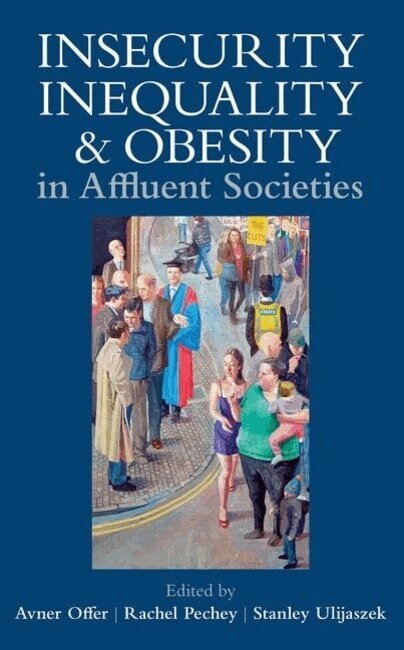
Insecurity, Inequality, and Obesity in Affluent Societies
Inbunden, Engelska, 2012
1 007 kr
Skickas inom 7-10 vardagar
During the last three decades, obesity has emerged as a big public health issue in affluent societies. A number of academic and policy approaches have been taken, none of which has been very effective. Most of the academic research, whether biological, epidemiological, social-scientific, or in the humanities, has focused on the individual, and on his or her response to external incentives.The point of departure taken here is that institutions matter a great deal too, and especially the normative environment of the nation state. In brief, the argument is that obesity is a response to stress, and that some types of welfare regimes are more stressful than others. English-speaking market-liberal societies have higher levels of obesity, and also higher levels of labour and product market competition, which induce uncertainty and anxiety. The studies presented here investigate this hypothesis, utilising a variety of disciplines, and the concluding contribution by the editors presents strong statistical evidence for its validity at the aggregate level. The hypothesis has an important bearing on public health policy and, indirectly, on economic policy more generally. It indicates that important drivers of obesity arise from the interaction between the external 'shock' of falling food prices and the enduring normative assumptions that govern society as a whole.If obesity is determined in part by inflexible norms and institutions, it may not be easy to counter it by focused interventions. Distinctive societal policy norms like an attachment to individualism (which national communities embrace with some conviction) may have harmful social spillovers which are rarely taken into account.
478 kr
Skickas inom 5-8 vardagar
This is a completely new interpretation of the First World War. Dr Offer weaves together the economic and social history of the English-speaking world, the Pacific Basin, and Germany, with the development of food production and consumption. He argues that the roots of Germany's defeat went back to the late-Victorian decline of British agriculture and the development of Canada, Australia, and the United States as agrarian exporters, while the agrarian interests of America and Australia were crucial in shaping the peace. The book examines the relation between economic and military power, and legal and moral questions of selecting civilians as a strategic target.
The Challenge of Affluence
Self-Control and Well-Being in the United States and Britain since 1950
Inbunden, Engelska, 2006
1 275 kr
Skickas inom 3-6 vardagar
Since the 1940s Americans and Britons have come to enjoy an era of rising material abundance. Yet this has been accompanied by a range of social and personal disorders, including family breakdown, addiction, mental instability, crime, obesity, inequality, economic insecurity, and declining trust.Avner Offer argues that well-being has lagged behind affluence in these societies, because they present an environment in which consistent choices are difficult to achieve over different time ranges and in which the capacity for personal and social commitment is undermined by the flow of novelty. His approach draws on economics and social science, makes use of the latest cognitive research, and provides a detailed and reasoned critique of modern consumer society, especially the assumption that freedom of choice necessarily maximizes individual and social well-being.The book falls into three parts. Part one analyses the ways in which economic resources map on to human welfare, why choice is so intractable, and how commitment to people and institutions is sustained. It argues that choice is constrained by prior obligation and reciprocity. The second section then applies these conceptual arguments to comparative empirical studies of advertising, of eating and obesity, and of the production and acquisition of appliances and automobiles. Finally, in part three, Offer investigates social and personal relations in the USA and Britain, including inter-personal regard, the rewards and reversals of status, the social and psychological costs of inequality, and the challenges posed to heterosexual love and to parenthood by the rise of affluence.
The Challenge of Affluence
Self-Control and Well-Being in the United States and Britain since 1950
Häftad, Engelska, 2007
564 kr
Skickas inom 5-8 vardagar
Since the 1940s Americans and Britons have come to enjoy an era of rising material abundance. Yet this has been accompanied by a range of social and personal disorders, including family breakdown, addiction, mental instability, crime, obesity, inequality, economic insecurity, and declining trust. Avner Offer argues that well-being has lagged behind affluence in these societies, because they present an environment in which consistent choices are difficult to achieve over different time ranges and in which the capacity for personal and social commitment is undermined by the flow of novelty. His approach draws on economics and social science, makes use of the latest cognitive research, and provides a detailed and reasoned critique of modern consumer society, especially the assumption that freedom of choice necessarily maximizes individual and social well-being. The book falls into three parts. Part one analyses the ways in which economic resources map on to human welfare, why choice is so intractable, and how commitment to people and institutions is sustained. It argues that choice is constrained by prior obligation and reciprocity. The second section then applies these conceptual arguments to comparative empirical studies of advertising, of eating and obesity, and of the production and acquisition of appliances and automobiles. Finally, in part three, Offer investigates social and personal relations in the USA and Britain, including inter-personal regard, the rewards and reversals of status, the social and psychological costs of inequality, and the challenges posed to heterosexual love and to parenthood by the rise of affluence.
Property and Politics 1870-1914
Landownership, Law, Ideology and Urban Development in England
Häftad, Engelska, 2010
441 kr
Skickas inom 7-10 vardagar
Landed and urban property exercised a powerful influence on social policy, urban development and national party politics in Victorian and Edwardian England. This book presents an innovative study of the economic, legal and social foundations of the British State. It contains a history of the law of land transfer, estimates of landed property and landed debt, and descriptions of the urban property market and of the impact of taxation upon urban development. Agrarian and urban property owners embraced conflicting doctrines of taxation. These doctrines, held rigidly for many decades, helped to form the identies of the Conservative and Liberal parties, and determine their policies in office. This book also analyses the stormy period from 1909 to 1914 where the urban crisis was compounded of collapsing property values, rising taxes and unsatisfied social demands as well as Lloyd George's provocative budgets and his ambitious and abortive land schemes.
399 kr
Skickas inom 7-10 vardagar
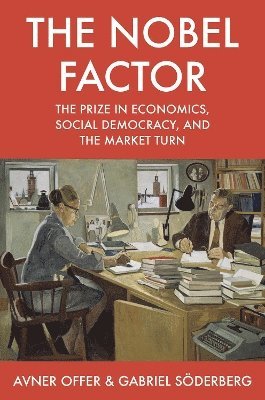
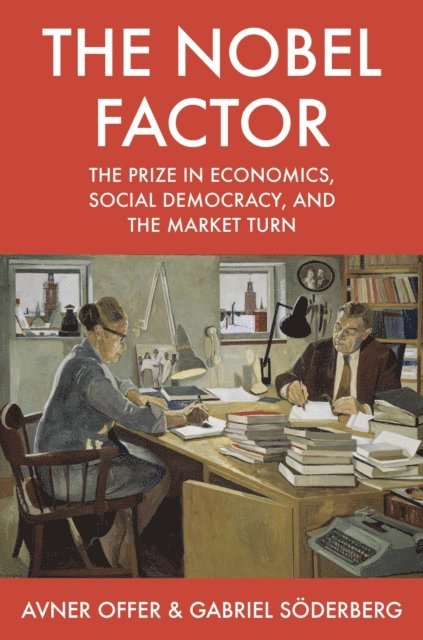
Economic theory may be speculative, but its impact is powerful and real. Since the 1970s, it has been closely associated with a sweeping change around the world--the "market turn." This is what Avner Offer and Gabriel Soderberg call the rise of market liberalism, a movement that, seeking to replace social democracy, holds up buying and selling as the norm for human relations and society. Our confidence in markets comes from economics, and our confidence in economics is underpinned by the Nobel Prize in Economics, which was first awarded in 1969. Was it a coincidence that the market turn and the prize began at the same time? The Nobel Factor, the first book to describe the origins and power of the most important prize in economics, explores this and related questions by examining the history of the prize, the history of economics since the prize began, and the simultaneous struggle between market liberals and social democrats in Sweden, Europe, and the United States. The Nobel Factor tells how the prize, created by the Swedish central bank, emerged from a conflict between central bank orthodoxy and social democracy.The aim was to use the halo of the Nobel brand to enhance central bank authority and the prestige of market-friendly economics, in order to influence the future of Sweden and the rest of the developed world. And this strategy has worked, with sometimes disastrous results for societies striving to cope with the requirements of economic theory and deregulated markets. Drawing on previously untapped Swedish national bank archives and providing a unique analysis of the sway of prizewinners, The Nobel Factor offers an unprecedented account of the real-world consequences of economics--and its greatest prize.
368 kr
Skickas inom 7-10 vardagar
How the creation of the Nobel Prize in Economics changed the economics profession, Sweden, and the worldOur confidence in markets comes from economics, and our confidence in economics is underpinned by the Nobel Prize in Economics, which was first awarded in 1969. Was it a coincidence that the prize and the rise of free-market liberalism began at the same time? The Nobel Factor is the first book to describe the origins and power of the most important prize in economics. It tells how the prize, created by the Swedish central bank, emerged from a conflict between central bank orthodoxy and Sweden's social democracy. The aim was to use the halo of the Nobel brand to influence the future of Sweden and the rest of the developed world by enhancing the bank's authority and the prestige of market-friendly economics. And the strategy has worked spectacularly—with sometimes disastrous results for societies striving to cope with the requirements of economic theory and deregulated markets. Drawing on previously untapped archives and providing a unique analysis of the sway of prizewinners, The Nobel Factor offers an unprecedented account of the real-world consequences of economics and its greatest prize.
Understanding the Private-Public Divide
Markets, Governments, and Time Horizons
Inbunden, Engelska, 2022
1 065 kr
Skickas inom 7-10 vardagar
Markets are taken as the norm in economics and in much of political and media discourse. But if markets are superior why does the public sector remain so large? Avner Offer provides a distinctive new account of the effective temporal limits on private, public, and social activity. Understanding the Private-Public Divide accounts for the division of labour between business and the public sector, how it changes over time, where the boundaries ought to run, and the harm that follows if they are violated. He explains how finance forces markets to focus on short-term objectives and why business requires special privileges in return for long-term commitment. He shows how a private sector policy bias leads to inequality, insecurity, and corruption. Integrity used to be the norm and it can be achieved again. Only governments can manage uncertainty in the long-term interests of society, as shown by the challenge of climate change.
Understanding the Private-Public Divide
Markets, Governments, and Time Horizons
Häftad, Engelska, 2022
331 kr
Skickas inom 7-10 vardagar
Markets are taken as the norm in economics and in much of political and media discourse. But if markets are superior why does the public sector remain so large? Avner Offer provides a distinctive new account of the effective temporal limits on private, public, and social activity. Understanding the Private-Public Divide accounts for the division of labour between business and the public sector, how it changes over time, where the boundaries ought to run, and the harm that follows if they are violated. He explains how finance forces markets to focus on short-term objectives and why business requires special privileges in return for long-term commitment. He shows how a private sector policy bias leads to inequality, insecurity, and corruption. Integrity used to be the norm and it can be achieved again. Only governments can manage uncertainty in the long-term interests of society, as shown by the challenge of climate change.