Carolina Armenteros - Böcker
Visar alla böcker från författaren Carolina Armenteros. Handla med fri frakt och snabb leverans.
6 produkter
6 produkter
1 818 kr
Skickas inom 10-15 vardagar
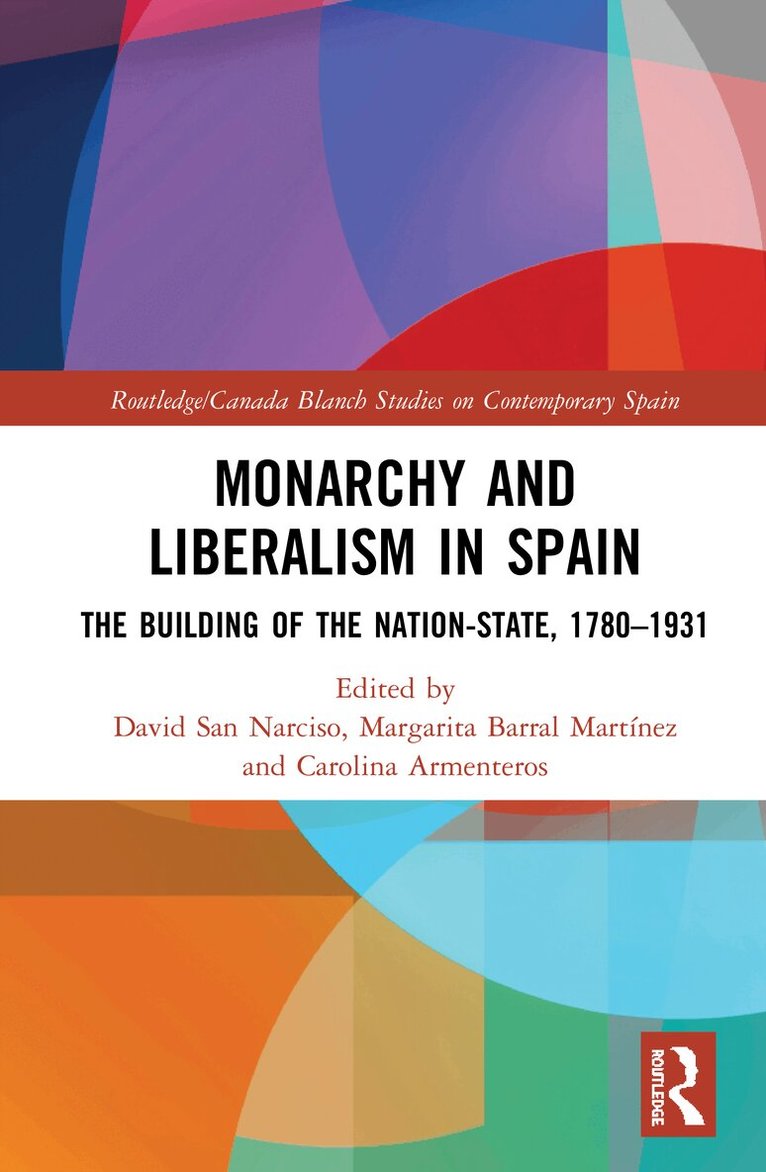
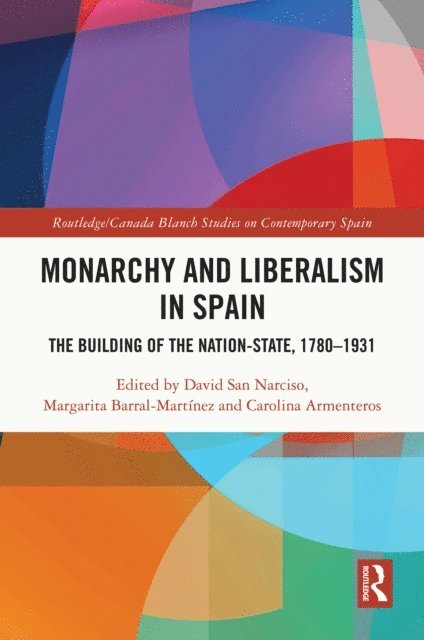
Bringing together the work of top specialists and emerging scholars in the field, this volume is the first book-length study of the rapport between liberalism and the Spanish monarchy over the long nineteenth century in any language. It is at once a general overview and a set of original contributions to knowledge. The essays discuss monarchy’s rapport with the pre-liberal, liberal and post-liberal nation-state, from the eve of the French Revolution, when the monarchy regulated a ‘natural’ order, to the unstable reign of Isabel II, fraught by revolutions that ended in her exile, to the brief republican monarchy of Amadeo I, the much-maligned foreign king, to Alfonso XIII’s expulsion from Spain following the failure of the dictatorship of Primo de Rivera. The essays approach the subject through two main thematic-analytical axes. The first, political axis examines the monarchy’s confrontation with, and adaptation to, liberalism as a political force that aimed to nationalize the Spanish people. The second axis is cultural, and studies the Crown’s support of liberalism’s nationalizing aims through various staging strategies that comprised visits, rituals, ceremonies, iconography, religiosity, and familial and military display. The dual approach invites the reader to question the boundaries between the political and the cultural, especially in regard to the ceremonial, and during critical times that witness the transformation of political power and the building of the nation-state.Designed for Hispanists and students of politics, ritual, liberalism and monarchy, this collection should appeal to academics and researchers as well as anyone interested in modern European history.
648 kr
Skickas inom 10-15 vardagar
Bringing together the work of top specialists and emerging scholars in the field, this volume is the first book-length study of the rapport between liberalism and the Spanish monarchy over the long nineteenth century in any language. It is at once a general overview and a set of original contributions to knowledge. The essays discuss monarchy’s rapport with the pre-liberal, liberal and post-liberal nation-state, from the eve of the French Revolution, when the monarchy regulated a ‘natural’ order, to the unstable reign of Isabel II, fraught by revolutions that ended in her exile, to the brief republican monarchy of Amadeo I, the much-maligned foreign king, to Alfonso XIII’s expulsion from Spain following the failure of the dictatorship of Primo de Rivera. The essays approach the subject through two main thematic-analytical axes. The first, political axis examines the monarchy’s confrontation with, and adaptation to, liberalism as a political force that aimed to nationalize the Spanish people. The second axis is cultural, and studies the Crown’s support of liberalism’s nationalizing aims through various staging strategies that comprised visits, rituals, ceremonies, iconography, religiosity, and familial and military display. The dual approach invites the reader to question the boundaries between the political and the cultural, especially in regard to the ceremonial, and during critical times that witness the transformation of political power and the building of the nation-state.Designed for Hispanists and students of politics, ritual, liberalism and monarchy, this collection should appeal to academics and researchers as well as anyone interested in modern European history.
1 548 kr
Skickas inom 7-10 vardagar
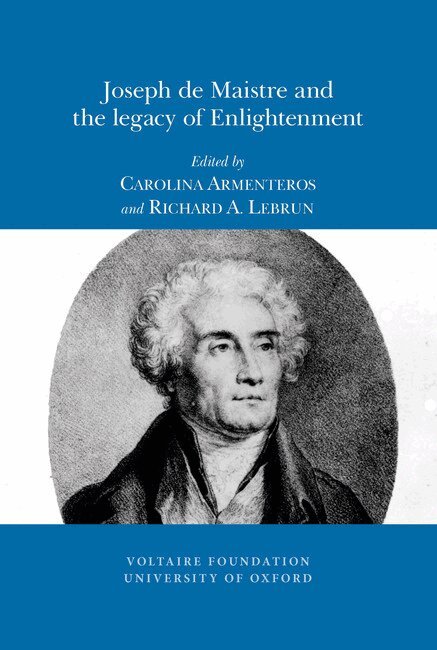
Although Joseph de Maistre has long been regarded as characterising the Counter-Enlightenment, his intellectual relationship to eighteenth-century philosophy remains unexplored. In this first comprehensive assessment of Joseph de Maistre’s response to the Enlightenment, a team of renowned scholars uncover a writer who was both the foe and heir of the philosophes. While Maistre was deeply indebted to thinkers who helped to fashion the Enlightenment – Rousseau, the Cambridge Platonists – he also agreed with philosophers such as Schopenhauer who adopted an overtly critical stance. His idea of genius, his critique of America and his historical theory all used ‘enlightened’ language to contradict Enlightenment principles. Most intriguingly, and completely unsuspected until now, Maistre used the writings of the early Christian theologian Origen to develop a new, late, religious form of Enlightenment that shattered the logic of philosophie.The Joseph de Maistre revealed in this book calls into question any simple opposition of Enlightenment and Counter-Enlightenment, and offers particular lessons for our own time, when religion is at the forefront of public debate and a powerful political tool.
910 kr
Skickas inom 10-15 vardagar
"A fierce absolutist, a furious theocrat... the champion of the hardest, narrowest, and most inflexible dogmatism... part learned doctor, part inquisitor, part executioner." Thus did Émile Faguet describe Joseph-Marie de Maistre (1753–1821) in his 1899 history of nineteenth-century thought. This view of the influential thinker as a reactionary has, with little variation, held sway ever since. In The French Idea of History, Carolina Armenteros recovers a very different figure, one with a far more subtle understanding of, and response to, the events of his day. Maistre emerges from this deeply learned book as the crucial bridge between the Enlightenment and the historicized thought of the nineteenth century. Armenteros demonstrates that Maistre inaugurated a specifically French way of thinking about past, present, and future that held sway not only among conservative political theorists but also among intellectuals generally considered to belong to the left, particularly the Utopian Socialists.The historical rupture represented by the French Revolution compelled contemporaries to reflect on the nature and meaning of history. Some who remained religious during those years felt history with particular intensity, awakening suddenly to the fear that God might have abandoned humankind. This profound spiritual anxiety emerged in Maistre's work: under his pen, everything—knowledge, society, religion, government, the human body—had to be historicized and temporalized in order to be known. The imperative was to end history by uncovering its essence. Socialists, positivists, and traditionalists drew on Maistre's historical ideas to construct the collective good and design the future. The dream that history held the key to human renewal and the obliteration of violence faded after the 1848 revolutions, but it permanently changed French social, political, moral, and religious thought.
2 599 kr
Skickas inom 7-10 vardagar
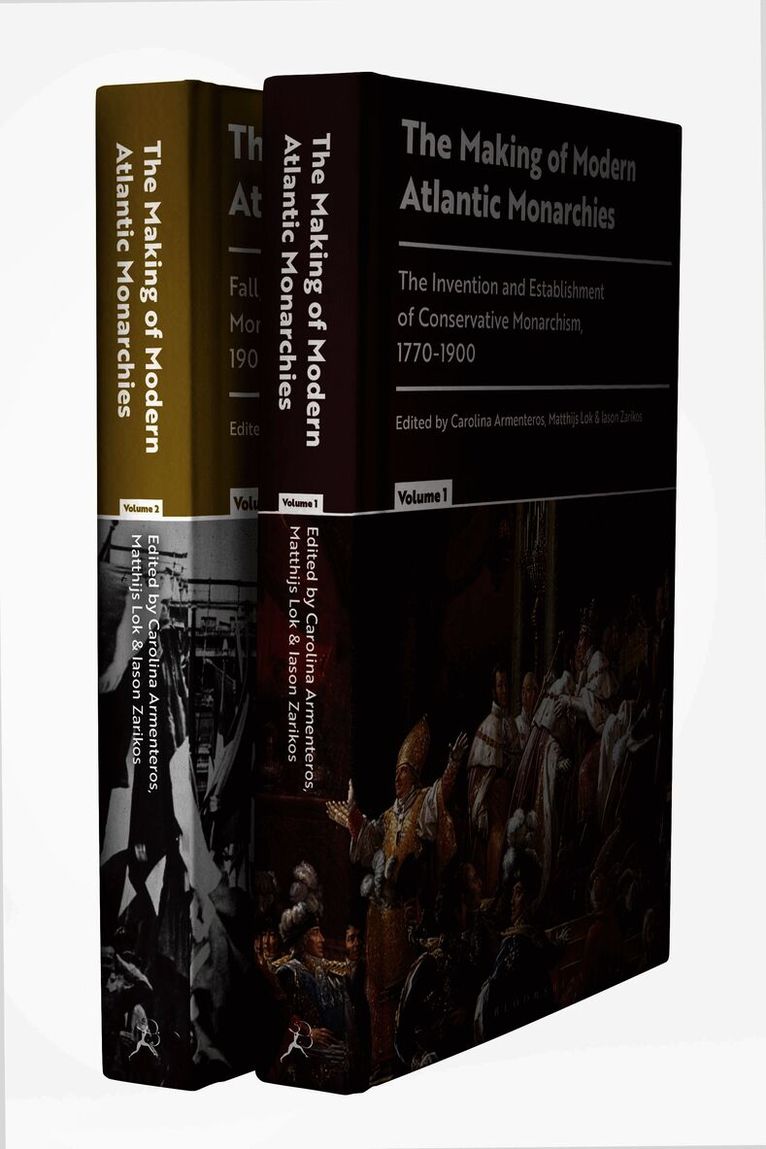
This two-volume study sees contributors from the UK, the USA, Canada, Mexico, Singapore and ten countries from across mainland Europe analyse how monarchy has been theorized and implemented in the Atlantic world from the birth of conservatism during the French Revolution to the present day. Using monarchy as a lens, it also provides an original exploration of how conservatism, often branded as reactive, can be viewed as a continual response to, and reinterpretation of, pivotal social and political events over the longue durée.The Making of Modern Atlantic Monarchies shows that 1789, the Bourbons’ return, the 1848 revolutions, the US Civil War, World War I, the rise and fall of fascism and other events became catalysts that triggered conservative thought and waves of traditionalist renovations — often posing as restorations — which swept through both Europe and the United States. It argues that these renovations were themselves bound up with the transformation of monarchy, which was forced to reinvent itself, sometimes gradually and sometimes suddenly, following the steady destruction of its traditional forms of legitimation. The 33 chapters included, covering over 20 nations across the Atlantic world and extending to Asia, reveal that, by reflecting on monarchy as an institution, strands of monarchist conservatism developed what were often bold, innovative and even radical answers to modernity’s political dilemmas. The study breaks new ground by detailing how nationally and internationally significant events impelled political thinkers and movements across the Atlantic to reflect on European monarchy in order to articulate forms of conservatism whose legacies persist today, both consciously and unconsciously, as both constituents of, and provocations to, the democratic process. At the same time, The Making of Modern Atlantic Monarchies illustrates the unity and diversity of the Atlantic ideological landscape even while providing an overview and a reference for those interested in conservatism’s centuries-long history.
Del 30 - Brill's Companions to European History
Companion to Italian Constitutional History (1804–1938)
The House of Savoy and the Making of the Nation-State
Inbunden, Engelska, 2023
1 891 kr
Skickas inom 5-8 vardagar
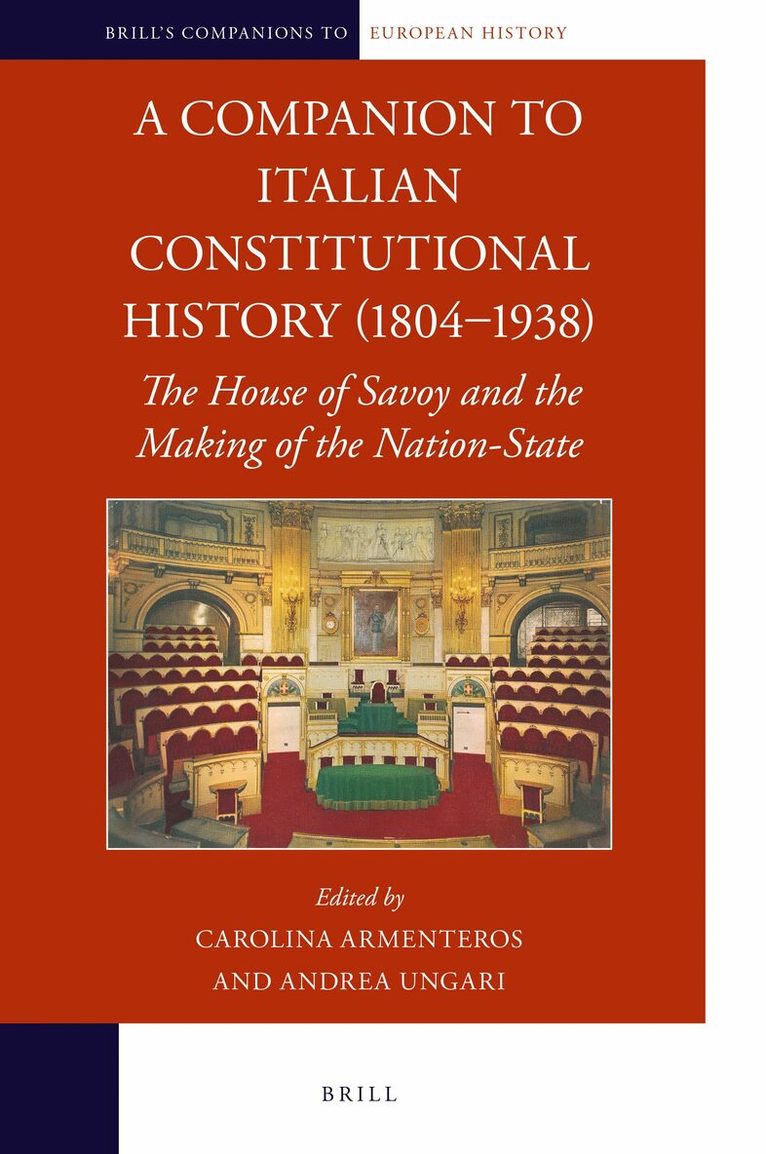
'This is the first account in English of the making of Italian nationhood from the perspective of constitutional history. It is also the first to consider the role that the House of Savoy played in this process. Bringing together influential experts in the field, the collection covers the evolution of the Italian constitution from Russian diplomacy’s little-known planning of the Risorgimento to the monarchy’s demise after its clashes with fascism. Combining systematic coverage with original research, the volume includes such varied themes as the king’s role in the Italian wars of independence, the Italian peninsula’s forgotten charters of 1848, and the story of the ephemeral building that housed the first Italian parliament.Contributors are: Carolina Armenteros, Andrea Ungari, Paolo Colombo, Frans Willem Lantink, Christian Satto, Giulio Stolfi, Valentina Villa, Tommaso Zerbi, and Romano Ferrari Zumbini.