Christophe Chalamet – författare
Visar alla böcker från författaren Christophe Chalamet. Handla med fri frakt och snabb leverans.
14 produkter
14 produkter
E-bok
PDF, Engelska, 2017428 kr
Läs direkt efter köp
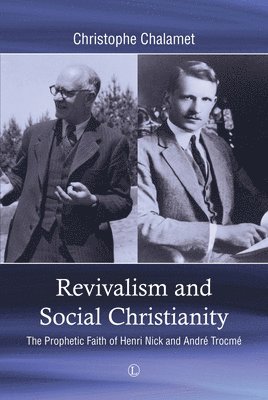
How does one become ''righteous among the Nations''? In the case of Henri Nick (1868-1954) and Andre Trocme (1901-1971), two French Protestant pastors who received the title for their acts of solidarity toward persecuted Jews, it was because they had been immersed, from an early age, in the discourses and practices of social Christianity. Focussing on the lives of these two remarkable figures of twentieth-century Christianity, Revivalism and Social Christianity is the first study in English on the Social Gospel in French Protestantism. Chalamet presents a genealogy of the movement, from its emergence in the last decades of the nineteenth century to its high point during World War II, in Le Chambon-sur-Lignon, where Trocme and many local people rescued hundreds of Jewish refugees. As social Christians who prayed and worked for the coming of God''s kingdom on earth in the midst of a society ravaged by two world wars, Henri Nick and Andre Trocme combined a deep revivalist faith with a concern for the concrete conditions in which people live.
Häftad, Engelska, 2017
291 kr
Skickas inom 5-8 vardagar
How does one become 'righteous among the Nations'? In the case of Henri Nick (1868-1954) and André Trocmé (1901-1971), two French Protestant pastors who received the title for their acts of solidarity toward persecuted Jews, it was because they had been immersed, from an early age, in the discourses and practices of social Christianity. Focussing on the lives of these two remarkable figures of twentieth-century Christianity, Revivalism and Social Christianity is the first study in English on the Social Gospel in French Protestantism.Chalamet presents a genealogy of the movement, from its emergence in the last decades of the nineteenth century to its high point during World War II, in Le Chambon-sur-Lignon, where Trocmé and many local people rescued hundreds of Jewish refugees. As social Christians who prayed and worked for the coming of God's kingdom on earth in the midst of a society ravaged by two world wars, Henri Nick and André Trocmé combined a deep revivalist faith with a concern for the concrete conditions in which people live.
Häftad, Engelska, 2014
547 kr
Skickas inom 3-6 vardagar
Häftad, Engelska, 2015
706 kr
Skickas inom 3-6 vardagar
Inbunden, Engelska, 2013
440 kr
Skickas inom 5-8 vardagar
E-bok
Engelska, 2013455 kr
Läs direkt efter köp
How does one become a Righteous among the Nations? In the case of Henri Nick (1868-1954) and Andre Trocme (1901-1971), two French Protestant pastors on whom that title was conferred by Yad Vashem (Jerusalem) for their acts of solidarity toward persecuted Jews, the answer seems to be: by being immersed, from an early age, in the discourses and practices of social Christianity. By focusing on the lives of two significant figures of twentieth-century Christianity, this study, the first in English on the Social Gospel in French Protestantism, presents a genealogy of that movement, from its emergence in the last decades of the nineteenth century to its high point, during World War II, in Le Chambon-sur-Lignon, where Trocme and many people of that area of southern France rescued hundreds of Jewish refugees. As social Christians who prayed and worked for the coming of God''s kingdom on earth in the midst of a world torn by two world wars, Henri Nick and Andre Trocme combined a deep revivalist faith with a concern for the concrete conditions in which people live. They wished to save others, and indeed they realized that intent in ways they did not foresee.
Häftad, Engelska, 2013
298 kr
Skickas inom 5-8 vardagar
Inbunden, Engelska, 2019
1 182 kr
Skickas inom 10-15 vardagar
Faith, hope, and love are the three core realities of Christian existence. Far from being self-grounded, they are rooted in God’s action and being in the gospel of Jesus Christ. Reflecting on the meaning these three realities have for us today, Christophe Chalamet argues that we gain a deeper understanding of them as we consider them in their interrelation, rather than separately. The first disciples sometimes described their burgeoning tradition as “the Way.” The apostle Paul, who reflected on faith, hope, and love in his epistles, praised love as “a most excellent way.” This book in constructive theology, drawing from a wealth of thinkers from the Christian tradition broadly conceived, presents faith, hope, and love as the abiding response to God’s faithfulness, God’s justice, and God’s love, for the sake of this world.
Inbunden, Engelska, 2017
1 739 kr
Skickas inom 5-8 vardagar
Modern science informs us about the end of the universe: "game over" is the message which lies ahead of our world. Christian theology, on the other hand, sees in the end not the cessation of all life, but rather an invitation to play again, in God's presence. Is there a way to articulate together such vastly different claims?Eschatology is a theological topic which merits being considered from several different angles. This book seeks to do this by gathering contributions from esteemed and fresh voices from the fields of biblical exegesis, history, systematic theology, philosophy, and ethics.How can we make sense, today, of Jesus' (and the New Testament's) eschatological message? How did he, his early disciples, and the Christian tradition, envision the "end" of the world? Is there a way for us to articulate together what modern science tells us about the end of the universe with the biblical and Christian claims about God who judges and who will wipe every tear?Eschatology has been at the heart of Christian theology for 100 years in the West. What should we do with this legacy? Are there ways to move our reflection forward, in our century? Scholars and other interested readers will find here a wealth of insights.
E-bok
Engelska, 20171 697 kr
Läs direkt efter köp
Modern science informs us about the end of the universe: "game over" is the message which lies ahead of our world. Christian theology, on the other hand, sees in the end not the cessation of all life, but rather an invitation to play again, in God''s presence. Is there a way to articulate together such vastly different claims?Eschatology is a theological topic which merits being considered from several different angles. This book seeks to do this by gathering contributions from esteemed and fresh voices from the fields of biblical exegesis, history, systematic theology, philosophy, and ethics.How can we make sense, today, of Jesus'' (and the New Testament''s) eschatological message? How did he, his early disciples, and the Christian tradition, envision the "end" of the world? Is there a way for us to articulate together what modern science tells us about the end of the universe with the biblical and Christian claims about God who judges and who will wipe every tear?Eschatology has been at the heart of Christian theology for 100 years in the West. What should we do with this legacy? Are there ways to move our reflection forward, in our century? Scholars and other interested readers will find here a wealth of insights.
E-bok
PDF, Engelska, 20171 697 kr
Läs direkt efter köp
Modern science informs us about the end of the universe: "game over" is the message which lies ahead of our world. Christian theology, on the other hand, sees in the end not the cessation of all life, but rather an invitation to play again, in God''s presence. Is there a way to articulate together such vastly different claims?Eschatology is a theological topic which merits being considered from several different angles. This book seeks to do this by gathering contributions from esteemed and fresh voices from the fields of biblical exegesis, history, systematic theology, philosophy, and ethics.How can we make sense, today, of Jesus'' (and the New Testament''s) eschatological message? How did he, his early disciples, and the Christian tradition, envision the "end" of the world? Is there a way for us to articulate together what modern science tells us about the end of the universe with the biblical and Christian claims about God who judges and who will wipe every tear?Eschatology has been at the heart of Christian theology for 100 years in the West. What should we do with this legacy? Are there ways to move our reflection forward, in our century? Scholars and other interested readers will find here a wealth of insights.
Inbunden, Engelska, 2022
1 908 kr
Skickas inom 5-8 vardagar
Karl Barth’s commentary on Paul’s epistle to the Romans, in its two editions (1919 and 1922), is one of the most significant works published in Christian theology in the 20th century. This book, which landed “like a bombshell on the theologians’ playground,” still deserves close scrutiny one hundred years after its publication.In this volume, New Testament scholars, philosophers of religion and systematic theologians ponder the intricacies of Barth’s “expressionistic” commentary, pointing out the ways in which Barth interprets Paul’s epistle for his own day, how this actualized interpretation of the apostle’s message challenged the theology of Barth’s time, and how some of the insights he articulated in 1919 and in 1922 have shaped Christian theology up to our day. With his commentary, the young Swiss pastor paved the way for a renewed, intensely theological interpretation of the Scriptures.The volume thus centers of some of the key themes which run through Barth’s commentary: faith as divine gift beyond any human experience or psychological data, the Easter event as the turning point of the world’s history, God’s judgment and mercy and God’s one Word in Jesus Christ.This volume represents a major contribution to the interpretation of Karl Barth’s early thought.
E-bok
PDF, Tyska, 2004421 kr
Läs direkt efter köp
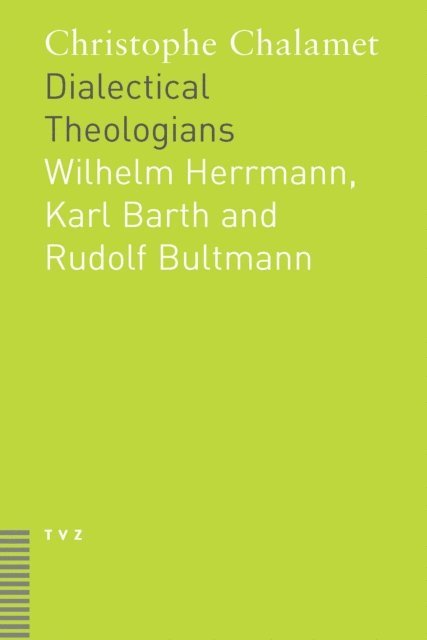
Karl Barths und Rudolf Bultmanns Theologien sind in ihrer Nähe und Distanz als eigenständige Weiterführungen der Theologie Wilhelm Herrmanns zu deuten - das ist die These dieses Buches. Es gibt keinen ''vor-dialektischen'' Barth oder Bultmann, sondern verschiedene Phasen ihrer dialektischen Theologie. Als Schüler Herrmanns waren sie von Anfang an dialektische Theologen, nämlich Theologen in der Spannung von Gesetz und Evangelium, in der Dialektik des Deus absconditus et revelatus, des Gerichts und der Gnade Gottes. Deswegen konnte Bultmann um 1922 in die Nähe der neuen theologischen Bewegung kommen. Aber weil die Dialektik Barths eine Umwandlung der Theologie Herrmanns war, konnte Bultmann, als treuer Schüler Herrmanns, ihm nicht folgen. Unter Berücksichtigung von umfangreichem unveröffentlichtem Material aus dem Baseler Karl Barth-Archiv und dem Bultmann-Nachlaß in Tübingen unternimmt die Studie den Versuch, die Wurzeln der dialektischen Theologie bei Wilhelm Herrmann zu zeigen (erster Teil), die Debatte zwischen Barth und Bultmann im Lichte von Herrmanns Theologie zu verstehen (zweiter Teil) und die konkreten Konsequenzen aus der Dialektik des Deus absconditus et revelatus bei Bultmann und Barth darzustellen (dritter Teil), nämlich - unter anderem - die Auseinandersetzung mit der natürlichen Theologie (Barth) und das Programm der Entmythologisierung (Bultmann).
Inbunden, Tyska, 2013
2 383 kr
Tillfälligt slut
Auf einer sehr persönlichen Ebene beschreibt der von dem Hallenser Privatdozenten Wilhelm Herrmann begonnene Briefwechsel die kontroversen Wirkungen, die der Göttinger Theologe Albrecht Ritschl in der Gründerzeit mit seiner Reich-Gottes-Theologie auslöste. Versöhnung der Menschheit, nicht Versöhnung Gottes ist die Botschaft der Offenbarung. Diese exegetisch neue Einsicht machte Schule, denn so ließ sich der in der Verkündigung Jesu zentrale Anbruch des Reichs Gottes als ein Impuls der Freiheit zur sittlichen (eigentlich auch zur demokratischen) Gestaltung der Lebensordnungen verstehen. Der Briefwechsel zeigt den Enthusiasmus, mit dem der junge Wilhelm Herrmann dieser Fundierung des sich weitenden Weltbewusstseins Bahn brach. In unbezweifelbarer Loyalität zu Ritschl bestand er zunächst auf der Universalität der christlichen Weltanschauung, doch führte ihn das Gewissheitsproblem der Religion dazu, den Gemeindeansatz Ritschls auf das Wahrwerden der individuellen Existenz auszurichten.