Claire Zimmerman - Böcker
Visar alla böcker från författaren Claire Zimmerman. Handla med fri frakt och snabb leverans.
7 produkter
7 produkter
723 kr
Skickas
373 kr
Skickas inom 7-10 vardagar
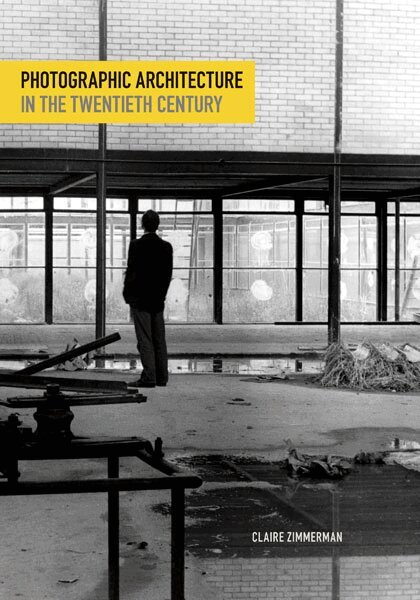
One hundred years ago, architects found in the medium of photography-so good at representing a building’s lines and planes-a necessary way to promote their practices. It soon became apparent, however, that photography did more than reproduce what it depicted. It altered both subject and reception, as architecture in the twentieth century was enlisted as a form of mass communication. Claire Zimmerman reveals how photography profoundly influenced architectural design in the past century, playing an instrumental role in the evolution of modern architecture. Her “picture anthropology” demonstrates how buildings changed irrevocably and substantially through their interaction with photography, beginning with the emergence of mass-printed photographically illustrated texts in Germany before World War II and concluding with the postwar age of commercial advertising. In taking up “photographic architecture,” Zimmerman considers two interconnected topics: first, architectural photography and its circulation; and second, the impact of photography on architectural design. She describes how architectural photographic protocols developed in Germany in the early twentieth century, expanded significantly in the wartime and postwar diaspora, and accelerated dramatically with the advent of postmodernism. In modern architecture, she argues, how buildings looked and how photographs made them look overlapped in consequential ways. In architecture and photography, the modernist concepts that were visible to the largest number over the widest terrain with the greatest clarity carried the day. This richly illustrated work shows, for the first time, how new ideas and new buildings arose from the interplay of photography and architecture-transforming how we see the world and how we act on it.
1 509 kr
Skickas inom 7-10 vardagar
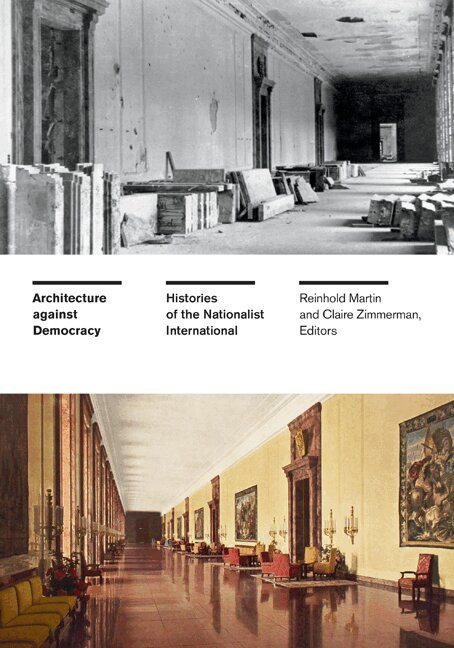
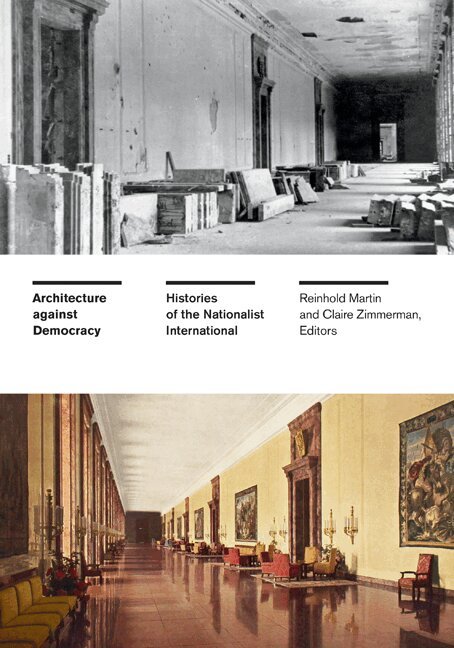
Examining architecture’s foundational role in the repression of democracy Reinhold Martin and Claire Zimmerman bring together essays from an array of scholars exploring the troubled relationship between architecture and antidemocratic politics. Comprising detailed case studies throughout the world spanning from the early nineteenth century to the present, Architecture against Democracy analyzes crucial occasions when the built environment has been harnessed as an instrument of authoritarian power. Alongside chapters focusing on paradigmatic episodes from twentieth-century German and Italian fascism, the contributors examine historic and contemporary events and subjects that are organized thematically, including the founding of the Smithsonian Institution, Ellis Island infrastructure, the aftermath of the Paris Commune, Cold War West Germany and Iraq, Frank Lloyd Wright’s domestic architecture, and Istanbul’s Taksim Square. Through the range and depth of these accounts, Architecture against Democracy presents a selective overview of antidemocratic processes as they unfold in the built environment throughout Western modernity, offering an architectural history of the recent “nationalist international.” As new forms of nationalism and authoritarian rule proliferate across the globe, this timely collection offers fresh understandings of the role of architecture in the opposition to democracy. Contributors: Esra Akcan, Cornell U; Can Bilsel, U of San Diego; JosÉ H. Bortoluci, Getulio Vargas Foundation; Charles L. Davis II, U of Texas at Austin; Laura diZerega; Eve Duffy, Duke U; MarÍa GonzÁlez PendÁs, Cornell U; Paul B. Jaskot, Duke U; Ana MarÍa LeÓn, Harvard U; Ruth W. Lo, Hamilton College; Peter Minosh, Northeastern U; Itohan Osayimwese, Brown U; Kishwar Rizvi, Yale U; Naomi Vaughan; Nader Vossoughian, New York Institute of Technology and Columbia U; Mabel O. Wilson, Columbia U.
373 kr
Skickas inom 7-10 vardagar
Examining architecture’s foundational role in the repression of democracy Reinhold Martin and Claire Zimmerman bring together essays from an array of scholars exploring the troubled relationship between architecture and antidemocratic politics. Comprising detailed case studies throughout the world spanning from the early nineteenth century to the present, Architecture against Democracy analyzes crucial occasions when the built environment has been harnessed as an instrument of authoritarian power. Alongside chapters focusing on paradigmatic episodes from twentieth-century German and Italian fascism, the contributors examine historic and contemporary events and subjects that are organized thematically, including the founding of the Smithsonian Institution, Ellis Island infrastructure, the aftermath of the Paris Commune, Cold War West Germany and Iraq, Frank Lloyd Wright’s domestic architecture, and Istanbul’s Taksim Square. Through the range and depth of these accounts, Architecture against Democracy presents a selective overview of antidemocratic processes as they unfold in the built environment throughout Western modernity, offering an architectural history of the recent “nationalist international.” As new forms of nationalism and authoritarian rule proliferate across the globe, this timely collection offers fresh understandings of the role of architecture in the opposition to democracy. Contributors: Esra Akcan, Cornell U; Can Bilsel, U of San Diego; JosÉ H. Bortoluci, Getulio Vargas Foundation; Charles L. Davis II, U of Texas at Austin; Laura diZerega; Eve Duffy, Duke U; MarÍa GonzÁlez PendÁs, Cornell U; Paul B. Jaskot, Duke U; Ana MarÍa LeÓn, Harvard U; Ruth W. Lo, Hamilton College; Peter Minosh, Northeastern U; Itohan Osayimwese, Brown U; Kishwar Rizvi, Yale U; Naomi Vaughan; Nader Vossoughian, New York Institute of Technology and Columbia U; Mabel O. Wilson, Columbia U.
179 kr
Skickas inom 3-6 vardagar
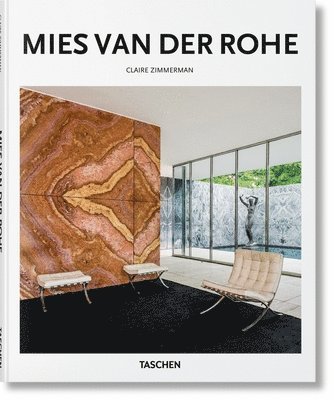
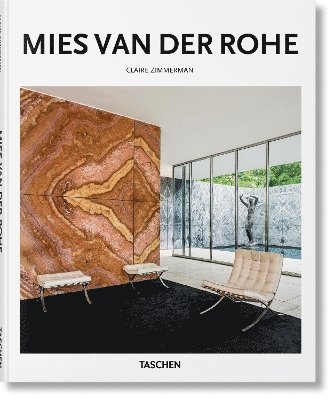
Famed for his motto “less is more,” Ludwig Mies van der Rohe (1886–1969) was one of the founding fathers of modern architecture and a hotly-debated tastemaker of twentieth-century aesthetics and urban experience.Mies van der Rohe’s philosophy was one of underlying truth in pure forms and proportions. With the help of contemporary technological and material developments, he sought a stripped-down purity to architecture, showcased by the likes of the Seagram Building and Farnsworth House. Some spoke out against this stark approach as the precursor to bland, generic cityscapes. Others cite Mies van der Rohe as the ultimate master of an abidingly elegant essence.This book presents more than 20 of Mies van der Rohe’s projects from the period 1906–1967 to introduce his groundbreaking practise and influence in both America and Europe.
187 kr
Skickas
Famed for his motto “less is more,” Ludwig Mies van der Rohe (1886–1969) was one of the founding fathers of modern architecture and a hotly-debated tastemaker of twentieth-century aesthetics and urban experience.Mies van der Rohe’s philosophy was one of underlying truth in pure forms and proportions. With the help of contemporary technological and material developments, he sought a stripped-down purity to architecture, showcased by the likes of the Seagram Building and Farnsworth House. Some spoke out against this stark approach as the precursor to bland, generic cityscapes. Others cite Mies van der Rohe as the ultimate master of an abidingly elegant essence.This book presents more than 20 of Mies van der Rohe’s projects from the period 1906–1967 to introduce his groundbreaking practise and influence in both America and Europe.
187 kr
Skickas
Famed for his motto “less is more,” Ludwig Mies van der Rohe (1886–1969) was one of the founding fathers of modern architecture and a hotly-debated tastemaker of twentieth-century aesthetics and urban experience.Mies van der Rohe’s philosophy was one of underlying truth in pure forms and proportions. With the help of contemporary technological and material developments, he sought a stripped-down purity to architecture, showcased by the likes of the Seagram Building and Farnsworth House. Some spoke out against this stark approach as the precursor to bland, generic cityscapes. Others cite Mies van der Rohe as the ultimate master of an abidingly elegant essence.This book presents more than 20 of Mies van der Rohe’s projects from the period 1906–1967 to introduce his groundbreaking practise and influence in both America and Europe.