Peter Gössel - Böcker
Visar alla böcker från författaren Peter Gössel. Handla med fri frakt och snabb leverans.
48 produkter
48 produkter
888 kr
Skickas inom 3-6 vardagar
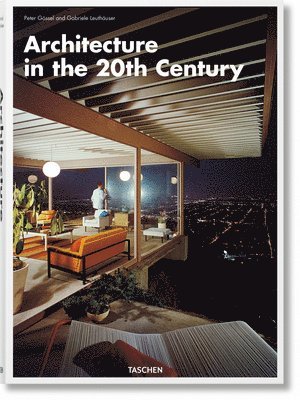
The architecture of the 20th century is distinguished by an astonishing diversity. Just as the clash of aesthetic and commercial ambitions nevertheless produced many a happy symbiosis, so the purist and the expressive, the monumental and the picturesque came face to face. From lofty “starchitects” to lesser-known names around the world, this chronological overview takes you to the heart of the ideas, trends, and transitions that defined the 1900s. From Frank Lloyd Wright to Antoni Gaudí, Frank O. Gehry to Shigeru Ban and all the best stuff in-between, it’s all here. Organized chronologically, the 31 chapters put it all into perspective, illustrated by hundreds of large-format photos as well as a plenitude of drawings and floor plans. The biographical appendix covers all of the century’s greatest architects while celebrating today’s new talents, and the lavish illustrations include some of the best architectural photography in the modern era. For anyone interested in the zeitgeist and building design of the 20th century, this is your be-all-end-all reference work. The collection covers not only the architects but also the groups, the movements, and the styles that defined an era of construction. A must for all lovers of architecture!
186 kr
Skickas
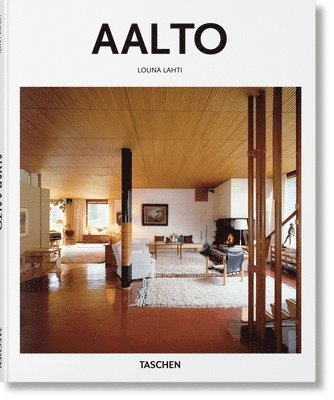
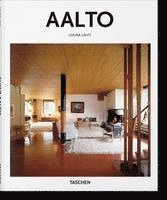
Alvar Aalto (1898–1976) made a unique modernist mark. Influenced by both the landscape and the political independence of his native Finland, he designed warm, curving, compassionate buildings, wholly set apart from the slick, mechanistic, geometric designs that characterized much contemporary European practice.Whether a church, a villa, a sauna, or a public library, Aalto’s organic structures tended to replace plaster and steel with brick and wood, often incorporating undulating, wave-like forms, which would also appear in his chair, glassware, and lamp designs. An adherent to detail, Aalto insisted upon the humanity of his work stating: “Modern architecture does not mean using immature new materials; the main thing is to work with materials towards a more human line.”Many of Aalto’s public buildings such as Säynätsalo Town Hall, the lecture theatre at Otaniemi Technical University, the Helsinki National Pensions Institute and the Helsinki House of Culture may be seen as psychological as well as physical landmarks in the rebuilding of Finland after the ravages of war.
186 kr
Skickas inom 3-6 vardagar
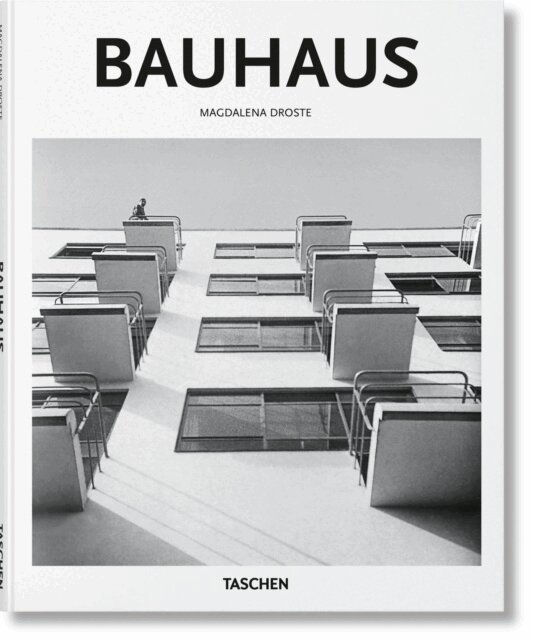
In a fleeting fourteen year period, sandwiched between two world wars, Germany’s Bauhaus school of art and design changed the face of modernity. With utopian ideals for the future, the school developed a pioneering fusion of fine art, craftsmanship, and technology to be applied across painting, sculpture, design, architecture, film, photography, textiles, ceramics, theatre, and installation. As much an intense personal community as a publicly minded collective, the Bauhaus was first founded by Walter Gropius (1883–1969), and counted Josef and Anni Albers, Wassily Kandinsky, Paul Klee, Oskar Schlemmer, Gunta Stölzl, Marianne Brandt and Ludwig Mies van der Rohe among its members. Between its three successive locations in Weimar, Dessau and Berlin, the school fostered charismatic and creative exchange between teachers and students, all varied in their artistic styles and preferences, but united in their idealism and their interest in a “total” work of art across different practices and media. This book celebrates the adventurous innovation of the Bauhaus movement, both as a trailblazer in the development of modernism, and as a paradigm of art education, where an all-encompassing freedom of creative expression and cutting-edge ideas led to functional and beautiful creations.
186 kr
Skickas
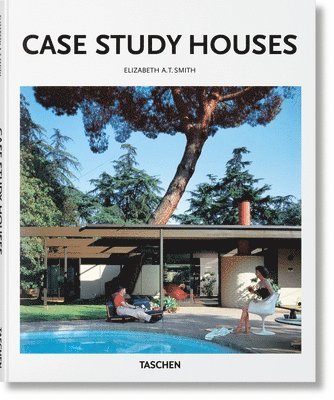
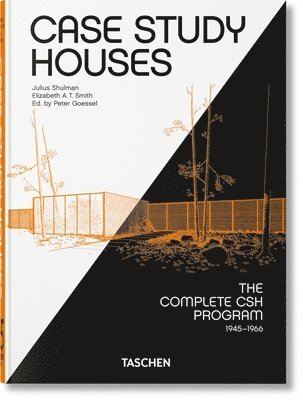
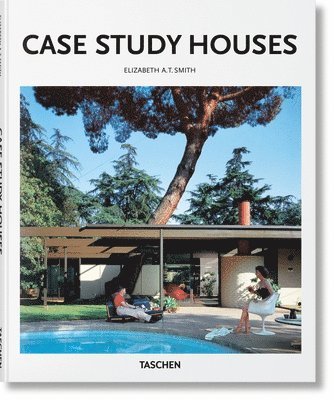
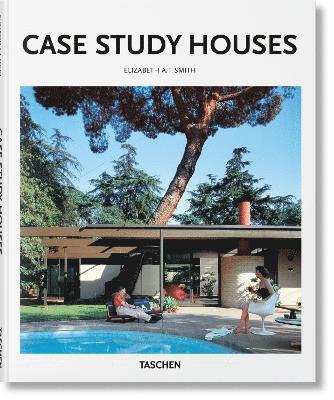
The Case Study House program (1945–1966) was a unique event in the history of American architecture. Sponsored by Arts & Architecture magazine, the program sought to respond to the postwar building boom with prototype modern homes that could be both easily replicated and readily affordable to the average American.Concentrated on the Los Angeles area, the Case Study Houses included 36 model homes commissioned from such major architects of the day as Richard Neutra, Raphael Soriano, Craig Ellwood, Charles and Ray Eames, Pierre Koenig, Eero Saarinen, A. Quincy Jones, and Ralph Rapson. Their criteria included “using, as far as is practicable, many war-born techniques and materials best suited to the expression of man’s life in the modern world.”The results of the program would redefine the modern home and extend influence not only across the United States but around the world. This compact guide includes all of the Case Study Houses with over 150 photos and plans, as well as a map showing locations of all sites, including those that no longer exist.
299 kr
Skickas inom 3-6 vardagar
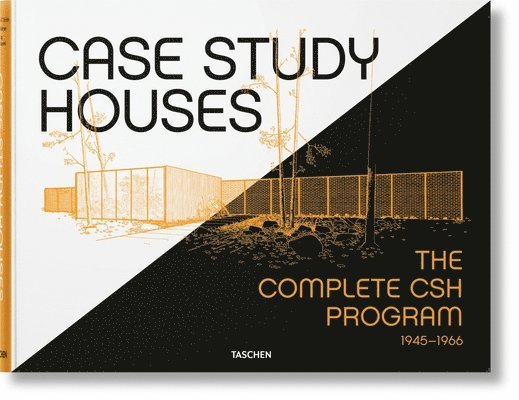
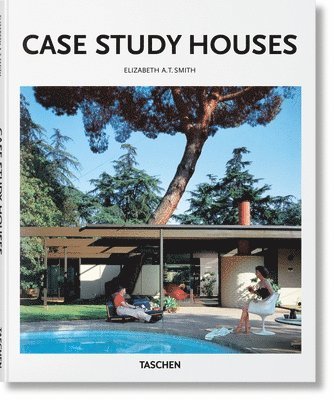
The Case Study House program (1945–1966) was an exceptional, innovative event in the history of American architecture and remains to this day unique. The program, which concentrated on the Los Angeles area and oversaw the design of 36 prototype homes, sought to make available plans for modern residences that could be easily and cheaply constructed during the postwar building boom. The program’s chief motivating force was Arts & Architecture editor John Entenza, a champion of modernism who had all the right connections to attract some of architecture’s greatest talents, such as Richard Neutra, Charles and Ray Eames, and Eero Saarinen. Highly experimental, the program generated houses that were designed to redefine the modern home, and had a pronounced influence on architecture—American and international—both during the program’s existence and even to this day. TASCHEN brings you a retrospective of the entire program with comprehensive documentation, brilliant photographs from the period and, for the houses still in existence, contemporary photos, as well as extensive floor plans and sketches.
186 kr
Skickas
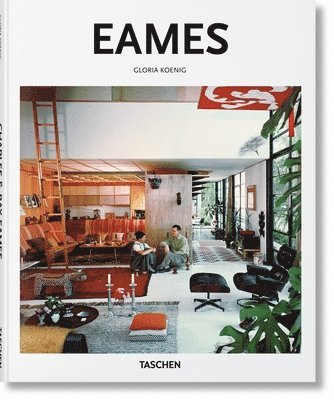
The creative duo Charles Eames (1907–1978) and Ray Kaiser Eames (1912–1988) transformed the visual character of America. Though best known for their furniture, the husband and wife team were also forerunners in architecture, textile design, photography, and film. The Eameses’ work defined a new, multifunctional modernity, exemplary for its integration of craft and design, as well as for the use of modern materials, notably plywood and plastics. The Eames Lounge Chair Wood, designed with molded plywood technology, became a defining furniture piece of the 20th century, while the couple’s contribution to the Case Study Houses project not only made inventive use of industrial materials but also developed an adaptable floor plan of multipurpose spaces which would become a hallmark of postwar modern architecture.From the couple’s earliest furniture experiments to their seminal short film Powers of Ten, this book covers all the aspects of the illustrious Eames repertoire and its revolutionary impact on middle-class American living.
190 kr
Skickas inom 3-6 vardagar
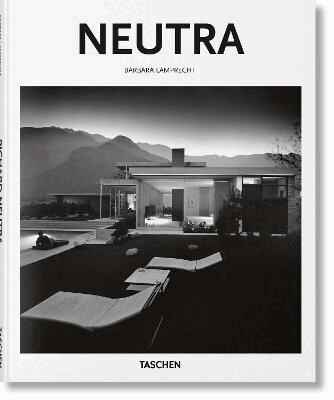
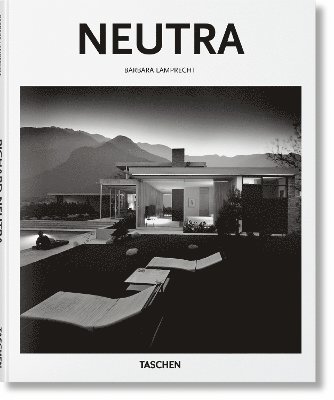
In the architecture of Richard Neutra (1892–1970), inside and outside find their perfect modernist harmony. As the Californian sun glints off sleek building surfaces, vast glass panel walls allow panoramic views over mountains, gardens, palm trees, and pools.Neutra moved to the United States from his native Vienna in 1923 and settled in Los Angeles. He displayed his affinity with architectural settings early on with the Lovell House, set on a landscaped hill with views of the Pacific Ocean and Santa Monica Mountains. Later projects such as the Kaufmann House and Nesbitt House would continue this blend of art, landscape, and living comfort, with Neutra’s clients often receiving detailed questionnaires to define their precise needs.This richly illustrated architect introduction presents the defining projects of Neutra’s career. As crisp structures nestle amid natural wonders, we celebrate a particularly holistic brand of modernism which incorporated the ragged lines and changing colors of nature as much as the pared down geometries of the International Style.
306 kr
Skickas
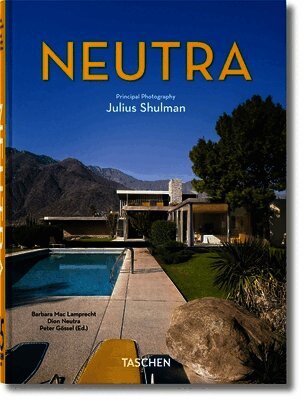
Originally from Vienna, Richard Neutra came to America early in his career, settling in California. His influence on postwar architecture is undisputed, the sunny climate and rich landscape being particularly suited to his cool, sleek modern style.Neutra had a keen appreciation for the relationship between people and nature; his trademark plate glass walls and ceilings which turn into deep overhangs have the effect of connecting the indoors with the outdoors. His ability to incorporate technology, aesthetics, science, and nature into his designs brought him to the forefront of Modernist architecture.In this volume, more than 100 of Neutra’s works (private homes, schools, and public buildings) are gathered together, illustrated by hundreds of photographs, including those of Julius Shulman and other prominent photographers.
426 kr
Kommande
Mid-century California wasn’t just a place, it was a mecca for ambitious architects who envisioned new ways of living. Four devotees—two Austrians, one Swiss, and a Midwesterner of Irish-Austrian descent—journeyed to California’s sun-drenched climes, inspired by the raw beauty of the landscape and attracted by clients with deeper pockets and broader horizons, in every sense. This book celebrates their transformational work. Richard Neutra designed homes where glass walls dissolved boundaries between interior and exterior, combining lyrical modernism with total meticulousness—he was known for asking his clients to fill out detailed questionnaires. R. M. Schindler, his lifelong friend and rival, extolled an expressive style he called “space architecture,” using warm materials, complex shapes, and striking colors.Albert Frey saw the Californian landscape as a blank canvas for his “desert modernism,” crafting sleek, elemental structures sympathetic to Palm Springs’ rocky terrain. Committed iconoclast John Lautner eagerly tackled difficult sites, upon which he conjured multilevel living spaces, using pioneering materials and panoramic expanses of plate glass. Meanwhile, the Case Study House program sought to democratize modernism—inviting talents like Craig Ellwood, Charles and Ray Eames, and Pierre Koenig to create elegant, efficient, replicable homes to meet the urgent needs of a postwar world. This collection celebrates the achievements and influence of these important pioneers who saw a future where innovation harmonized with nature and who made California a blueprint for modern living.
179 kr
Skickas inom 3-6 vardagar
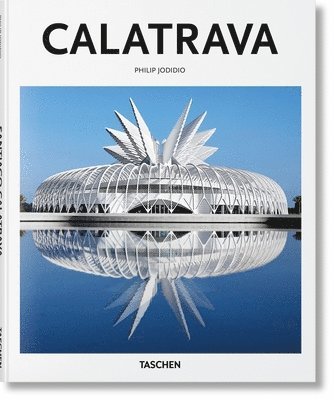
Spanish visionary Santiago Calatrava is renowned around the world as an architect, structural engineer, sculptor, and artist. Famed for bridges as much as buildings, he has made his name with neofuturistic structures that combine deft engineering solutions with dramatic visual impact.From the Athens 2004 Olympic sports complex and the Museum of Tomorrow to the Peace Bridge in Calgary, Alamillo Bridge in Seville, and the Mujer Bridge in Buenos Aires, Calatrava’s creations show particular interest in the meeting point of movement and balance. With influences ranging from NASA space design to da Vinci’s nature studies, the structures dazzle with a sense of lightness, agility, and aerodynamism, but always with a graceful poise amid their particular surroundings.This compact introduction explores Calatrava’s unique aesthetic with key projects from his career, from early breakthroughs to his most recent work. Through buildings of culture, science, faith, and across his many famous bridges, we explore his integration of organic forms and human movements, and a uniquely fluid futurism, soaring towards tomorrow.
306 kr
Kommande
A prefab is a mass-produced house, constructed in a factory and assembled on–site in a few days or weeks. Once regarded as a cheap, easy solution for urgent housing problems, the prefab has evolved to become a synonym for ambitious design and sophisticated detailing solutions.The amazing history of prefabricated houses started in England in the 1830s with a building kit for emigrants moving to Australia. Even today, prefabricated houses provide a high percentage of living spaces in many countries of the world. This book covers prefabs from the USA via Europe to Asia and Africa, giving insight into the various industrially prefabricated components, the difficulties of delivery to the building site, and the intricacies of assembly and completion. As well as tracing the link between modernism and industrialization that evolved to produce the latest prefabricated solutions, it also features a unique compilation of one-off prefabricated houses by well-known international architects, as well as successful dwellings manufactured off-site for everyday modern living.
922 kr
Skickas inom 3-6 vardagar
The Case Study House program (1945–66) was an exceptional, innovative event in the history of American architecture and remains to this day unique. The program, which concentrated on the Los Angeles area and oversaw the design of 36 prototype homes, sought to make available plans for modern residences that could be easily and cheaply constructed during the postwar building boom.The program’s chief motivating force was Arts & Architecture editor John Entenza, a champion of modernism who had all the right connections to attract some of architecture’s greatest talents, such as Richard Neutra, Charles and Ray Eames, and Eero Saarinen. Highly experimental, the program generated houses that were designed to redefine the modern home, and thus had a pronounced influence on architecture—American and international—both during the program’s existence and even to this day.TASCHEN brings you a monumental retrospective of the entire program with comprehensive documentation, brilliant photographs from the period and, for the houses still in existence, contemporary photos, as well as extensive floor plans and sketches.
922 kr
Skickas inom 3-6 vardagar
Originally from Vienna, Richard Neutra came to America early in his career, settling in California. His influence on postwar architecture is undisputed, the sunny climate and rich landscape being particularly suited to his cool, sleek modern style.Neutra had a keen appreciation for the relationship between people and nature; his trademark plate glass walls and ceilings which turn into deep overhangs have the effect of connecting the indoors with the outdoors. His ability to incorporate technology, aesthetics, science, and nature into his designs brought him to the forefront of Modernist architecture.In this volume, all of Neutra’s works (nearly 300 private homes, schools, and public buildings) are gathered together, illustrated by over 1,000 photographs, including those of Julius Shulman and other prominent photographers.
179 kr
Skickas inom 3-6 vardagar
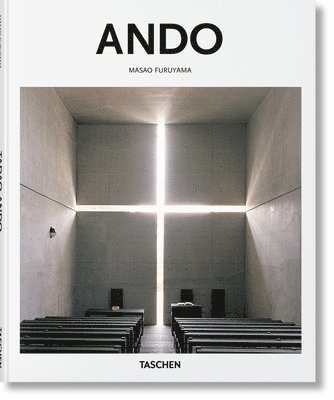
In this essential TASCHEN introduction to Tadao Ando we explore the hybrid of tradition, modernism, and function that allows his buildings to enchant architects, designers, fashion designers, and beyond. Through key projects including private homes, churches, museums, apartment complexes, and cultural spaces, we explore a uniquely monumental yet comforting aesthetic that draws as much on the calm restraint of Japanese tradition as the compelling modernist vocabularies of Bauhaus and Le Corbusier.With featured projects in Japan, France, Italy, Spain, and the United States, we see not only Ando’s global reach but also his refined sensitivity for the environs: the play of light through windows, and, in particular, the interaction of buildings with water. From the mesmerizing Church of the Light in Osaka to the luminous Punta della Dogana Contemporary Art Center in Venice, this is a radiant tour through a distinctly contemporary form as much as a timeless appeal of light, elements, and equilibrium.
186 kr
Skickas
In this essential TASCHEN introduction to Tadao Ando we explore the hybrid of tradition, modernism, and function that allows his buildings to enchant architects, designers, fashion designers, and beyond. Through key projects including private homes, churches, museums, apartment complexes, and cultural spaces, we explore a uniquely monumental yet comforting aesthetic that draws as much on the calm restraint of Japanese tradition as the compelling modernist vocabularies of Bauhaus and Le Corbusier.With featured projects in Japan, France, Italy, Spain, and the United States, we see not only Ando’s global reach but also his refined sensitivity for the environs: the play of light through windows, and, in particular, the interaction of buildings with water. From the mesmerizing Church of the Light in Osaka to the luminous Punta della Dogana Contemporary Art Center in Venice, this is a radiant tour through a distinctly contemporary form as much as a timeless appeal of light, elements, and equilibrium.
179 kr
Skickas inom 3-6 vardagar
The Case Study House program (1945–1966) was a unique event in the history of American architecture. Sponsored by Arts & Architecture magazine, the program sought to respond to the postwar building boom with prototype modern homes that could be both easily replicated and readily affordable to the average American.Concentrated on the Los Angeles area, the Case Study Houses included 36 model homes commissioned from such major architects of the day as Richard Neutra, Raphael Soriano, Craig Ellwood, Charles and Ray Eames, Pierre Koenig, Eero Saarinen, A. Quincy Jones, and Ralph Rapson. Their criteria included “using, as far as is practicable, many war-born techniques and materials best suited to the expression of man’s life in the modern world.”The results of the program would redefine the modern home and extend influence not only across the United States but around the world. This compact guide includes all of the Case Study Houses with over 150 photos and plans, as well as a map showing locations of all sites, including those that no longer exist.
186 kr
Skickas
Spanish visionary Santiago Calatrava is renowned around the world as an architect, structural engineer, sculptor, and artist. Famed for bridges as much as buildings, he has made his name with neofuturistic structures that combine deft engineering solutions with dramatic visual impact.From the Athens 2004 Olympic sports complex and the Museum of Tomorrow to the Peace Bridge in Calgary, Alamillo Bridge in Seville, and the Mujer Bridge in Buenos Aires, Calatrava’s creations show particular interest in the meeting point of movement and balance. With influences ranging from NASA space design to da Vinci’s nature studies, the structures dazzle with a sense of lightness, agility, and aerodynamism, but always with a graceful poise amid their particular surroundings.This compact introduction explores Calatrava’s unique aesthetic with key projects from his career, from early breakthroughs to his most recent work. Through buildings of culture, science, faith, and across his many famous bridges, we explore his integration of organic forms and human movements, and a uniquely fluid futurism, soaring towards tomorrow.
187 kr
Skickas
Spanish visionary Santiago Calatrava is renowned around the world as an architect, structural engineer, sculptor, and artist. Famed for bridges as much as buildings, he has made his name with neofuturistic structures that combine deft engineering solutions with dramatic visual impact.From the Athens 2004 Olympic sports complex and the Museum of Tomorrow to the Peace Bridge in Calgary, Alamillo Bridge in Seville, and the Mujer Bridge in Buenos Aires, Calatrava’s creations show particular interest in the meeting point of movement and balance. With influences ranging from NASA space design to da Vinci’s nature studies, the structures dazzle with a sense of lightness, agility, and aerodynamism, but always with a graceful poise amid their particular surroundings.This compact introduction explores Calatrava’s unique aesthetic with key projects from his career, from early breakthroughs to his most recent work. Through buildings of culture, science, faith, and across his many famous bridges, we explore his integration of organic forms and human movements, and a uniquely fluid futurism, soaring towards tomorrow.
187 kr
Skickas
In the architecture of Richard Neutra (1892–1970), inside and outside find their perfect modernist harmony. As the Californian sun glints off sleek building surfaces, vast glass panel walls allow panoramic views over mountains, gardens, palm trees, and pools.Neutra moved to the United States from his native Vienna in 1923 and settled in Los Angeles. He displayed his affinity with architectural settings early on with the Lovell House, set on a landscaped hill with views of the Pacific Ocean and Santa Monica Mountains. Later projects such as the Kaufmann House and Nesbitt House would continue this blend of art, landscape, and living comfort, with Neutra’s clients often receiving detailed questionnaires to define their precise needs.This richly illustrated architect introduction presents the defining projects of Neutra’s career. As crisp structures nestle amid natural wonders, we celebrate a particularly holistic brand of modernism which incorporated the ragged lines and changing colors of nature as much as the pared down geometries of the International Style.
187 kr
Skickas
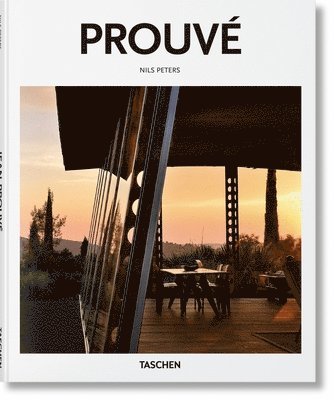
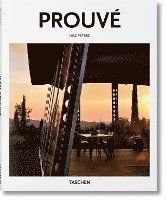
French-born Jean Prouvé (1901–1984) was the 20th century’s leading construction designer, a self-declared constructeur and member of the jury who oversaw the design of the Centre Pompidou in Paris. As a designer, he captured the midcentury spirit of innovation, expansion, and growth, developing techniques that united simple, striking aesthetics with practical, cost-effective materials and assembly.From vast, temporary exhibition marquees to handheld letter openers, modular building systems to interior lighting, Prouvé’s designs efficiently fitted their function with minimal fuss and understated elegance. Feted by designers, architects, and engineers the world over, Prouvé has left a rich and inspirational legacy, which resonates perfectly with the approach of this compact volume, neatly summarizing his life and works.
187 kr
Skickas
Louis Isadore Kahn (1901–1974) treated each building like a temple. Across the United States, in India, Bangladesh, Pakistan, and Israel, his designs combined the sleek, utilitarian surfaces of modernism with a devotion to geometric forms and a reverence for natural light that suffused his stuctures with a monumental and breathtaking spirituality.This essential introduction brings together 17 of Kahn’s most important buildings across his cultural, governmental, religious, and residential repertoire. Plans, views, descriptions, and quality photographs trace the context and development of each project, while an introductory essay explores Kahn’s unique architectural ideology and his legacy as one of the most important 20th-century American architects since Frank Lloyd Wright.Through Kahn masterworks, such as the National Assembly Building in Dhaka, Bangladesh, or Kimbell Art Museum in Fort Worth, Texas, we’ll explore Kahn’s his “back to basics” grammar inspired by ancient sites in Italy, Greece, and Egypt; and his unique vocabulary of mass, void, and light that suffused the International Style with a near-celestial luminescence.
187 kr
Skickas
With his geometric structures perched upon the hillsides, beaches, and deserts of California, John Lautner (1911–1994) was behind some of the most striking and innovative architectural designs in mid-20th-century America.This introductory book brings together the most important of Lautner’s projects to explore his ingenious use of modern building materials and his bold stylistic repertoire of sweeping rooflines, glass-paneled walls, and steel beams. From commercial buildings to such iconic homes as the Chemosphere, we look at Lautner’s sensitivity to a building’s surroundings and his unique capacity to integrate structures into the Californian landscape. With several of Lautner’s houses now labeled Los Angeles Historic-Cultural Monuments, we’ll also consider the architect’s cultural legacy, as much as his pioneering of a visual paradigm of 1950s optimism, economic growth, and space-age adventure.
186 kr
Skickas
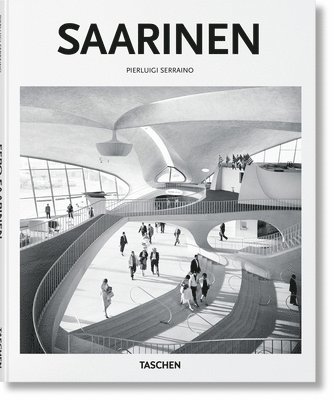
The creator of the ubiquitous Knoll “Tulip” chairs and tables, Eero Saarinen (1910–1961) was one of the 20th century’s most prominent space shapers, merging dynamic forms with a modernist sensibility across architecture and design.Among Saarinen’s greatest accomplishments are Washington D.C.’s Dulles International Airport, the very sculptural and fluid TWA terminal at JFK Airport in New York, and the 630 ft. (192 m) high Gateway Arch of St. Louis, Missouri, each of them defining structures of postwar America. Catenary curves were present in many of his structural designs. During his long association with Knoll, Saarinen’s other famous furniture pieces included the “Grasshopper” lounge chair and the “Womb” settee. Married to Aline Bernstein Saarinen, a well-known critic of art and architecture, Saarinen also collaborated with Charles Eames, with whom he designed his first prize-winning chair.With rich illustration tracing his life and career, this introduction follows Saarinen from his studies across his training all the way to his most prestigious projects, and explores how each of his designs brought a new dimension to the modernist landscape.
186 kr
Skickas inom 3-6 vardagar
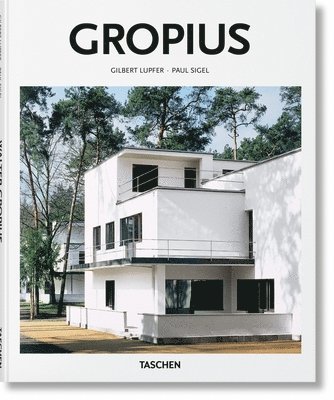
Walter Gropius (1883–1969) set out to build for the future. As the founding director of the Bauhaus, the Berlin-born architect had an inestimable influence on our aesthetic environment, championing a bold new hybrid of light, geometry, and industrial design, as dazzling today as it was a century ago.In this essential architect introduction, we survey Gropius’ evolution and influence with 20 of his most significant projects, from the Bauhaus Building in Dessau, Germany, to the Chicago Tribune Tower and Harvard University Graduate Center, completed after Gropius’s exodus to the United States in 1937. We explore his role both as an architectural practitioner, and as a writer and educator, not only as a Bauhaus pioneer, but also, along with Ludwig Mies van der Rohe, as a leading proponent of the International Style.Along the way, we see how many of Gropius’s tenets remain benchmarks for architects, designers, and urbanists today. Whether in his emphasis on a functional beauty or his interest in housing and city planning, Gropius astounds in the agility of his thinking as much as in the luminous precision of his work.
187 kr
Skickas
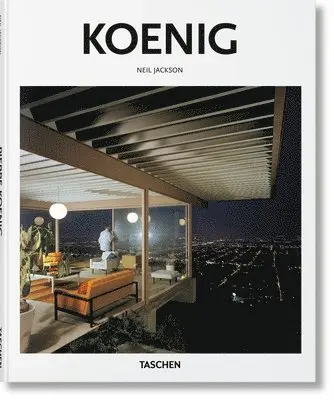
There are few images of 20th-century architecture more iconic than the nighttime view of Case Study House #22. At its eagle’s nest promontory above Los Angeles, the building is a vision of streamlined glass and steel, its slick lines echoing the twinkling city boulevards below. With this and his other equally innovative build for the famous project of the Arts & Architecture magazine, American architect Pierre Koenig (1925–2004) became one of the leading figures of the Modern movement.While still a student of architecture, Koenig designed and built his first exposed steel house in 1950, proving that the use of prefabricated materials could allow for spatial freedom in affordable houses. Throughout his career, he would champion socially responsible design, as well as buildings that responded deftly and directly to the Southern California climate. Through windows, water, terraces, skylights, and glazing, his buildings optimized the rapport between inside and outside, while aiming for a simplistic purity of appearance.Through all of Koenig’s major projects, including the Johnson House (1962) and Oberman House (1962), this book introduces an architect who was pioneering in method and material and iconic of his time, as fueled by experimentalism as the postwar optimism of the age.
181 kr
Tillfälligt slut
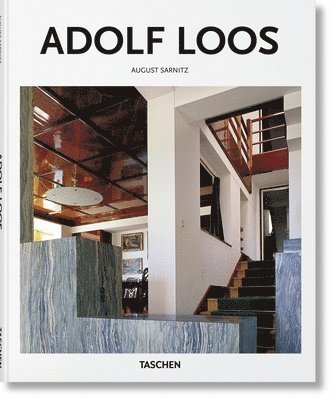
Adolf Loos (1870–1933) was a flamboyant character whose presence in the cultural hotbed of early 1900s Vienna galvanized the country’s architectural landscape. An early, impassioned advocate of modernism, he all-out rejected the grand Secessionist aesthetic prevalent at the time, as well as any hallmarks of the European fin de siècle.Instead, in lectures and essays, such as the milestone Ornament and Crime of 1908, Loos articulated his “passion for smooth and precious surfaces.” He advocated that architectural ornamentation was, by its nature, ephemeral—locked into current trends and styles, and therefore quickly dated. Loos, himself a Classicist at heart, argued instead for simple, timeless designs with time-honored aesthetic and structural qualities.In this essential introduction, we explore Loos’s writings, projects, and legacy, from his key concept of “spatial plan” architecture to his rejection of decorative fripperies in favor of opulent, fine-quality materials and crisp lines. Featured projects include Vienna’s Café Museum (1899), the fashion store Knize (1913), and the controversial Loos House (1912), which Emperor Franz Joseph I would refuse to travel past, bristling with rage at its insolently minimalist aesthetic.
168 kr
Skickas inom 3-6 vardagar
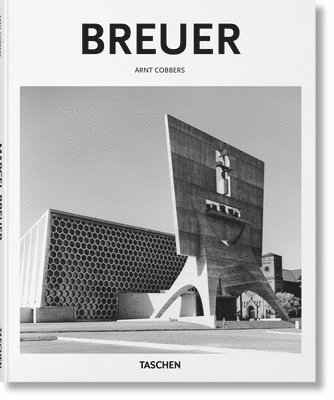
In 1956, TIME magazine called him one of the defining “form-givers of the 20th century.” Today, Marcel Breuer (1902–1981) remains a locus classicus of modernism for architects and designers alike. As a Bauhaus pioneer, even his earliest work was marked by a material restraint; the balance of texture, color, and shape; and a symbiosis of local and global, big and small, rough and smooth.In this essential introductory monograph, we survey Breuer’s complete career through some of his most influential projects and ideas, from his landmark tubular furniture to the MoMA Research House to his innovation of “binuclear” housing, splitting living and sleeping areas into separate wings. Along the way, we follow Hungarian-born Breuer’s journey to international acclaim, with featured projects from Germany, France, England, Switzerland, and across the United States contributing to his global status as a modernist maestro.
187 kr
Skickas
Architect Albert Frey (1903–1998) saw a modernist utopia in the desert. Born in Zurich, he studied in Europe with Le Corbusier before moving to the United States in 1930, convinced it was the land of architectural opportunity. On a visit to Palm Springs, he fell under the desert spell. It was here, amid the arid and empty landscape, that he could truly envisage a perfect modern future.Like fellow Californian luminary, John Lautner, Frey would spend the rest of his career nurturing the consonance of architecture and nature: studying the fall of sunlight and rain, and merging aluminum, steel, and glass with the boulders and sands of the West Coast wilds. His vision centered in particular on Palm Springs, capitalizing on the city’s postwar population boom to create a bastion of the sleek, leisurely modernism that defines midcentury California.In this dependable architect introduction, we follow Frey’s long and prestigious career from his European beginnings through to the apogee of his Californian practice, taking in his notes on De Stijl, Le Corbusier, and Bauhaus, and exploring the stylistic, material, and geographic makings of his unique “desert modernism.”
964 kr
Tillfälligt slut
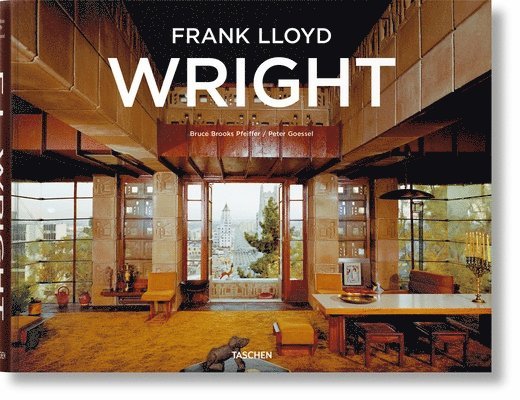
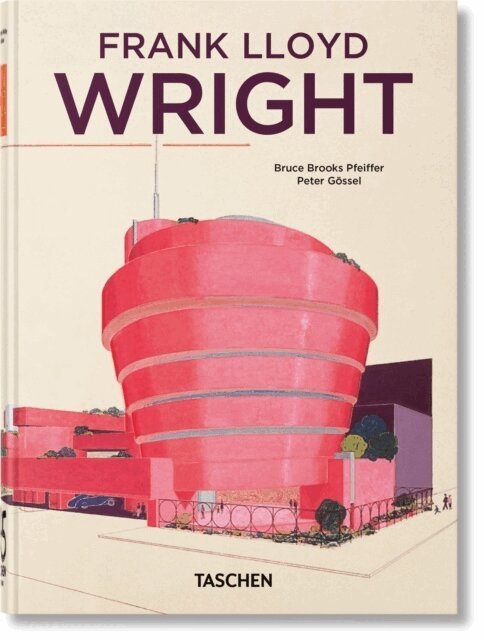
A building by Frank Lloyd Wright (1867-1959) is at once unmistakably individual, and evocative of an entire era. Notable for their exceptional understanding of an organic environment, as well as for their use of steel and glass to revolutionize the interface of indoor and outdoor, Wright’s designs helped announce the age of modernity, as much as they secured his own name in the annals of architectural genius.This meticulous compilation from TASCHEN’s previous three-volume monograph assembles the most important works from Wright’s extensive, paradigm-shifting oeuvre into one authoritative and accessibly priced overview of America's most famous architect. Based on unlimited access to the Frank Lloyd Wright Archives in Taliesin, Arizona, the collection spans the length and breadth of Wright’s projects, both realized and unrealized, from his early Prairie Houses, through the Usonian concept home, epitomized by Fallingwater, the Tokyo years, his progressive “living architecture” buildings, right through to later schemes like the Guggenheim Museum, New York, and fantastic visions for a better tomorrow in the “living city.”Author Bruce Brooks Pfeiffer, who served as Wright’s apprentice during the 1950s, discusses recent research on Wright and gives his own insights on these game-changing buildings.
179 kr
Skickas inom 3-6 vardagar
Alvar Aalto (1898–1976) made a unique modernist mark. Influenced by both the landscape and the political independence of his native Finland, he designed warm, curving, compassionate buildings, wholly set apart from the slick, mechanistic, geometric designs that characterized much contemporary European practice.Whether a church, a villa, a sauna, or a public library, Aalto’s organic structures tended to replace plaster and steel with brick and wood, often incorporating undulating, wave-like forms, which would also appear in his chair, glassware, and lamp designs. An adherent to detail, Aalto insisted upon the humanity of his work stating: “Modern architecture does not mean using immature new materials; the main thing is to work with materials towards a more human line.”Many of Aalto’s public buildings such as Säynätsalo Town Hall, the lecture theatre at Otaniemi Technical University, the Helsinki National Pensions Institute and the Helsinki House of Culture may be seen as psychological as well as physical landmarks in the rebuilding of Finland after the ravages of war.