Bruce Brooks Pfeiffer - Böcker
Visar alla böcker från författaren Bruce Brooks Pfeiffer. Handla med fri frakt och snabb leverans.
5 produkter
5 produkter
252 kr
Skickas inom 7-10 vardagar
He was the most iconoclastic of architects, and at the height of his career his output of writings about architecture was as prolific and visionary as his architecture itself. Frank Lloyd Wright pioneered a bold new kind of architecture, one in which the spirit of modern man truly "lived in his buildings." The Essential Frank Lloyd Wright is a one-volume compendium of Wright's most critically important--and personally revealing--writings on every conceivable aspect of his craft. Wright was perhaps the most influential and inspired architect of the twentieth century, and this is the only book that gathers all of his most significant essays, lectures, and articles on architecture. Bruce Pfeiffer includes each piece in its entirety to present the architect's writings as he originally intended them. Beginning early in Wright's career with "The Art and Craft of the Machine" in 1901, the book follows major themes through The Disappearing City, The Natural House, and many other writings, and ends with A Testament in 1957, published two years before his death.This volume is beautifully illustrated with original drawings and photographs, and is complemented by Pfeiffer's general introduction, which provides history and context. The Essential Frank Lloyd Wright is a must-have resource for architects and scholars and a delight for general readers.
964 kr
Tillfälligt slut
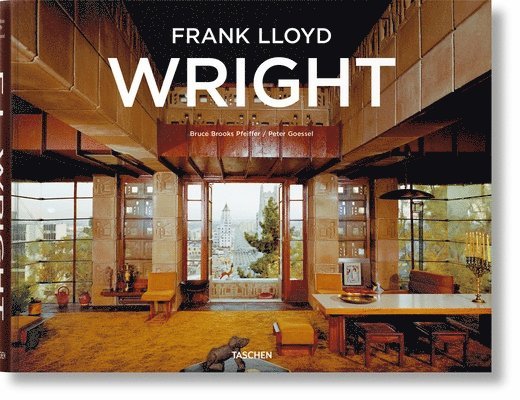
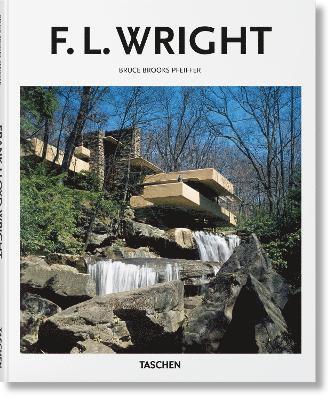
A building by Frank Lloyd Wright (1867-1959) is at once unmistakably individual, and evocative of an entire era. Notable for their exceptional understanding of an organic environment, as well as for their use of steel and glass to revolutionize the interface of indoor and outdoor, Wright’s designs helped announce the age of modernity, as much as they secured his own name in the annals of architectural genius.This meticulous compilation from TASCHEN’s previous three-volume monograph assembles the most important works from Wright’s extensive, paradigm-shifting oeuvre into one authoritative and accessibly priced overview of America's most famous architect. Based on unlimited access to the Frank Lloyd Wright Archives in Taliesin, Arizona, the collection spans the length and breadth of Wright’s projects, both realized and unrealized, from his early Prairie Houses, through the Usonian concept home, epitomized by Fallingwater, the Tokyo years, his progressive “living architecture” buildings, right through to later schemes like the Guggenheim Museum, New York, and fantastic visions for a better tomorrow in the “living city.”Author Bruce Brooks Pfeiffer, who served as Wright’s apprentice during the 1950s, discusses recent research on Wright and gives his own insights on these game-changing buildings.
179 kr
Skickas inom 3-6 vardagar
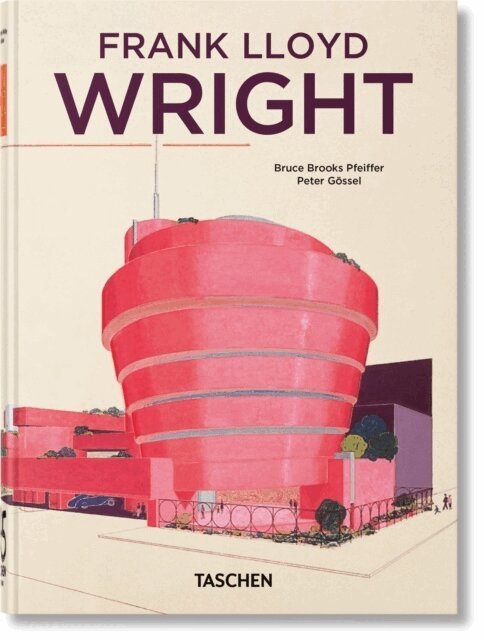
Acclaimed as the “father of skyscrapers,” the quintessentially American icon Frank Lloyd Wright (1867–1959) was an architect of aspiration. He believed in giving cultivated American life its fitting architectural equivalent and applied his idealism to structures across the continent, from suburban homes to churches, offices, skyscrapers, and the celebrated Guggenheim Museum.Wright’s work is distinguished by its harmony with humanity and its environment, a philosophy he called organic architecture, and which found its paradigm at Fallingwater, a house in rural Pennsylvania, cited by the American Institute of Architects as “the best all-time work of American architecture.” Wright also made a particular mark with his use of industrial materials, and by the simple L or T plan of his Prairie House which became a model for rural architecture across America. Wright was also often involved in many of the interior elements of his buildings, such as the furniture and stained glass, paying particular attention to the balance between individual needs and community activity.Exploring Wright’s aspirations to augment American society through architecture, this book offers a concise introduction to his at once technological and Romantic response to the practical challenges of middle-class Americans.
187 kr
Skickas
Acclaimed as the “father of skyscrapers,” the quintessentially American icon Frank Lloyd Wright (1867–1959) was an architect of aspiration. He believed in giving cultivated American life its fitting architectural equivalent and applied his idealism to structures across the continent, from suburban homes to churches, offices, skyscrapers, and the celebrated Guggenheim Museum.Wright’s work is distinguished by its harmony with humanity and its environment, a philosophy he called organic architecture, and which found its paradigm at Fallingwater, a house in rural Pennsylvania, cited by the American Institute of Architects as “the best all-time work of American architecture.” Wright also made a particular mark with his use of industrial materials, and by the simple L or T plan of his Prairie House which became a model for rural architecture across America. Wright was also often involved in many of the interior elements of his buildings, such as the furniture and stained glass, paying particular attention to the balance between individual needs and community activity.Exploring Wright’s aspirations to augment American society through architecture, this book offers a concise introduction to his at once technological and Romantic response to the practical challenges of middle-class Americans.
280 kr
Skickas inom 3-6 vardagar
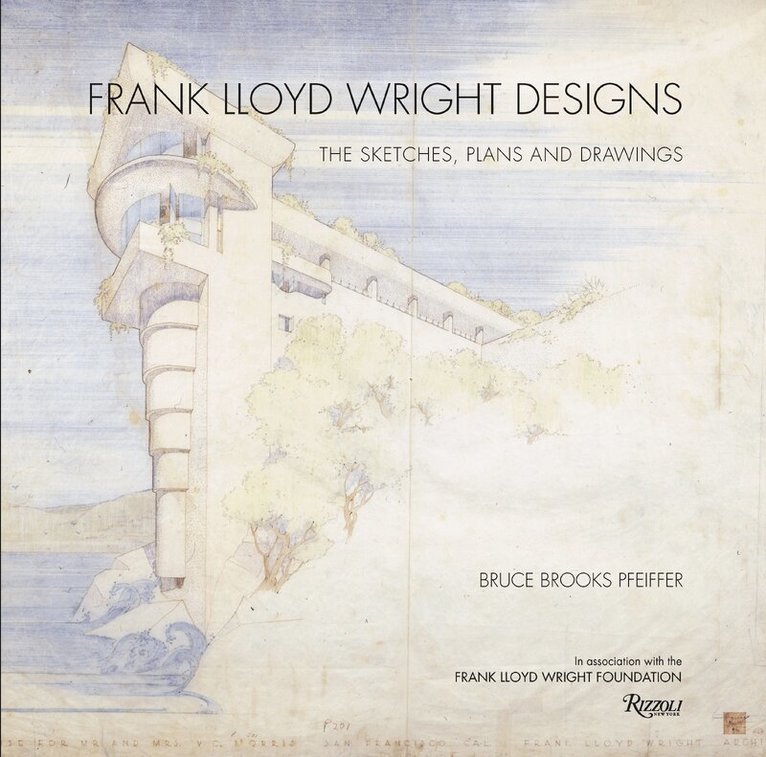
A building by Frank Lloyd Wright (1867–1959) is at once unmistakably individual and evocative of an entire era. Notable for their exceptional harmony with their environment, as well as for their use of steel and glass to revolutionize the interface of indoor and outdoor, Wright’s designs helped announce the age of modernity, as much as they secured his place in the annals of architectural genius.This meticulous compilation from TASCHEN’s previous monograph assembles the most important works from Wright’s extensive, paradigm-shifting oeuvre into one authoritative overview of America’s most famous architect. Based on unlimited access to the Frank Lloyd Wright Foundation’s archives at Taliesin West in Arizona, the collection spans the length and breadth of Wright’s projects, both realized and unrealized, from his early prairie houses, the Usonian concept homes, and the extraordinary Fallingwater to the Tokyo years, his designs for administrative buildings and places of worship, and later high-profile projects like the Guggenheim Museum in New York, as well as his fantastic visions for a better tomorrow with “The Living City.”