Reinhold Martin - Böcker
Visar alla böcker från författaren Reinhold Martin. Handla med fri frakt och snabb leverans.
10 produkter
10 produkter
1 230 kr
Skickas inom 7-10 vardagar
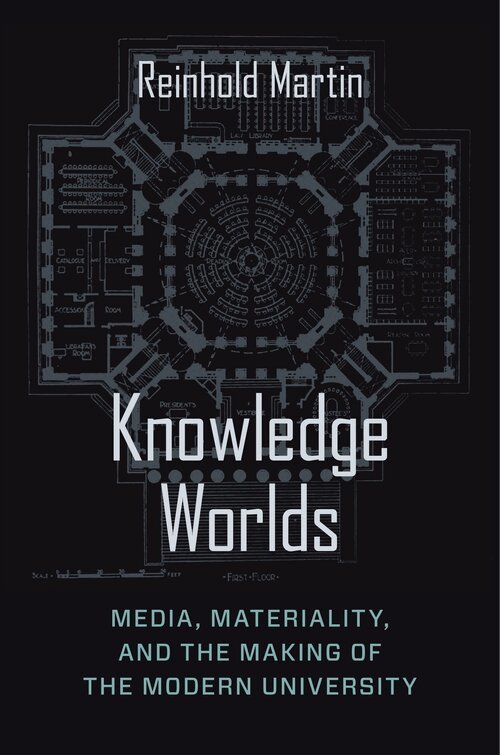
What do the technical practices, procedures, and systems that have shaped institutions of higher learning in the United States, from the Ivy League and women’s colleges to historically black colleges and land-grant universities, teach us about the production and distribution of knowledge? Addressing media theory, architectural history, and the history of academia, Knowledge Worlds reconceives the university as a media complex comprising a network of infrastructures and operations through which knowledge is made, conveyed, and withheld.Reinhold Martin argues that the material infrastructures of the modern university—the architecture of academic buildings, the configuration of seminar tables, the organization of campus plans—reveal the ways in which knowledge is created and reproduced in different kinds of institutions. He reconstructs changes in aesthetic strategies, pedagogical techniques, and political economy to show how the boundaries that govern higher education have shifted over the past two centuries. From colleges chartered as rights-bearing corporations to research universities conceived as knowledge factories, educating some has always depended upon excluding others. Knowledge Worlds shows how the division of intellectual labor was redrawn as new students entered, expertise circulated, science repurposed old myths, and humanists cultivated new forms of social and intellectual capital. Combining histories of architecture, technology, knowledge, and institutions into a critical media history, Martin traces the uneven movement in the academy from liberal to neoliberal reason.
313 kr
Skickas inom 7-10 vardagar
What do the technical practices, procedures, and systems that have shaped institutions of higher learning in the United States, from the Ivy League and women’s colleges to historically black colleges and land-grant universities, teach us about the production and distribution of knowledge? Addressing media theory, architectural history, and the history of academia, Knowledge Worlds reconceives the university as a media complex comprising a network of infrastructures and operations through which knowledge is made, conveyed, and withheld.Reinhold Martin argues that the material infrastructures of the modern university—the architecture of academic buildings, the configuration of seminar tables, the organization of campus plans—reveal the ways in which knowledge is created and reproduced in different kinds of institutions. He reconstructs changes in aesthetic strategies, pedagogical techniques, and political economy to show how the boundaries that govern higher education have shifted over the past two centuries. From colleges chartered as rights-bearing corporations to research universities conceived as knowledge factories, educating some has always depended upon excluding others. Knowledge Worlds shows how the division of intellectual labor was redrawn as new students entered, expertise circulated, science repurposed old myths, and humanists cultivated new forms of social and intellectual capital. Combining histories of architecture, technology, knowledge, and institutions into a critical media history, Martin traces the uneven movement in the academy from liberal to neoliberal reason.
618 kr
Skickas inom 5-8 vardagar
296 kr
Skickas inom 10-15 vardagar
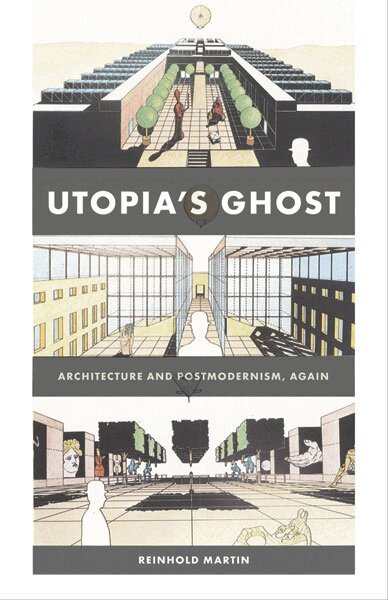
Architectural postmodernism had a significant impact on the broader development of postmodern thought: Utopia’s Ghost is a critical reconsideration of their relationship. Combining discourse analysis, historical reconstruction, and close readings of buildings, projects, and texts from the 1970s and 1980s, Reinhold Martin argues that retheorizing postmodern architecture gives us new insights into cultural postmodernism and its aftermath. Much of today’s discussion has turned to the recovery of modernity, but Martin writes in the Introduction, “Simply to historicize postmodernism seems inadequate and, in many ways, premature.” Utopia’s Ghost connects architecture to current debates on biopolitics, neoliberalism, and corporate globalization as they are haunted by the problem of utopia. Exploring a series of concepts-territory, history, language, image, materiality, subjectivity, and architecture itself-Martin shows how they reorganize the cultural imaginary and shape a contemporary biopolitics that ultimately precludes utopian thought. Written at the intersection of culture, politics, and the city, particularly in the context of corporate globalization, Utopia’s Ghost challenges dominant theoretical paradigms and opens new avenues for architectural scholarship and cultural analysis.
125 kr
Skickas inom 7-10 vardagar
Reinhold Martin’s Mediators is a series of linked meditations on the globalized city. Focusing on infrastructural, technical, and social systems, Martin explores how the aesthetics and the political economy of cities overlap and interact. He discusses a range of subjects, including the architecture of finance written into urban policy, regimes of enumeration that remix city and country, fictional ecologies that rewrite biopolitics, the ruins of socialism strewn amid the transnational commons, and memories of revolution stored in everyday urban hardware. For Martin, these mediators-the objects, processes, and imaginaries from which these phenomena emerge-serve to explain disparate fragments of a global urbanity.Forerunners: Ideas First is a thought-in-process series of breakthrough digital publications. Written between fresh ideas and finished books, Forerunners draws on scholarly work initiated in notable blogs, social media, conference plenaries, journal articles, and the synergy of academic exchange. This is gray literature publishing: where intense thinking, change, and speculation take place in scholarship.
240 kr
Skickas inom 7-10 vardagar
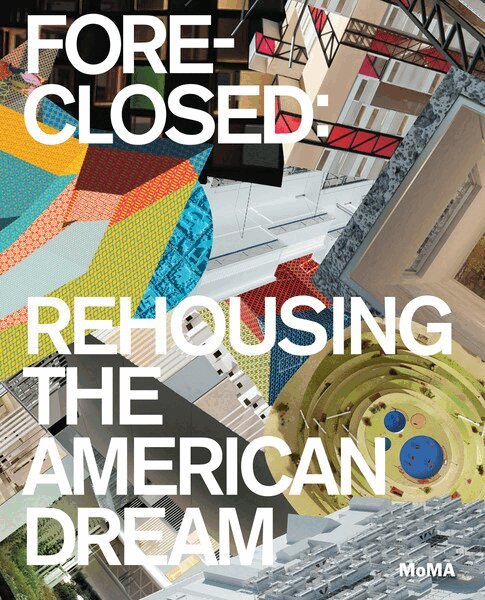
Foreclosed: Rehousing the American Dream is an exploration of new architectural possibilities for American cities and suburbs in the aftermath of the recent foreclosure crisis in the United States. During the summer of 2011, five interdisciplinary teams of architects, urban planners, ecologists, engineers, and landscape designers were enlisted by The Museum of Modern Art, New York, and MoMA PS1 to envision new housing infrastructures that could catalyze urban transformation, particularly in the country’s suburbs. Drawing on ideas proposed in The Buell Hypothesis, a research publication by Temple Hoyne Buell Center for the Study of American Architecture at Columbia University, each team focused on a specific ‘mega region’, a metropolitan area between two major cities, to come up with inventive solutions for the future of housing and cities, to be exhibited at MoMA in Spring 2012. This publication presents each of these proposals in detail, through photographs, drawings, and renderings as well as interviews with the team leaders. With essays by Barry Bergdoll, MoMA’s Philip Johnson Chief Curator of Architecture and Design, and Reinhold Martin, Director of the Temple Hoyne Buell Center, Foreclosed examines the relationship between land, infrastructures, and urban form in today’s cities and suburbs, and presents a potentially different future for housing in the United States.
291 kr
Skickas inom 7-10 vardagar
Urbanization is a system of power and knowledge, and todays city functions through the expansive material infrastructures of the urban order. In The Urban Apparatus, Reinhold Martin analyzes urbanization and the contemporary city in aesthetic, socioeconomic, and mediapolitical terms. He argues that understanding the city as infrastructure reveals urbanization to be a way of imparting functional, aesthetic, and cognitive order to a contradictory, doubly bound neoliberal regime. Blending critical philosophy, political theory, and media theory, The Urban Apparatus explores how the aesthetics of cities and their political economies overlap. In a series of ten essays, with a detailed theoretical introduction, Martin explores questions related to urban life, drawn from a wide range of global topics-from the fiscal crisis in Detroit to speculative development in Mumbai to the landscape of Mars, from discussions of race and the environment to housing and economic inequality. Each essay proposes a particular mediator(or a material complex) that is shaped by imaginative practices, each answering the question What is a city, today? The Urban Apparatus serves as an urbanbookend to the architectural questions explored by Martin in his earlier book Utopias Ghost, and ultimately offers readers a way to think politically about urbanization.
194 kr
Skickas inom 10-15 vardagar
A pioneering systematic inquiry into-and mapping of-the field of media and organization Media organize things into patterns and relations. As intermediaries among people and between people and worlds, media shape sociotechnical orders. At the same time, media are organized: while they condition different organizational forms and processes, they, too, are formed and can be re-formed. This intimate relation of media and organizing is timeless. Yet arguably, digital media technologies repose the question of organization-and thus of power and domination, control and surveillance, disruption and emancipation. Bringing together leading media thinkers and organization theorists, this book interrogates organization as an effect and condition of media. How can we understand the recursive relation between media and organization? How can we think, explore, critique, and perhaps alter the organizational bodies and scripts that shape contemporary life?Organize will be of interest to scholars and students of new and old media, social organization, and technology. Moreover, the dialogical form of these essays provides a concise and path-breaking view on the recursive relation between technological media and social organization. The book therefore establishes and maps “media and organization” as a highly relevant field of inquiry, appealing to those with a critical interest in the technological conditioning of the social.
1 509 kr
Skickas inom 7-10 vardagar
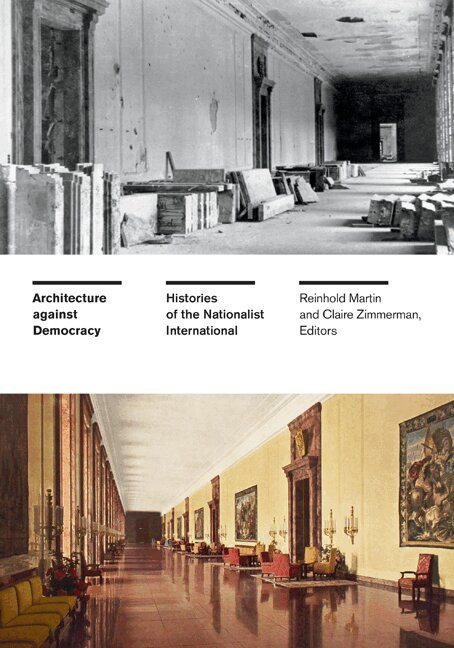
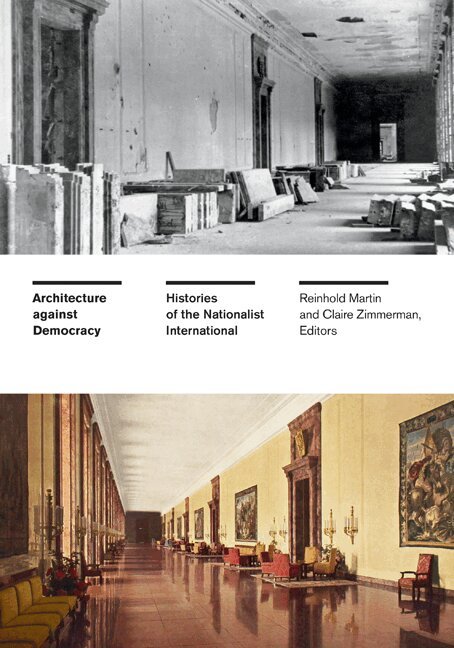
Examining architecture’s foundational role in the repression of democracy Reinhold Martin and Claire Zimmerman bring together essays from an array of scholars exploring the troubled relationship between architecture and antidemocratic politics. Comprising detailed case studies throughout the world spanning from the early nineteenth century to the present, Architecture against Democracy analyzes crucial occasions when the built environment has been harnessed as an instrument of authoritarian power. Alongside chapters focusing on paradigmatic episodes from twentieth-century German and Italian fascism, the contributors examine historic and contemporary events and subjects that are organized thematically, including the founding of the Smithsonian Institution, Ellis Island infrastructure, the aftermath of the Paris Commune, Cold War West Germany and Iraq, Frank Lloyd Wright’s domestic architecture, and Istanbul’s Taksim Square. Through the range and depth of these accounts, Architecture against Democracy presents a selective overview of antidemocratic processes as they unfold in the built environment throughout Western modernity, offering an architectural history of the recent “nationalist international.” As new forms of nationalism and authoritarian rule proliferate across the globe, this timely collection offers fresh understandings of the role of architecture in the opposition to democracy. Contributors: Esra Akcan, Cornell U; Can Bilsel, U of San Diego; JosÉ H. Bortoluci, Getulio Vargas Foundation; Charles L. Davis II, U of Texas at Austin; Laura diZerega; Eve Duffy, Duke U; MarÍa GonzÁlez PendÁs, Cornell U; Paul B. Jaskot, Duke U; Ana MarÍa LeÓn, Harvard U; Ruth W. Lo, Hamilton College; Peter Minosh, Northeastern U; Itohan Osayimwese, Brown U; Kishwar Rizvi, Yale U; Naomi Vaughan; Nader Vossoughian, New York Institute of Technology and Columbia U; Mabel O. Wilson, Columbia U.
373 kr
Skickas inom 7-10 vardagar
Examining architecture’s foundational role in the repression of democracy Reinhold Martin and Claire Zimmerman bring together essays from an array of scholars exploring the troubled relationship between architecture and antidemocratic politics. Comprising detailed case studies throughout the world spanning from the early nineteenth century to the present, Architecture against Democracy analyzes crucial occasions when the built environment has been harnessed as an instrument of authoritarian power. Alongside chapters focusing on paradigmatic episodes from twentieth-century German and Italian fascism, the contributors examine historic and contemporary events and subjects that are organized thematically, including the founding of the Smithsonian Institution, Ellis Island infrastructure, the aftermath of the Paris Commune, Cold War West Germany and Iraq, Frank Lloyd Wright’s domestic architecture, and Istanbul’s Taksim Square. Through the range and depth of these accounts, Architecture against Democracy presents a selective overview of antidemocratic processes as they unfold in the built environment throughout Western modernity, offering an architectural history of the recent “nationalist international.” As new forms of nationalism and authoritarian rule proliferate across the globe, this timely collection offers fresh understandings of the role of architecture in the opposition to democracy. Contributors: Esra Akcan, Cornell U; Can Bilsel, U of San Diego; JosÉ H. Bortoluci, Getulio Vargas Foundation; Charles L. Davis II, U of Texas at Austin; Laura diZerega; Eve Duffy, Duke U; MarÍa GonzÁlez PendÁs, Cornell U; Paul B. Jaskot, Duke U; Ana MarÍa LeÓn, Harvard U; Ruth W. Lo, Hamilton College; Peter Minosh, Northeastern U; Itohan Osayimwese, Brown U; Kishwar Rizvi, Yale U; Naomi Vaughan; Nader Vossoughian, New York Institute of Technology and Columbia U; Mabel O. Wilson, Columbia U.