Dietland Müller-Schwarze - Böcker
Visar alla böcker från författaren Dietland Müller-Schwarze. Handla med fri frakt och snabb leverans.
18 produkter
18 produkter
1 061 kr
Skickas inom 10-15 vardagar
The first volume in this series appeared in 1977, the second in 1980. From these volumes and the present one, some research trends in chemical communication can be perceived. In the 1977 volume, studies on 13 animal taxa were reported. In the present volume, the number is 25. This taxonomie diversi fication of research since the first volume of this series demon strates the wide variety of ecological adaptions, although no new general principles of chemical communication have ernerged. Further more, divergences in chemical comrnunication below the species level have become more apparent. In general, more sophisticated observa tions and techniques have led to greater awareness of the com plexities in chemical communication. As such awareness has also developed in the field of insect chemical communication, there has been a corresponding increase in the identification of the chemical compounds involved. However, in the vertebrates, no such correlation exists; in the present volume, conclusive chemical identifications of semiochemicals are remarkable by their paucity.
2 115 kr
Skickas inom 10-15 vardagar
This volume is an up-to-date treatise of chemosensory vertebrate research performed by over 200 scientists from 22 countries. Importantly, data from over 25 taxa of vertebrates are presented, including those from human beings. Unlike other volumes on this topic, a significant nurober of the contributions come from leading workers in the former Soviet Union and reflect studies within a wide variety of disciplines, including behavior, biochemistry, ecology, endocrinology, genetics, psychophysics, and morphol ogy. Most of the studies described in this volume were presented at the Chemical Signals in Vertbrates VI (CSV VI) symposium held at the University of Pennsylvania in the summer of 1991. This international symposium was the largest and the most recent of a series of six such symposia, the first of which was held in Saratoga Springe, New York (June 6-9, 1976) and the last in Oxford, England (August 8-10, 1988). Unlike the previous symposia, Chemical Signals in Vertabrates VI lasted a full week, reflecting the increased number of participants and the desire of many to present their research findings orally to the group as a whole.
2 115 kr
Skickas inom 10-15 vardagar
The purpose of this volume is to provide an update and overview of the field of chemical communication in vertebrates, including chemical identification of the signals, sensory mechanisms, interactions between odours and the endocrine system, behaviour, and ecology. It gives extensive coverage of a number of vertebrate taxa, especially amphibians, fish, and mammals, and includes both theoretical and review chapters as well as reports of recent research. The volume is divided into ten sections: comparative and revolutionary perspectives; chemical identification of chemical signals; the major histochemical complex and odor communication, social recognition: individuals, kin, and species; signaling behaviours: functions of scent marking; sex, aggression, and social behaviour; relationships to endocrine function; predator-prey relationships; neural mechanisms of chemical communication, and practical applications.
2 115 kr
Skickas inom 10-15 vardagar
This volume presents recent progress in our understanding of various mechanisms involved in chemical communication between individual animals. Such communication is important for survival and reproduction of any vertebrate species in a variable environment. Apart from visual and acoustic signals, many animals developed highly complex means of conveying message by odor and taste. Low molecular weight and volatile compounds known as pheromones affect many metabolic processes and behavioral traits. The chapters in this volume are derived from presentations and discussions at the Ninth International Symposium on Chemical Signals in Vertebrates, held at the Jagiellonian University, Krakow, Poland, on July 25-29, 2000. The four days and nights of discussions at the conference explored diverse topics in chemical communication, and many of the chapters in this volume were improved by revisions in which the authors took into account the discussions in Krakow.
2 115 kr
Skickas inom 10-15 vardagar
The editors and contributors to this volume should be justifiably proud of their participation in the tenth triennial meeting of the Chemical Signals in Vertebrates International Symposium. This meeting was held 27 years after the initial gathering of participants in Saratoga Springs, New York from June 6* to 9*, 1976. Subsequent meetings have been held every three years in Syracuse, New York; Sarasota, Florida; Laramie, Wyoming; Oxford, England; Philadelphia, Pennsylvania; Tubingen, Germany; Ithaca, New York; and Krakow, Poland. This tenth aimiversary symposium was held from July 29* through August 1*' in Corvallis, Oregon and was hosted by the Zoology Department and Biology Programs of Oregon State University. This book also represents the tenth in a series of books on chemical communication, chemical ecology, olfactory and vomeronasal research in vertebrate species. The species covered in the chapters herein range from fish to mammals including humans. By taxonomic breakdown the mammals are the most represented in number of species and chapter contributions. However, the hosts of the meeting endeavored to have some representative contributions covering all of the major vertebrate taxa. As in past years, the meeting was well-represented with just over 100 participants from 13 different nations. Plenary talks focused on some of the non-mammalian groups that have tended to be less represented in these symposia. Thus, we had a very nice overview of comparisons and contrasts of invertebrate chemical commimication to vertebrate systems.
1 929 kr
Skickas inom 7-10 vardagar
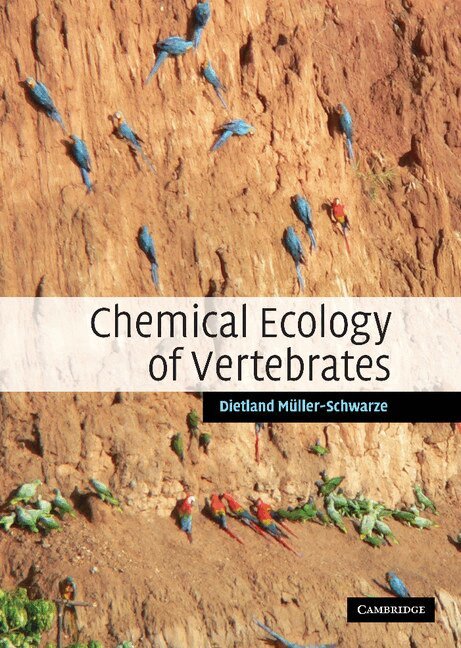
Published in 2006, Chemical Ecology of Vertebrates was the first book to focus exclusively on the chemically-mediated interactions between vertebrates including fish, amphibians, reptiles, birds and mammals, and other animals and plants. Reviewing research in three core areas - pheromones (where the interactions are between members of the same species), interspecific interactions involving allomones (where the sender benefits) and kairomones (where the receiver benefits), it pulls together information from widely scattered technical literature in many different disciplines into a coherent whole. Chapters on the environment, properties of odour signals, and production and release of chemosignals set the stage for discussion of more complex behavioural topics. While the main focus is ecological, dealing with behaviour and interactions in the field, it also covers chemoreception, orientation and navigation, the development of behaviour and the practical applications of chemosignals.
578 kr
Skickas inom 7-10 vardagar
Beavers can and do dramatically change the landscape. The beaver is a keystone species—their skills as foresters and engineers create and maintain ponds and wetlands that increase biodiversity, purify water, and prevent large-scale flooding. Biologists have long studied their daily and seasonal routines, family structures, and dispersal patterns. As human development encroaches into formerly wild areas, property owners and government authorities need new, nonlethal strategies for dealing with so-called nuisance beavers. At the same time, the complex behavior of beavers intrigues visitors at parks and other wildlife viewing sites because it is relatively easy to observe.In an up-to-date, exhaustively illustrated, and comprehensive book on beaver biology and management, Dietland Müller-Schwarze gathers a wealth of scientific knowledge about both the North American and Eurasian beaver species. The Beaver is designed to satisfy the curiosity and answer the questions of anyone with an interest in these animals, from students who enjoy watching beaver ponds at nature centers to homeowners who hope to protect their landscaping. Photographs taken by the authors document every aspect of beaver behavior and biology, the variety of their constructions, and the habitats that depend on their presence. Beaver facts:•Just as individual beavers shape their immediate surroundings, so did the distribution of beavers across North America influence the paths of English and French explorers and traders. As a result of the fur trade, beavers were wiped out across large areas of the United States. Reintroduction efforts led to the widespread establishment of these resilient animals, and now they are found throughout North America, Europe, and parts of the southern hemisphere.•Beaver meadows provided early settlers with level, fertile pastures and hayfields.•Based on the fossil record, the smallest extinct beaver species were the size of a muskrat, and the largest may have reached the size of a black bear (five to six times as large as today's North American beavers). Beaver-gnawed wood has been found alongside the skeleton of a mastodon.•Some beavers remain in the home lodge for an extra year to assist their parents in raising younger siblings. They feed, groom, and guard the newborn kits.•In 1600, beaver ponds covered eleven percent of the upper Mississippi and Missouri Rivers' watershed above Thebes, Illinois. Restoring only 3 percent of the original wetlands might suffice to prevent catastrophic floods such as those in the early 1990s.
1 057 kr
Tillfälligt slut
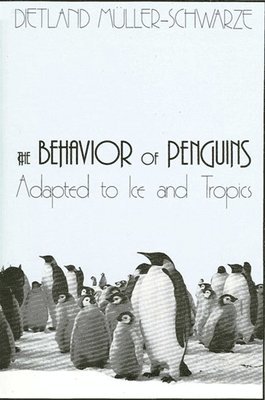
"Strange geese." That was their description when they were discovered in 1520 during Magellan's historic voyage. Today, penguins are familiar to everyone, yet few researchers have observed them in the remote regions in which they live.Written by an ecologist-behaviorist who has worked extensively in the natural penguin habitat, The Behavior of Penguins is the first general work on the entire family of penguins. Numerous and remarkable field photographs document the author's detailed study of the life cycles and breeding patterns of each penguin species. He brings to light their unusual abilities to go with little food for months, to dive deep in the ocean, and to protect themselves in extreme environments. Müller-Schwarze's comprehensive and fascinating account of penguins also emphasizes the urgent need to protect these birds and their natural habitat.
376 kr
Tillfälligt slut
"Strange geese." That was their description when they were discovered in 1520 during Magellan's historic voyage. Today, penguins are familiar to everyone, yet few researchers have observed them in the remote regions in which they live.Written by an ecologist-behaviorist who has worked extensively in the natural penguin habitat, The Behavior of Penguins is the first general work on the entire family of penguins. Numerous and remarkable field photographs document the author's detailed study of the life cycles and breeding patterns of each penguin species. He brings to light their unusual abilities to go with little food for months, to dive deep in the ocean, and to protect themselves in extreme environments. Müller-Schwarze's comprehensive and fascinating account of penguins also emphasizes the urgent need to protect these birds and their natural habitat.
1 140 kr
Skickas inom 7-10 vardagar
Published in 2006, Chemical Ecology of Vertebrates was the first book to focus exclusively on the chemically-mediated interactions between vertebrates including fish, amphibians, reptiles, birds and mammals, and other animals and plants. Reviewing research in three core areas - pheromones (where the interactions are between members of the same species), interspecific interactions involving allomones (where the sender benefits) and kairomones (where the receiver benefits), it pulls together information from widely scattered technical literature in many different disciplines into a coherent whole. Chapters on the environment, properties of odour signals, and production and release of chemosignals set the stage for discussion of more complex behavioural topics. While the main focus is ecological, dealing with behaviour and interactions in the field, it also covers chemoreception, orientation and navigation, the development of behaviour and the practical applications of chemosignals.
534 kr
Skickas inom 10-15 vardagar
Hands-On Chemical Ecology: Simple Field and Laboratory Exercises, a premiere collection of practical exercises in chemical ecology, offers tools and strategies for understanding this young science. The exercises included use general principles and follow a simple structure. Topics examined include birds, fish, insects, mammals, and plant chemistry among others. Additionally, exercises require accessible materials, ensuring that each can be easily modified and completed anywhere in the world with locally existing instruments. This text will be of value to undergraduate and graduates students and high school biology teachers.
2 115 kr
Skickas inom 10-15 vardagar
This volume is comprised of the proceedings of Chemical Signals in Vertebrates 10, held July 29th through August 1st, 2003 at Oregon State University in Corvallis, Oregon, USA. The volume includes the state-of-the-art in chemical signaling among vertebrates.
1 061 kr
Skickas inom 10-15 vardagar
This volume reviews recent developments in our understanding of che~ ical signaling in vertebrates. After sections dealing with general princi ples and chemical aspects of vertebrate pheromones, it follows a taxonomic approach, progressing from fish to. mammals. The editors asked a diverse, international group of leading investigators, working on a wide array of vertebrate taxa and specific issues, to consider their efforts from compar ative, evolutionary, and ecological viewpoints. The relative number of manuscripts in each part does not necessarily reflect current intensity of research, since the editors invited speakers who together would provide a balanced and comprehensive overview, while avoiding duplication. Still, the part on mammals is the longest. Fourth in a series dating from 1977, this volume illuminates current trends and likely future developments in the field of chemical signaling in vertebrates. Going back even farther, the first chapter, a personal account of the past quarter century by Dr. Mykytowycz recalls the most important milestones, such as symposia, or the founding of societies and journals. He also credits those investigators who stand out by their seminal studies.
2 115 kr
Skickas inom 10-15 vardagar
It is generally accepted that the recent progress in molecular and cellular biology would not have been possible without an understanding of the mechanisms and signaling pathways of communication inside the cell and between various cells of the animal organism. In fact a similar progress occurred in the field of chemical communication between individual organisms of vertebrate species, and this volume is aimed at presenting the current state of the art on this subject. The reader can find here both original results obtained in the laboratory or field studies and comprehensive reviews summarizing many years of research. The presentations of over 60 scientists have been grouped according to their approach into nine parts covering such fields as ecological and evolutionary aspects of chemical communication, structure and neuronal mechanisms of chemosensory systems, chemical structure of pheromones and binding proteins, kin, individual and sexual recognition, predator-prey relationships, purpose and consequences of marking behavior, scent signals and reproductive processes. Expanding on former volumes of this series, entirely new chapters have been added on prenatal chemical communication describing specific effects of the intrauterine environment. In many cases a truly multidisciplinary approach was required, such as with the population analysis of polymorphic variants of the mouse's major urinary proteins that function in carrying pheromones.
2 115 kr
Skickas inom 10-15 vardagar
The field of olfactory research and chemical communication is in the early stages of revolutionary change, and many aspects of this revolution are reflected in the chapters in this book. Thus, it should serve admirably as an up-to-date reference. First, a wide range of vertebrate groups and species are represented. Second, there are excellent reviews of specific topics and theoretical approaches to communication by odors, including chapters on signal specialization and evolution in mammals, the evolution of hormonal pheromones in fish, alarm pheromones in fish, chemical repellents, the chemical signals involved in endocrine responses in mice, and the controversy over human pheromones. Third, there are exciting new findings presented in numerous specific topic areas, such as the chemis try of pheromones in a wide range of species (salamanders to elephants), the chemistry of proteins that control the release of pheromones, the molecular biology and physiology of detection, coding and response to odor signals, the effects of experience on sensitivity to odors, the role of genes of the immune system in odor production and in human mate choice, the function and perception of scent over-marks, the recognition of individuals and kin by odors, the influence of odors on predator-prey interactions, and the use of odors to help control pests. This book is an offshoot of the Eighth International Symposium on Chemical Sig nals in Vertebrates, held at Cornell University in Ithaca, New York, July 20-25, 1997, hosted and organized by Bob Johnston.
1 061 kr
Skickas inom 10-15 vardagar
From June 6 to 9, 1976, about 140 participants (physiologists, chemists, ecologists, animal behaviorists, and psychologists) gathered in the Gideon Putnam Hotel at Saratoga Springs, New York for a symposium entitled "Chemical Signals in Vertebrates". The focus of this symposium, sponsored by the United States National Science Foundation, was on chemical communication in higher animals, most notably mammals. This included the chemical nature, production, and reception of chemical signals, and their modulating effects on behavior. Almost all the world's laboratories working in this area were represented. It was the first meeting of its kind, and although the physiological aspects of taste and smell on the one hand and insect pheromones on the other have previously been treated in several fine symposia, they have not before been treated as a back drop to chemical communication in vertebrates. The field of insect pheromones is well developed, with hundreds of active compounds identified. By contrast, in vertebrates only six mammalian phero mones in as many species had been identified chemically by 1976.
1 061 kr
Skickas inom 10-15 vardagar
The first volume in this series appeared in 1977, the second in 1980. From these volumes and the present one, some research trends in chemical communication can be perceived. In the 1977 volume, studies on 13 animal taxa were reported. In the present volume, the number is 25. This taxonomie diversi fication of research since the first volume of this series demon strates the wide variety of ecological adaptions, although no new general principles of chemical communication have ernerged. Further more, divergences in chemical comrnunication below the species level have become more apparent. In general, more sophisticated observa tions and techniques have led to greater awareness of the com plexities in chemical communication. As such awareness has also developed in the field of insect chemical communication, there has been a corresponding increase in the identification of the chemical compounds involved. However, in the vertebrates, no such correlation exists; in the present volume, conclusive chemical identifications of semiochemicals are remarkable by their paucity.
2 115 kr
Skickas inom 10-15 vardagar
This volume is an up-to-date treatise of chemosensory vertebrate research performed by over 200 scientists from 22 countries. Importantly, data from over 25 taxa of vertebrates are presented, including those from human beings. Unlike other volumes on this topic, a significant nurober of the contributions come from leading workers in the former Soviet Union and reflect studies within a wide variety of disciplines, including behavior, biochemistry, ecology, endocrinology, genetics, psychophysics, and morphol ogy. Most of the studies described in this volume were presented at the Chemical Signals in Vertbrates VI (CSV VI) symposium held at the University of Pennsylvania in the summer of 1991. This international symposium was the largest and the most recent of a series of six such symposia, the first of which was held in Saratoga Springe, New York (June 6-9, 1976) and the last in Oxford, England (August 8-10, 1988). Unlike the previous symposia, Chemical Signals in Vertabrates VI lasted a full week, reflecting the increased number of participants and the desire of many to present their research findings orally to the group as a whole.