Douglas Bruster - Böcker
Visar alla böcker från författaren Douglas Bruster. Handla med fri frakt och snabb leverans.
15 produkter
15 produkter
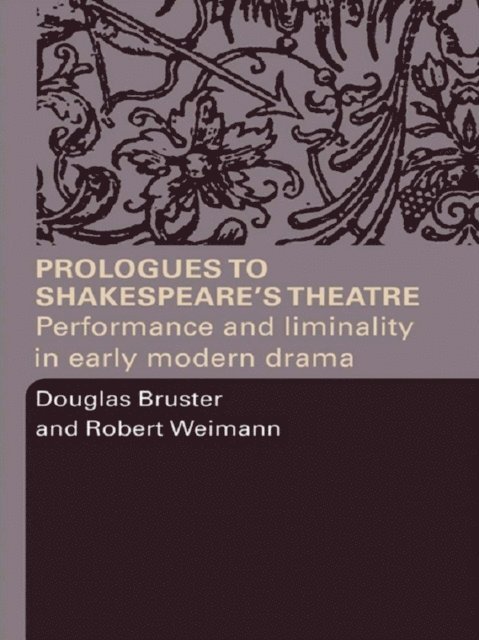
Prologues to Shakespeare's Theatre
Performance and Liminality in Early Modern Drama
Inbunden, Engelska, 2004
2 418 kr
Skickas inom 10-15 vardagar
This eye-opening study draws attention to the largely neglected form of the early modern prologue. Reading the prologue in performed as well as printed contexts, Douglas Bruster and Robert Weimann take us beyond concepts of stability and autonomy in dramatic beginnings to reveal the crucial cultural functions performed by the prologue in Elizabethan England.While its most basic task is to seize the attention of a noisy audience, the prologue's more significant threshold position is used to usher spectators and actors through a rite of passage. Engaging competing claims, expectations and offerings, the prologue introduces, authorizes and, critically, straddles the worlds of the actual theatrical event and the 'counterfeit' world on stage. In this way, prologues occupy a unique and powerful position between two orders of cultural practice and perception.Close readings of prologues by Shakespeare and his contemporaries, including Marlowe, Peele and Lyly, demonstrate the prologue's role in representing both the world in the play and playing in the world. Through their detailed examination of this remarkable form and its functions, the authors provide a fascinating perspective on early modern drama, a perspective that enriches our knowledge of the plays' socio-cultural context and their mode of theatrical address and action.
Prologues to Shakespeare's Theatre
Performance and Liminality in Early Modern Drama
Häftad, Engelska, 2004
667 kr
Skickas inom 10-15 vardagar
This eye-opening study draws attention to the largely neglected form of the early modern prologue. Reading the prologue in performed as well as printed contexts, Douglas Bruster and Robert Weimann take us beyond concepts of stability and autonomy in dramatic beginnings to reveal the crucial cultural functions performed by the prologue in Elizabethan England.While its most basic task is to seize the attention of a noisy audience, the prologue's more significant threshold position is used to usher spectators and actors through a rite of passage. Engaging competing claims, expectations and offerings, the prologue introduces, authorizes and, critically, straddles the worlds of the actual theatrical event and the 'counterfeit' world on stage. In this way, prologues occupy a unique and powerful position between two orders of cultural practice and perception.Close readings of prologues by Shakespeare and his contemporaries, including Marlowe, Peele and Lyly, demonstrate the prologue's role in representing both the world in the play and playing in the world. Through their detailed examination of this remarkable form and its functions, the authors provide a fascinating perspective on early modern drama, a perspective that enriches our knowledge of the plays' socio-cultural context and their mode of theatrical address and action.
Shakespeare and the Power of Performance
Stage and Page in the Elizabethan Theatre
Häftad, Engelska, 2010
644 kr
Skickas inom 7-10 vardagar
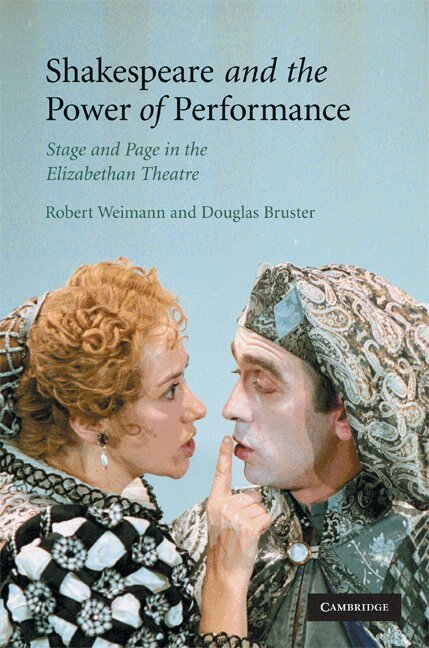
Focusing on the practical means and media of Shakespeare's stage, this study envisions horizons for his achievement in the theatre. Bridging the gap between today's page- and stage-centred interpretations, two renowned Shakespeareans demonstrate the artful means by which Shakespeare responded to the competing claims of acting and writing in the Elizabethan era. They examine how the playwright explored issues of performance through the resonant trio of clown, fool and cross-dressed boy actor. Like this trio, his deepest and most captivating characters often attain their power through the highly performative mode of 'personation' - through playing the character as an open secret. Surveying the whole of the playwright's career in the theatre, Shakespeare and the Power of Performance offers not only compelling ways of approaching the relation of performance and print in Shakespeare's works, but also new models for understanding dramatic character itself.
Del 1 - Cambridge Studies in Renaissance Literature and Culture
Drama and the Market in the Age of Shakespeare
Häftad, Engelska, 2005
614 kr
Skickas inom 7-10 vardagar
Douglas Bruster's provocative study of English Renaissance drama explores its links with Elizabethan and Jacobean economy and society, looking at the status of playwrights such as Shakespeare and the establishment of commercial theatres. He identifies in the drama a materialist vision which has its origins in the climate of uncertainty engendered by the rapidly expanding economy of London. His examples range from the economic importance of cuckoldry to the role of stage props as commodities, and the commercial significance of the Troy story in Shakespeare's Troilus and Cressida, and he offers new ways of reading English Renaissance drama, by returning the theatre and the plays performed there, to its basis in the material world.
Shakespeare and the Power of Performance
Stage and Page in the Elizabethan Theatre
Inbunden, Engelska, 2008
1 371 kr
Skickas inom 7-10 vardagar
Focusing on the practical means and media of Shakespeare's stage, this study envisions horizons for his achievement in the theatre. Bridging the gap between today's page- and stage-centred interpretations, two renowned Shakespeareans demonstrate the artful means by which Shakespeare responded to the competing claims of acting and writing in the Elizabethan era. They examine how the playwright explored issues of performance through the resonant trio of clown, fool and cross-dressed boy actor. Like this trio, his deepest and most captivating characters often attain their power through the highly performative mode of 'personation' - through playing the character as an open secret. Surveying the whole of the playwright's career in the theatre, Shakespeare and the Power of Performance offers not only compelling ways of approaching the relation of performance and print in Shakespeare's works, but also new models for understanding dramatic character itself.
688 kr
Skickas inom 10-15 vardagar
William Shakespeare is perhaps the most frequently quoted author of the English-speaking world. His plays, in turn, "quote" a wide variety of sources, from books and ballads to persons and events. In this dynamic study of Shakespeare's plays, Douglas Bruster demonstrates that such borrowing can illuminate the world in which Shakespeare and his contemporary playwrights lived and worked, while also shedding light on later cultures that quote his plays. In contrast to the New Historicism's sometimes arbitrary linkage of literary works with elements drawn from the surrounding culture, Quoting Shakespeare focuses on the resources that writers used in making their works. Bruster shows how this borrowing can give us valuable insight into the cultural, historical, and political positions of writers and their works. Because Shakespeare's plays have often been quoted by other writers, this study also examines what subsequent uses of Shakespeare's plays reveal about the writers and cultures that use them. In this way, Quoting Shakespeare insists that literary production and reception are both integral to a historical approach to literature.
623 kr
Skickas inom 10-15 vardagar
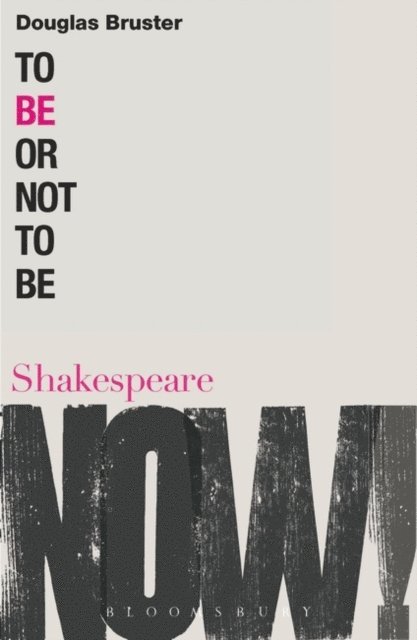
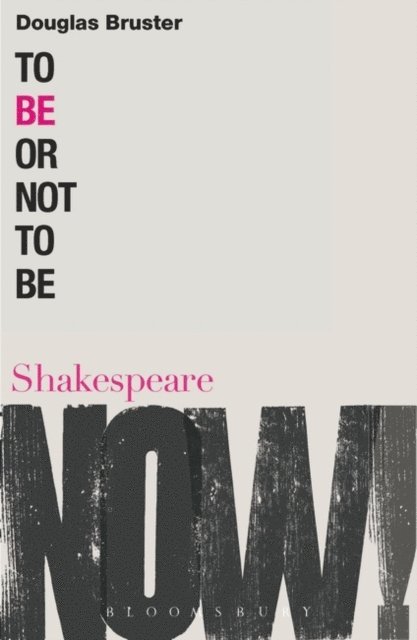
Hamlet's 'To be or not to be' soliloquy is quoted more often than any other passage in Shakespeare. It is arguably the most famous speech in the Western world - though few of us can remember much about it. This book carefully unpacks the individual words, phrases and sentences of Hamlet's solioquy uin order to reveal how and why it has achieved its remarkable hold on our culture. Hamlet's speech asks us to ask some of the most serious questions there are regarding knowledge and existence. In it, Shakespeare also expands the limits of the English language. Douglas Bruster therefore reads Hamlet's famous speech in 'slow motion' to highlight its material, philosophical and cultural meaning and its resonance for generations of actors, playgoers and readers. Douglas Bruster is Professor of English at The University of Texas at Austin, USA. He is the author of Drama and the Market in the Age of Shakespeare; Quoting Shakespeare; Shakespeare and the Question of Culture; and, with Robert Weimann, Prologues to Shakespeare's Theatre.
377 kr
Skickas inom 10-15 vardagar
"Shakespeare Now!" is a series of short books of truly vital literary scholarship, each with its own distinctive form. "Shakespeare Now!" recaptures the excitement of Shakespeare; it doesn't assume we know him already, or that we know the best methods for approaching his plays. "Shakespeare Now!" is a new generation of critics, unafraid of risk, on a series of intellectual adventures. Above all - it is a new Shakespeare, freshly present in each volume. Hamlet's "To be or not to be" soliloquy is quoted more often than almost any other passage in Shakespeare. Parodies and advertisements show us that invoking even its first two words is enough to imply the rest of the speech - though few of us can recall much about it. For we like to think we know this speech, even as we like to think we know our Shakespeare. "To Be or Not to Be" takes this most famous speech and unpacks it's meaning to reveal the questions and problems it raises. Hamlet's speech asks us to ask serious questions about knowledge and existence. The book asks what close attention to Shakespeare's words can tell us about what we don't and perhaps can't know.If this speech concerns what isn't knowable, what else is it about? Is it or is it not about suicide? Do the King and Polonius overhear? If so, does Hamlet know or care? What must we bring to it, as readers? What about as audience members: to what do we need to pay attention? This book reads the individual words, phrases and sentences of Hamlet's famous speech in 'slow motion' to highlight its material, philosophical and cultural meaning and its resonance for generations of actors, playgoers and readers.
2 185 kr
Skickas inom 10-15 vardagar
Seeing Shakespeare’s Style offers new ways for readers to perceive Shakespeare and, by extension, literary texts generally. Organized as a series of studies of Shakespeare’s plays and poems, poetry, and prose, it looks at the inner functioning of language and form in works from all phases of this writer’s career. Because the very concept of literary style has dropped out of so many of our conversations about writing, we need new ways to understand how words, phrases, speeches, and genres in literature work. Responding to this need, this book shows how visual representations of writing can lead to a deeper understanding of language’s textures and effects. Starting with chapters that a beginning reader of Shakespeare can benefit from, its second half puts these tools to use in more in-depth examinations of Shakespeare’s language and style. Although focused on Shakespeare’s works, and the works of his contemporaries, this book provides tools for all readers of literature by defining style as material, graphic, and shaped by the various media in which all writers work.
667 kr
Skickas inom 10-15 vardagar
Seeing Shakespeare’s Style offers new ways for readers to perceive Shakespeare and, by extension, literary texts generally. Organized as a series of studies of Shakespeare’s plays and poems, poetry, and prose, it looks at the inner functioning of language and form in works from all phases of this writer’s career. Because the very concept of literary style has dropped out of so many of our conversations about writing, we need new ways to understand how words, phrases, speeches, and genres in literature work. Responding to this need, this book shows how visual representations of writing can lead to a deeper understanding of language’s textures and effects. Starting with chapters that a beginning reader of Shakespeare can benefit from, its second half puts these tools to use in more in-depth examinations of Shakespeare’s language and style. Although focused on Shakespeare’s works, and the works of his contemporaries, this book provides tools for all readers of literature by defining style as material, graphic, and shaped by the various media in which all writers work.
1 698 kr
Skickas inom 10-15 vardagar
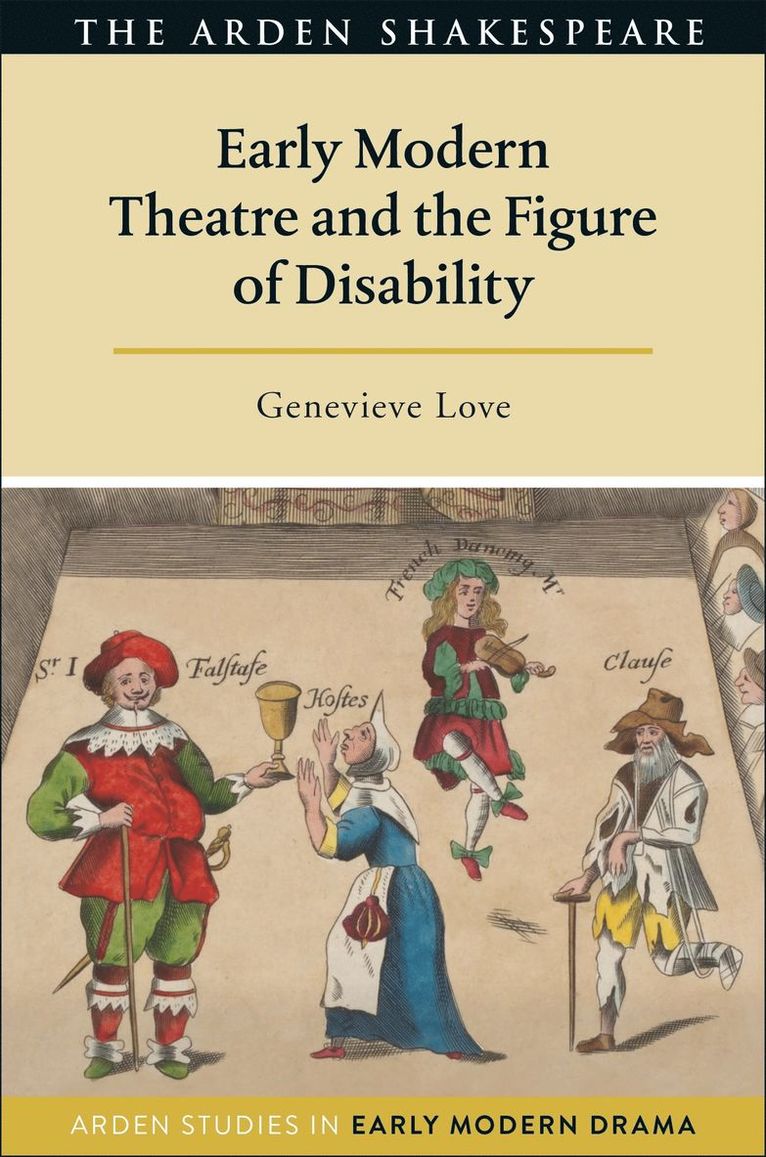
What work did physically disabled characters do for the early modern theatre? Through a consideration of a range of plays, including Doctor Faustus and Richard III, Genevieve Love argues that the figure of the physically disabled prosthetic body in early modern English theatre mediates a set of related ‘likeness problems’ that structure the theatrical, textual, and critical lives of the plays of Shakespeare and his contemporaries. The figure of disability stands for the relationship between actor and character: prosthetic disabled characters with names such as Cripple and Stump capture the simultaneous presence of thefictional and the material, embodied world of the theatre. When the figure of the disabled body exits the stage, it also mediates a second problem of likeness, between plays in their performed and textual forms. While supposedly imperfect textual versions of plays have been characterized as ‘lame’, the dynamic movement of prosthetic disabled characters in the theatre expands the figural role which disability performs in the relationship between plays on the stage and on the page. Early Modern Theatre and the Figure of Disability reveals how attention to physical disability enriches our understanding of early modern ideas about how theatre works, while illuminating in turn how theatre offers a reframing of disability as metaphor.
407 kr
Skickas inom 10-15 vardagar
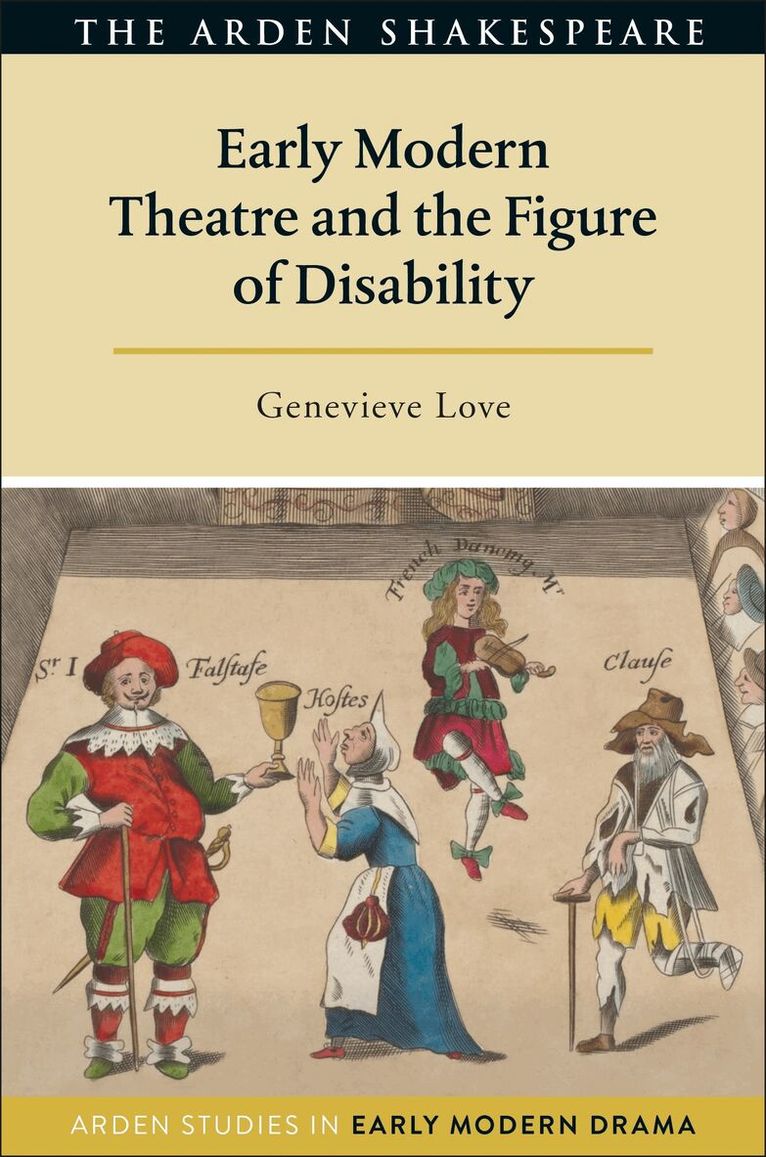
What work did physically disabled characters do for the early modern theatre? Through a consideration of a range of plays, including Doctor Faustus and Richard III, Genevieve Love argues that the figure of the physically disabled prosthetic body in early modern English theatre mediates a set of related ‘likeness problems’ that structure the theatrical, textual, and critical lives of the plays of Shakespeare and his contemporaries. The figure of disability stands for the relationship between actor and character: prosthetic disabled characters with names such as Cripple and Stump capture the simultaneous presence of the fictional and the material, embodied world of the theatre. When the figure of the disabled body exits the stage, it also mediates a second problem of likeness, between plays in their performed and textual forms. While supposedly imperfect textual versions of plays have been characterized as ‘lame’, the dynamic movement of prosthetic disabled characters in the theatre expands the figural role which disability performs in the relationship between plays on the stage and on the page. Early Modern Theatre and the Figure of Disability reveals how attention to physical disability enriches our understanding of early modern ideas about how theatre works, while illuminating in turn how theatre offers a reframing of disability as metaphor.
557 kr
Kommande
The concepts of trust and risk provide important insights into the social and cultural life of early modern England but remain relatively unexplored in early modern literary studies. This collection addresses that gap by exploring a wide range of literary genres and texts including comic drama, lyric verse, emblem books, ledgers, wills, polemical prose and religious epic. Contributors explore issues of personal trust through the faith and lies that characterize Shakespeare’s sonnets, Donne’s sermons and Milton’s Paradise Lost. Following the idea of trust and risk into community brings us to a discussion of The Merry Wives of Windsor, the spiritual trust of faith communities and the network of relationships that are traceable though surviving records of women’s wills. Following this progression outwards from the personal to the communal, the final essays in the collection consider the role of institutional trust, specifically the early modern obsession with credit in its various guises. The Merchant of Venice, Volpone and The Winter’s Tale act as illustrative examples of credit’s significance for understanding trust and risk in the early modern period. Taken together the range of texts and genres considered reveal new insights into early modern English literature and its socio-economic context.
1 522 kr
Kommande
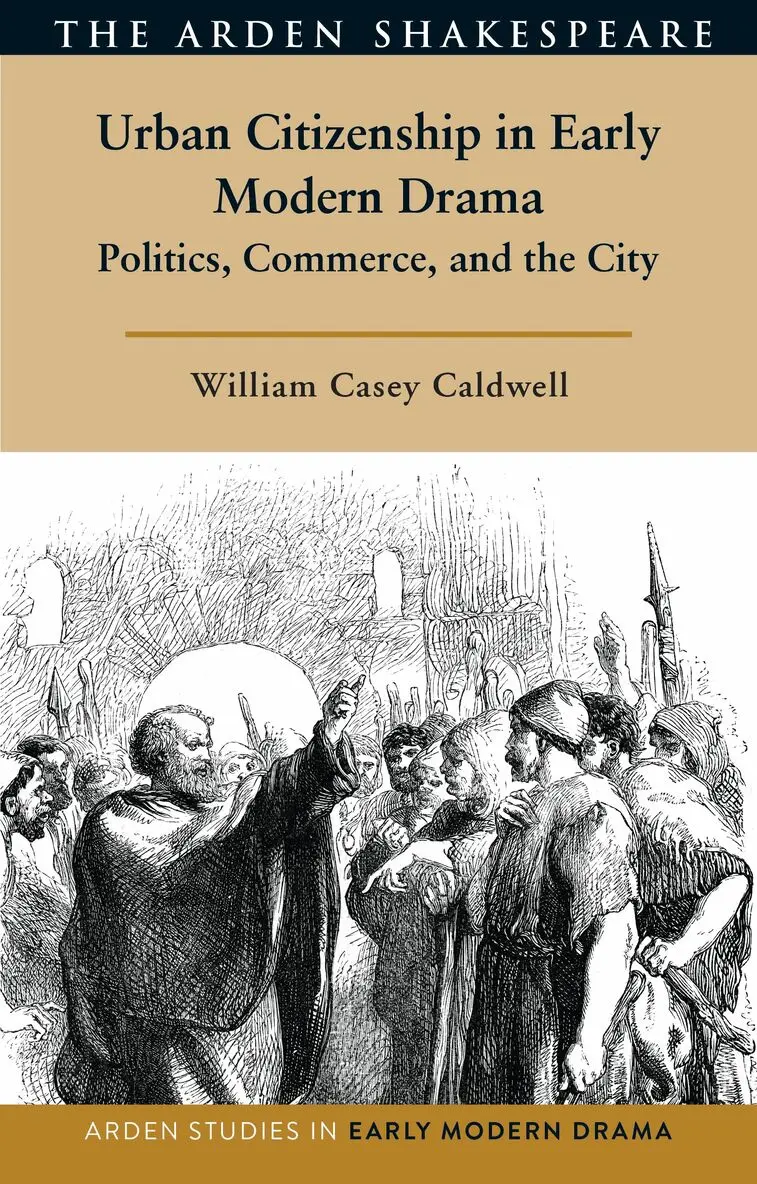
Citizenship in Shakespeare’s England was not attached to nationality but rather to one’s city and employment. In this study of urban citizenship, William Casey Caldwell explores the range of economic relationships which existed through a range of dramatic texts.Revealing how citizenship was defined along urban lines and controlled by early forms of corporations, Caldwell argues that playwrights at the time used this context to imagine new opportunities for non-citizens. By returning us to its commercial and urban bases, Urban Citizenship in Early Modern Drama exposes how playwrights such as Shakespeare, Francis Beaumont, and William Haughton used extant and emergent financial instruments and relationships to rethink the economic foundations of citizenship in London. From Shylock’s bid to make a debt bond to procreate with a citizen in The Merchant of Venice to the monetized form of toleration directed towards a Portuguese denizen’s daughters in Englishmen for My Money, this book explores how plays provided their audience - many of whom would not have been citizens either - with critical and performative forms of citizenship defined by the intersection of job and city.
223 kr
Skickas inom 10-15 vardagar
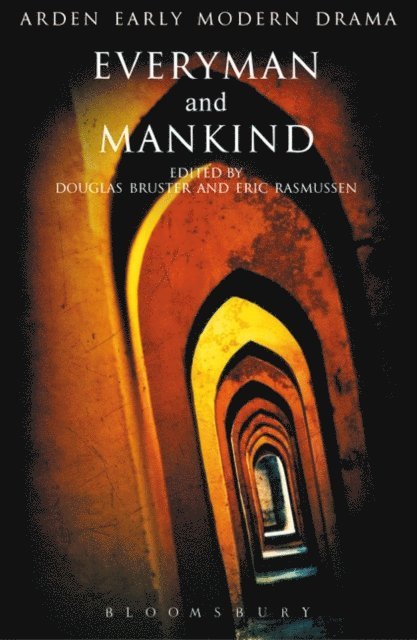
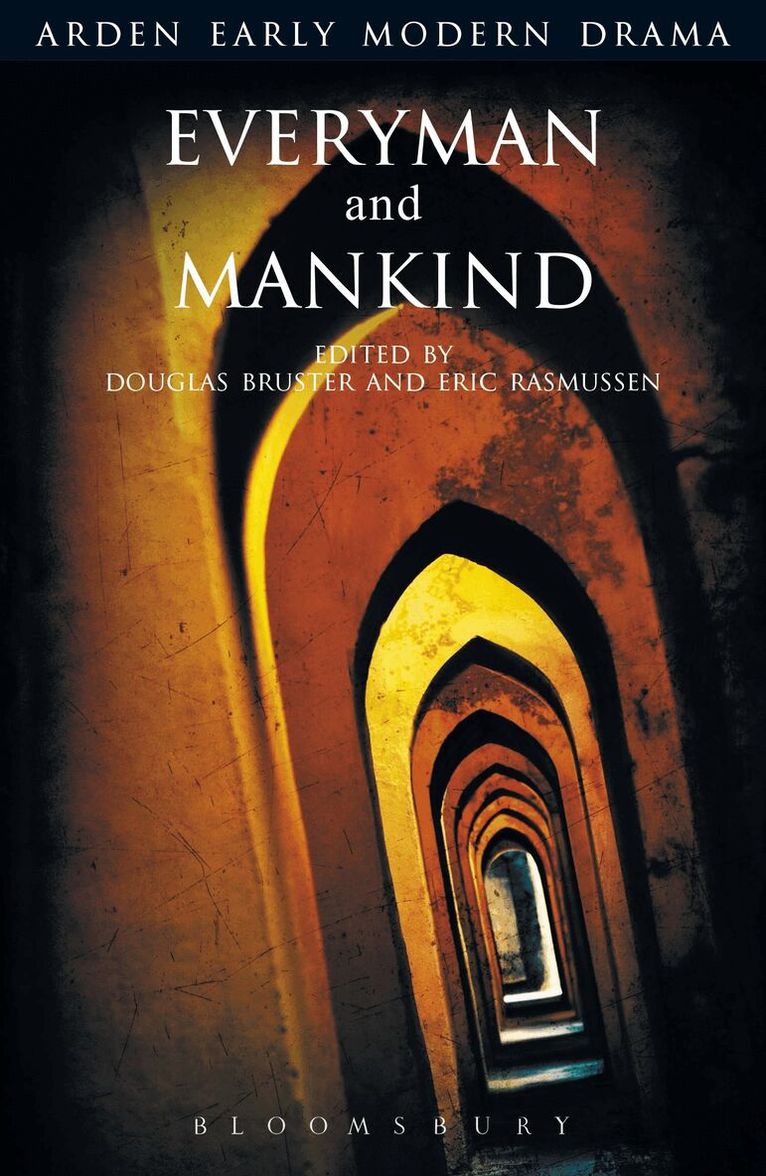
Everyman and Mankind are morality plays which mark the turn of the medieval period to the early modern, with their focus on the individual. Everyman follows a man's journey towards death and his efforts to secure himself a life thereafter, whilst Mankind shows a man battling with temptation and sin, often with great humour. Both texts are modernised here and edited to the highest standards of scholarship, with full on-page commentaries giving the depth of information and insight associated with all Arden editions. The comprehensive, illustrated introduction argues that the plays signal the birth of the early modern consciousness and puts them in their historic and religious contexts. An account is also given of the staging and performance history of the plays and their critical history and significance. With a wealth of helpful and incisive commentary this is the finest edition of the plays available.