Ebrahim Ghafar-Zadeh - Böcker
Visar alla böcker från författaren Ebrahim Ghafar-Zadeh. Handla med fri frakt och snabb leverans.
6 produkter
6 produkter
1 452 kr
Kommande
COVID-19 Diagnostic Technologies covers diagnostic tests, sensing technologies and their characteristics and limitations for the detection and diagnosis of COVID-19. The book focuses on laboratory or portable based sensing technologies and the potential benefit of promising low-cost and portable strategies for accurate detection of the viral diseases. Sections review the virology of SARS-CoV-2 and discuss nucleic, acid-based tests for viral RNA detection, including PCR-based tests, Isothermal Nucleic Acid Amplification, DNA-microarray-based tests, and sequencing-based tests. Protein-based tests, which include neutralizing antibodies, serological tests and antigenic tests are also discussed. The book concludes with novel strategies for viral detection like emerging biosensors, nanotechnology, and the role of new digital technologies.
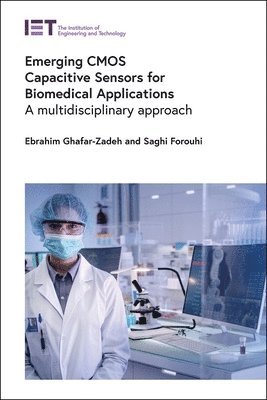
Emerging CMOS Capacitive Sensors for Biomedical Applications
A multidisciplinary approach
Inbunden, Engelska, 2021
1 616 kr
Skickas inom 3-6 vardagar
CMOS-based sensors offer significant advantages to life science applications, such as non-invasive long-term recordings, fast responses and label-free processes. They have been widely applied in many biological and medical fields for the study of living cell samples such as neural cell recording and stimulation, monitoring metabolic activity, cell manipulation, and extracellular pH monitoring. Compared to other sensing techniques, capacitive sensors are low-complexity, high-precision, label-free sensing methods for monitoring cellular activities such as cell viability, proliferation and morphology.The development of capacitive sensors for use in life sciences requires thorough knowledge of both the intended biological applications and CMOS circuitry. This book addresses the principles, design, implementation and testing, and packaging of CMOS circuits for these applications. Existing applications, markets, and potential future developments are also covered, plus the relevant biological protocols.Emerging CMOS Capacitive Sensors for Biomedical Applications provides information and guidance for researchers and advanced students in the field of microelectronics who are looking to specialise in biological applications. It is also relevant to academic and industrial researchers already working in the biosensors field, who wish to expand their knowledge and keep abreast of new developments.
1 923 kr
Skickas inom 3-6 vardagar
Emerging complementary metal-oxide semiconductor (CMOS) technologies and their ongoing downscaling trend have opened an avenue to developing integrated systems for life sciences. They offer great advantages for the monolithic integration of several active elements, and the implementation of millions of biosensors along with their transducers and readout circuits on a single chip. Benefits include the ability to make highly dense systems with high signal-to-noise ratios (SNRs), good accessibility and reliability. Moreover, the huge investment in CMOS foundries and the possibility of the batch production of various devices using CMOS have established it as an economical technology appropriate for the fabrication of affordable platforms for end-users. All these features make CMOS electronics a valuable technology for the implementation of integrated bio-systems such as lab-on-chips (LoCs) and point-of-care (PoC) devices.This book offers deep multidisciplinary knowledge of different types of biosensors and bioactuators. The book covers the design and implementation of CMOS chips, including transducers, readouts and data equation circuitries. It also deals with microfluidic packaging techniques, and biological applications and protocols. The theoretical and practical aspects of CMOS biosensors are discussed, and the fundamentals of microfabrication. Several key life science applications are explored, including optical biosensors, thermal sensors, and a range of actuators.CMOS-Based Sensors and Actuators for Life Science Applications offers a systematic and thorough approach to this complex multidisciplinary topic for researchers and engineers working in the field of microelectronic design and development, particularly those whose work has life sciences applications.
CMOS Capacitive Sensors for Lab-on-Chip Applications
A Multidisciplinary Approach
Inbunden, Engelska, 2010
1 094 kr
Skickas inom 10-15 vardagar
1.1 Overview of Lab-on-Chip Laboratory-on-Chip (LoC) is a multidisciplinary approach used for the miniaturization, integration and automation of biological assays or procedures in analytical chemistry [1–3]. Biology and chemistry are experimental sciences that are continuing to evolve and develop new protocols. Each protocol offers step-by-step laboratory instructions, lists of the necessary equipments and required biological and/or chemical substances [4–7]. A biological or chemical laboratory contains various pieces of equipment used for performing such protocols and, as shown in Fig. 1.1, the engineering aspect of LoC design is aiming to embed all these components in a single chip for single-purpose applications. 1.1.1 Main Objectives of LoC Systems Several clear advantages of this technology over conventional approaches, including portability, full automation, ease of operation, low sample consumption and fast assays time, make LoC suitable for many applications including. 1.1.1.1 Highly Throughput Screening To conduct an experiment, a researcher fills a well with the required biological or chemical analytes and keeps the sample in an incubator for some time to allowing the sample to react properly. Afterwards, any changes can be observed using a microscope. In order to quickly conduct millions of biochemical or pharmacolo- cal tests, the researchers will require an automated highly throughput screening (HTS) [8], comprised of a large array of wells, liquid handling devices (e.g., mic- channel, micropump and microvalves [9–11]), a fully controllable incubator and an integrated sensor array, along with the appropriate readout system.
1 093 kr
Skickas inom 10-15 vardagar
Integrating experimental, theoretical and simulation examples, this book provides broad coverage of the emerging field of CMOS biochips by drawing in a range of disciplines: microelectronics, microfluidics and classical biology and chemistry.
CMOS Capacitive Sensors for Lab-on-Chip Applications
A Multidisciplinary Approach
Häftad, Engelska, 2012
1 094 kr
Skickas inom 10-15 vardagar
1.1 Overview of Lab-on-Chip Laboratory-on-Chip (LoC) is a multidisciplinary approach used for the miniaturization, integration and automation of biological assays or procedures in analytical chemistry [1–3]. Biology and chemistry are experimental sciences that are continuing to evolve and develop new protocols. Each protocol offers step-by-step laboratory instructions, lists of the necessary equipments and required biological and/or chemical substances [4–7]. A biological or chemical laboratory contains various pieces of equipment used for performing such protocols and, as shown in Fig. 1.1, the engineering aspect of LoC design is aiming to embed all these components in a single chip for single-purpose applications. 1.1.1 Main Objectives of LoC Systems Several clear advantages of this technology over conventional approaches, including portability, full automation, ease of operation, low sample consumption and fast assays time, make LoC suitable for many applications including. 1.1.1.1 Highly Throughput Screening To conduct an experiment, a researcher fills a well with the required biological or chemical analytes and keeps the sample in an incubator for some time to allowing the sample to react properly. Afterwards, any changes can be observed using a microscope. In order to quickly conduct millions of biochemical or pharmacolo- cal tests, the researchers will require an automated highly throughput screening (HTS) [8], comprised of a large array of wells, liquid handling devices (e.g., mic- channel, micropump and microvalves [9–11]), a fully controllable incubator and an integrated sensor array, along with the appropriate readout system.