Éva Kovács - Böcker
Visar alla böcker från författaren Éva Kovács. Handla med fri frakt och snabb leverans.
5 produkter
5 produkter
1 074 kr
Skickas inom 10-15 vardagar
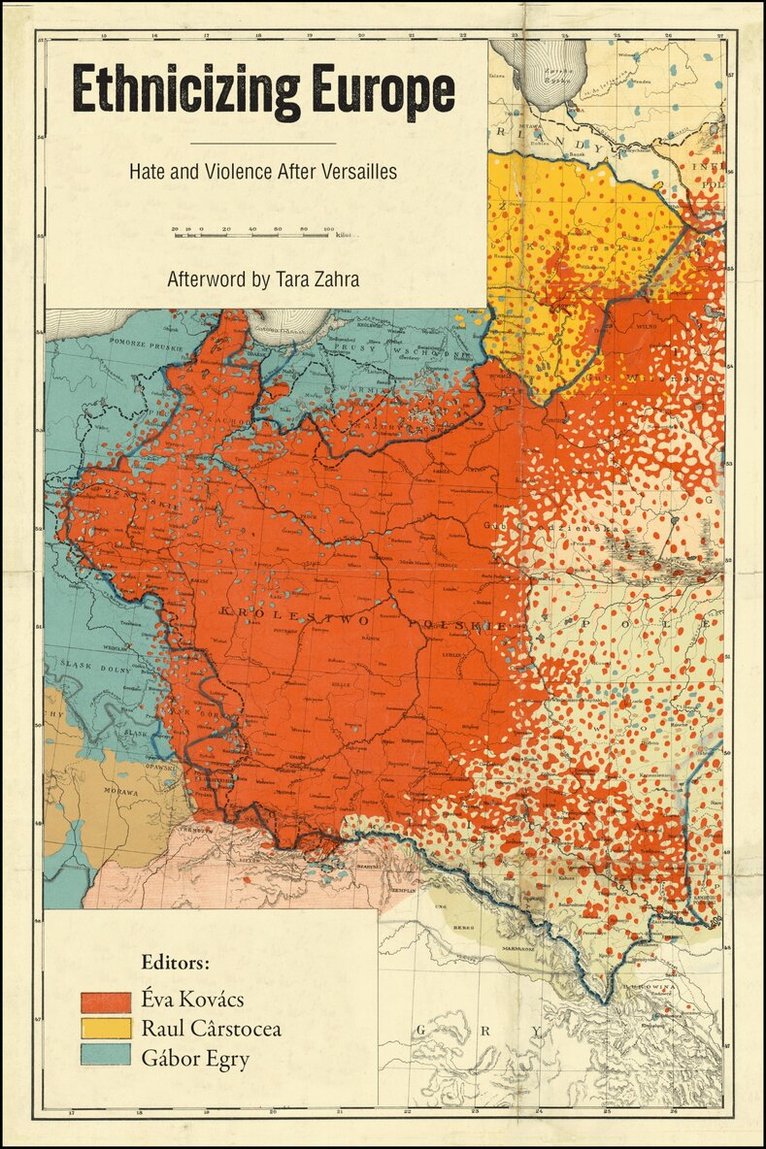
Ethnicizing Europe focuses on the dynamics of interethnic violence in Europe between the two world wars. The new international system that was enshrined by the Versailles peace treaties after World War I did not bring stability to East-Central Europe. Rather, it resulted in a host of conditions like self-determination, international oversight, revolutionary political ideas, and democratic processes, which eventually gave new meaning to already established conflicts, as well as igniting new conflicts in the region. This book opens with a discussion of the theoretical scholarship on ethnicity before proceeding to specific case studies investigating the different ways in which ethnicity was enacted and contested during a period of European transformation, focusing mostly on ethnically heterogeneous locales. Rather than concentrating on either political violence or ethnonationalism, this collection brings these two literatures together to show how ethnicization, the legal concepts of citizenship, and violence were intertwined in post-Versailles Europe, not only shaping the period between the wars, but also the Europe we know today. The book concludes with an afterword by Tara Zahra, which expands this perspective to the wider transatlantic region.
567 kr
Skickas inom 10-15 vardagar
Ethnicizing Europe focuses on the dynamics of interethnic violence in Europe between the two world wars. The new international system that was enshrined by the Versailles peace treaties after World War I did not bring stability to East-Central Europe. Rather, it resulted in a host of conditions like self-determination, international oversight, revolutionary political ideas, and democratic processes, which eventually gave new meaning to already established conflicts, as well as igniting new conflicts in the region. This book opens with a discussion of the theoretical scholarship on ethnicity before proceeding to specific case studies investigating the different ways in which ethnicity was enacted and contested during a period of European transformation, focusing mostly on ethnically heterogeneous locales. Rather than concentrating on either political violence or ethnonationalism, this collection brings these two literatures together to show how ethnicization, the legal concepts of citizenship, and violence were intertwined in post-Versailles Europe, not only shaping the period between the wars, but also the Europe we know today. The book concludes with an afterword by Tara Zahra, which expands this perspective to the wider transatlantic region.
2 229 kr
Skickas inom 3-6 vardagar
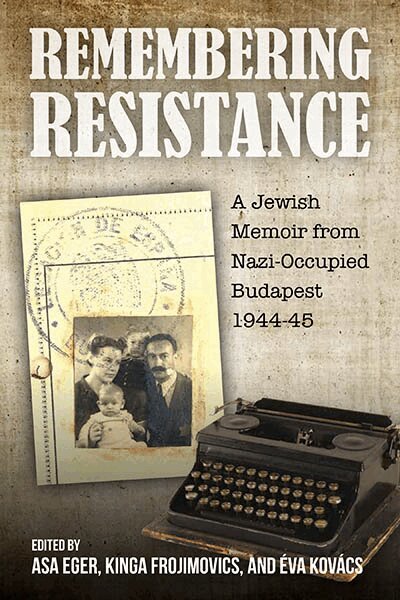
The existence and achievements of Jewish “self-rescuers” within Nazi-occupied Hungary remains, in spite of their significance, historically underexplored. In this illuminating chronicle of the life and work of a Jewish couple, László and Eugenia Szamosi, Remembering Resistance seeks to address this lacunae, offering a unique insight into a family’s personal history of resistance under the Nazi regime. Combining oral testimony from fellow survivors, with a previously-unpublished translation of László’s memoir, this book foregrounds the remarkable work of the Szamosis and their network, in rescuing Jews from the Death Marches and reuniting displaced families. Through doing so, this book offers a powerful framework for mediating how we remember Jewish experiences of the Holocaust.
Connected Histories
Memories and Narratives of the Holocaust in Digital Space
Inbunden, Engelska, 2024
869 kr
Skickas inom 3-6 vardagar
The World Wide Web (WWW) and digitisation have become important sites and tools for the history of the Holocaust and its commemoration. Today, some memory institutions use the Internet at a high professional level as a venue for self-presentation and as a forum for the discussion of Holocaust-related topics for potentially international, transcultural and interdisciplinary user groups. At the same time, it is not always the established institutions that utilise the technical possibilities and potential of the Internet to the maximum. Creative and sometimes controversial new forms of storytelling of the Holocaust or more traditional ways of remembering the genocide presented in a new way with digital media often come from people or groups who are not in the realm of influence of the large memorial sites, museums and archives. Such "private" stagings have experienced a particular upswing since the boom of social media. This democratisation of Holocaust memory and history is crucial though it is as yet undecided how much it will ultimately reinforce old structures and cultural, regional or other inequalities or reinvent them. The “Digital space” as an arbitrary and limitless archive for the mediation of the Holocaust spanning from Russia to Brazil is at the centre of the essays collected in this volume. This space is also considered as a forum for negotiation, a meeting place and a battleground for generations and stories and as such offers the opportunity to reconsider the transgenerational transmission of trauma, family histories and communication. Here it becomes evident: there are new societal intentions and decision-making structures that exceed the capabilities of traditional mass media and thrive on the participation of a broad public.
Holocaust Literature and Ego Documents
Literary and Historiographical Approaches
Häftad, Engelska, 2026
628 kr
Kommande
From the very beginning, writing about the Holocaust has been shaped by considerations of form, the limits of language, and the (im)possibilities of conveying knowledge to future generations. In recent years, literary studies have undertaken various attempts to define 'Holocaust literature,' focusing on questions of genre, different time periods, themes, and experiences. In the integrated history of the Holocaust, ego documents came to the attention of scholars with a focus on agency, experience and factuality. The contributors to this volume take up these debates and bring together literary and historical perspectives on Holocaust literature and ego documents to discuss their relevance for Holocaust studies.