Eve Rosenhaft - Böcker
Visar alla böcker från författaren Eve Rosenhaft. Handla med fri frakt och snabb leverans.
12 produkter
12 produkter
2 166 kr
Skickas inom 10-15 vardagar
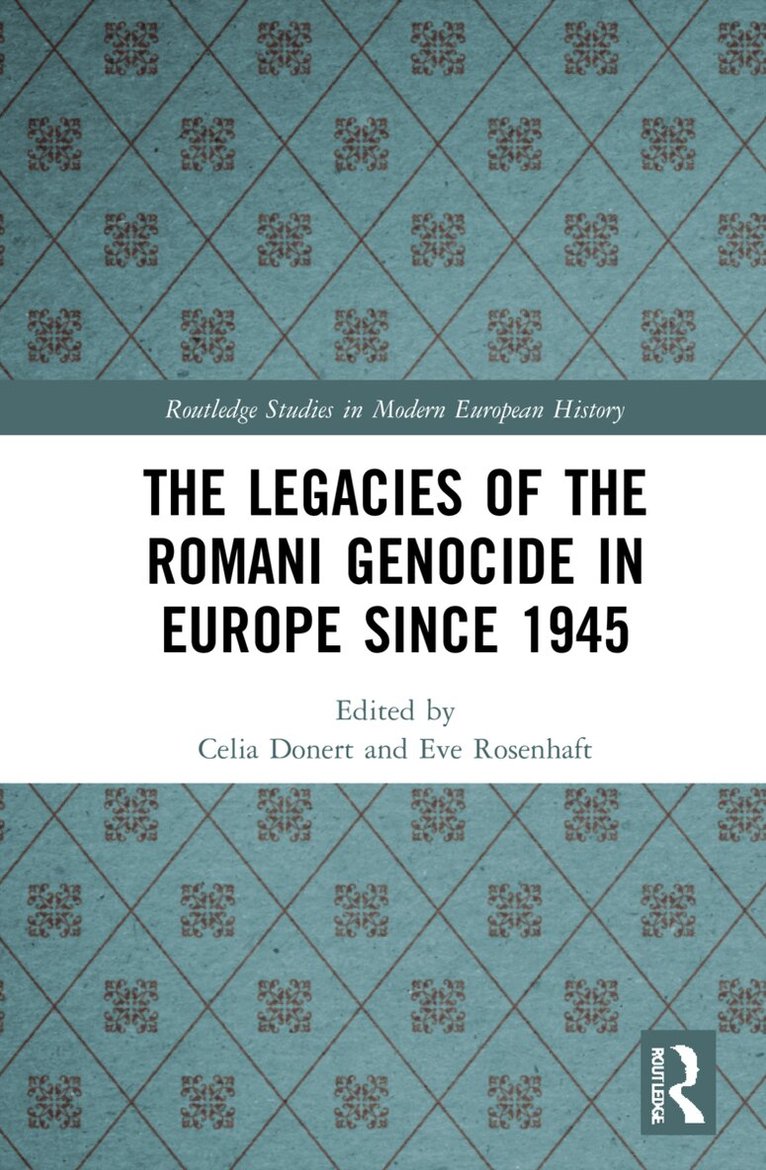
This book explores the legacies of the genocide of Roma in Europe after the end of the Second World War. Hundreds of thousands of people labelled as ‘Gypsies’ were persecuted or killed in Nazi Germany and across occupied Europe between 1933 and 1945. In many places, discrimination continued after the war was over. The chapters in this volume ask how these experiences shaped the lives of Romani survivors and their families in eastern and western Europe since 1945.This book will appeal to researchers and students in Modern European History, Romani Studies, and the history of genocide and the Holocaust.
577 kr
Skickas inom 7-10 vardagar
In this book Eve Rosenhaft examines the involvement of Communists in political violence during the years of Hitler's rise to power in Germany (1929-33). Specifically, she aims to account for their participation in `street-fighting' or 'gang-fighting' with National Socialist storm-troopers. The origins of this conflict are examined at two levels. First Dr Rosenhaft analyses the official policy of the Communist Party towards fascism and Nazism, and the special anti-fascist and self-defence organizations which it developed. Among the aspects of Communist policy that are explored are the relation between the international confrontation between Communists and Social Democrats as claimants to lead the left, and the implications of this dispute in German politics; the ideological difficulties in the implementation of Communist policy in a period of economic dislocation; and the organizational problems posed by the fight against fascism. Dr Rosenhaft then explores the attitudes and experience of the Communist rank and file engaged in the struggle against fascism, concentrating on the city of Berlin, where a fierce contest for control of the streets was waged.
596 kr
Skickas inom 10-15 vardagar
This book explores the legacies of the genocide of Roma in Europe after the end of the Second World War. Hundreds of thousands of people labelled as ‘Gypsies’ were persecuted or killed in Nazi Germany and across occupied Europe between 1933 and 1945. In many places, discrimination continued after the war was over. The chapters in this volume ask how these experiences shaped the lives of Romani survivors and their families in eastern and western Europe since 1945.This book will appeal to researchers and students in Modern European History, Romani Studies, and the history of genocide and the Holocaust.
1 512 kr
Skickas inom 7-10 vardagar
This groundbreaking history traces the development of Germany's black community, from its origins in colonial Africa to its decimation by the Nazis during World War II. Robbie Aitken and Eve Rosenhaft follow the careers of Africans arriving from the colonies, examining why and where they settled, their working lives and their political activities, and giving unprecedented attention to gender, sexuality and the challenges of 'mixed marriage'. Addressing the networks through which individuals constituted community, Aitken and Rosenhaft explore the ways in which these relationships spread beyond ties of kinship and birthplace to constitute communities as 'black'. The study also follows a number of its protagonists to France and back to Africa, providing new insights into the roots of Francophone black consciousness and postcolonial memory. Including an in-depth account of the impact of Nazism and its aftermath, this book offers a fresh critical perspective on narratives of 'race' in German history.
523 kr
Skickas inom 7-10 vardagar
This groundbreaking history traces the development of Germany's black community, from its origins in colonial Africa to its decimation by the Nazis during World War II. Robbie Aitken and Eve Rosenhaft follow the careers of Africans arriving from the colonies, examining why and where they settled, their working lives and their political activities, and giving unprecedented attention to gender, sexuality and the challenges of 'mixed marriage'. Addressing the networks through which individuals constituted community, Aitken and Rosenhaft explore the ways in which these relationships spread beyond ties of kinship and birthplace to constitute communities as 'black'. The study also follows a number of its protagonists to France and back to Africa, providing new insights into the roots of Francophone black consciousness and postcolonial memory. Including an in-depth account of the impact of Nazism and its aftermath, this book offers a fresh critical perspective on narratives of 'race' in German history.
Del 7 - People, Markets, Goods: Economies and Societies in History
Slavery Hinterland
Transatlantic Slavery and Continental Europe, 1680-1850
Häftad, Engelska, 2016
345 kr
Skickas inom 7-10 vardagar
Contributors from the US, Britain and Europe explore a neglected aspect of transatlantic slavery: the implication of a continental European hinterland.Slavery Hinterland explores a neglected aspect of transatlantic slavery: the implication of a continental European hinterland. It focuses on historical actors in territories that were not directly involved in the traffic inAfricans but linked in various ways with the transatlantic slave business, the plantation economies that it fed and the consequences of its abolition. The volume unearths material entanglements of the Continental and Atlantic economies and also proposes a new agenda for the historical study of the relationship between business and morality. Contributors from the US, Britain and continental Europe examine the ways in which the slave economy touched on individual lives and economic developments in German-speaking Europe, Switzerland, Denmark and Italy. They reveal how these 'hinterlands' served as suppliers of investment, labour and trade goods for the slave trade and of materials for the plantation economies, and how involvement in trade networks contributed in turn to key economic developments in the 'hinterlands'. The chapters range in time from the first, short-lived attempt at establishing a German slave-trading operation in the 1680s to the involvement of textile manufacturers in transatlantic trade in the first quarter of the nineteenth century. A key theme of the volume is the question of conscience, or awareness of being morally implicated in an immoral enterprise. Evidence for subjective understandings of the moral challenge of slavery is found in individual actions and statements and also in post-abolition colonisation and missionary projects.FELIX BRAHM is Research Fellow at the German Historical Institute in London.EVE ROSENHAFT is Professor of German Historical Studies, University of Liverpool.CONTRIBUTORS: Felix Brahm, Peter Haenger, Catherine Hall, Daniel P. Hopkins, Craig Koslofsky, Sarah Lentz, Rebekka von Mallinckrodt, Anne Sophie Overkamp, Alexandra Robinson, Eve Rosenhaft, Anka Steffen, Klaus Weber, Roberto Zaugg
1 906 kr
Skickas inom 7-10 vardagar
An Open Access edition of this book is available on the Liverpool University Press website and the OAPEN library.This book, designed as a resource for scholars, educators, activists and non-specialist readers, presents the results of new research on the role of Romani groups in European culture and society since the nineteenth century. Its specific focus is on the ways in which Romani actors, in their interactions with non-Romanies, have contributed to shaping Europe’s public spaces. Twelve chapters recount the experiences and accomplishments of individuals and families, from across Europe (England, France, Spain, Germany, Poland, Hungary, Romania and Finland) and Canada. All based on new research, and maintaining a focus on the real lives and activities of Romani people rather than on the perspective of the majority societies, these studies exemplify the creative presence of Romani people in the fields of politics, economics and culture. We see them as writers, artists and performers, political activists and resistance fighters, traders and entrepreneurs, circus and cinema managers and purveyors of popular science. Sensitive to the ambivalent position from which Roma act, the cases are linked and contextualized by a general introduction and by section introductions written by leading scholars of Romani studies with expertise in history, ethnography, musicology, literary and discourse studies and visual culture. The volume is richly illustrated, including many images that have never been published before, and includes an extensive bibliography / guide to further reading.Contributors to the volume: Begoña Barrera, Beatriz Carrillo de los Reyes, Malte Gasche, Paweł Lechowski, Anna G. Piotrowska, Laurence Prempain, Juan Pro, Eve Rosenhaft, Carolina García Sanz, María Sierra, and Tamara West.
532 kr
Skickas inom 7-10 vardagar
An Open Access edition of this book is available on the Liverpool University Press website and the OAPEN library.This book, designed as a resource for scholars, educators, activists and non-specialist readers, presents the results of new research on the role of Romani groups in European culture and society since the nineteenth century. Its specific focus is on the ways in which Romani actors, in their interactions with non-Romanies, have contributed to shaping Europe’s public spaces. Twelve chapters recount the experiences and accomplishments of individuals and families, from across Europe (England, France, Spain, Germany, Poland, Hungary, Romania and Finland) and Canada. All based on new research, and maintaining a focus on the real lives and activities of Romani people rather than on the perspective of the majority societies, these studies exemplify the creative presence of Romani people in the fields of politics, economics and culture. We see them as writers, artists and performers, political activists and resistance fighters, traders and entrepreneurs, circus and cinema managers and purveyors of popular science. Sensitive to the ambivalent position from which Roma act, the cases are linked and contextualized by a general introduction and by section introductions written by leading scholars of Romani studies with expertise in history, ethnography, musicology, literary and discourse studies and visual culture. The volume is richly illustrated, including many images that have never been published before, and includes an extensive bibliography / guide to further reading.Contributors to the volume: Begoña Barrera, Beatriz Carrillo de los Reyes, Malte Gasche, Paweł Lechowski, Anna G. Piotrowska, Laurence Prempain, Juan Pro, Eve Rosenhaft, Carolina García Sanz, María Sierra, and Tamara West.
Del 6 - Imagining Black Europe
Ronald Roberts, the Lad Who Outwitted the Nazis
From Weimar Germany to Windrush Britain
Häftad, Engelska, 2025
591 kr
Skickas inom 5-8 vardagar
This book documents in text and photographs the extraordinary life of a man who was both a Black German and a British Empire national.Ronald Roberts was born in Germany in 1921. As the son of a Barbadian father and a white mother, Roberts suffered racial persecution in Nazi Germany and spent the Second World War interned in a civilian camp as a British national. After the war, he made a new life for himself working with the British military in occupied Austria and finally settled in a postwar Britain that was barely coming to terms with its own colonial legacy. His experiences along the way are a record of endurance, inventiveness and the stubborn refusal to ‘go under’ in the face of persistent racism. Roberts’ prison and camp letters to his parents (a unique source) and his postwar testimony are reproduced here, along with a short biography by his widow. His story is richly illustrated with family photos and documents, and an introduction and explanatory notes provide readers with critical and historical context.
1 833 kr
Skickas inom 10-15 vardagar
This classic text -- thoroughly revised to take into account the effects of unification -- explores the relationship between state policy and social change in modern German history. Particular emphasis is placed on the Wilhelmine Empire (pre-1918), the Weimar Republic (1918-1933) and West Germany since 1945.Chapters address:* the social implications of industrial medicine since the 19th century;* official attitudes to the employment of female civil servants in the Weimar Republic;* public health in the Weimar Republic; and* the role of municipal finance in 20th-century economics and politics.This is an invaluable sourcebook for students and scholars looking for insights into current debates about German state policy, the preconditions for the rise of Nazism, and the evidence that the process of reunification provides for the character of the GDR and the future of the Federal Republic.
335 kr
Skickas inom 10-15 vardagar
A global memory formation has emerged since the 1990s, in which memories of traumatic histories in different parts of the world, often articulated in the terms established by Holocaust memory, have become entangled, reconciled, contested, conflicted and negotiated across borders.
Del 76 - Skrifter utgivna av Avdelningen för litteratursociologi vid Litteraturvetenskapliga institutionen i Uppsala
The Materiality of Writing. Manuscript Practices in the Age of Print
Häftad, Engelska, 2019
211 kr
Skickas inom 7-10 vardagar
We think of the eighteenth century as the heyday of print culture, when the presses drove the ever more rapid circulation of information and argument among ever wider circles of the European population. But it remains the case that well into the nineteenth century all writing was done by hand. In fact the intensification of print culture with the rise of modern commercial society and state systems depended on an ever-increasing output of writing with pen and ink. At the same time, handwriting, and in particular the signature, came to be understood as an index of character ad authenticator if personal intent, whether it appeared on contracts, petitions or letters, or in the guest books and autograph books that recorded friendship. In acknowledgement of this, scholars have begun to focus on the interactions between print and manuscript forms. Studies of the ‘reading revolution’ have shone a light on marginalia – not simply evidence for reader reactions, but increasingly an object of study in themselves. And research in the history of authorship and publication between 1750 and 1850 is homing in on authorial practices that self-consciously combined manuscript and print forms. It is no longer possible to presume that print and manuscript practices and their persistence can help us to re-vision classical modernity, including the shifting border between the public and the private. This volume brings together new research by cultural historians and literary scholars that allows us to reflect on how a material approach to the uses of the pen might help us to understand the processes through which meaning and modernity were constructed in the long eighteenth century.