Faye Ginsburg - Böcker
Visar alla böcker från författaren Faye Ginsburg. Handla med fri frakt och snabb leverans.
5 produkter
5 produkter
330 kr
Skickas inom 5-8 vardagar
1 080 kr
Skickas inom 7-10 vardagar
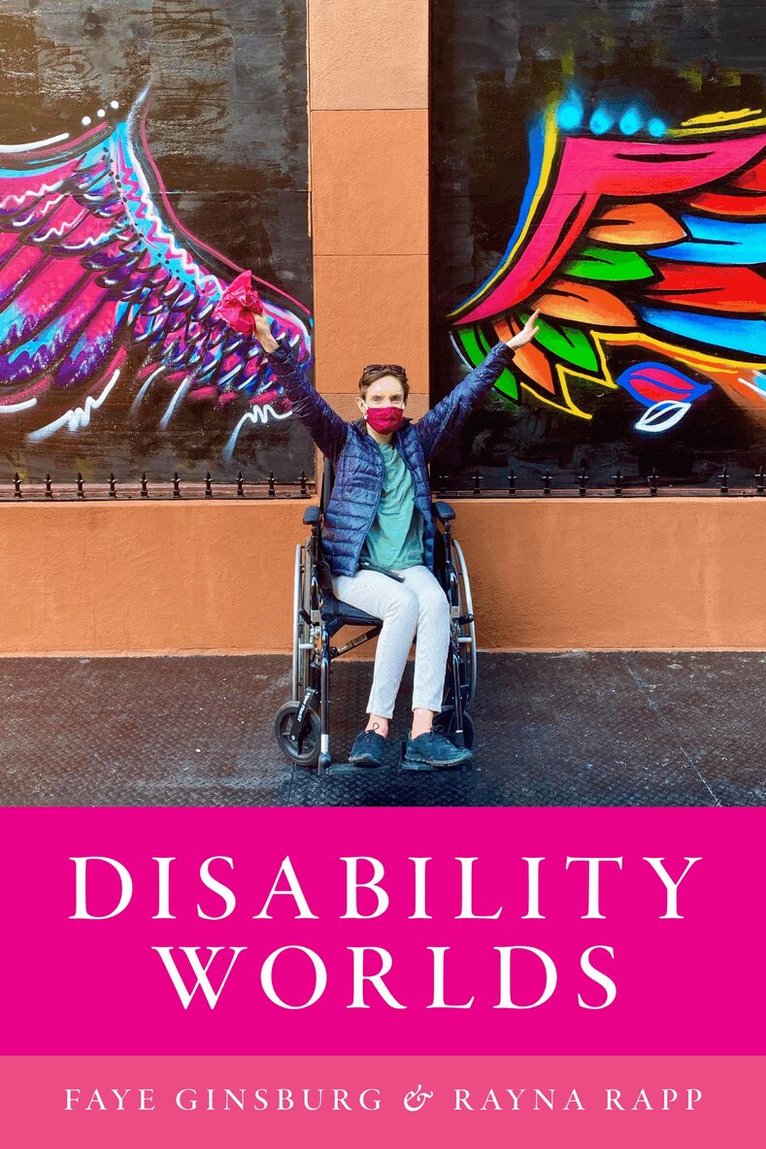
In Disability Worlds, Faye Ginsburg and Rayna Rapp chronicle and theorize two decades of immersion in New York City’s wide-ranging disability worlds as parents, activists, anthropologists, and disability studies scholars. They situate their disabled children’s lives among the experiences of advocates, families, experts, activists, and artists in larger struggles for recognition and rights. Disability consciousness, they show, emerges in everyday politics, practices, and frictions. Chapters consider dilemmas of genetic testing and neuroscientific research, reimagining kinship and community, the challenges of “special education,” and the perils of transitioning from high school. They also highlight the vitality of neurodiversity activism, disability arts, politics, and public culture. Disability Worlds reflects the authors’ anthropological commitments to recognizing the significance of this fundamental form of human difference. Ginsburg and Rapp’s conversations with diverse New Yorkers reveal the bureaucratic constraints and paradoxes established in response to the disability rights movement, as well as the remarkable creativity of disabled people and their allies who are opening pathways into both disability justice and disability futures.
275 kr
Skickas inom 7-10 vardagar
In Disability Worlds, Faye Ginsburg and Rayna Rapp chronicle and theorize two decades of immersion in New York City’s wide-ranging disability worlds as parents, activists, anthropologists, and disability studies scholars. They situate their disabled children’s lives among the experiences of advocates, families, experts, activists, and artists in larger struggles for recognition and rights. Disability consciousness, they show, emerges in everyday politics, practices, and frictions. Chapters consider dilemmas of genetic testing and neuroscientific research, reimagining kinship and community, the challenges of “special education,” and the perils of transitioning from high school. They also highlight the vitality of neurodiversity activism, disability arts, politics, and public culture. Disability Worlds reflects the authors’ anthropological commitments to recognizing the significance of this fundamental form of human difference. Ginsburg and Rapp’s conversations with diverse New Yorkers reveal the bureaucratic constraints and paradoxes established in response to the disability rights movement, as well as the remarkable creativity of disabled people and their allies who are opening pathways into both disability justice and disability futures.
1 097 kr
Skickas inom 10-15 vardagar
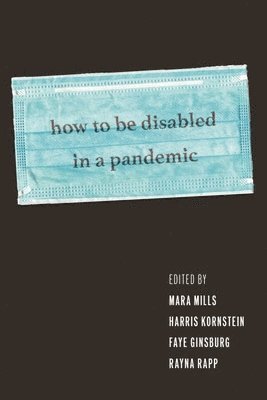
A chronicle of ableism and disability activism in New York City during the COVID-19 pandemicHow to Be Disabled in a Pandemic documents the pivotal experiences of disabled people living in an early epicenter of COVID-19: New York City. Among those hardest hit by the pandemic, disability communities across the five boroughs have been disproportionately impacted by city and national policies, work and housing conditions, stigma, racism, and violence—as much as by the virus itself. Disabled and chronically-ill activists have protested plans for medical rationing and refuted the eugenic logic of mainstream politicians and journalists who "reassure" audiences that only older people and those with disabilities continue to die from COVID-19. At the same time, as exemplified by the viral hashtag #DisabledPeopleToldYou, disability expertise has become widely recognized in practices such as accessible remote work and education, quarantine, and distributed networks of support and mutual aid. This edited volume charts the legacies of this "mass disabling event" for uncertain viral futures, exploring the dialectic between disproportionate risk and the creativity of a disability justice response.How to Be Disabled in a Pandemic includes contributions by wide-ranging disability scholars, writers, and activists whose research and lived experiences chronicle the pandemic's impacts in prisons, migrant detention centers, Chinatown senior centers, hospitals in Queens and the Bronx, subways, schools, housing shelters, social media, and other locations of public and private life. By focusing on New York City over the course of three years, the book reveals key themes of the pandemic, including hierarchies of disability "vulnerability," the deployment of disability as a tool of population management, and innovative crip pandemic cultural production. How to Be Disabled in a Pandemic honors those lost, as well as those who survived, by calling for just policies and caring infrastructures, not only in times of crisis but for the long haul.
355 kr
Skickas
A chronicle of ableism and disability activism in New York City during the COVID-19 pandemicHow to Be Disabled in a Pandemic documents the pivotal experiences of disabled people living in an early epicenter of COVID-19: New York City. Among those hardest hit by the pandemic, disability communities across the five boroughs have been disproportionately impacted by city and national policies, work and housing conditions, stigma, racism, and violence—as much as by the virus itself. Disabled and chronically-ill activists have protested plans for medical rationing and refuted the eugenic logic of mainstream politicians and journalists who "reassure" audiences that only older people and those with disabilities continue to die from COVID-19. At the same time, as exemplified by the viral hashtag #DisabledPeopleToldYou, disability expertise has become widely recognized in practices such as accessible remote work and education, quarantine, and distributed networks of support and mutual aid. This edited volume charts the legacies of this "mass disabling event" for uncertain viral futures, exploring the dialectic between disproportionate risk and the creativity of a disability justice response.How to Be Disabled in a Pandemic includes contributions by wide-ranging disability scholars, writers, and activists whose research and lived experiences chronicle the pandemic's impacts in prisons, migrant detention centers, Chinatown senior centers, hospitals in Queens and the Bronx, subways, schools, housing shelters, social media, and other locations of public and private life. By focusing on New York City over the course of three years, the book reveals key themes of the pandemic, including hierarchies of disability "vulnerability," the deployment of disability as a tool of population management, and innovative crip pandemic cultural production. How to Be Disabled in a Pandemic honors those lost, as well as those who survived, by calling for just policies and caring infrastructures, not only in times of crisis but for the long haul.