Rayna Rapp - Böcker
Visar alla böcker från författaren Rayna Rapp. Handla med fri frakt och snabb leverans.
9 produkter
9 produkter
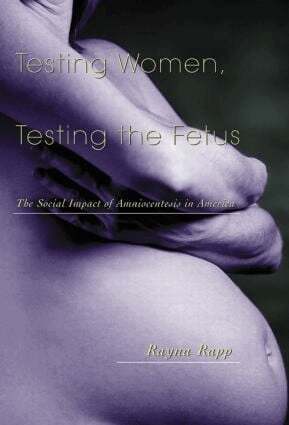
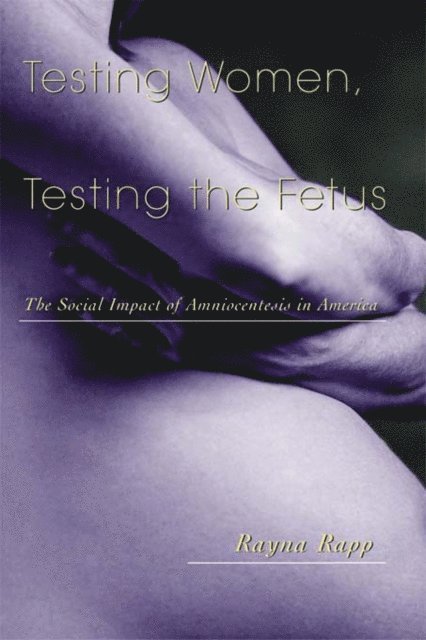
Testing Women, Testing the Fetus
The Social Impact of Amniocentesis in America
Inbunden, Engelska, 1999
2 098 kr
Skickas inom 10-15 vardagar
Rich with the voices and stories of participants, these touching, firsthand accounts examine how women of diverse racial, ethnic, class and religious backgrounds perceive prenatal testing, the most prevalent and routinized of the new reproducing technologies. Based on the author's decade of research and her own personal experiences with amniocentesis, Testing Women, Testing the Fetus explores the "geneticization" of family life in all its complexity and diversity.
565 kr
Skickas inom 10-15 vardagar
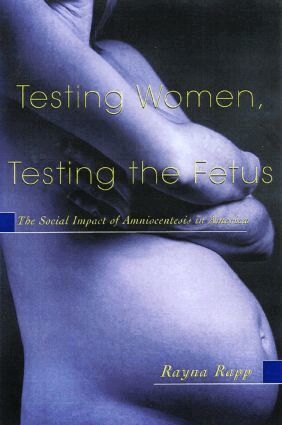
Rich with the voices and stories of participants, these touching, firsthand accounts examine how women of diverse racial, ethnic, class and religious backgrounds perceive prenatal testing, the most prevalent and routinized of the new reproducing technologies. Based on the author's decade of research and her own personal experiences with amniocentesis, Testing Women, Testing the Fetus explores the "geneticization" of family life in all its complexity and diversity.
621 kr
Skickas inom 3-6 vardagar
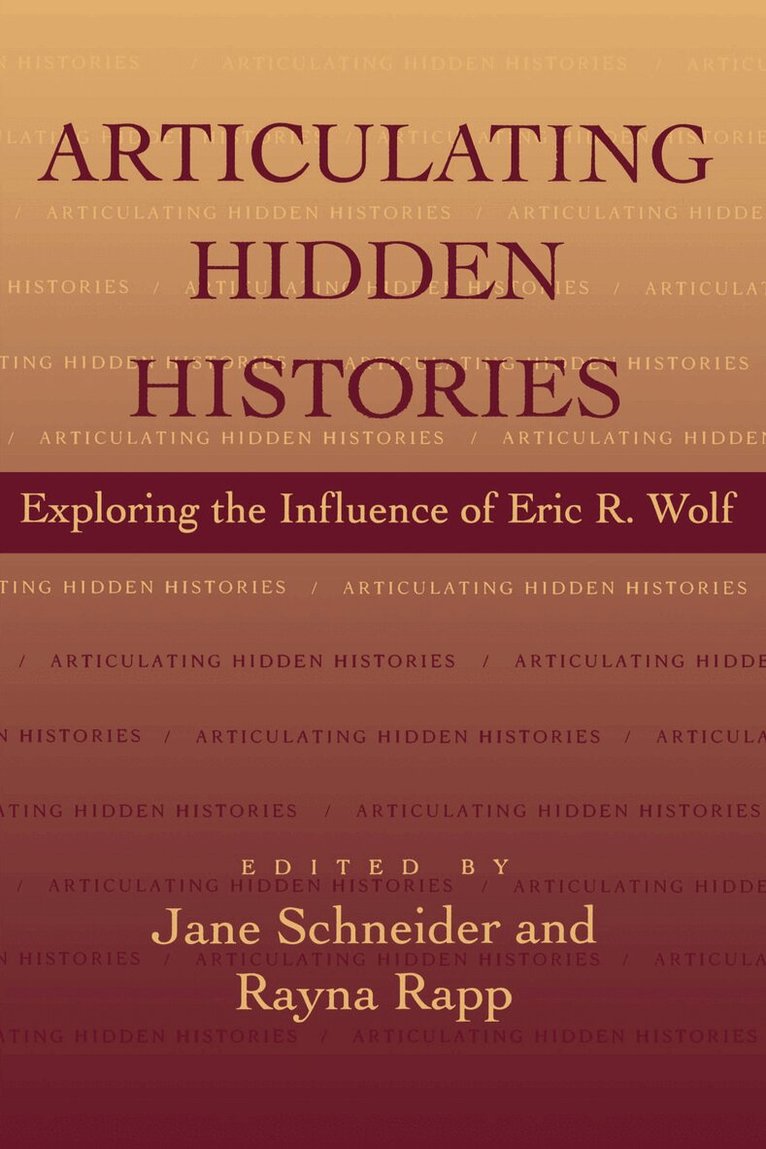
With his groundbreaking Europe and the People Without History, Eric R. Wolf powerfully advanced the project of integrating the disciplines of anthropology and history. In Articulating Hidden Histories, many of those influenced by Wolf--both anthropologists and historians--acknowledge the contribution of this great scholar while extending his work by presenting their own original field and archival research. The "hidden histories" referred to here encompass the histories of economic and political forces capable of dislodging people from their surroundings, of the people thus dislocated, and of the anthropological concepts developed to understand such processes. Within this framework, the contributors explore an extraordinarily wide range of topics, from the invention of tribalism in colonial West Africa to the ecological activism of North American housewives. This collection offers a fitting tribute not only to Eric Wolf's work, but to its continuing influence on the fields of anthropology and history.
591 kr
Skickas inom 3-6 vardagar
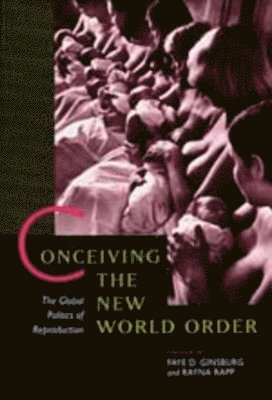
This groundbreaking volume provides a dramatic investigation of the dynamics of reproduction. In an unusually broad spectrum of essays, a distinguished group of international feminist scholars and activists explores the complexity of contemporary sexual politics around the globe. Using reproduction as an entry point in the study of social life and placing it at the center of social theory, the authors examine how cultures are produced, contested, and transformed as people imagine their collective future in the creation of the next generation. The studies encompass a wide variety of subjects, from the impact of AIDS on reproduction in the United States to the aftereffects of Chernobyl on the Sami people in Norway and the impact of totalitarian abortion and birth control policies in Romania and China. The contributors use historical and comparative perspectives to illuminate the multiple and intersecting forms of power and resistance through which reproduction is given cultural weight and social form.They discuss the ways that seemingly distant influences shape and constrain local reproductive experiences such as the international flows of adoptive babies and childcare workers and the Victorian and imperial legacy of eugenics and family planning.
275 kr
Skickas inom 5-8 vardagar
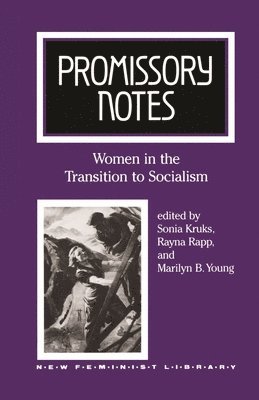
Revolutionary socialist movements have held out the promise, in both theory and practice, that women can achieve liberation through their participation in the revolutionary process. But many women in post-revolutionary societies have watched in frustration as this promise has been pushed into the future or dropped from the agenda altogether. The essays in Promissory Notes renew the debate about the connections between feminism and socialism by examining the position of women in socialist thought from the time of Marx to the present. The book looks at the central theoretical formulations of the "Woman Question" in classical Marxist thought, then explores their applications first in the Soviet Union and China, then in a series of third world regimes and contemporary Eastern European countries. The volume ends with a roundtable debate in which a number of scholars and activists take up the central theoretical issues raised throughout the book. Contributors include Joan B. Landes, Elizabeth Waters, Wendy Zeva Goldman, Christina Gilmartin, Muriel Nazzari, Maxine D. Molyneux, Sonia Kurks and Ben Wisner, Christine Pelzer White, Amrita Basu, Marilyn B.Young, Mary Buckley, Barbara Einhorn, Martha Lampland, Lourdes Beneria, Zillah Eisenstein, Delia D. Aguilar, Delia Davin, Kumari Jayawardena, and Rayna Rapp.
1 085 kr
Skickas inom 7-10 vardagar
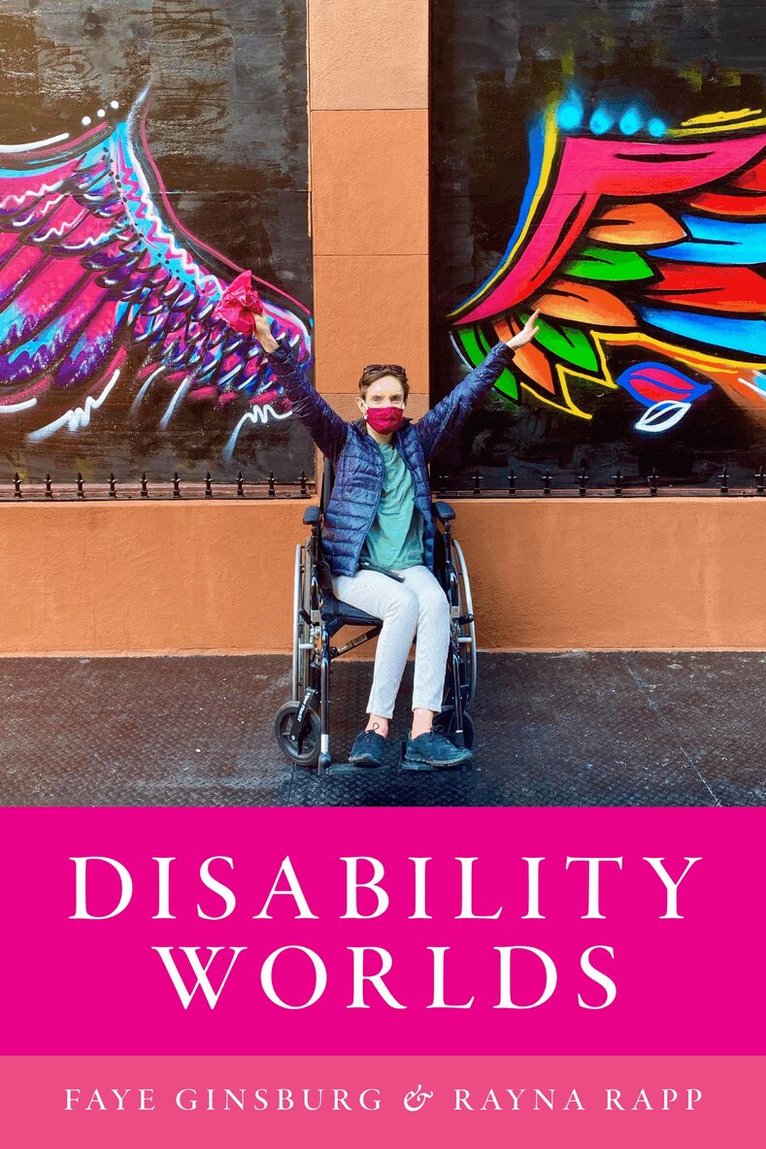
In Disability Worlds, Faye Ginsburg and Rayna Rapp chronicle and theorize two decades of immersion in New York City’s wide-ranging disability worlds as parents, activists, anthropologists, and disability studies scholars. They situate their disabled children’s lives among the experiences of advocates, families, experts, activists, and artists in larger struggles for recognition and rights. Disability consciousness, they show, emerges in everyday politics, practices, and frictions. Chapters consider dilemmas of genetic testing and neuroscientific research, reimagining kinship and community, the challenges of “special education,” and the perils of transitioning from high school. They also highlight the vitality of neurodiversity activism, disability arts, politics, and public culture. Disability Worlds reflects the authors’ anthropological commitments to recognizing the significance of this fundamental form of human difference. Ginsburg and Rapp’s conversations with diverse New Yorkers reveal the bureaucratic constraints and paradoxes established in response to the disability rights movement, as well as the remarkable creativity of disabled people and their allies who are opening pathways into both disability justice and disability futures.
276 kr
Skickas inom 7-10 vardagar
In Disability Worlds, Faye Ginsburg and Rayna Rapp chronicle and theorize two decades of immersion in New York City’s wide-ranging disability worlds as parents, activists, anthropologists, and disability studies scholars. They situate their disabled children’s lives among the experiences of advocates, families, experts, activists, and artists in larger struggles for recognition and rights. Disability consciousness, they show, emerges in everyday politics, practices, and frictions. Chapters consider dilemmas of genetic testing and neuroscientific research, reimagining kinship and community, the challenges of “special education,” and the perils of transitioning from high school. They also highlight the vitality of neurodiversity activism, disability arts, politics, and public culture. Disability Worlds reflects the authors’ anthropological commitments to recognizing the significance of this fundamental form of human difference. Ginsburg and Rapp’s conversations with diverse New Yorkers reveal the bureaucratic constraints and paradoxes established in response to the disability rights movement, as well as the remarkable creativity of disabled people and their allies who are opening pathways into both disability justice and disability futures.
1 102 kr
Skickas inom 10-15 vardagar
A chronicle of ableism and disability activism in New York City during the COVID-19 pandemicHow to Be Disabled in a Pandemic documents the pivotal experiences of disabled people living in an early epicenter of COVID-19: New York City. Among those hardest hit by the pandemic, disability communities across the five boroughs have been disproportionately impacted by city and national policies, work and housing conditions, stigma, racism, and violence—as much as by the virus itself. Disabled and chronically-ill activists have protested plans for medical rationing and refuted the eugenic logic of mainstream politicians and journalists who "reassure" audiences that only older people and those with disabilities continue to die from COVID-19. At the same time, as exemplified by the viral hashtag #DisabledPeopleToldYou, disability expertise has become widely recognized in practices such as accessible remote work and education, quarantine, and distributed networks of support and mutual aid. This edited volume charts the legacies of this "mass disabling event" for uncertain viral futures, exploring the dialectic between disproportionate risk and the creativity of a disability justice response.How to Be Disabled in a Pandemic includes contributions by wide-ranging disability scholars, writers, and activists whose research and lived experiences chronicle the pandemic's impacts in prisons, migrant detention centers, Chinatown senior centers, hospitals in Queens and the Bronx, subways, schools, housing shelters, social media, and other locations of public and private life. By focusing on New York City over the course of three years, the book reveals key themes of the pandemic, including hierarchies of disability "vulnerability," the deployment of disability as a tool of population management, and innovative crip pandemic cultural production. How to Be Disabled in a Pandemic honors those lost, as well as those who survived, by calling for just policies and caring infrastructures, not only in times of crisis but for the long haul.
355 kr
Skickas
A chronicle of ableism and disability activism in New York City during the COVID-19 pandemicHow to Be Disabled in a Pandemic documents the pivotal experiences of disabled people living in an early epicenter of COVID-19: New York City. Among those hardest hit by the pandemic, disability communities across the five boroughs have been disproportionately impacted by city and national policies, work and housing conditions, stigma, racism, and violence—as much as by the virus itself. Disabled and chronically-ill activists have protested plans for medical rationing and refuted the eugenic logic of mainstream politicians and journalists who "reassure" audiences that only older people and those with disabilities continue to die from COVID-19. At the same time, as exemplified by the viral hashtag #DisabledPeopleToldYou, disability expertise has become widely recognized in practices such as accessible remote work and education, quarantine, and distributed networks of support and mutual aid. This edited volume charts the legacies of this "mass disabling event" for uncertain viral futures, exploring the dialectic between disproportionate risk and the creativity of a disability justice response.How to Be Disabled in a Pandemic includes contributions by wide-ranging disability scholars, writers, and activists whose research and lived experiences chronicle the pandemic's impacts in prisons, migrant detention centers, Chinatown senior centers, hospitals in Queens and the Bronx, subways, schools, housing shelters, social media, and other locations of public and private life. By focusing on New York City over the course of three years, the book reveals key themes of the pandemic, including hierarchies of disability "vulnerability," the deployment of disability as a tool of population management, and innovative crip pandemic cultural production. How to Be Disabled in a Pandemic honors those lost, as well as those who survived, by calling for just policies and caring infrastructures, not only in times of crisis but for the long haul.