François Ost - Böcker
Visar alla böcker från författaren François Ost. Handla med fri frakt och snabb leverans.
13 produkter
13 produkter
1 617 kr
Skickas inom 5-8 vardagar
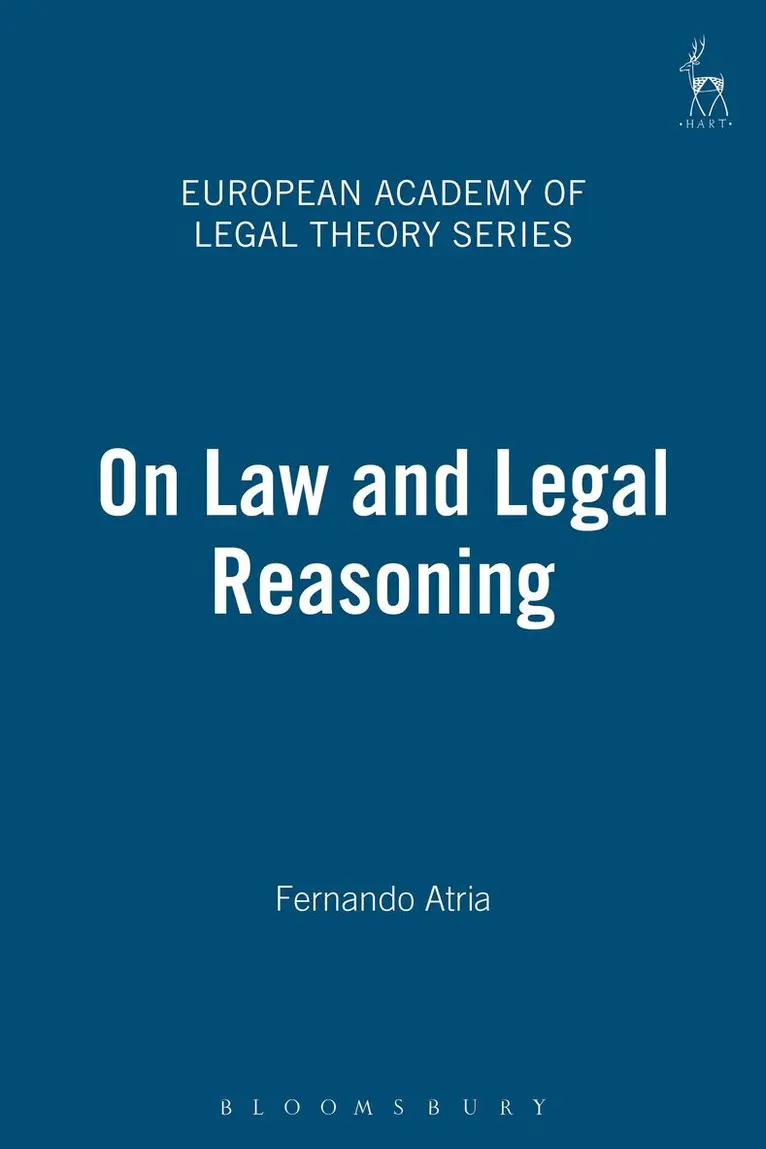
This book considers two interrelated core questions. The first is: how have legal philosophers systematized law, and what types of assumptions have they made in undertaking this task? Second, in what sense is law a system, and how is it maintained as such? In answering the first question the book surveys and analyses the theories of a number of European legal philosophers and in answering the second puts forward its own distinct theory.
Democracy and Ontology
Agonism between Political Liberalism, Foucault and Psychoanalysis
Inbunden, Engelska, 2018
1 174 kr
Skickas inom 10-15 vardagar
This book investigates the relationship between liberal democracies and ontology, that is, philosophical claims about the constitution of agents and the social world. Many philosophers argue that ontology needs to be avoided in political and legal philosophy. In fact, political liberalism, a highly influential paradigm founded by the philosopher John Rawls, makes the avoidance of ontology a core ambition of its ‘political, non-metaphysical’ programme. In contrast to political liberalism, this book argues that attending to ontological disputes is essential to political and legal philosophy. Illuminating, criticising and developing ontological arguments does not only enhance our understanding of justice, but also highlights key features of democratic citizenship. The argument is built up by bringing together three traditions of thought that have so far not been confronted with one another: political liberalism, the work of Michel Foucault, and the psychoanalytic theories of Sigmund Freud and Donald Winnicott. The book also investigates more concrete implications of ontological disputes by drawing on several case studies: a Dutch political-legal debate about greeting rituals; an American conflict about the legalisation of religious freedom; and the struggles for resilience of two American social movement groups.
990 kr
Skickas inom 10-15 vardagar
This book uses the philosophy of Thomas Kuhn to provide a new vision of the development of European comparative law that will challenge and inspire scholars in the field.With the ‘empathic’ use of some ideas from Kuhn’s theories on the history of science – paradigm, paradigm-shift, puzzle-solving research and incommensurability – the book rethinks the modern history of European comparative law from the late 19th century to the modern day. It argues that three major paradigms determine modern comparative law:- historical and comparative jurisprudence, - droit comparé, and - post-World War II comparative law.It concludes that contemporary methodological trends are not signs of a paradigm-shift toward a postmodern and culturalist understanding of comparative law, but that the new approach spreads the idea of methodological plurality.
1 567 kr
Skickas inom 10-15 vardagar
This volume,which offers a bridge between comparative law and legal theory, centers upon debates about European legal integration, and, more generally, about the methodology of comparative law. What should be compared? Statutory rules, case law, legal history, law's political, sociological and economical environment, the ideological background of the lawyers, legal techniques, legal traditions, legal cultures, etc.? This question is at the core of many current debates and is discussed in many of the papers contained in this volume. The contributors all attempt to locate law in its context, and adopt a more theoretical and interdisciplinary approach to making comparisons. In taking an interdisciplinary approach many of the contributors look at our current law from the point of view of one non legal discipline, with an eye on at least some other elements of law's context: notably legal history, legal sociology (especially 'legal culture') and linguistics.They also contribute new ideas to various areas of legal theory including legal epistemology, pluralist or monist conceptions of a 'legal system', legal methodology, judicial reasoning, the theory of legal sources, and the analysis of concepts such as 'equality', 'rights', 'legal principles', 'personal rights' and 'personal identity'.
1 235 kr
Skickas inom 10-15 vardagar
This book is about legal theory and legal reasoning. In particular,it seeks to examine the relations that obtain between law and a theory of law and legal reasoning and a theory of legal reasoning. Two features of law and legal reasoning are treated as being of particular importance in this regard: law is institutional, and legal reasoning is formal. These two features are so closely connected that it is reasonable to believe that in fact they are simply two ways of looking at the same issue. This becomes clearer as the focus of the book shifts from the institutional nature of law to the consequences of this for legal reasoning, and which is the principal focus of the book. The author received the European Academy of Legal Theory award in 2000 for the doctoral dissertation on which this work was based.
1 235 kr
Skickas inom 10-15 vardagar
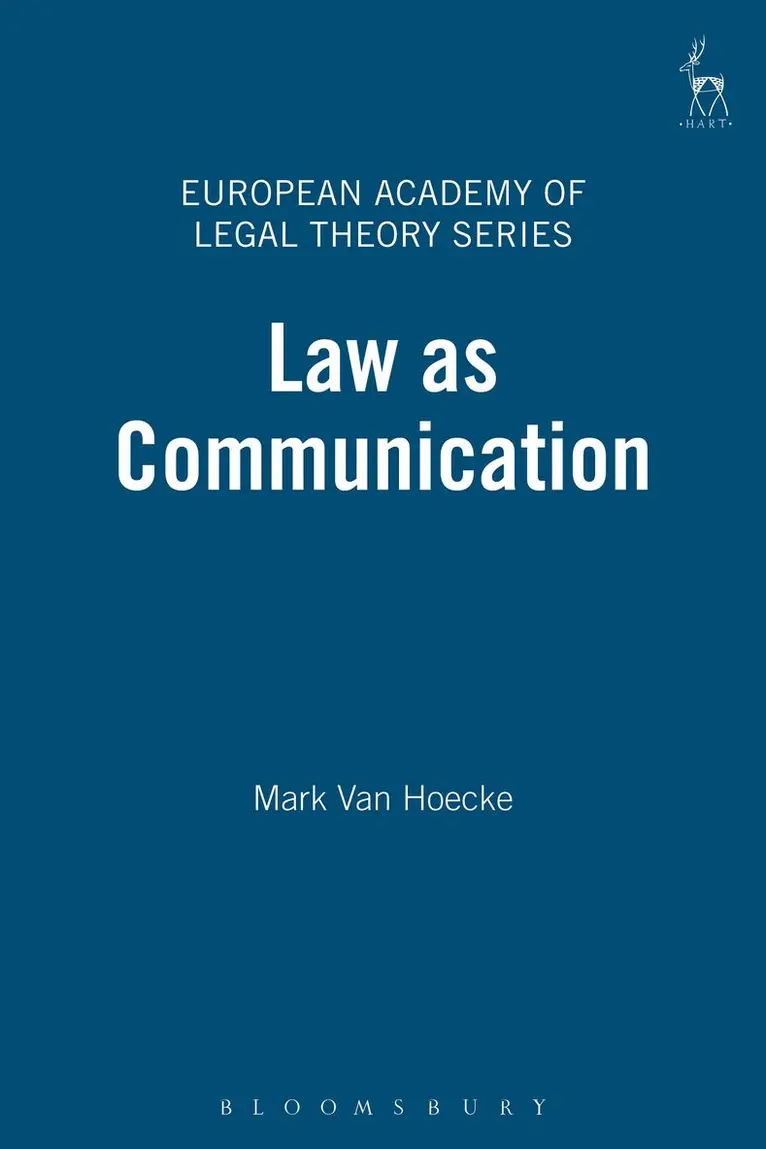
Human interaction and communication are not only regulated by law,but such communication plays an increasing role in the making and legitimation of law, involving various kinds of participants in the communication process. The precise nature of these communications depends on the legal actors involved -- for instance legislators, judges, legal scholars, and the media -- and on the situations where they arise - for instance at the national and supra-national level and within or between State law and non-State law. The author argues that our conception of legal system, of democracy, of the legitimation of law and of the respective role of judges, legislators and legal scholars should be based on a pluralist and communicative approach, rather than on a monolithic and hierarchical one. This book analyses the main problems of jurisprudence from such a communicative perspective
1 174 kr
Skickas inom 10-15 vardagar
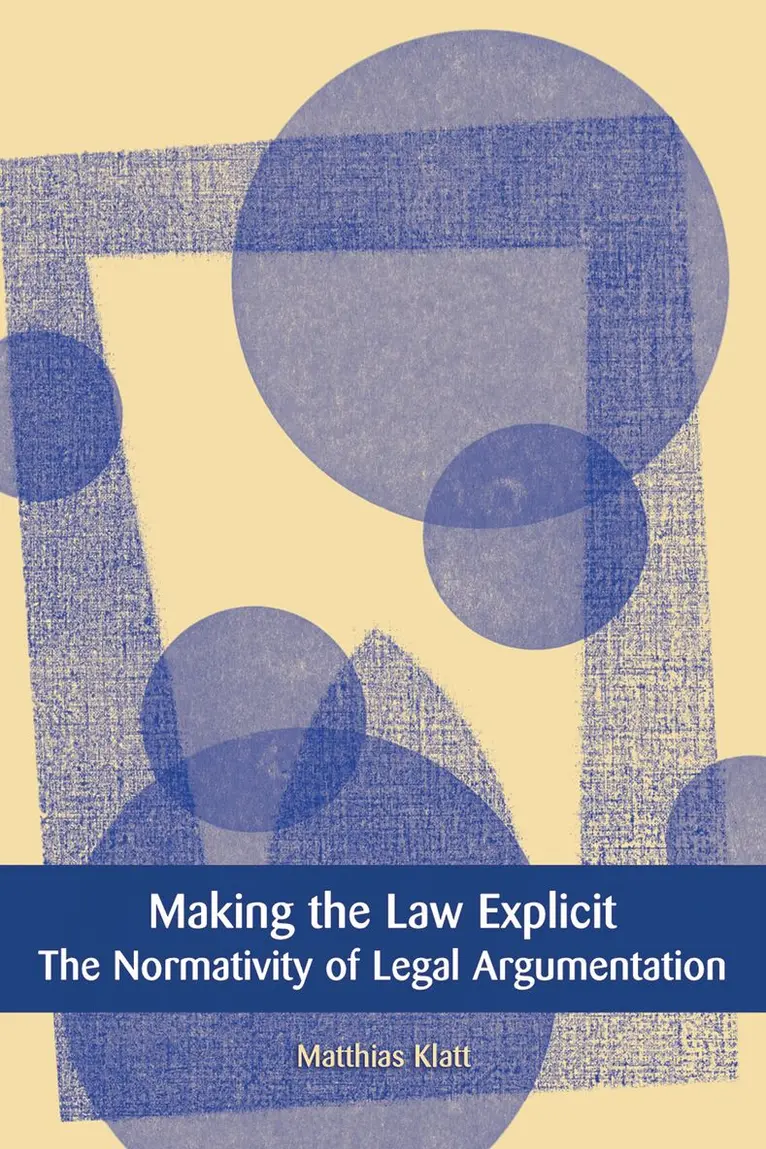
Legal argumentation consists in the interpretation of texts. Therefore, it has a natural connection to the philosophy of language. Central issues of this connection, however, lack a clear answer. For instance, how much freedom do judges have in applying the law? How are the literal and the purposive approaches related to one another? How can we distinguish between applying the law and making the law? This book provides answers by means of a complex and detailed theory of literal meaning. A new legal method is introduced, namely the further development of the law. It is so far unknown in Anglo-American jurisprudence, but it is shown that this new method helps in solving some of the most crucial puzzles in jurisprudence. At its centre the book addresses legal indeterminism and refutes linguistic-philosophical reasons for indeterminacy. It spells out the normative character of interpretation as emphasized by Raz and, with the help of Robert Brandom's normative pragmatics, it is shown that the relativism of interpretation from a normative perspective does not at all justify scepticism.On the contrary, it supports the claim that legal argumentation can be objective, and maintains that statements on the meaning of a statute can be right or wrong, and take on inter-subjective validity accordingly. This book breaks new ground in transferring Brandom's philosophy to legal theoretical problems and presents an original and exciting analysis of the semantic argument in legal argumentation. It was the recipient of the European Award for Legal Theory in 2002. 'This book represents, on the one hand, a reception of Robert Brandom's important theory including applications of this theory in the field of legal philosophy and, on the other, an exploration of the limits of an appeal in legal interpretation to the text. The enquiry thereby impinges upon the central juridico-philosophical themes of meaning, objectivity, and normativity. The author's work counts as a significant contribution to analytical jurisprudence and is deserving of a wide readership.' Robert Alexy, Professor for Public Law and Legal Philosophy, Kiel. 'Klatt focuses on a very profound theory of concept formation and uses this theory in a creative way to solve classical problems of legal argumentation.'Aleksander Peczenik
1 051 kr
Skickas inom 10-15 vardagar
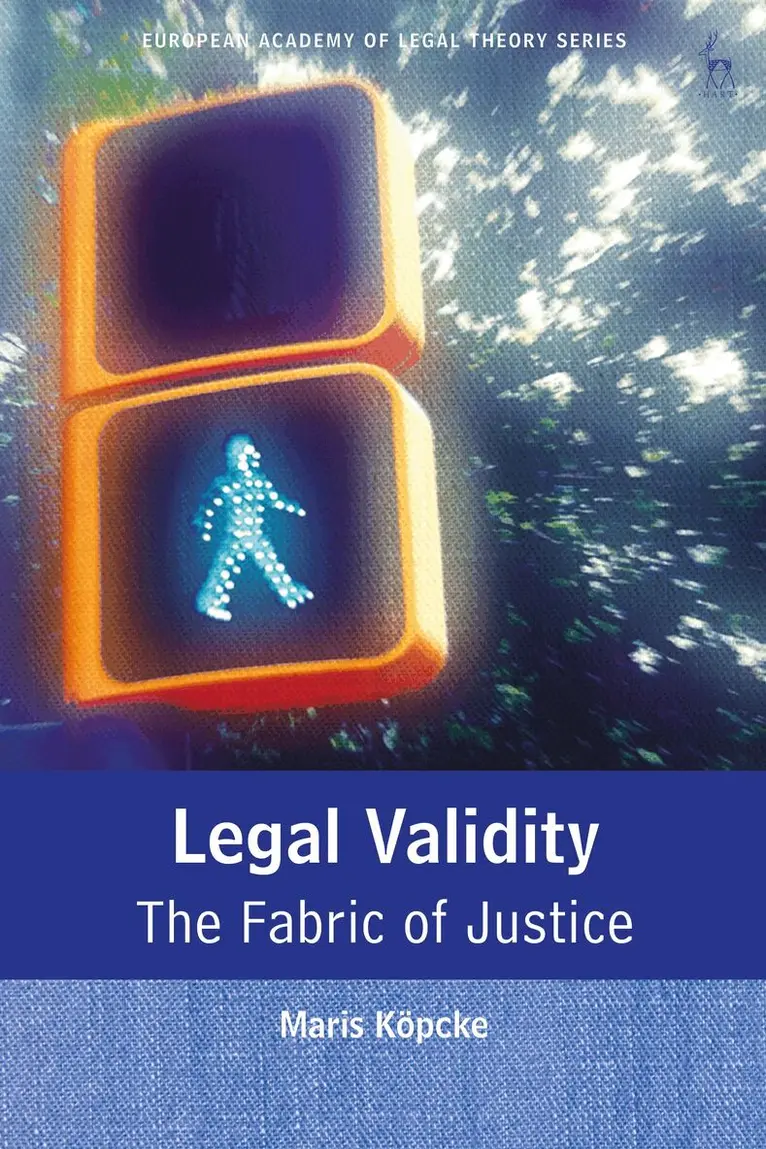
Critical human interests are affected on a daily basis by appeal to past decisions deemed to be ‘legally valid’. They include statutes, deportation orders, judgments, mortgage contracts, patents and wills. Through the technique of validity, lawyerly reasoning settles morally pressing matters in a way that largely bypasses moral argument. Legal philosophy has paid considerable attention to validity criteria, but it has neglected to explore validity’s point: whether, and if so how, the pervasive technique of validity can contribute to a legal system’s ability to realise justice and human rights.This book shows that validity can help a political community to foster justice precisely because validity does not primarily turn on moral considerations. Validity serves to both allocate, and limit, a distinct kind of power, a power that is key to forging valuable forms of enterprise and commitment in pursuit of individual and collective self-direction. By entrusting the capacity to decide to those who, in justice, ought to bear it, validity can enable persons and institutions to rally the resources and opportunities that only large-scale behavioural convergence can afford, thereby weaving a fabric of just relationships within the systemic framework of law.
642 kr
Skickas inom 3-6 vardagar
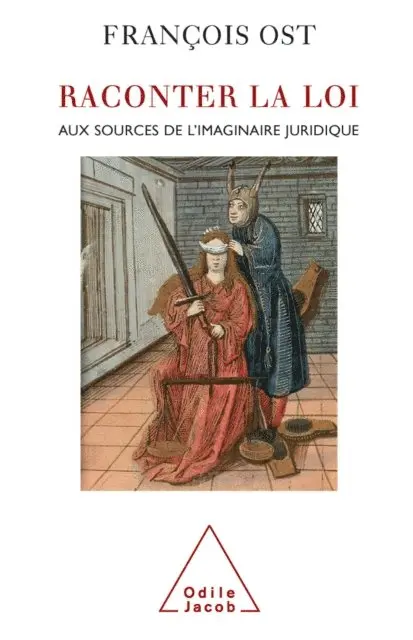
Recounting the Law: Delving into the Origins of the Judicial Imagination / Raconter la loi: Aux sources de l'imaginaire juridique
Häftad, Franska, 2004
667 kr
Skickas inom 3-6 vardagar
619 kr
Skickas inom 3-6 vardagar
1 628 kr
Skickas inom 5-8 vardagar
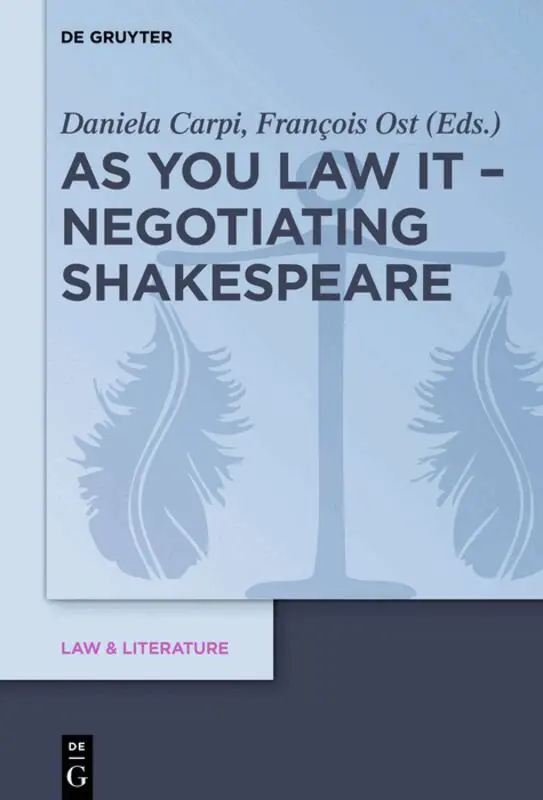
Shakespeare was fascinated by law, which permeated Elizabethan everyday life. The general impression one derives from the analysis of many plays by Shakespeare is that of a legal situation in transformation and of a dynamically changing relation between law and society, law and the jurisdiction of Renaissance times. Shakespeare provides the kind of literary supplement that can better illustrate the legal texts of the sixteenth and early seventeenth centuries. There was a strong popular participation in the system of justice, and late sixteenth-century playwrights often made use of forensic models of narrative. Uncertainty about legal issues represented a rich potential for causing strong reactions in the public, especially feelings concerning the resistance to tyranny. The volume aims at highlighting some of the many legal perspectives and debates emplotted in Shakespearean plays, also taking into consideration the many texts that have been produced during the latest years on law and literature in the Renaissance.
Del 4 - International Studies in Law and Literature
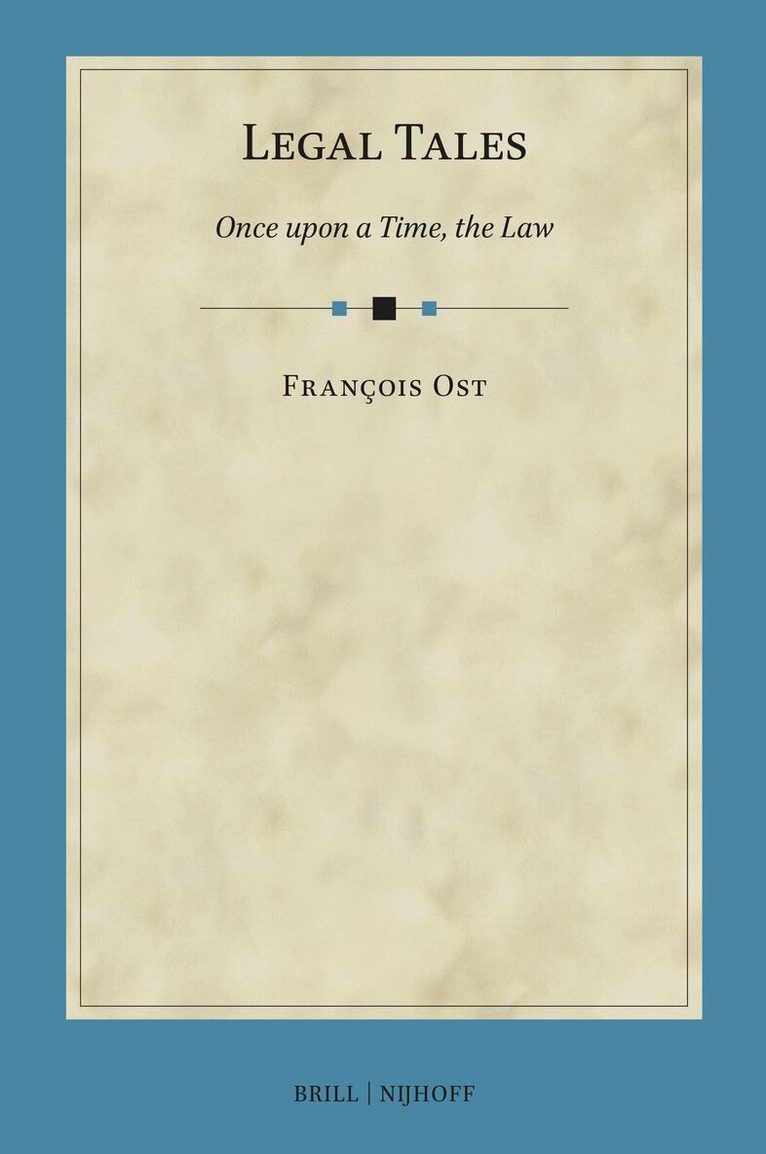
Legal Tales
Once upon a Time, the Law
Inbunden, Engelska, 2025
3 222 kr
Skickas inom 3-6 vardagar
Telling stories as a way of exploring the law—this is the premise of the present volume. It draws on a wide range of narrative forms: historical fables and animal allegories, science fiction and realist reportage, dreamlike speculations and fantastical tales, philosophical reflections and dystopian visions.Across nine stories, the book invites readers to reflect on law and justice by posing strange and unsettling questions:Should there be laws aboard Noah’s Ark? Between absolute love and unleashed violence, what place is there for Pilate’s Roman justice in the trial of Jesus? What do the animal trials held in the West up to the French Revolution reveal? What if Robinson Crusoe, having set sail from Brazil in search of African slaves for his plantations, had not been shipwrecked on the outward journey—but on the way back? Where do the hidden passages of the majestic Palace of Justice lead? And what kind of justice lies buried in its secret depths? What is law for? The story of the Amoco Cadiz shipwreck offers a stark and contrasting answer. Can reality sometimes surpass fiction? The distortion of law in a modern democracy suggests it can. A dystopia emerges when, enthralled by their president Selfidor and his motto “Never two without me,” the people begin to forget the law. Killing your own clone—one equipped with artificial intelligence, no less—is it murder, or the destruction of a non-human entity? Over the years, the author loses touch with his beloved library. Books disappear, others turn up in the strangest places. What is The Liberated Library trying to tell him? And what kind of legal knowledge does it contain? This book was originally published by Éditions DALLOZ under the title, Contes de la rue Soufflot (2024).