Mark Van Hoecke – författare
Visar alla böcker från författaren Mark Van Hoecke. Handla med fri frakt och snabb leverans.
20 produkter
20 produkter
Häftad, Engelska, 2017
629 kr
Skickas inom 10-15 vardagar
In recent years coherence theories of law and adjudication have been extremely influential in legal scholarship. These theories significantly advance the case for coherentism in law. Nonetheless, there remain a number of problems in the coherence theory in law. This ambitious new work makes the first concerted attempt to develop a coherence-based theory of legal reasoning, and in so doing addresses, or at least mitigates these problems. The book is organized in three parts. The first part provides a critical analysis of the main coherentist approaches to both normative and factual reasoning in law. The second part investigates the coherence theory in a number of fields that are relevant to law: coherence theories of epistemic justification, coherentist approaches to belief revision and theory-choice in science, coherence theories of practical and moral reasoning and coherence-based approaches to discourse interpretation. Taking this interdisciplinary analysis as a starting point, the third part develops a coherence-based model of legal reasoning. While this model builds upon the standard theory of legal reasoning, it also leads to rethinking some of the basic assumptions that characterize this theory, and suggests some lines along which it may be further developed. Thus, ultimately, the book not only improves upon the current state of coherence theory in law, but also contributes to the larger debate about how to articulate a theory of legal reasoning that results in better decision-making.
Häftad, Engelska, 2020
454 kr
Skickas inom 10-15 vardagar
This book investigates the relationship between liberal democracies and ontology, that is, philosophical claims about the constitution of agents and the social world. Many philosophers argue that ontology needs to be avoided in political and legal philosophy. In fact, political liberalism, a highly influential paradigm founded by the philosopher John Rawls, makes the avoidance of ontology a core ambition of its ‘political, non-metaphysical’ programme. In contrast to political liberalism, this book argues that attending to ontological disputes is essential to political and legal philosophy. Illuminating, criticising and developing ontological arguments does not only enhance our understanding of justice, but also highlights key features of democratic citizenship. The argument is built up by bringing together three traditions of thought that have so far not been confronted with one another: political liberalism, the work of Michel Foucault, and the psychoanalytic theories of Sigmund Freud and Donald Winnicott. The book also investigates more concrete implications of ontological disputes by drawing on several case studies: a Dutch political-legal debate about greeting rituals; an American conflict about the legalisation of religious freedom; and the struggles for resilience of two American social movement groups.
Häftad, Engelska, 2020
454 kr
Skickas inom 10-15 vardagar
Critical human interests are affected on a daily basis by appeal to past decisions deemed to be ‘legally valid’. They include statutes, deportation orders, judgments, mortgage contracts, patents and wills. Through the technique of validity, lawyerly reasoning settles morally pressing matters in a way that largely bypasses moral argument. Legal philosophy has paid considerable attention to validity criteria, but it has neglected to explore validity’s point: whether, and if so how, the pervasive technique of validity can contribute to a legal system’s ability to realise justice and human rights.This book shows that validity can help a political community to foster justice precisely because validity does not primarily turn on moral considerations. Validity serves to both allocate, and limit, a distinct kind of power, a power that is key to forging valuable forms of enterprise and commitment in pursuit of individual and collective self-direction. By entrusting the capacity to decide to those who, in justice, ought to bear it, validity can enable persons and institutions to rally the resources and opportunities that only large-scale behavioural convergence can afford, thereby weaving a fabric of just relationships within the systemic framework of law.
Häftad, Engelska, 2022
479 kr
Skickas inom 10-15 vardagar
This book uses the philosophy of Thomas Kuhn to provide a new vision of the development of European comparative law that will challenge and inspire scholars in the field.With the ‘empathic’ use of some ideas from Kuhn’s theories on the history of science – paradigm, paradigm-shift, puzzle-solving research and incommensurability – the book rethinks the modern history of European comparative law from the late 19th century to the modern day. It argues that three major paradigms determine modern comparative law:- historical and comparative jurisprudence, - droit comparé, and - post-World War II comparative law.It concludes that contemporary methodological trends are not signs of a paradigm-shift toward a postmodern and culturalist understanding of comparative law, but that the new approach spreads the idea of methodological plurality.
Inbunden, Engelska, 2023
1 126 kr
Skickas inom 10-15 vardagar
How does law possess the normative force it requires to direct our actions?This book argues that this seemingly innocuous question is of central importance to the philosophy of law and, by extension, of the very concept of law itself. It advances a position grounded in the secular natural law tradition, and in doing so addresses the two success criteria for this position head on: Firstly, that commitment to the existence of a supreme moral principle is required; Secondly, that any supreme moral principle must be identifiable through human reason.The book argues that these conditions are met by Alan Gewirth's Principle of Generic Consistency (PGC), which – through a dialectically necessary argument – locates the existence of universally applicable moral norms in the concept of agency. Given the very purpose of law is to guide action, legal norms must be located in a unified hierarchy of practical reason. It follows that, if law is to succeed in claiming to be capable of guiding our action, moral permissibility with reference to the PGC is a necessary condition of a rule’s legal validity.This strong theory of natural law is defended throughout, both against moral sceptics and positions within contemporary legal positivism.
Häftad, Engelska, 2024
554 kr
Skickas inom 10-15 vardagar
How does law possess the normative force it requires to direct our actions?This book argues that this seemingly innocuous question is of central importance to the philosophy of law and, by extension, of the very concept of law itself. It advances a position grounded in the secular natural law tradition, and in doing so addresses the two success criteria for this position head on: Firstly, that commitment to the existence of a supreme moral principle is required; Secondly, that any supreme moral principle must be identifiable through human reason.The book argues that these conditions are met by Alan Gewirth's Principle of Generic Consistency (PGC), which – through a dialectically necessary argument – locates the existence of universally applicable moral norms in the concept of agency. Given the very purpose of law is to guide action, legal norms must be located in a unified hierarchy of practical reason. It follows that, if law is to succeed in claiming to be capable of guiding our action, moral permissibility with reference to the PGC is a necessary condition of a rule’s legal validity.This strong theory of natural law is defended throughout, both against moral sceptics and positions within contemporary legal positivism.
Inbunden, Engelska, 2025
1 126 kr
Skickas inom 10-15 vardagar
This book takes an interdisciplinary approach to the relationship between law, time, and new technologies to explain the emergence and transformation of global law, with a special focus on platform economy. It describes the ‘metamorphoses of global law’ on the basis of an experimental understanding of legal theory that looks beyond the systematisation of dogmatic categories, the reproduction of prefabricated theories. It offers a novel and sound theoretical approach to the formation of society within a highly digitalised and platform-oriented world, conjugating the work of several relevant authors, such as Niklas Luhmann, Gunther Teubner, Carl Schmitt, Jürgen Habermas, and Lawrence Lessing, among others.The book answers the myriad questions that the platform economy poses for law, shedding light on the possibility of a hybrid regulation, i.e., the mixture of political-constitutional external regulation and a self-regulation by the digital code, in an attempt to overcome simplistic notions of platform governance. It provides a comprehensive exploratory analysis on the phenomena of digitalisation, platformisation, big data, algorithms, and their relevance to law in global society.
Häftad, Engelska, 2027
678 kr
Kommande
Inbunden, Engelska, 2023
1 126 kr
Skickas inom 10-15 vardagar
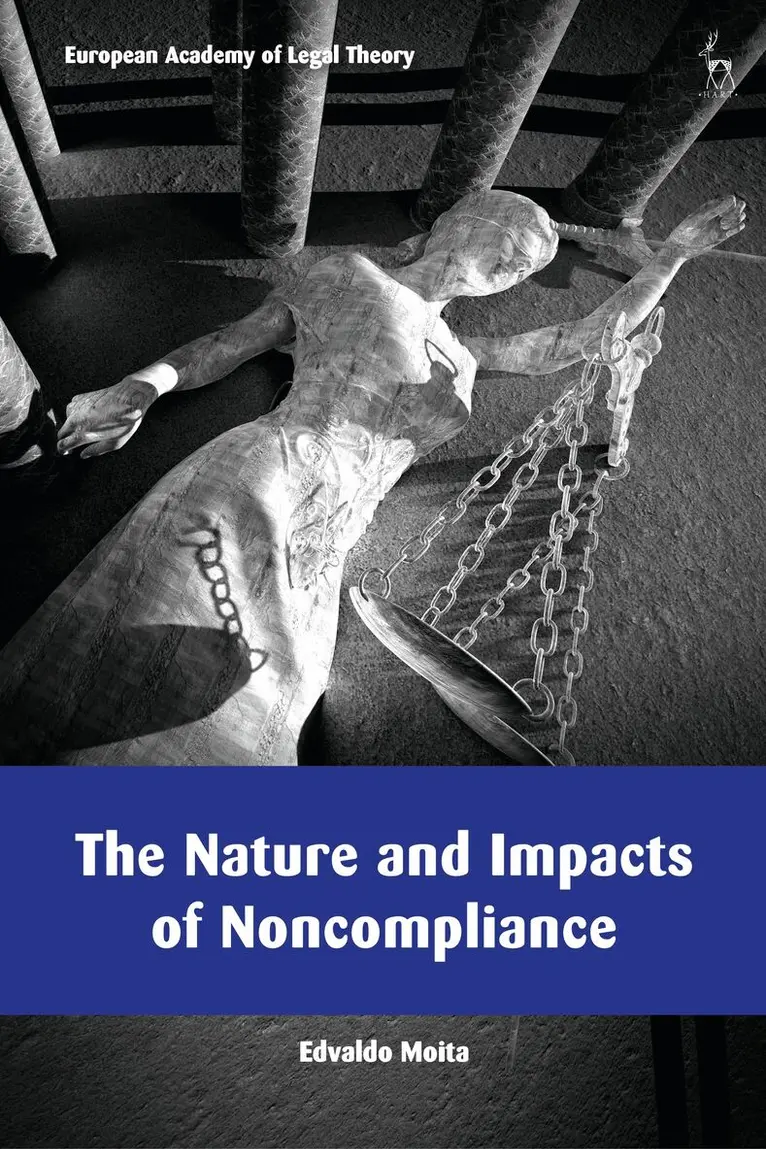
Over 2 billion people (61% of the world’s employed population) work in the informal economy. Due to its pervasiveness, informality plays a major role in understanding a wide swath of ideas, such as development, work, employment, governance, and growth. Its scope, nonetheless, goes far beyond economic definitions and political agendas. As the book argues, at the root of informality lies another comprehensive, yet generally unnoticed—or at best improperly treated—phenomenon: that of noncompliance with the law. Whilst it is true that much attention has been paid to the economic aspect over the past 5 decades, the same cannot be said about the legal aspect, which is one of its constitutive features. This book takes the first steps in this direction. The book provides an account of the phenomenon’s legal nature through the lens of a case study on street vendors in Brazil, focusing on what can be conceived as noncompliance and by which forms noncompliant behaviour can be assessed. It goes on to set out the most striking impacts of noncompliance; specifically, what happens with the legal system when noncompliance becomes pervasive.The Nature and Impacts of Noncompliance was awarded The European Award for Legal Theory 2022 from the European Academy of Legal Theory (EALT), Prêmio Abrafi de Teses 2022 from the Brazilian Association for Philosophy of Law and Sociology of Law (Abrafi), and the 2024 RCSL-ISA Adam Podgórecki Prize.
Häftad, Engelska, 2025
541 kr
Skickas inom 10-15 vardagar
Over 2 billion people (61% of the world’s employed population) work in the informal economy. Due to its pervasiveness, informality plays a major role in understanding a wide swath of ideas, such as development, work, employment, governance, and growth. Its scope, nonetheless, goes far beyond economic definitions and political agendas. As the book argues, at the root of informality lies another comprehensive, yet generally unnoticed—or at best improperly treated—phenomenon: that of noncompliance with the law. Whilst it is true that much attention has been paid to the economic aspect over the past 5 decades, the same cannot be said about the legal aspect, which is one of its constitutive features. This book takes the first steps in this direction. The book provides an account of the phenomenon’s legal nature through the lens of a case study on street vendors in Brazil, focusing on what can be conceived as noncompliance and by which forms noncompliant behaviour can be assessed. It goes on to set out the most striking impacts of noncompliance; specifically, what happens with the legal system when noncompliance becomes pervasive.The Nature and Impacts of Noncompliance was awarded The European Award for Legal Theory 2022 from the European Academy of Legal Theory (EALT), Prêmio Abrafi de Teses 2022 from the Brazilian Association for Philosophy of Law and Sociology of Law (Abrafi), and the 2024 RCSL-ISA Adam Podgórecki Prize.
Inbunden, Engelska, 2021
1 758 kr
Skickas inom 5-8 vardagar
This cutting-edge book facilitates debate amongst scholars in law, humanities and social sciences, where comparative methodology is far less well anchored in most areas compared to other research methods. It posits that these are disciplines in which comparative research is not simply a bonus, but is of the essence.Featuring discussions and reflections from scholars experienced in conducting comparative research, this book considers the ways in which comparative legal research can gain important comparative, qualitative and interpretive insights from the humanities and from the social sciences. Chapters examine contrasting comparative legal versus historical approaches, comparative sociology, comparative religion, comparative (legal) anthropology, comparative philosophy, comparative economics and more. Additionally, the book considers the challenges that lie ahead, not just for comparative legal research, but for comparative disciplines as a whole. Of the many challenges that are identified and discussed, the book concludes that comparative research can especially be further developed when it is also understood as a research design, instead of just a method.Inspiring and progressive, this book will be a crucial reference point for both research students and experienced researchers who are embarking on comparative research within the disciplines of law, humanities and social sciences.
Inbunden, Engelska, 1999
1 359 kr
Skickas inom 10-15 vardagar
Winner of the 1998 European Award for Legal Theory European Academy of Legal Theory Monograph Series This book sets the significance of moral conflict as a core concern for contemporary theorising about law and legal reasoning. It asks whether liberal legal structures can adequately deal with moral conflict,or whether they fall prey to intellectual and professional techniques and interests which reduce the possibilities for meaningful dissensus. Concentrating on the meanings of moral conflict through an analysis of the work of Alasdair MacIntyre and Richard Rorty, it provides a defence of an 'agonistic liberalism' drawn from the work of Isaiah Berlin which puts conflict over values at the heart of its critical concerns. But in so doing, and drawing on writers from a variety of intellectual positions, including enlightenment, postmodern and feminist analyses, it argues that the practices and presuppositions of liberal legalism - exemplified in writers such as Ronald Dworkin, Neil MacCormick and Robert Alexy - must be challenged as failing to live up to the aspirations of the agonistic liberal theory.
Inbunden, Engelska, 2000
1 624 kr
Skickas inom 10-15 vardagar
This volume,which offers a bridge between comparative law and legal theory, centers upon debates about European legal integration, and, more generally, about the methodology of comparative law. What should be compared? Statutory rules, case law, legal history, law's political, sociological and economical environment, the ideological background of the lawyers, legal techniques, legal traditions, legal cultures, etc.? This question is at the core of many current debates and is discussed in many of the papers contained in this volume. The contributors all attempt to locate law in its context, and adopt a more theoretical and interdisciplinary approach to making comparisons. In taking an interdisciplinary approach many of the contributors look at our current law from the point of view of one non legal discipline, with an eye on at least some other elements of law's context: notably legal history, legal sociology (especially 'legal culture') and linguistics.They also contribute new ideas to various areas of legal theory including legal epistemology, pluralist or monist conceptions of a 'legal system', legal methodology, judicial reasoning, the theory of legal sources, and the analysis of concepts such as 'equality', 'rights', 'legal principles', 'personal rights' and 'personal identity'.
Inbunden, Engelska, 2002
1 251 kr
Skickas inom 10-15 vardagar
Human interaction and communication are not only regulated by law,but such communication plays an increasing role in the making and legitimation of law, involving various kinds of participants in the communication process. The precise nature of these communications depends on the legal actors involved -- for instance legislators, judges, legal scholars, and the media -- and on the situations where they arise - for instance at the national and supra-national level and within or between State law and non-State law. The author argues that our conception of legal system, of democracy, of the legitimation of law and of the respective role of judges, legislators and legal scholars should be based on a pluralist and communicative approach, rather than on a monolithic and hierarchical one. This book analyses the main problems of jurisprudence from such a communicative perspective
Inbunden, Engelska, 2004
1 375 kr
Skickas inom 10-15 vardagar
Whereas many modern works on comparative law focus on various aspects of legal doctrine the aim of this book is of a more theoretical kind - to reflect on comparative law as a scholarly discipline, in particular at its epistemology and methodology. Thus, among its contents the reader will find: a lively discussion of the kind of 'knowledge' that is, or could be, derived from comparative law; an analysis of 'legal families' which asks whether we need to distinguish different 'legal families' according to areas of law; essays which ask what is the appropriate level for research to be conducted - the technical 'surface level', a 'deep level' of ideology and legal practice, or an 'intermediate level' of other elements of legal culture, such as the socio-economic and historical background of law.One part of the book is devoted to questioning the identification and demarcation of a 'legal system' (and the clash between 'legal monism' and 'legal pluralism') and the definition of the European legal orders, sub-State legal orders, and what is left of traditional sovereign State legal systems; while a final part explores the desirability and possibility of developing a basic common legal language, with common legal principles and legal concepts and/or a legal meta-language, which would be developed and used within emerging European legal doctrine. All the papers in this collection share the common goal of seeking answers to fundamental, scientific problems of comparative research that are too often neglected in comparative scholarship.
Inbunden, Engelska, 2007
1 188 kr
Skickas inom 10-15 vardagar
The book focuses on the relationship between law and politics as perceived by the legal community and more specifically, the transformation of politics into law. After exploring the relationship between law and politics as considered by the major modern schools of legal theory, the focus moves to the regions of interaction in which law and politics meet, termed the "policy of law." The policy of law is characterized in this work as the stage of the law-making process at which values entrenched in political decisions are transformed into legal concepts in order to fit the existing legal system. The space labeled as policy of law is today mainly (but not exclusively) the domain of legal actors. Consequently, the identification of a branch of the legal discipline specifically devoted to the investigation of the transformations of values into law is given: the policy of law analysis. Finally, whether and to what extent the policy of law analysis can be encompassed within the traditional legal discipline and, more particularly, as a part of jurisprudence, is explored. "Zamboni ranges broadly and knowledgeably over vast areas of legal theory.But it is no mere taxonomising - his argument is valuable and original. It is clear, learned and never boring." [Zenon Bankowski, University of Edinburgh].
Inbunden, Engelska, 2011
1 002 kr
Skickas inom 10-15 vardagar
Until quite recently questions about methodology in legal research have been largely confined to understanding the role of doctrinal research as a scholarly discipline. In turn this has involved asking questions not only about coverage but, fundamentally, questions about the identity of the discipline. Is it (mainly) descriptive, hermeneutical, or normative? Should it also be explanatory? Legal scholarship has been torn between, on the one hand, grasping the expanding reality of law and its context, and, on the other, reducing this complex whole to manageable proportions. The purely internal analysis of a legal system, isolated from any societal context, remains an option, and is still seen in the approach of the French academy, but as law aims at ordering society and influencing human behaviour, this approach is felt by many scholars to be insufficient. Consequently many attempts have been made to conceive legal research differently. Social scientific and comparative approaches have proven fruitful. However, does the introduction of other approaches leave merely a residue of 'legal doctrine', to which pockets of social sciences can be added, or should legal doctrine be merged with the social sciences? What would such a broad interdisciplinary field look like and what would its methods be? This book is an attempt to answer some of these questions.
Inbunden, Engelska, 2013
1 189 kr
Skickas inom 10-15 vardagar
Legal theorists consider their discipline as an objective endeavour in line with other fields of science. Objectivity in science is generally regarded as a fundamental condition, informing how science should be practised and how truths may be found. Objective scientists venture to uncover empirical truths about the world and ought to eliminate personal biases, prior commitments and emotional involvement. However, legal theorists are inevitably bound up with a given legal culture. Consequently, their scholarly work derives at least in part from this environment and their subtle interaction with it. This book questions critically, in novel ways and from various perspectives, the possibilities of objectivity of legal theory in the twenty-first century. It transpires that legal theory is unavoidably confronted with varying conceptions of law, underlying ideologies, approaches to legal method, argumentation and discourse etc, which limit the possibilities of 'objectivity' in law and in legal reasoning. The authors of this book reveal some of these underlying notions and discuss their consequences for legal theory.
Häftad, Engelska, 2013
405 kr
Skickas inom 10-15 vardagar
Until quite recently questions about methodology in legal research have been largely confined to understanding the role of doctrinal research as a scholarly discipline. In turn this has involved asking questions not only about coverage but, fundamentally, questions about the identity of the discipline. Is it (mainly) descriptive, hermeneutical, or normative? Should it also be explanatory? Legal scholarship has been torn between, on the one hand, grasping the expanding reality of law and its context, and, on the other, reducing this complex whole to manageable proportions. The purely internal analysis of a legal system, isolated from any societal context, remains an option, and is still seen in the approach of the French academy, but as law aims at ordering society and influencing human behaviour, this approach is felt by many scholars to be insufficient. Consequently many attempts have been made to conceive legal research differently. Social scientific and comparative approaches have proven fruitful. However, does the introduction of other approaches leave merely a residue of 'legal doctrine', to which pockets of social sciences can be added, or should legal doctrine be merged with the social sciences? What would such a broad interdisciplinary field look like and what would its methods be? This book is an attempt to answer some of these questions.
Häftad, Engelska, 2014
355 kr
Skickas inom 10-15 vardagar
This short book on comparative law theory and method is designed primarily for postgraduate research students whose work involves comparison between legal systems. It is, accordingly, a book on research methods, although it will also be of relevance to all students (undergraduate and postgraduate) taking courses in comparative law and to academics entering the field of comparison. The substance of the book has been developed over many years of teaching general theory of comparative law, primarily on the European Academy of Legal Theory programme in Brussels but also on other programmes in French, Belgian and English universities. It is arguable that there has been to date no single introductory work exclusively devoted to comparative law methodology and thus this present book aims to fill this gap.